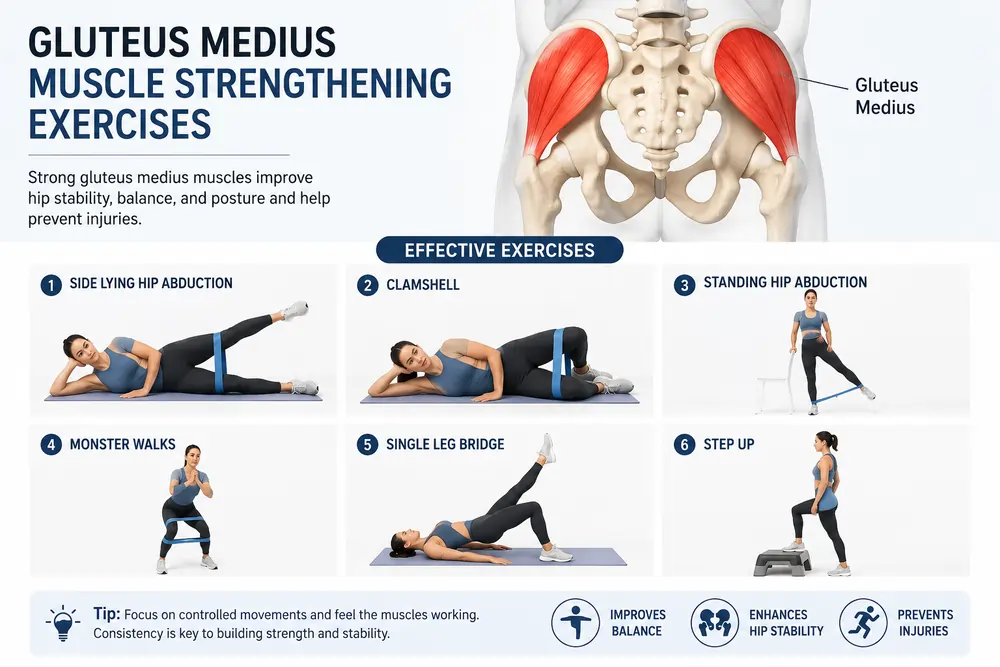
11 Top Gluteus Medius Muscle Strengthening Exercises
Introduction:
- Exercises that strengthen the gluteus muscles are crucial for increasing hip strength and power. This activity plays an important role in carrying out daily tasks in human life and has several health advantages.
- Among the glute muscles, the gluteus medius is the most ignored. It is not as attractive as the little but powerful gluteus minimus and is overshadowed by the gluteus maximus, which steals the show.
- However, the gluteus medius should not be ignored, much like when you extend your wrists. Fortunately, you can maintain your strength and safety by strengthening this overlooked butt muscle with gluteus medius workouts.
What Is the Gluteus Medius Muscle?
- One of the muscles in your glutes is the gluteus medius. Each side of your pelvis has one. The glute muscle aids in hip rotation, hip displacement from the center of the body, and spine stabilization during movement.
Where Is the Gluteus Medius Located?
- The location of the gluteus medius gives it its name: It is situated between the two other major glute muscles, the gluteus maximus and gluteus minimus. It does not add much to the form of your butt because it is not the largest muscle in your glutes. It is near your pelvis and slightly raised.
- Place your hands on the sides of your hips, under your hip bones, and stand upright to feel it. Raise one leg to the side: Your glute med is the muscle beneath your palm on the side you feel contracting.
How does the gluteus medius muscle power your movements?
- The glute medius is primarily a stabilizing muscle that supports the hip and trunk during movement. It won’t make you run faster or leap higher, but it will improve the quality and safety of such movements.
Benefits of Gluteus Medius Exercises:
- While it’s not the muscle that gives your butt its round, lifted appearance, the glute muscle may go unseen. However, strengthening it is important to prevent discomfort.
- The greatest advantage of having strong gluteus medius muscles is lowering your chance of injury, particularly while engaging in sports like jogging. Strengthening this muscle is like giving your hips a superhero costume.
- This is because weak glute medius muscles reduce core stability, increasing your risk of feeling unsteady when running and spraining your ankle, or of falling uncomfortably during plyometric exercises and twisting your knee.
- Compared to those without back pain, those with persistent low back pain were more likely to have weak glute medius muscles.
- Therefore, strengthening these muscles can help you stay balanced and stable while lowering your chance of injury.
How Does the Gluteus Medius Muscle Become Weak?
- Sitting for extended periods of time is the most prevalent cause of weak glute muscles. Although you are surely aware that prolonged sitting is bad for your health, there are situations when it cannot be avoided, such as during a lengthy commute or at work.
- The kind of daily activity is another factor that causes glute med weakness: Whether we’re walking down the street, jogging on the treadmill, climbing and descending stairs, or getting out of a chair, we’re moving forward in space most of the time. The gluteus maximus and the quadriceps power these movements; the gluteus medius is more involved when we move laterally, so it isn’t used as much in our normal movements.
- As a result, many people have comparatively weaker glutes than quads. It may need considerably more concentrated effort to activate your glute medius when you’re quad dominant.
Gluteus medius muscle exercise
The following exercises are for the gluteus medius muscles:
Side-Lying Leg Lifts:
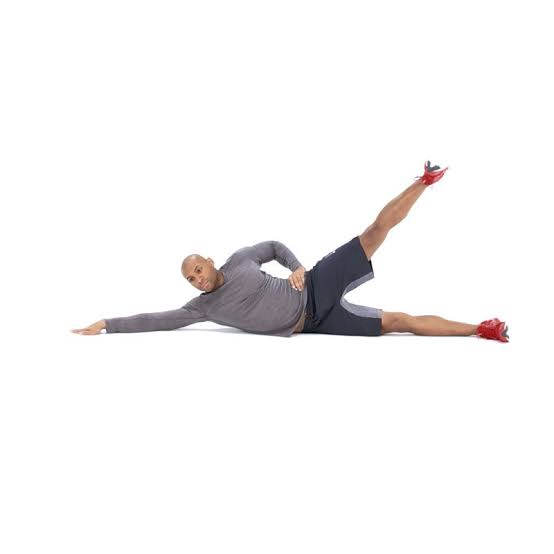
You’ll also strengthen your glute minimus with this two-for-one exercise. Just use your body weight at first. As you gain strength, you can go on to using ankle weights.
- With your legs straight and aligned, lie on your right side.
- Lift your left leg toward the ceiling while maintaining its alignment.
- Repeat until you reach the required number of repetitions, gently lowering your left leg back down.
- On the opposite side, repeat.
Clamshells:
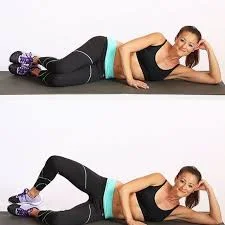
The clamshell exercise works your hips and gluteus medius with just your body weight. Alternatively, you may add a small loop resistance band right above your knees to increase the intensity.
- With your legs raised and your knees bent at a 45-degree angle, lie on your right side.
- Use your right arm to raise your head.
- Place your left palm lightly on the ground in front of you.
- Open your left knee as much as you can while maintaining a solid back and keeping your heels together.
- Repeat until you reach the required number of repetitions by bringing your left knee back down.
- On the opposite side, repeat.
Standing Hip Abduction:
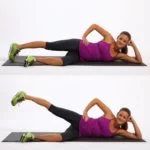
One of the main functions of the glute med is hip abduction, which is the movement of your hips apart from one another. By putting a little resistance band around your ankles, you may increase the difficulty of this exercise for that muscle.
- With your feet together, your hands on your hips, and your core active, try standing.
- Transfer your weight to your right foot. Contract your left glute to lift your left foot up and out to the side while maintaining a straight body.
- Return your left foot to the middle while keeping it off the ground.
- Change sides once you’ve completed the required amount of repetitions.
Fire Hydrants:
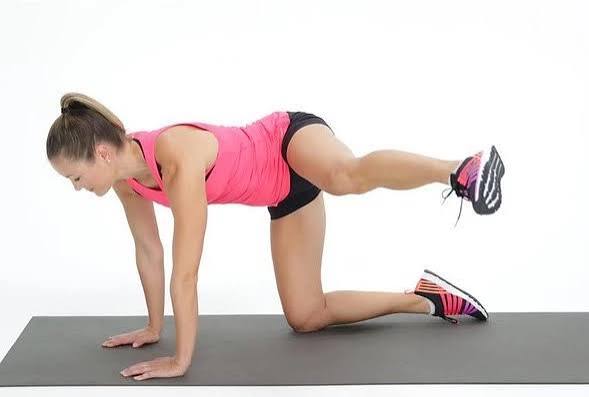
In addition to strengthening your glutes, this exercise will test your shoulders and core for stability.
- Place your knees exactly below your hips and your palms exactly below your shoulders as you begin on all fours. Maintain a stable spine and a strong core.
- Lift your right leg from the hip out to the side while keeping your right knee bent. Raise your knee to hip height, then stop for a moment.
- Bring your right leg down to the beginning position.
- Change sides once you’ve completed the required number of repetitions.
Hip Thrusts:
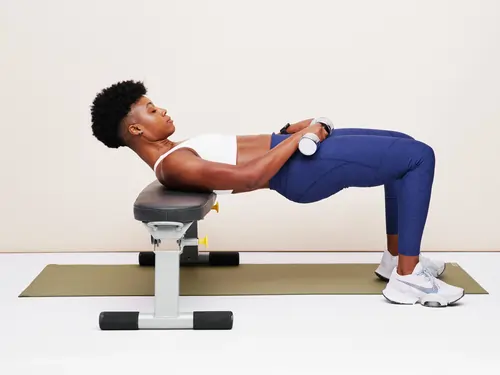
Dumbbells or a heavy kettlebell placed carefully on your hips can also be used to do the hip thrust. Using a bench or box to support your shoulders during this glute workout will increase your range of motion.
- Start with your feet flat on the ground, your knees bent, and your back and shoulders pressed against a bench or box.
- Place a dumbbell on each hip bone or a barbell over your hips. Hold the weight in place gently.
- Lift your hips by pressing through your feet until your knees, hips, and shoulders create a straight line.
- Return your hips to the floor slowly.
- Continue until you reach the required number of repetitions.
Donkey Kicks:
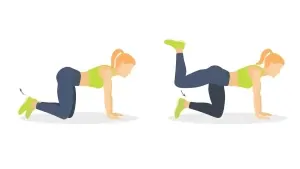
Similar to fire hydrants, donkey kicks strengthen your core and develop your glute muscles.
- Place your knees exactly below your hips and your palms exactly below your shoulders as you start on all fours position. Maintain a stable spine and a strong core.
- As you raise your right foot, keep your right knee bent. Imagine putting your foot’s sole up against the sky. Raise your knee to hip height, then stop for a moment.
- Bring your right leg down to the beginning position.
- Change sides once you’ve performed the required number of repetitions.
Side Plank with Leg Lift:
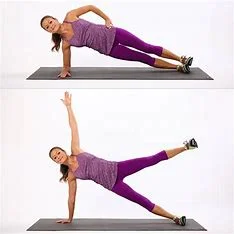
By using a plank, this glute workout increases the level of pain of standing hip abduction.
- While resting on your right side, place your left foot over your right foot.
- Press up into a side plank while resting on the outside of your right foot and your right hand or forearm, stabilizing your glutes and core.
- Raise your left leg till your left foot is at hip height while contracting your glutes. Take a moment to pause here.
- For the number of repetitions you want, lower your left foot till it touches your right foot.
- On the opposite side, repeat.
Single-Leg Glute Bridge:
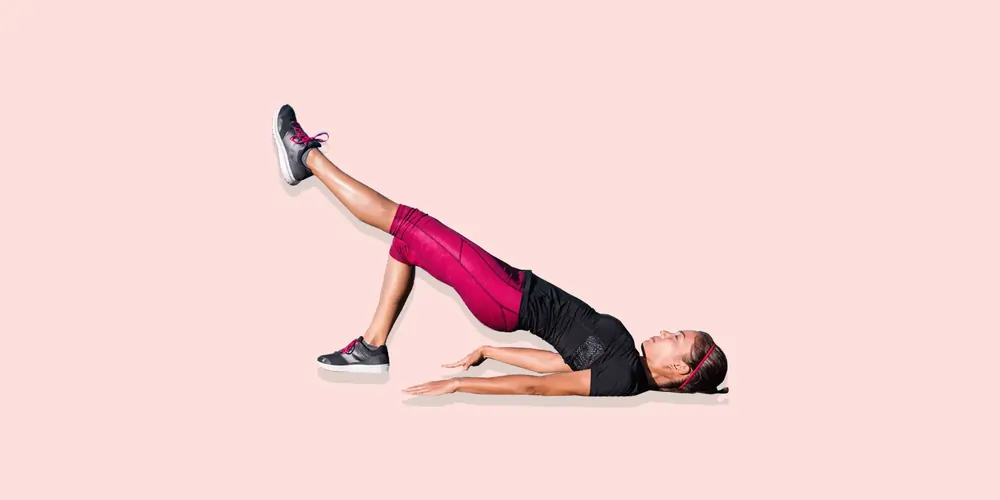
Compared to a regular bridge, performing a glute bridge on just one leg at a time strengthens your gluteus medius.
- Rest on your back with your legs bent and feet on the floor.
- Stretch your left leg toward the ceiling just above your left hip while using your core.
- Put your weight on your right foot and tuck your hips down a little.
- Push through your right foot to lift your hips off the floor. Raise your body until your right knee, hips, and shoulders create a straight line. Here, take a moment to pause.
- Lower your hips to the floor slowly.
- Repeat on the opposite side after completing the required number of repetitions.
Standing side leg raise:
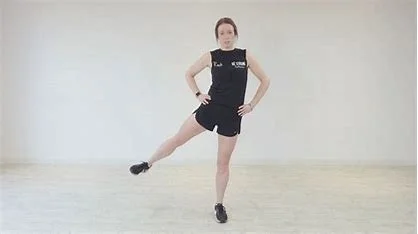
If you have hip pain or are just starting to work out your gluteus medius, this is a great choice. Because one leg is supporting you while the other moves, it also tests your balance. Here, the two sides of your glutes work together, one supporting your stability and the other raising your leg.
- Place your hand on a strong surface, such as a table or countertop, to help you stay balanced.
- Maintaining a straight knee, raise one leg to your side and toward the ceiling.
- As you maintain this position, concentrate on tightening your hip muscles.
- Let your leg drop back to the ground.
- On the opposite side, repeat.
Single-leg squat:
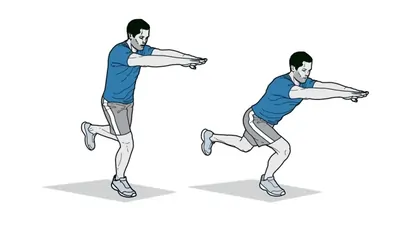
One of the best exercises for strengthening the gluteus medius is this one, which offers your hip muscles a great opportunity to support your balance on one leg. As you get used to the exercise, you can utilize a chair, wall, or countertop for support if you need assistance maintaining steady balance, because balance can be just as difficult as the strengthening part.
- Place one hand on a solid surface, such as a table or countertop, and stand.
- Raise one leg off the ground.
- Squat: Lean your chest slightly toward the floor, bend through your knees, and maintain a squat position.
- To straighten your knee and get back up on your feet, push through your foot.
- On the opposite side, repeat.
Lateral wall push:
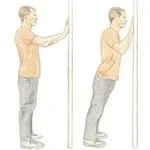
This exercise is a great choice if you want to activate your gluteus medius but find it hard to move your leg out to the side. Although it doesn’t need much movement, it can be quite the glute burner.
- Stand close to the wall and place a pillow between the outside of your knee and the wall.
- Press the side of the leg nearest the wall into the pillow after lifting it off the ground.
- Increase your leg’s pressure against the pillow gradually and hold it there for a short while.
- Return your foot to the ground and unwind.
- On the opposite side, repeat.
What precautions should one take during exercise?
- Take it gradually at first. These are preliminary exercises. For more difficult activities, find out from your doctor whether you need to see a physical therapist. You might be able to add weights or perform more sets of each exercise as you gain strength.
- If you are in pain, stop. You may not experience pain at first, but it is common to feel some discomfort. Over time, regular exercise will help reduce the discomfort.
- Before performing glute workouts, warm up. To warm up your muscles, walk or ride a stationary bike for five to ten minutes.
- Keep to the workout plan that your doctor has prescribed. He or she will suggest exercises that are good for your situation. Additionally, he or she will advise you on the number of repetitions and frequency of the exercises.
FAQs:
What are the signs of a weak gluteus medius?
An uneven walk, hip or knee pain, trouble balancing on one leg, or lower back pain are other symptoms. A physical therapist can evaluate the strength of your muscles.
What happens if the gluteus medius is weak?
Your pelvis drops or sways as you walk due to a weak gluteus medius, a condition known as a Trendelenburg gait. This instability causes adjacent muscles, such as your knees and lower back, to overcompensate, which often results in runner’s knee, hip discomfort, IT band syndrome, and chronic lower back pain.
Does walking strengthen the gluteus medius?
Walking actually does strengthen the gluteus medius because it keeps the pelvis from falling when you are balancing on one leg.
What are the symptoms of gluteus medius pain?
Usually, gluteus medius symptoms appear as either a sharp pain on the outside of your hip or a deep, dull aching. It frequently gets worse when lying on the affected side, sitting for extended periods of time, or ascending stairs. It is often associated with tendinitis, tiny rips in the gluteus medius tendon, or muscular weakness.
What aggravates the gluteus medius?
Exercises that promote overuse of your hip muscles include: The gluteus medius may also be strained by extended use of the hip muscles. These consist of running, hiking, and walking. Exercises involving weight-bearing: The additional weight on the upper body may put more strain on the hip muscles.
Do strong glutes help knees?
For those who wish to actively manage their osteoarthritis in their knees, gluteal strengthening is a useful technique. The gluteal muscles are crucial for knee function as well as for supporting the pelvis, hips, and knees.
References:
- Johnson, J. (2021b). Functional Rehabilitation of low back pain with core stabilization Exercises: Suggestions for exercises and progressions in athletes. Digital Commons – USU (Utah State University). https://doi.org/10.26076/c6ce-67f6
- Jeong, U., Sim, J., Kim, C., Hwang-Bo, G., & Nam, C. (2015). The effects of gluteus muscle strengthening exercise and lumbar stabilization exercise on lumbar muscle strength and balance in chronic low back pain patients. Journal of Physical Therapy Science, 27(12), 3813–3816. https://doi.org/10.1589/jpts.27.3813