
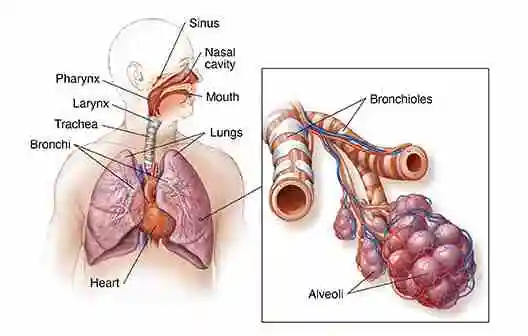
Respiratory System
Introduction:
The survival of our cells depends on oxygen. One of the waste products produced by cells is carbon dioxide. The respiratory system takes in oxygen from the air we breathe and releases harmful carbon dioxide.
The lungs are the respiratory system’s primary organ. Additional respiratory organs include the nose, the trachea, and the breathing muscles (intercostal and diaphragm).
Anatomy:
Which components make up the respiratory system?
Your lungs are the primary respiratory system organs. However, your respiratory system is composed of many parts that work together to help you breathe. Your respiratory system is composed of the following parts:
- The nasal cavity and nose.
- Oral cavity and mouth.
- Sinuses.
- Throat, or pharynx.
- Voice box, or larynx.
- Windpipe, or trachea.
- The bronchi are the major airways.
- Lungs.
- Diaphragm.
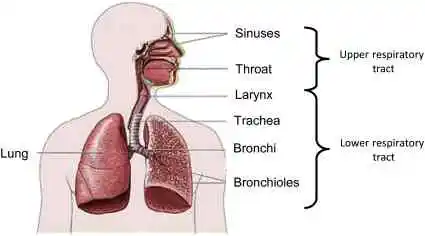
How does your upper respiratory tract look?
Air enters your body through your upper respiratory tract, which also assists in directing it toward your lungs. It adds moisture to the air you breathe. You take air into your body through your mouth and nose, which is where your respiratory tract begins. Your larynx, sinuses (hollow spots on your forehead and cheeks), and nasal cavity are other components of your upper respiratory tract.
Which lower respiratory tract do you have?
The lower respiratory system is made up of the lungs, bronchi, and trachea. The tracheobronchial (pronounced “tray-key-oh-BRON-key-uhl”) tree is a network of progressively smaller tubes that carry air from the upper respiratory tract to small air sacs in your lungs (alveoli). It is composed of the trachea, bronchi, and bronchioles (small airways).
Tracheobronchial Tree:
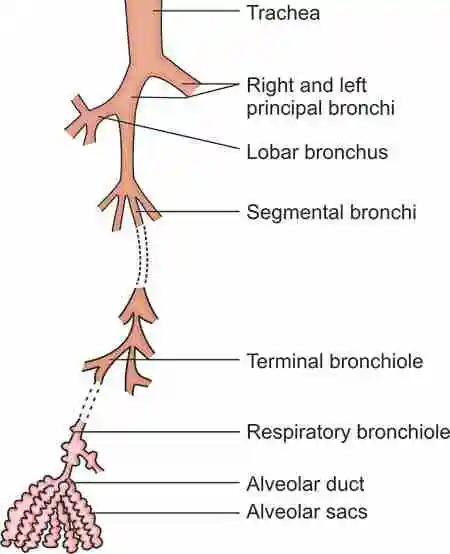
A section of the respiratory system called the tracheobronchial tree carries air from the upper airways to the lung parenchyma. It is made up of the intrapulmonary airways (bronchi and bronchioles) and the trachea. The main branch of the tracheobronchial tree can be seen by the trachea, which is situated in the superior mediastinum. At the level of the sternal angle (T5), the trachea divides into the left and right major bronchi, one for each lung.
Inferolaterally, the left main bronchus enters the left lung’s hilum. Along the way, it passes in front of the esophagus and thoracic aorta and behind the aortic arch.
Inferolaterally, the right main bronchus enters the right lung’s hilum. In addition to being shorter and wider than the left, the right main bronchus runs more vertically. This increases the risk of foreign body obstruction in the right bronchus.
The main bronchi divide into gradually smaller intrapulmonary bronchi as they approach the lungs. The right main bronchus divides into three secondary lobar bronchi that serve the left and right lung lobes, respectively, while the left main bronchus divides into two secondary lobar bronchi.
Each lobar bronchus further divides into tertiary segmental bronchi to supply oxygen to the bronchopulmonary segments. Several generations of intrasegmental (conducting) bronchioles follow the segmental bronchi, ultimately leading to terminal bronchioles. Numerous generations of respiratory bronchioles are produced by each terminal bronchiole. The respiratory bronchioles extend into various alveolar ducts, which lead to each alveolar sac, which contains several grape-like outpocketings called alveoli. These structures indicate the location where gas exchange starts because they contain alveoli.
Function:
What is your respiratory system’s primary purpose?
The main functions of the respiratory system are to take in oxygen for your body’s cells and exhale carbon dioxide, a waste product. This occurs by breathing in and out as well as by gas exchange between the blood vessels that run close by and the small air sacs in your lungs, known as alveoli. Additionally, your respiratory system:
Makes the air you breathe in warmer and more moist: The air is warmed by your respiratory system to the temperature of your body. It moisturizes the air to the proper humidity level for your body.
Protects your body from particles in the air: Your respiratory system has components that can either keep dangerous bacteria and irritants out or force them out if they do get inside.
Lets you speak: Your voice notes vibrate in the air, producing sounds.
Assists in smell: Your olfactory nerve, which communicates with your brain about smells, is traversed by the molecules in air when you breathe it in.
Balances your body’s pH level: Your blood becomes acidic when you have too much carbon dioxide in it. Your respiratory system contributes to the storage of your body’s acid-base equilibrium by removing carbon dioxide.
Disorders and Conditions:
Which diseases have an effect on your respiratory system?
The tissues and organs that make up your respiratory system might be affected by a variety of diseases. Some of these disorders can be caused by irritants and microorganisms that you breathe in from the air, such as bacteria, viruses, and fungi that cause diseases. Others are caused by harm or inherited diseases.
Your respiratory system may be impacted by the following conditions:
Allergic rhinitis: Your nasal passageways and airways may be impacted by allergic reactions to dust, pet dander, tree pollen, and other allergens.
Chronic respiratory disorders: These include cystic fibrosis, asthma, and chronic obstructive pulmonary disease (COPD).
Upper and Lower respiratory tract infections: Colds and the flu (influenza) are the most common respiratory diseases.
Inflammation: A respiratory infection may cause swelling in your sinuses (sinusitis), alveoli (pneumonia), or big airways (bronchitis).
ILD, or interstitial lung disease: Your lungs may be permanently damaged by pulmonary fibrosis and other ILDs.
Blockage: This can be a malignant tumor, a benign growth, or an alien item.
Acid-base imbalances: Exhaling too much or too little carbon dioxide can cause respiratory alkalosis and acidosis, which alter the blood’s acid-base balance.
What symptoms might a disorder affecting your respiratory system present with?
Your respiratory system may be affected by conditions that lead to:
- Dyspnea, or shortness of breath.
- Stuffy or runny nose.
- Cyanosis, or blue skin, lips, or nails.
Which tests do doctors use to diagnose respiratory conditions?
Pulse ox, or pulse oximetry. This is a straightforward, everyday test that measures your blood oxygen level using a device on your finger.
- Pulmonary function test.
- Chest X-rays.
- Arterial blood gas. (ABG)
FAQs
What is the respiratory system’s primary function?
Transporting oxygen into the body and releasing carbon dioxide are the respiratory system’s primary functions. We define this process as respiration.
Which seven components make up the respiratory system?
It includes the following:
Nose.
The mouth.
The throat (pharynx)
Larynx, or voice box
The trachea, or windpipe
Airways (bronchi)
lungs.
What are the respiratory system’s four primary purposes?
Oxygen delivery to the body’s tissues.
Carbon dioxide removal from the body.
By controlling the blood’s carbon dioxide levels, pH equilibrium is maintained.
It maintains the body’s water content.
What respiratory rate is considered normal?
An adult’s resting respiratory rate typically ranges from 12 to 20 breaths per minute. Depending on age, this can change.
Which three types of respiration are there?
There are three different kinds of respiration: cellular, external, and internal. The breathing process is called external respiration. It involves breathing in and out gases. Blood and bodily cells exchange gases during internal respiration.
Define a diaphragm.
A muscle with a dome shape that aids in inhalation and exhalation is the diaphragm. It divides the space between your chest and abdomen and is situated between your heart and lungs.
What level of oxygen is considered normal?
A typical pulse oximeter reading for oxygen saturation for most persons falls between 95% and 100%.
Which four organs make up the respiratory system?
The lungs are the respiratory system’s primary organ. The trachea, the nose, and the breathing muscles (the diaphragm and the intercostal muscles) are further respiratory organs.
Reference:
- Respiratory system. (n.d.). WebMD. https://www.webmd.com/lung/how-we-breathe
- Klocke, A, R., Siebens, A, A., Cherniack, S, N., Weibel, R, E., Burri, H, P., Beers, F, M., Elliott, H, D., Heath, & Albert, D. (2025, February 11). Human respiratory system | Description, Parts, Function, & Facts. Encyclopedia Britannica. https://www.britannica.com/science/human-respiratory-system
- Wikipedia contributors. (2025a, February 13). Respiratory system – Wikipedia. https://en.wikipedia.org/wiki/Respiratory_system
- Department of Health & Human Services. (n.d.). Respiratory system. Better Health Channel. https://www.betterhealth.vic.gov.au/health/conditionsandtreatments/respiratory-system
- Professional, C. C. M. (2024a, May 1). Respiratory system. Cleveland Clinic. https://my.clevelandclinic.org/health/body/21205-respiratory-system


One Comment