5 Minute Desk Exercises for Lower Back Pain
Introduction:
Nowadays, a lot of people sit in front of a desk at home or in their jobs for eight to ten hours every day. Working remotely makes this even more prevalent, and prolonged use of this position can lead to bad posture, tense muscles, and lower back, neck, and shoulder pain.
The good news is that you may feel substantially better without going to the gym or using any specific equipment. In front of your workstation, you may do easy exercises to relieve your lower back ache. You may improve your posture, reduce stiffness, and stay active throughout the day by including these exercises in your routine in addition to inactive lifestyle workouts.
Why Does Prolonged Sitting Cause Back Pain?
Your body may get more stressed if you spend a lot of time sitting still every day without getting enough physical activity. Your muscles may become stiff and inflexible as a result, increasing the tension on your lower back. Sitting for extended periods of time is one of the variables that may contribute to back pain, while it is by no means the sole one.
The following are some of the most popular theories as to why extended sitting results in back pain:
- Stiff hip muscles: When you sit, your hip muscles become rigid and pull your lower back, which might have an impact on your posture.
- Weak core muscles: Your spine is supported by your core muscles. Weak core muscles put additional strain on your lower back, which can be painful and uncomfortable.
- Poor blood circulation: Staying still for a long time results in poor blood circulation, which makes the muscles stiff and tired.
- Muscle stiffness: Inactivity causes stiffness in the legs, hips, and back.
- Increased pressure on spinal discs: Compared to standing up, prolonged sitting puts more strain on the spinal discs.
You may maintain your muscles engaged and increase your flexibility by including easy workouts and movements for inactive lifestyles into your everyday routine. By preventing the negative consequences of sitting, these activities will also help avoid sitting-related illness. Exercise for a sedentary lifestyle, in addition to stretching activities, maintains your body strong and flexible throughout the day.
Is Your Desk Setup Making Back Pain Worse?
Many individuals neglect their desk setup in favor of stretching. Your posture may be gradually impacted during the day by a too-high chair, a screen that is below eye level, unsupported feet, or an improperly positioned keyboard. For lower back pain, improving your workplace arrangement in addition to office stretches frequently yields better long-term outcomes than depending only on stretching.
5 Warning Signs You Need a Stretch Break:
Before stiffness develops into chronic pain, your body frequently sends forth tiny signs. By identifying these early indicators, you may take a little pause, correct your posture, and resume normal movement before tension accumulates over the day.
- After 30 minutes of sitting, the lower back feels tight.
- Standing feels slow and uncomfortable when the hips are tight.
- You move about a lot when you’re seated.
- It’s hard to stand straight after lengthy meetings.
- Pain increases with the length of time you sit.
- Your posture starts to sag forward over time.
- One of the easiest ways to keep your back feeling better during the workday is to take prompt action in response to these warning symptoms. It is frequently more beneficial to take a quick stretch break every hour rather than waiting until stiffness becomes hard to ignore.
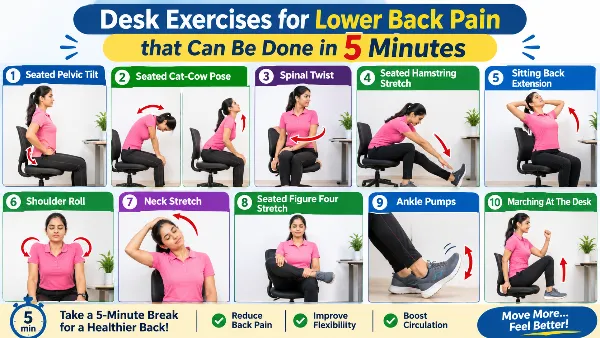
Desk Exercises for Lower Back Pain that Can Be Done in 5 Minutes:
Maintaining the health of your back muscles doesn’t require going to the gym or using any equipment. You can complete these desk exercises for back pain in a matter of minutes. They may help you avoid stiffness, improve your flexibility, and feel more at ease when sitting, in addition to your regular posture exercises.
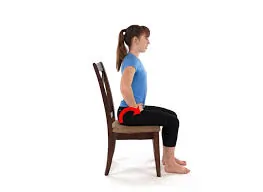
Seated Pelvic Tilt:
Procedures:
With both feet flat on the ground, take a comfortable seat. Keep your posture straight. Your hips should be tilted forward and backward. Take your time and don’t put any strain on your body.
Advantages:
It helps with lower back relaxation. Enhances the pelvic joint’s range of motion. Avoids stiffness caused by extended sitting.
Time: 30 seconds
Who shouldn’t do it: People who have recently had surgery or have a significant back issue should speak with their doctor.
Seated Cat-Cow Pose:
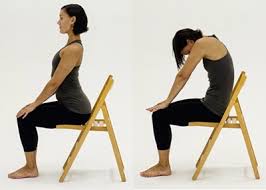
How Should I Proceed?
With your feet on the ground, take a seat in a chair. Bring your head close to your chest and bend your back. Now lift your chest and bend your back a little. Follow your breathing pattern while working gently.
Advantages:
Increases the flexibility of your spine. Eases the tension in your back. is suitable as one of the best stretches for office posture.
Time: 30 seconds
Who should stay away? Those who suffer from severe pain as a result.
Spinal Twist:
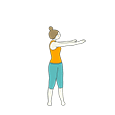
Doing the exercise:
Take a straight seat in your chair. Place your hand on the opposite knee. Gently rotate your upper body. Hold, then repeat with the opposite hand.
Advantages:
Increases the spine’s flexibility. Reduces back and waist stiffness. Helps improve sitting posture.
Time: 30 seconds
Those with any spinal problems shouldn’t do this workout.
Seated Hamstring Stretch:
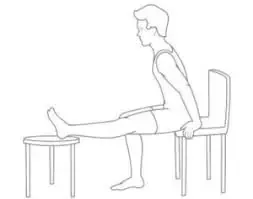
Instructions:
Take a seat at the chair’s edge. With your heel on the ground, extend one leg in front of you. While keeping your back straight, bend forward. Repeat with the opposite leg.
Benefits:
Releases tense hamstrings. Helps reduce lower back tension. Improves adaptability.
Time: 30 seconds
Who shouldn’t do this exercise: If you have a hamstring injury, don’t do it.
Sitting Back Extension:
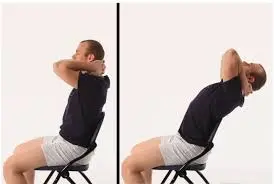
How to carry out the workout:
Place your feet shoulder-width apart. Place your hands on your lower back. Bend backward gently. Return to the starting position slowly.
Benefits:
Relieves tension after extended periods of sitting. Stretches the front portion of your body. An easy-to-perform desk exercise that may help relieve lower back discomfort.
Time: 30 seconds
Those who shouldn’t try it: If you have back pain or dizziness, don’t try it.
Shoulder Roll:
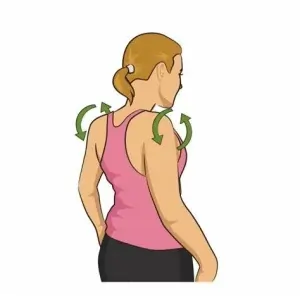
How to Do It:
Take a comfy seat or stand. Turn your shoulders forward five times. Turn your shoulders back five times.
Advantages:
Makes your shoulders more relaxed. aids in maintaining proper posture for the upper body. The perfect workplace posture workout.
Time: 30 seconds
Those who have severe shoulder rotation pain should stay away from it.
Neck Stretch:

How to carry it out:
Sit up straight. Lower your head slowly to one shoulder. Hold off for a short while. For the other side, repeat.
Advantages:
Reduces stiffness in the neck. Stretches muscles after using a computer. Increases the range of motion of the neck.
Time:30 seconds
Those who have neck injuries should avoid it.
Seated Figure Four Stretch:
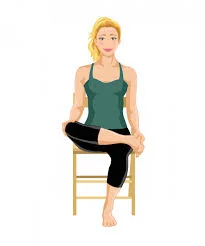
How to Do the Stretch:
Take a seat in a chair. Cross one knee over the other ankle. Bending forward. Apply the same principle to the opposite side.
Benefits of the Stretch:
Allows the hip joints to open. aids in easing any lower back pain. Improves mobility.
Time: 30 seconds
Those who have hip or knee pain when stretching should avoid this stretch.
Ankle Pumps:
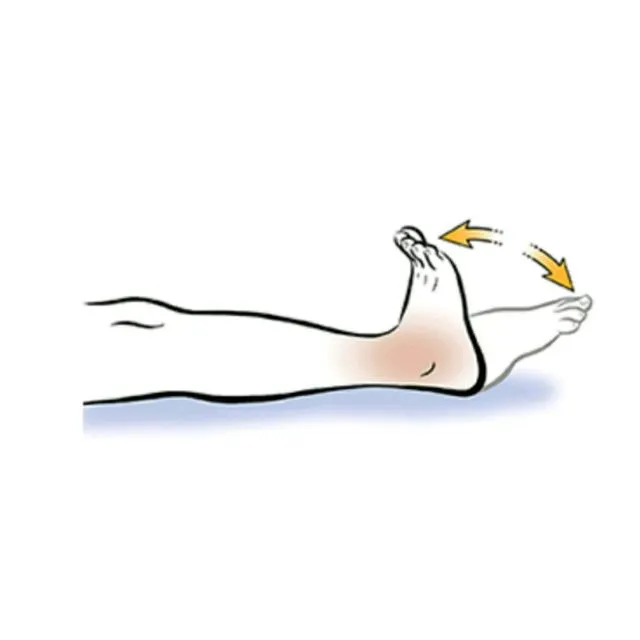
How to carry out the workout:
Place both feet on the floor while seated. Without lifting the heels, lift the toes. Then, without raising the toes, elevate the heels. Take your time.
Advantages of the workout:
It enhances blood circulation. aids in easing leg tightness. Keeps the legs moving while working during the day.
Time: 30 seconds
Individuals who feel pain throughout the activity should not undertake it.
Marching At The Desk:
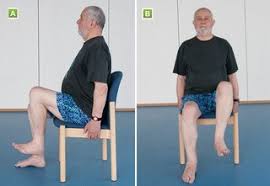
How to Do It:
Take a straight seat in your chair. Lift one knee, then the other, as you march. Throughout the workout, keep your core active. Do it with ease and regularity.
Advantages:
Improves the body’s blood flow. Activates the muscles in the legs and core. A simple approach to wrap up your lower back pain workout.
Time: 30 seconds
People to stay away from it: Stay away from it if lifting your knees affects your lower back and hips.
Building a 10-Minute Daily Routine:
Here’s how to include all five exercises into a set program that you can do once in the morning and once in the afternoon at your desk.
- Cat-cow seated: 10 cycles (2 minutes). Before doing deeper stretches, use this as a warm-up to gently mobilize your spine.
- Spinal twist when seated: two holds, each lasting 20 seconds (2 minutes). Once you’re sitting, go straight from cat-cow into the twist.
- Hip flexor stretch while standing: two holds per side, each lasting 25 seconds (2 minutes). Use your desk for balance and stand up effortlessly.
- Figure-four stretch: two 25-second holds on each side for two minutes. For this sitting stretch, go back to your chair.
- Ten repetitions of standing back extension (2 minutes). Finish standing up so you can stroll to the kitchen or return to work with ease.
It took around ten minutes in total. If you can only do this once a day, plan it during the early afternoon, when muscle fatigue and spinal disc dehydration tend to be at their highest.
Top tips for getting started:
You may maintain your back’s flexibility and prepare it for an active day by stretching every day. If you perform these exercises within your comfort zone, any soreness should gradually go away.
These five scientifically developed stretches are an excellent way to begin the day. See a personal trainer or physiotherapist for a customized solution if any of them make the pain severe.
When should I stretch my back?
One of the best ways to wake up the body and shake off the rust that has collected overnight is to stretch first thing in the morning. The variety of stretches we’ve included here is equally beneficial for desk workers who spend their whole workday at a desk.
If this sounds similar, changing things up with our 5-minute workout at work can significantly improve the health of your neck and spine.
How long do these stretches take?
This sequence of stretches can be done as often as you choose. Make an appointment with a physiotherapist and stop stretching if you feel any new pain.
Don’t rush; instead, take slow breaths in and out while you stretch. Every stretch should be performed carefully, with a focus on completing a complete, rounded movement.
How can back stretches help?
This sequence of stretches can be done as often as you choose. Make an appointment with a physiotherapist and stop stretching if you feel any new pain.
Don’t rush; instead, take slow breaths in and out while you stretch. Every stretch should be performed carefully, with a focus on completing a complete, rounded movement.
Common Mistakes to Avoid:
Although these exercises are straightforward, there are several tendencies that make them less successful or lead to new issues.
- Extending despite pain. It is acceptable to feel uncomfortable. It’s not sharp or shooting pain. Exercises that cause pain that goes beyond a little stretching feeling should be stopped, modified, or skipped completely.
- Holding your breath. When attempting to relax tightness, holding your breath increases intra-abdominal pressure and muscular tension, which is detrimental. During each exercise, take calm, steady breaths.
- Hurrying through the process. For connective tissue to extend, it must be gently stretched over time. The benefits of holding each stretch for fewer than 15 seconds are negligible. Take your time.
- Stretching only when pain arises. Prevention, not rescue, is the goal. Your tissues are already irritated and less receptive to stretching by the time you experience noticeable pain. Before symptoms appear, incorporate the program into your daily routine.
- Ignoring one aspect. The majority of humans are asymmetrical. Instead of performing equal repetitions and calling it a day, give your right hip more time if it is tighter than your left.
FAQs:
What are the best desk exercises?
Chair sit-ups, forward bends, cat-cow stretches, shoulder rolls, neck stretches, and sitting spinal twists are the greatest workplace workouts. These exercises assist ease back and neck pain caused by extended sitting, improve posture, and reduce stiffness.
How often should office workers do desk exercises?
Desk exercises should be done by office workers every 30 to 60 minutes. The risk of neck and back pain can be decreased, circulation can be improved, and muscular stiffness may be reduced by taking brief movement breaks throughout the day.
How do you get rid of back pain & back pain?
Steps: Maintain a straight back while sitting upright. Grasp the chair’s armrests. Maintain a level footing. Maintaining a straight back, stand up. Take a breath as you stand up. Inhale through your abdomen. Return to your seat and slowly release your breath. Do this five times.
Can sitting help lower back pain?
It is supported by research showing that medical students who sat for more than seven hours a day were 1.7 times more likely than their more active counterparts to report lower-back pain (LBP). Simply reducing sitting time during a six-month period stopped back discomfort from getting worse, according to another study.
How often should I take a stretch break while working?
Instead of sitting still for hours on end, the majority of workplace health experts advise getting up at least once every 30 to 60 minutes. Instead of waiting until pain becomes more apparent, many office workers find that taking short movement breaks on a regular basis makes them feel less stiff.
Can I do these stretches without leaving my desk?
Yes, the majority of office stretches for lower back pain are made to be readily incorporated into a typical workday and take up very little room. You can still stretch while seated until you have a chance to move about if standing isn’t feasible.
Is walking better than stretching during work breaks?
Stretching and walking have various advantages. While desk workouts for back pain target muscles that frequently grow stiff during extended desk labor, walking encourages your entire body to keep active. Relying on one habit is more difficult for many people than rotating between the two.
Can these stretches help prevent stiffness from returning?
Yes, particularly when paired with regular exercise and good desk habits. Stretching your lower back regularly during work is frequently more beneficial than waiting until your muscles are already tense. Shorter, more frequent stretch breaks are easier for many people to sustain than a single, lengthy exercise.
References:
- Bhardwaj, S. (2026, August 5). 5-Minute Desk exercises for lower back pain & better posture. https://mdlines.com/desk-exercises-for-lower-back-pain/
- Hasan, M. (2026, August 7). Desk Stretches for Lower Back Pain from Sitting | 5-Minute Relief. Yoga Flex Zone. https://www.yogaflexzone.com/desk-stretches-for-lower-back-pain-from-sitting/
- 5 morning stretches to relieve back pain | Nuffield Health. (n.d.). https://www.nuffieldhealth.com/article/5-essential-morning-stretches-to-relieve-back-pain