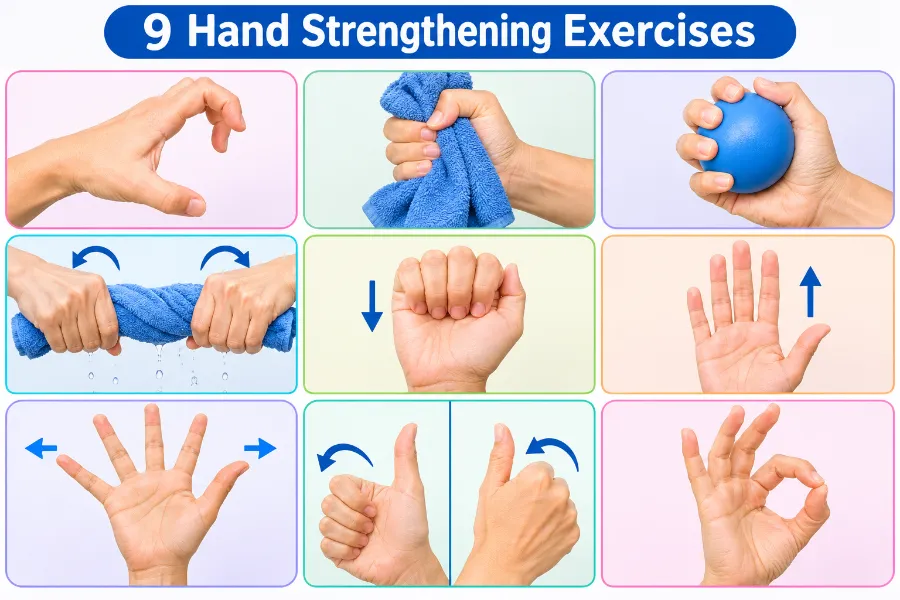
Hand Exercises for People Who Type All Day
Introduction:
Almost everything you do involves your hands, from typing and texting to grocery shopping and cleaning. However, unless you have problems like arthritis or hand pain, you might not consider the necessity of exercising your hands.
The proper hand exercises can have a significant impact, whether your goals are to reduce hand pain, enhance your grip, or just maintain your hands’ strength and functionality.
The importance of stretching wrists and hands:
Exercises for the wrists improve flexibility and reduce the chance of injury. Stretches are advised to relieve mild pain or as a preventative strategy. However, unless a medical specialist recommends them, those with inflammation or significant joint damage should not use them. This is due to the fact that exercising may be more damaging to your hands or wrists in those situations.
Before attempting any new stretches or treatments, always consult your physician. Finding the precise source of your wrist pain is crucial.
How Hand Exercises Help Improve Strength and Mobility:
Strength, flexibility, coordination, and general hand function can all be enhanced with hand and finger workouts. Exercises can aid in healing in a number of ways, depending on the underlying reason for hand stiffness or weakness.
Exercises could be used, for instance, to:
- Enhance range of motion and flexibility: Mild stretching and movement exercises assist in preserving joint mobility, lessening stiffness, and promoting more fluid hand and finger movements.
- Increase hand and grip strength: The muscles involved in daily hand movements are strengthened by resistance exercises like pinching, squeezing, and gripping things.
- Boost flexibility and coordination by practicing precise finger movements. This will make tasks like writing, buttoning clothing, and handling small things easier.
- Encourage neuroplasticity and motor recovery: The brain uses a process known as neuroplasticity to remodel and strengthen neural connections after a stroke or brain injury. The brain may remember movement patterns with the support of regular, task-specific practice.
9 Hand Strengthening Exercises:
Your hands will be strengthened and stretched by these workouts. You can perform these exercises to keep your hands strong and flexible for daily tasks or to relieve pain if your hands feel stiff after a few hours of work.
Hook Hands:
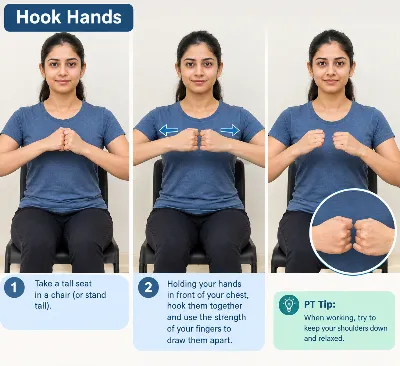
How to do it:
- Take a tall seat in a chair (or stand tall).
- Holding your hands in front of your chest, hook them together and use the strength of your fingers to pull them apart.
- PT Tip: When working, try to keep your shoulders down and relaxed.
Towel Squeeze:
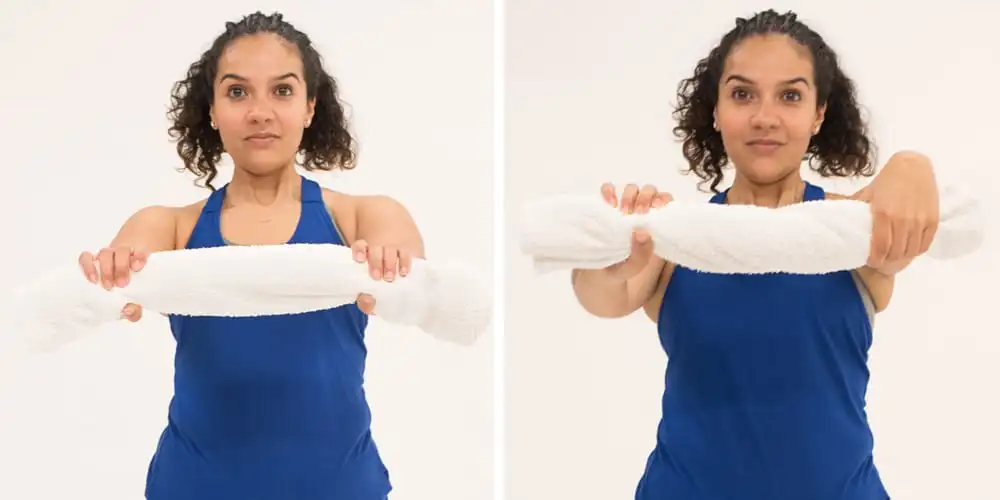
Grip strength is increased with this workout. An important aspect of our daily functioning is our grasp. Carrying, lifting, reaching, and grabbing are examples of functional tasks that require it.
Additionally, grip strength might give you an overview of your general health. Weaker grip strength is a useful signal of more general health issues because it may be linked to diseases like osteoporosis, heart disease, and even early dementia symptoms.
How to do it:
- With a table in front of you, take a seat.
- With your elbow and forearm resting on a table, grasp a rolled-up towel. Keep your palm facing down.
- Squeeze the towel roll by clenching your hand.
- Squeeze as hard as you can, then let go of the towel.
- PT Tip: By varying the size of your hold, you may modify the difficulty of this exercise by using a larger or smaller towel.
Grip Squeeze:
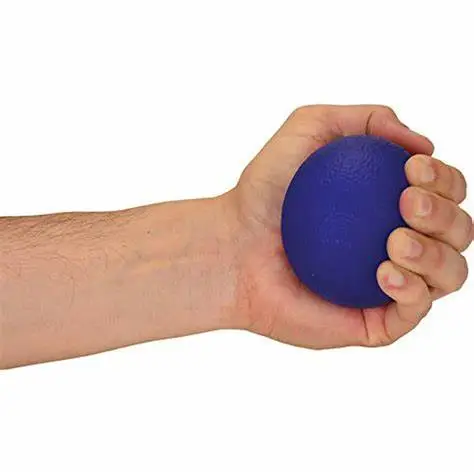
This one is comparable to the towel squeeze, but it’s a little more difficult because you’ll be squeezing something tougher than a towel, like a reusable water bottle. This works the muscles that enable you to perform tasks like turning a doorknob or opening a container.
How to do it:
- With your forearm resting on a table in front of you, gently grasp a hard object, such as a water bottle.
- Using your thumb on one side and your fingers on the other, grasp the object.
- Squeeze the item. As you squeeze, your hand may lift a little off the table.
- Return to the beginning position by slowly relaxing your muscles.
Towel Wringing:

With a twisting action, this is an even more difficult grip-training exercise. This helps in both controlling and strengthening your movements. This workout will probably cause some difficulty for your forearms as well.
How to do it:
- With your palms toward the floor and your hands spaced approximately a foot apart, grasp a rolled-up towel.
- To twist the towel, move your left palm slightly upward and away from your body while your right palm moves downward and toward your left side.
- To go back to the beginning, untwist the towel.
- To achieve a decent twist, twist the towel in the other way, adjusting your grip as necessary.
- Go back to where you were.
Isometric Finger Flexion:
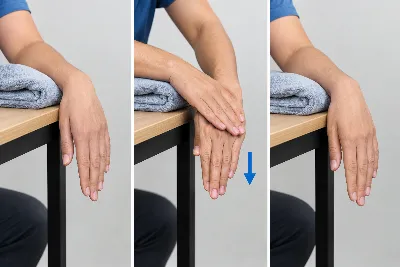
The hand muscles that enable you to bring your fingers closer to your palm are worked by this exercise. This is useful for tasks like picking up a cup, using scissors, and gripping a doorknob. You can perform this exercise without any equipment by applying resistance with your opposite hand. Depending on your tolerance, apply more or less pressure. For a more difficult task, you can also utilize a resistance band.
How to do it:
- Place your forearm and the back of your hand on a table, with the back of your hand being supported by a folded towel.
- You should have your fingers hanging off the table’s edge and straight.
- Using your opposing hand, push your fingers down toward the floor while they struggle, then let them rest.
Isometric Finger Extension:
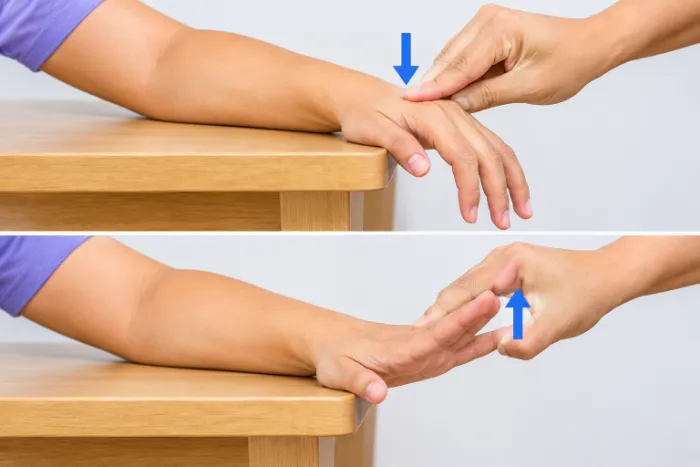
This exercise strengthens the opposing muscles on the top of your hand, which are useful for gripping a spoon or pencil. When you’re ready to engage those muscles further, you can extend your fingers away from your palm using a resistance band or against your own resistance.
How to do it:
- Place your palm and forearm on a table, with your fingers falling over the side.
- As your fingers resist, try using your opposing hand to force them down toward the floor.
- Relax your fingers and stop pushing.
Finger Abduction:
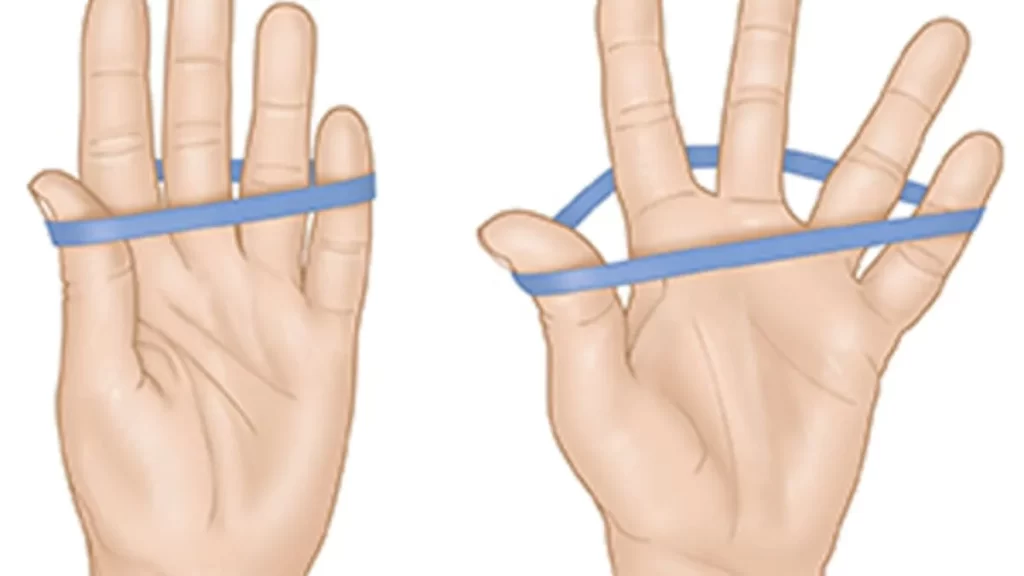
It may surprise you how crucial it is to spread your fingers apart. It shows how strong and flexible your hand’s tiny muscles are, which are crucial for grip strength, fine motor control, and general hand function. You can practice this movement on your own to improve it. As you advance, increase the resistance using your opposing hand or even a resistance band.
How to do it:
- Raise your hand to head height and place the targeted hand’s elbow on a table.
- You should hold your fingers tightly together and straighten them.
- Extend your fingers widely apart.
- Return your fingers to their initial position.
Thumb Abduction and Adduction:
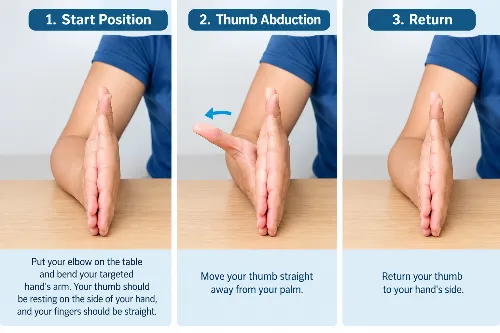
When considering hand strength, we cannot overlook the thumb. This workout targets some of your hand’s smallest muscles, which are crucial for flexibility and fine motor control despite their small size.
How to do it:
- Put your elbow on the table and bend the targeted hand’s arm.
- Your thumb should be resting on the side of your hand, and your fingers should be straight.
- Your thumb should be moved straight away from your palm.
- Return your thumb to your hand’s side.
Thumb Opposition:
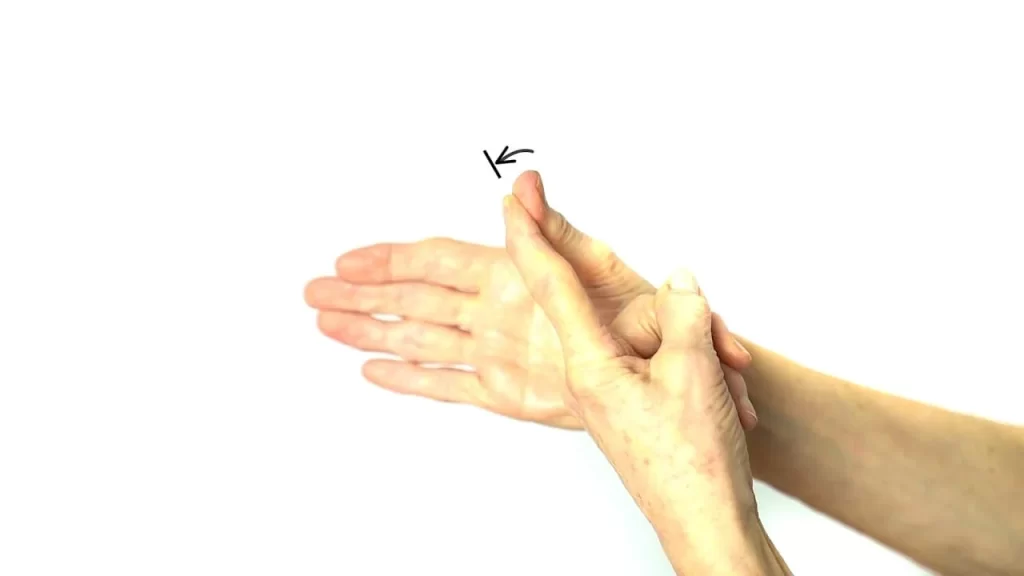
This workout activates your palm muscles by working your thumb and fingers together. It sequentially separates every muscle that contributes to a good, firm grip.
How to do it:
- To begin, place your targeted hand’s elbow on a table. Your thumb and fingers should be straight and slightly apart, and your hand should be open.
- Just the tips of your thumb and index finger should come into contact as you bend them toward one another. After maintaining this posture, release your hand and return it to its initial position.
- Bend your thumb and middle finger tips in the direction of one another. After maintaining this posture, return to the initial position with ease.
- Bend your thumb and ring finger tips together. After maintaining this posture, let go.
- Bend your thumb and pinky fingertips together. Hold, then let go.
Benefits of Hand Strengthening Exercises:
Exercises to strengthen your hands are beneficial for more than just opening a jar of olives that won’t open. There are several advantages to hand workouts, especially if you want to enhance your general health, dexterity, and hand function.
- Strengthened grasp. Gaining strength in your hands improves your grip, which makes lifting, carrying, and grabbing objects simpler. However, grip strength is more complex than you might imagine. Grip strength may be a predictor of longevity and can be used to assess general health. Improving grip strength is crucial for daily living as well as daily functioning.
- It also improves coordination and flexibility. Stronger hands improve fine motor abilities, which are crucial for precise tasks like typing, writing, or playing an instrument.
- Assist with routine tasks. Strengthening your hands makes it easier to perform tasks like doing the dishes without pain or stiffness, as well as carrying a bag to the grocery store.
- Preventing injuries. Tendons and joints are better supported by stronger hand muscles. This lowers the possibility of getting hurt when engaging in regular activities or sports.
- Better joint health. Exercises that strengthen the hands can increase flexibility and decrease stiffness, which is especially beneficial for individuals healing from injuries or those suffering from ailments like arthritis. Many people suffer from some form of hand arthritis. Symptoms can be lessened by keeping those muscles strong, maintaining grip strength, and purposefully performing functional movement patterns.
FAQs:
How to fix hand pain from typing?
Combine ergonomic changes, focused stretches, and frequent rests to release strained tendons and muscles in order to treat hand and wrist pain caused by typing.
How to increase hand strength for writing?
Targeted finger pinches, grip exercises, and regular fine motor activities can help you develop the hand muscles necessary for writing. Pencil control is improved, and fatigue is decreased by developing both tiny finger muscles and general hand endurance.
Do the hand exercises really work?
In fact, hand exercises are beneficial for joint mobility, grip strength, fine motor coordination, and post-injury recovery; however, their impact on dementia prevention and brain health is minimal. Your particular goal and the kind of movement you perform will determine how well they work.
How to heal an overused hand?
Give the inflamed tendons and muscles time to heal by reducing or ceasing repetitive movements that cause strain on an overused hand. Conservative home care improves the majority of minor overuse injuries.
Can typing cause arthritis in the hand?
Although excessive repetition can irritate joints, increase pre-existing osteoarthritis, or induce overuse injuries that resemble arthritis, such as tendinitis and carpal tunnel syndrome, typing itself rarely directly causes arthritis.
How long does hand overuse take to heal?
Depending on how severe the condition is and how it is treated, hand overuse or repetitive strain injury (RSI) usually takes two weeks to three months to heal.
What muscles control writing?
Writing requires a well-coordinated network of muscles that extends from your fingers to your core and shoulders. Different muscle areas take the lead depending on whether you write using finger, wrist, or arm/muscular movements (such as the Palmer Method).
What hand exercises can help improve brain function?
The motor cortex, sensory cortex, cerebellum, and frontal executive networks are stimulated by coordinated hand and finger workouts, which can promote neuroplasticity and cognitive performance.
Can writing too much cause hand pain?
Yes, writing excessively—whether by hand with a pen or using a keyboard—can cause hand pain. Your hand and wrist’s muscles, tendons, joints, and nerves are strained by repetitive movements, tight grips, and extended tension.
What is the best exercise to strengthen your hands?
The best hand-strengthening exercises focus on the grip, pinch, and finger-extension muscles. Examples include opening your fingers against a rubber band, wringing out a towel, and squeezing therapy putty or a stress ball.
References:
- Rehab, F. (2026, November 13). Improve Your Hand Function and Increase Strength with These 41 Hand Therapy Exercises to Try at Home. Flint Rehab. https://www.flintrehab.com/hand-therapy-exercises/
- Hinge Health. (2024, October 18). 9 Best hand strengthening exercises for better function. Hinge Health. https://www.hingehealth.com/resources/articles/hand-strengthening-exercises/
- The Healthline Editorial Team. (2026, January 28). Stretches for wrists and hands. Healthline. https://www.healthline.com/health/chronic-pain/wrist-and-hand-stretches#why-stretch