
Exercise For Golfer’s Elbow
Introduction:
Tendon inflammation on the inside of your elbow is the hallmark of golfer’s elbow (medial epicondylitis). Progressive, low-impact stretching and strengthening are essential for successful rehabilitation. By training your forearm muscles to properly manage the repetitive gripping and swinging actions in your favourite sports, these workouts help mend tendons and avoid reinjury.
A well-planned exercise regimen helps increase blood circulation, strengthen weak tendons, stretch tense muscles, and restore normal elbow and wrist mobility. Regularly performing mild strengthening and stretching exercises can improve function, lessen pain, and limit the chance of recurrent injuries. These exercises can help promote a safe and efficient recovery when combined with appropriate rest and activity moderation.
What Is Golfer’s Elbow?
Golfer’s elbow does not require playing golf, despite its name. Golfer’s elbow, sometimes referred to as medial epicondylalgia, is an overuse ailment that affects the tendons within your elbow. These tendons, which are in charge of wrist flexion, forearm rotation, and grasping, attach your forearm muscles to the bony hump on the inside of your elbow.
When these tendons are overworked, stressed, or involved in routine tasks, tiny tears develop. The tendon eventually becomes weak, painful, and load-sensitive.
Causes of Golfer’s Elbow
- Unexpected rise in training load or activity
- Poor lifting or athletic technique
- Weak shoulder and forearm muscles
- Long-term gripping positions (tools, desk job)
- Insufficient time for recuperation.
Golfers’ elbow is frequently caused by the following activities:
- Tennis, golf, and racquet sports
- Weight training (particularly pulling and grabbing)
- Manual labor and the use of tools
- Mouse work or repetitive typing
- Gardening
- Early physiotherapy treatment is crucial since symptoms can last for months if neglected.
The muscles involved in medial epicondylitis, or golfer’s elbow:
The tendons of the forearm flexor muscles that connect to the medial epicondyle (inner elbow) are the main target of golfer’s elbow. The primary muscles at play are:
- Wrist flexion and abduction are facilitated by the flexor carpi radialis.
- Palmaris Longus: Tenses the palmar fascia and facilitates wrist flexion.
- Flexor Digitorum Superficialis: Facilitates wrist flexion and finger flexion.
- The Flexor Digitorum Profundus flexes the fingers.
- The flexor pollicis longus flexes the thumb.
Typical Signs & Symptoms:
- Tenderness or pain inside the elbow
- Poor grip strength
- Pain while grasping, twisting, or lifting items
- Stiffness in the forearm or elbow
- Activity-related worsening of symptoms
- Many choose to overlook early warning indicators in the hopes that things will “just settle.” Unfortunately, without the proper loading schedule, tendon injuries seldom heal.
Diagnosis:
To diagnose medial epicondylitis, another name for golfer’s elbow, your doctor will usually begin by inquiring about your symptoms and medical history. After that, a physical examination will be performed to look for any pain, stiffness, or weakness. To determine what is causing your pain, your healthcare provider can ask you to move your elbow, wrist, and fingers in various ways or apply pressure to the inside of your elbow.
A shattered bone or arthritis are two other possible reasons for elbow pain that may be ruled out by an X-ray.
Your doctor could recommend more thorough testing, such as an MRI or ultrasound, to have a closer look at the tendons and soft tissues if your symptoms are severe or not improving.
Additional Details
- MRI
- X-ray
Treatment:
Stopping painful activities is the first step in curing golfer’s elbow. Allowing your arm to rest promotes tendon healing.
With rest, ice, and pain management, most patients recover. However, recovery may take many months or even longer. Some patients may experience intermittent flare-ups or persistent pain even after receiving therapy.
Procedures and medications:
To reduce golfer’s elbow pain, you can purchase an over-the-counter medication. Try ibuprofen (Advil, Motrin IB, etc.), naproxen sodium (Aleve), or acetaminophen (Tylenol, etc.). If you are unsure which is best for you, speak with your healthcare provider.
Because cortisone injections have been shown to damage the tissue and don’t appear to provide long-term relief, they are rarely used to treat golfer’s elbow. They can occasionally be used to temporarily relieve pain.
Other therapies for golfer’s elbow are being researched. Consult your healthcare provider about the potential benefits of rest, ice, and painkillers if they haven’t worked.
Tenotomy is another name for dry needling. To aid in the healing of a painful tendon, a medical practitioner pokes it with a tiny needle. The needle is occasionally guided by ultrasonography.
Shockwave treatment. The elbow is treated with sound waves to aid in healing.
A relatively new treatment that is being researched is platelet-rich plasma (PRP). To provide this treatment, your doctor will take a small sample of your blood, concentrate the platelets, and then inject them into the affected region. Usually, ultrasonography is used to guide the injections. Researchers are still investigating the effectiveness of this therapy.
Self-care and therapy:
You can heal by following these steps:
Rest your arm.
Until the pain subsides, stop playing golf or engaging in other elbow-straining activities. Resuming activities too soon may exacerbate the injury.
Put ice on it. For a few days, apply an ice pack to your elbow three or four times a day for 15 to 20 minutes at a time. To keep your skin safe, cover the ice with a small cloth. Two or three times a day, you can also use an ice cube to gently massage the inside of your elbow for five minutes.
Place a brace.
Your doctor could recommend a unique brace or strap for your forearm. The tendons that connect to your elbow may be less stressed as a result.
Strengthen and stretch. Exercises to gradually stretch and then strengthen your wrist and forearm muscles may be suggested by your healthcare provider. It has been demonstrated that progressively increasing strength aids in tendon recovery. Occupational or physical therapy may also be beneficial.
Gradually resume your regular activities as your pain subsides. Start by practicing your job’s or sport’s moves. Work with a therapist, trainer, or other sports expert, like a professional golfer, if necessary, to enhance your technique and prevent further elbow injuries.
Surgery:
Golfer’s elbow seldom requires surgery. However, your doctor could suggest surgery if your symptoms don’t improve after six to twelve months of other therapy.
The Tenex process is one more recent choice. Percutaneous ultrasonic tenotomy (PUT) is the medical name for this procedure. It removes damaged tissue from the skin using a small instrument. The instrument is guided to the precise location of the tendon injury via ultrasound imaging. Tenet is a comparable device that removes damaged tissue using water. These operations could aid in the recovery of certain patients, but further study is required.
Exercises for golfer’s elbow
The main workout phases that we frequently recommend are listed below. Before beginning, always have an individual evaluation since load levels are important.
Isometric wrist flexors
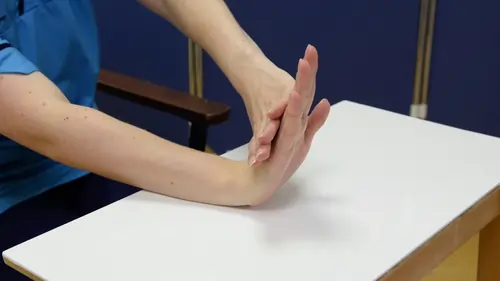
- With your palm facing up, place your forearm on a table.
- Hold a resistance band or a light dumbbell.
- Raise your wrist just a little bit.
- Hold for thirty to forty-five seconds.
- Repeat four or five times.
- By reducing the nerve system’s reaction surrounding the tendon, this frequently instantly lessens pain.
Strengthening Wrist Flexion
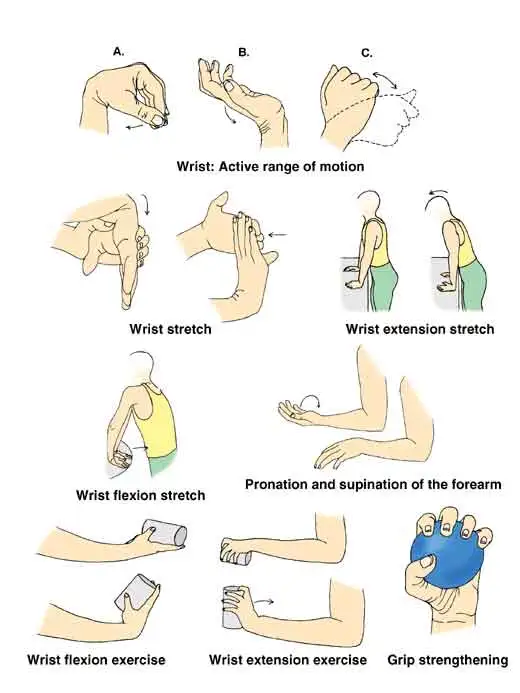
- Palm up, forearm supported
- Grasp a light dumbbell.
- Raise the wrist slowly for three seconds.
- Return to a lower position for three seconds.
- 3 sets of 12–15 repetitions
- Gradually increase your weight over several weeks.
Wrist flexion/extension stretch
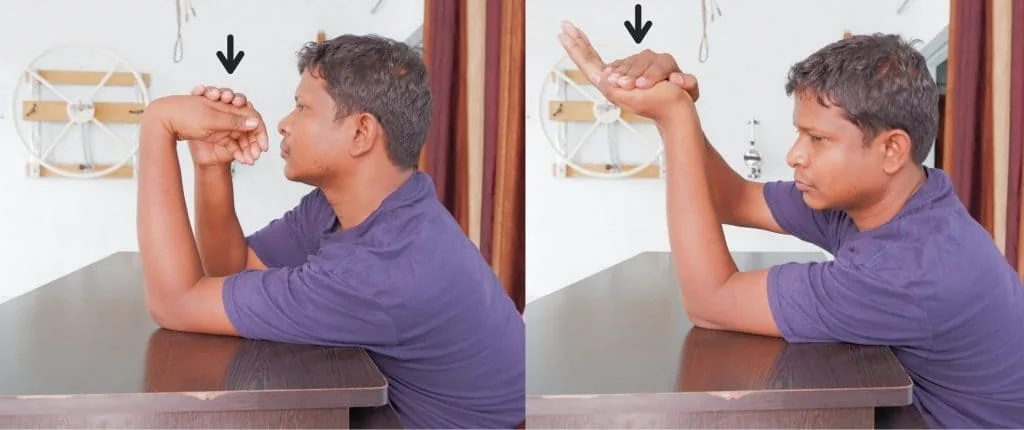
- Extend your arm
- Bend your wrist up and down until you feel tension in both directions
- Repeat 20 to 30 times several times a day
- If you want, apply a little pressure at the end, but don’t hold it for a long static stretch.
Resisted wrist flexion
- With your hand extended over the edge of the table, palm up, place your affected forearm on the table.
- Place one or two pounds of weight in your palm. This might be a filled water bottle, a food container, or a dumbbell.
- With your palm facing up and your forearm resting on the table, slowly raise and lower the weight.
- Do this eight or twelve times.
- Repeating similar actions with your other arm is a good idea.
Resisted wrist extension
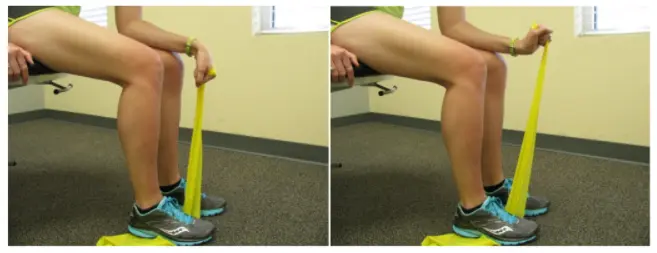
- With your hand hanging over the side of the table, palm down, place your affected forearm on the table.
- Place one or two pounds of weight in your palm. This might be a filled water bottle, a food container, or a dumbbell.
- With your palm facing down and your forearm resting on the table, slowly raise and lower the weight.
- Do this eight or twelve times.
- Repeating similar actions with your other arm is a good idea.
Wrist/forarm soft tissue rolling.
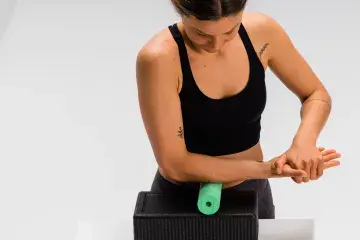
The goal of this golfer’s elbow workout is to increase blood flow in the affected area by moving around the tissues with little strain. A lot of people want to stretch the region because it feels tight, but don’t overdo it. The tissue is irritable, swollen, and immobile.
- Instead, try this method of soft tissue rolling.
- Something spherical, such as a lacrosse or tennis ball.
With your palm pointing either up or down, place your forearm—the bottom portion of your arm—on top of the ball. - Ten to fifteen times, slowly move your entire forearm up and down the ball.
On particularly painful areas, stop. While applying pressure, flex and extend your wrists.
Additional golfer’s elbow treatment
You might also attempt a few different therapy approaches to get the best chance of treating your golfer’s elbow.
Elbow flexion and extension exercise
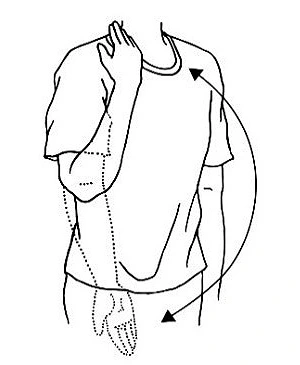
In addition to the flexion and extension exercises.
Elbow flexion: Sit or stand with your arm at your side. Bend your elbow slowly and move your hand closer to your shoulder. After holding for two to three seconds, slowly extend your arm.
Elbow extension: Begin in a sitting position. Starting with your elbow fully bent, gradually extend your arm as far as you can without moving your shoulder.
Cold and hot therapy:
During the first three days following the beginning of symptoms, ice packs can help minimize swelling and related pain. Please be aware, nevertheless, that you should only use an ice pack for four sessions each day and not for more than fifteen minutes. Ice packs work well to reduce inflammation, but they do so by narrowing arteries and veins, which lowers the blood flow required for your damaged muscles to repair.
In contrast, hot packs widen your blood vessels. Therefore, they are not good for inflammation, even if they ease tight and damaged muscles. Heat packs should thus be used three days following the beginning of symptoms.
When to stop exercising?
- If these exercises worsen your symptoms or result in new pain, stop doing them.
- It’s a good idea to discuss your symptoms with a healthcare provider if your elbow pain gets worse as you follow this advice.
- Avoid aggravating your injury throughout your rehabilitation by avoiding exercises that use your forearm muscles.
- Heavy lifting, particularly when palm-up.
- Repetitive lifting or tugging.
- Motions involving the side that is causing you symptoms.
- After you heal, avoid getting hurt again by continuing to:
Shoulder mobility: You should be able to move your arms sideways and overhead.
Maintaining proper posture helps to align your shoulders and spine.
Conclusion:
The muscles and tendons that support the elbow and forearm can be strengthened, flexibility increased, and pain reduced with golfer’s elbow workouts. Frequent stretching and strengthening exercises can aid in healing, functional restoration, and injury prevention.
Exercises should be done correctly and paired with enough rest, activity adjustment, and, if necessary, expert assistance for optimal outcomes. Most people may effectively heal and resume their regular activities and sports with increased comfort and performance if they are persistent and patient.
FAQs
What is the main cause of elbow pain in golfers?
Overuse or damage to the tendons and muscles that govern your wrist and fingers can result in golfer’s elbow, also known as medial epicondylitis.
How is a golfer’s elbow fixed?
Performing specific forearm stretches and eccentric strengthening exercises, controlling inflammation with ice or NSAIDs, and avoiding unpleasant activities
What should golfers’ elbows avoid?
Twisting and grasping, bend your wrist toward your palm, or strain your forearm muscles.
What is the root cause of elbow pain in golfers?
Overuse or damage to the tendons and muscles that govern your fingers and wrist.
References:
- NHS Inform. (2026, March 13). Exercises to help with golfer’s elbow | NHS Inform. NHS Inform. https://www.nhsinform.scot/illnesses-and-conditions/muscle-bone-and-joints/arm-shoulder-and-hand-problems-and-conditions/exercises-for-golfers-elbow
- XPhysio. (2026, January 10). 96) Golfer’s Elbow Treatment: Physiotherapy Exercises That Reduce Pain Fast – admin. www.xphysio.com.au. https://xphysio.com.au/golfers-elbow-treatment-physiotherapy-exercises/
- Resisted wrist flexion. (n.d.). [Video]. Hingehealth. https://www.hingehealth.com/gb/en/resources/articles/golfers-elbow-exercises/