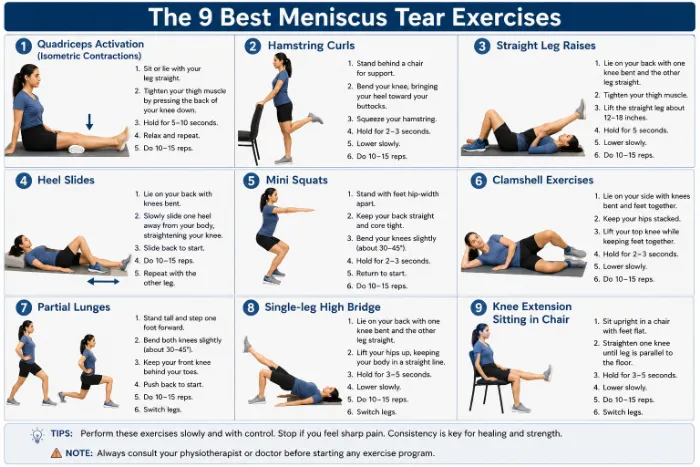
The 9 Best Exercises for Meniscus Tear
Introduction:
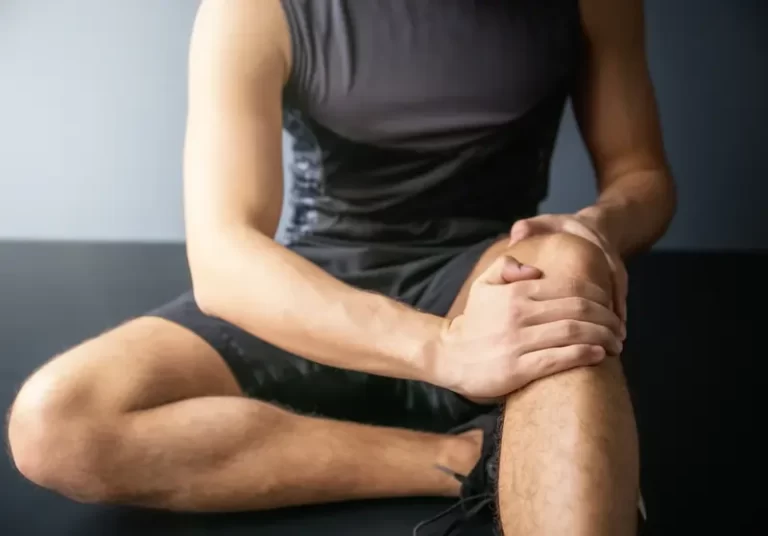
Few things are more painful when it comes to maintaining fitness and health than being hurt. Meniscal tears and other knee problems are very common. The movement within the knee joints is supported and protected by the meniscus, a little disc with a crescent shape. Meniscus tears can seriously affect daily living, making even the most basic tasks difficult, whether they happen due to abrupt trauma or progressive wear and strain.
Even though a meniscus tear might be an issue, it’s vital to keep in mind that certain exercises and the appropriate support from a physical therapist can be extremely helpful in lowering pain, improving mobility, and improving knee function.
What is a meniscus tear?
The meniscus, a layer of cartilage in the knee, has lots of important roles. It assists:
reducing trauma from walking and other activities, distributing loads over the knee joint, and giving the knee stability.
Severe strain, sometimes from activity, can result in a tear. Common signs and symptoms include:
- pain
- swelling
- clicking
- catching
- locking
- weakness
Vigorous military soldiers and other highly active individuals are more likely to sustain this injury. For men over 40, the risk is often greater.
Common Causes and Symptoms of a Meniscus Tear
Meniscus tears don’t usually demand notice. They can occasionally be subtle enough to be ignored until it’s too late. Sports like football, basketball, and tennis—anything involving rapid turns or sudden direction changes—are typically the cause. However, it can also happen when you rise too quickly from a squat.
The following are typical indicators that your meniscus may have been torn:
- Knee pain, particularly while bending or turning
- Swelling that gets worse over several days or hours
- Restricted range of motion or stiffness
- The knee’s locking or catching feeling
- Uncertainty, as if your knee could move out
Recovery phases:
Less severe meniscus tears can heal in four to six weeks with physical therapy and rest. Surgery may be required for others, and recovery may take up to six months.
Doctors may suggest mild activities for patients with less serious tears.
These exercises are usually a little uncomfortable. But stop exercising if it hurts.
The 9 Best Meniscus Tear Exercises
The meniscus tear treatment consists of the following exercises:
Quadriceps Activation (Isometric Contractions):
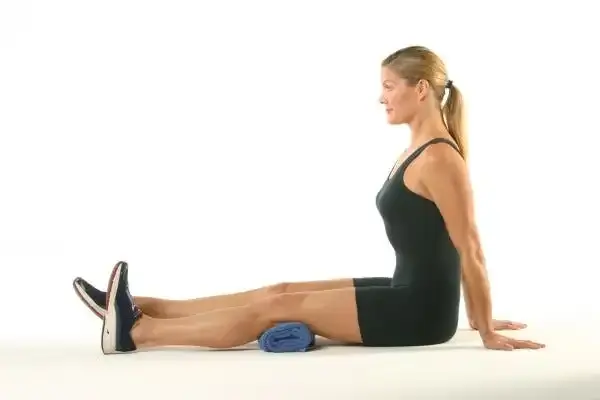
Strengthening the muscles surrounding the knee joint without increasing the strain on the meniscus can be done gently but effectively by stimulating the quadriceps.
- Look for a comfortable location to sit or lie down.
- Make sure your body is at rest and your back is straight.
- Focus on your quadriceps, the muscles in the front of your thigh.
- Tighten your quadriceps as much as you can without shifting your leg.
- Allow your muscles to relax by gently releasing the contraction.
Hamstring Curls:
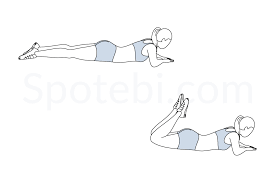
Improving your hamstring strength improves the knee joint’s full support.
- Start by resting on a level surface, like an exercise mat, face down.
- Bend your knees to bring your heels closer to your glutes while maintaining your pelvis on the mat.
- To highlight the contraction, hold the position for a short while.
- Return to the beginning posture by slowly extending your legs.
Straight Leg Raises:
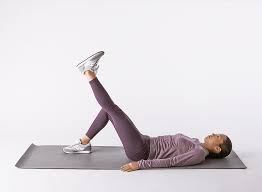
The purpose of straight leg lifts is to increase range of motion and work several knee muscle groups.
- Start on a comfortable surface, such as an exercise mat, and lie flat on your back.
- To get it flat on the ground, bend one leg while straightening the other.
- Lift the straight leg slowly up to the ceiling.
- After holding the elevated position for a little while, carefully return your leg to the beginning position.
Heel Slides:
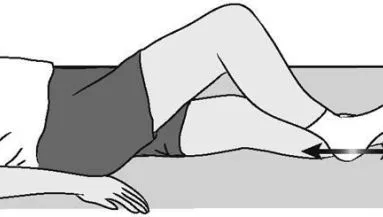
The goal of heel slides is to increase knee flexion, which is necessary for daily movements like walking and stair climbing.
- To begin, lie flat on your back on an exercise mat or other comfortable surface.
- First, pick one leg.
- To ensure a smooth and controlled action, gently bend this knee and slide your heel along the surface.
Mini Squats:
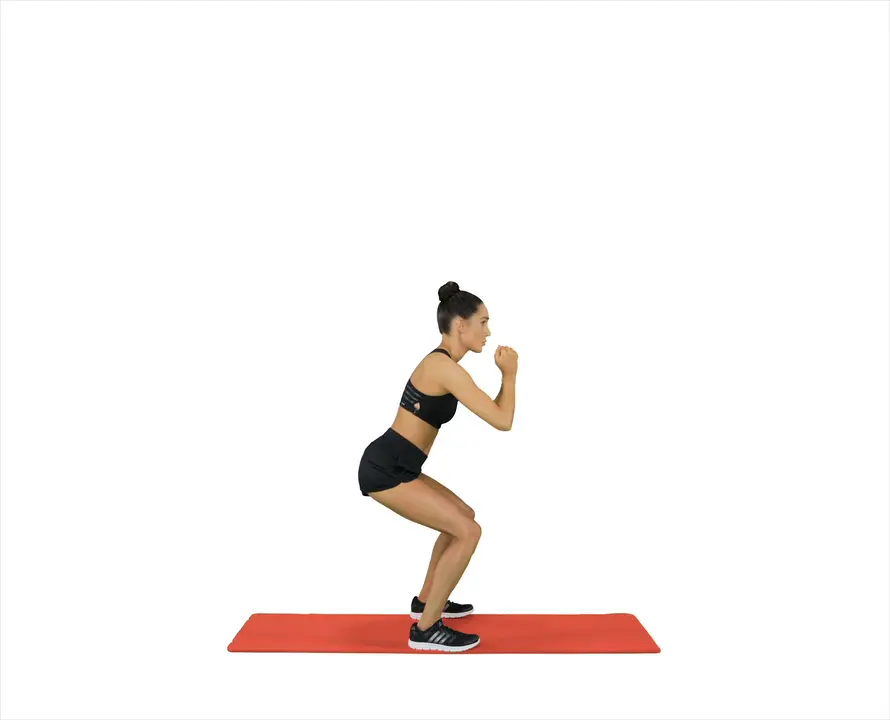
Mini squats under the supervision of a physical therapist can be very helpful as your knee strength increases.
- Place your feet shoulder-width apart as you stand.
- Maintain your weight balanced over your feet; gradually bend your knees.
- Your thighs might not be parallel to the floor since a tiny squat differs from a full squat.
- To go back up to the beginning position, push through your heels.
Clamshell Exercises:

The hip abductor muscles, which are essential for maintaining knee stability, are the focus of clamshell exercises.
- On an exercise mat, lie on your side with your head, shoulders, and hips in line and your legs bent at a 90-degree angle.
- During the exercise, make sure your heels stay in contact.
- Raise your upper knee as high as you can without shifting your pelvis while keeping your feet together.
- Return your knee to the beginning position gradually.
Partial Lunges:
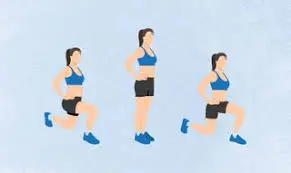
As your knee gains strength and range of motion, partial lunges are a great development.
- Place your feet hip-width apart and stand upright.
- Step forward on one leg.
- Half-lunge: Bend both knees and lower yourself into a half-lunge.
- To get back to the beginning position, push through the heel of your front foot.
Single-leg high bridge:
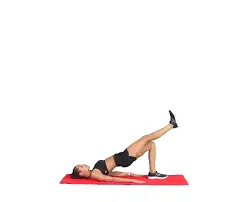
- Bend both knees and place your feet flat on the floor, hip-width apart, while lying on your back.
- Squeeze your buttocks and contract your abdominal muscles.
- Keeping the thighs in alignment, raise one foot off the ground and extend that leg.
- To raise your hips and create a straight line with your shoulders, hips, and supporting knee, push through the heel of the supporting leg.
- Maintain a level pelvis while holding the bridge for three to five seconds.
- Return your hips to the floor slowly and steadily.
- On one leg, perform 8–12 repetitions before switching to the other leg.
- After two to three sets, take a 30- to 60-second break.
Knee extension sitting in chair:
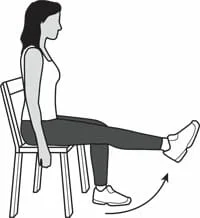
- With both feet flat on the ground and your back straight, take a seat erect on a firm chair.
- Tighten the quadriceps, the muscles on the front of one thigh.
- Gradually extend your leg until it is nearly parallel to the floor by straightening your knee.
- Maintaining a tight thigh muscle, hold the position for three to five seconds.
- Return your foot to the beginning position gradually.
- After ten to fifteen repetitions, transfer to the opposite leg.
- Perform two to three sets once or twice a day, or as your physiotherapist advises.
Exercises to Avoid with a Torn Meniscus:
Understanding which exercises to avoid is just as important as knowing which ones to perform for a torn meniscus. The following exercises should be avoided, particularly in the early and middle phases of recovery, as they place undue compressive or rotational forces on the meniscus.
- When performing deep squats, bending past a 90-degree angle compresses the meniscus.
- Lunges, particularly those that are deep or walking.
- Sports like basketball, tennis, and soccer include twisting or turning, as does any knee-rotating motion.
- A painful range of full-arc leg extensions and deep leg presses.
- Running, leaping, and strength training are examples of high-impact exercises.
- Combining any of the above with heavy free weights.
Why do some exercises make a meniscus tear worse?
The meniscus, a C-shaped pad of cartilage, supports your knee. When it tears, the torn edge between the bones is squeezed by deep bending and twisting, which results in pain, catching, and swelling. Early on, the objective is to strengthen the muscles that support the knee, particularly the hamstrings and quadriceps, without pushing the joint into postures that aggravate the rupture.
A simple rehab progression:
There are stages to recovery:
- Phase 1: Calm and protect (days 1–14): start with mild quad sets, heel slides, and straight-leg raises; reduce swelling with rest, ice, and elevation.
- Phase 2: Restore normal strength and mobility (weeks 2–6). Include calf training, hamstring curls, and mini-squats while maintaining pain-free range.
- Phase 3: Gain strength and resume activities (6 weeks or more): advance resistance training and low-impact conditioning, such as stationary cycling; resume sports only once cleared.
Is walking or cycling okay?
Yes, most of the time. As long as they don’t cause severe pain, walking on level ground and stationary cycling with minimal effort are two of the safest ways to keep the knee moving. They maintain the joint’s mobility while avoiding the severe bending and twisting that cause a tear.
The Benefits Of Exercise For Meniscus Tears:
Exercises for a torn meniscus in the knee can be a powerful aid in your recovery, even though it may seem unusual to do so. Here are some reasons why knee injuries may benefit from exercising under the supervision of a physical therapist:
- Reducing Pain and Inflammation: Sedentary behavior can worsen pain and inflammation after a knee injury, despite what may initially seem true. Gentle exercises can ease discomfort and aid healing.
- Restoring Flexibility and Range of Motion: Meniscus tears can cause the knee joint to become rigid, which restricts range of motion. The knee can maintain its range of motion throughout the rehabilitation process and beyond with the correct exercises.
- Strengthening the Muscles Around the Knee: Strengthening the muscles supporting the knee joint is one of the main objectives of training during meniscus tear rehabilitation. Strong muscles lessen the strain on the meniscus by adding stability.
- Improving Complete Joint Stability: Increasing the knee’s strength and flexibility can help improve the joint’s overall stability. This is very crucial to avoid further problems and injuries.
Physical Therapy for Knee Injuries
In order to provide individualized advice on what meniscus rehabilitation exercises are safe and effective, physical therapists use their expertise to diagnose and assess the severity of the injury.
While some meniscus injuries can be handled conservatively, some may need surgery. For every stage of treatment, physical therapists will offer the appropriate exercises. Exercises for a torn meniscus without surgery may be comparable to those for meniscus surgery, but they will depend on the type of surgery.
The Significance of Professional Advice:
Since each meniscal tear is different, your workout regimen should be customized to your particular injury and stage of rehabilitation. For a safe and successful recovery, it’s critical to adhere to your orthopedic surgeon’s and physical therapist’s recommendations. During any exercise, stop and speak with your care team if you feel more pain, edema, or instability.
FAQs:
What is the best exercise for a torn meniscus?
Gentle workouts that strengthen the quadriceps and hips without deep twisting or significant impact are ideal for meniscus tears. Straight leg lifts, quad sets, and mini-squats (15-degree bends) are great fundamental exercises for knee stabilization.
Can you recover 100% from a meniscus tear?
Depending on the location of the rip, your age, and the kind of therapy, a 100% recovery is feasible. Blood supply, tear size, and joint stability are important considerations.
Is walking ok for a meniscus tear?
For a meniscus tear, walking is usually safe as long as you keep it brief, remain on level ground, and stop if you have severe pain.
How to fix a meniscus tear naturally?
With the RICE technique, activity moderation, and focused physical therapy, a small meniscus tear may frequently heal on its own. Resting the joint and strengthening the surrounding leg muscles are crucial for healing.
Can a meniscus tear heal without surgery?
Actually, a meniscus tear can mend without surgery, particularly if it is minor, stable, or situated in the meniscus’s outer third, which has a healthy blood supply.
References:
- Hunter, C. W., Deer, T. R., Jones, M. R., Chien, G. C., D’Souza, R. S., Davis, T., Eldon, E. R., Esposito, M. F., Goree, J. H., Hewan-Lowe, L., Maloney, J. A., Mazzola, A. J., Michels, J. S., Layno-Moses, A., Patel, S., Tari, J., Weisbein, J. S., Goulding, K. A., Chhabra, A., . . . Strand, N. (2022). Consensus Guidelines on Interventional Therapies for Knee Pain (STEP Guidelines) from the American Society of Pain and Neuroscience. Journal of Pain Research, Volume 15, 2683–2745. https://doi.org/10.2147/jpr.s370469
- Beaufils, P., Becker, R., Kopf, S., Englund, M., Verdonk, R., Ollivier, M., & Seil, R. (2017). Surgical management of degenerative meniscus lesions: the 2016 ESSKA meniscus consensus. Knee Surgery Sports Traumatology Arthroscopy, 25(2), 335–346. https://doi.org/10.1007/s00167-016-4407-4
- Puddu, G., Cipolla, M., Cerullo, G., Franco, V., & Giannì, E. (2009). Which osteotomy for a valgus knee? International Orthopaedics, 34(2), 239–247. https://doi.org/10.1007/s00264-009-0820-3
- Sihvonen, R., Englund, M., Turkiewicz, A., & Järvinen, T. (2016). Mechanical symptoms as an indication for knee arthroscopy in patients with degenerative meniscus tear: a prospective cohort study. Osteoarthritis and Cartilage, 24(8), 1367–1375. https://doi.org/10.1016/j.joca.2016.03.013
- Lee, D. W., Ha, J. K., & Kim, J. G. (2014). Medial Meniscus posterior Root tear: A Comprehensive Review. Knee Surgery and Related Research, 26(3), 125–134. https://doi.org/10.5792/ksrr.2014.26.3.125
- Yang, S., Zhang, S., Li, R., Yang, C., Zheng, J., Wang, C., Lu, J., Zhang, Z., Shang, X., Zhang, H., Wang, W., Li, W., Huang, J., Zhang, Y., Wang, J., Wang, Y., Zheng, X., Chen, G., Hua, Y., . . . Li, J. (2023). Chinese Experts Consensus and Practice Guideline on Discoid Lateral Meniscus. Orthopaedic Surgery, 15(4), 915–929. https://doi.org/10.1111/os.13687