Top Exercise For Neck Arthritis
Introduction:
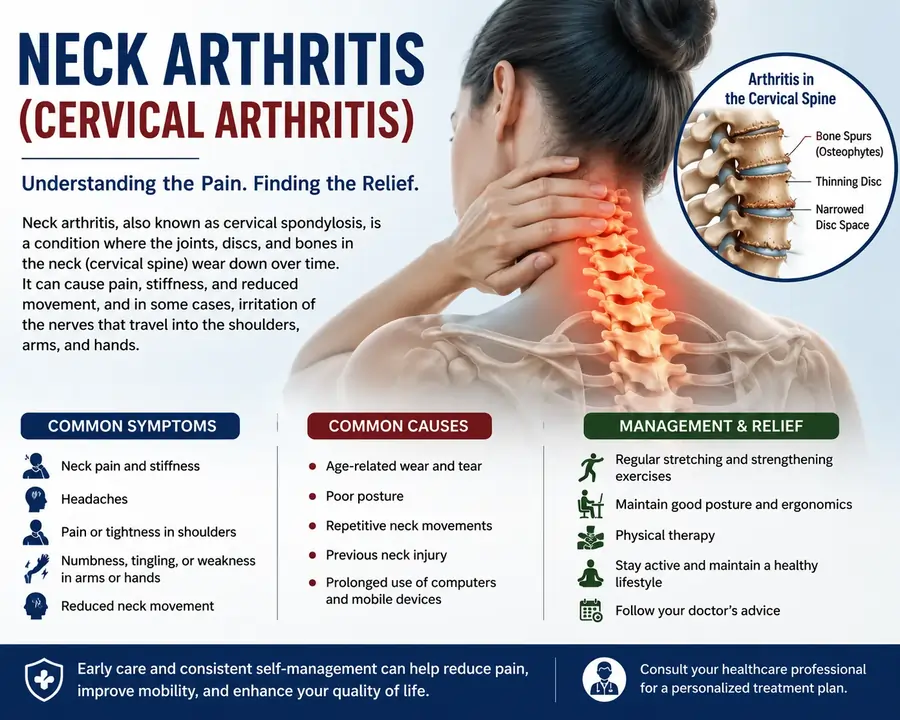
Neck arthritis, also known as cervical arthritis or cervical spondylosis, is a common age-related condition that affects the joints, discs, and bones of the neck (cervical spine). Over time, the cartilage that cushions the joints gradually wears down, causing stiffness, pain, and reduced flexibility. Although it is more common in people over the age of 50, neck arthritis can also develop earlier due to poor posture, repetitive neck movements, previous injuries, or prolonged use of computers and mobile devices.
Many people with neck arthritis experience mild symptoms, while others may develop persistent neck pain, headaches, muscle tightness, or a grinding sensation when moving the neck. In some cases, the condition can irritate nearby nerves, leading to pain, numbness, tingling, or weakness that radiates into the shoulders, arms, or hands.
The good news is that most cases of neck arthritis can be managed effectively without surgery. A combination of regular stretching, strengthening exercises, posture correction, ergonomic adjustments, physical therapy, and healthy lifestyle habits can help reduce pain, improve neck mobility, and prevent the condition from worsening.
Early diagnosis and appropriate treatment play an important role in maintaining an active, pain-free lifestyle and improving overall quality of life.
What to know about neck arthritis?
A person with neck arthritis may have pain and stiffness in their neck. It is often caused by wear and stress on the spinal discs, although there are many types with different ways to treat them. A person with neck arthritis may have discomfort and stiffness in their neck. It is often caused by wear and stress on the spinal discs, although there are many types with different ways to treat them.
Approximately 85% of those over 60 have neck arthritis. Most of the time, symptoms can be managed without surgery. With the correct course of therapy, people with the illness can maintain a high standard of living.
Causes:
The primary cause of neck spondylosis is ageing.
Your spinal disks, which are the rubbery cushions between your spinal bones, dry out as you age. Degenerative disk disease is the term for this condition. It may result in several further alterations to the structure of your spine,
- such as:
Bones in your spinal joint rub against each other - Bone spurs on your vertebrae. Changes in your spinal alignment
- Herniated or bulging disks
- Reduced disk height
- Narrowing of the space (spinal stenosis)
Symptoms:
- Pain in the neck
- A stiff neck
- A knot or lump in your neck
- Headache
- Trouble sleeping
- Loss of balance
- Radiating pain to the arm
- Weakness in the hand
- Loss of bladder and bowel control
- If your neck pains or feels stiff for more than a few days, see a doctor.
You can experience additional symptoms if changes in your spine put pressure on your spinal cord. For instance, you may experience mobility problems, muscular spasms, or numbness.
Risk factors:
Cervical spondylosis is a normal and anticipated condition. However, multiple factors can speed up or worsen the process,
- such as: Performing tasks that require spending hours each day staring up or down
- Having a family history of cervical spondylosis
- A history of neck injuries
- Being overweight
Complications:
This condition’s complications
If a spinal cord injury results from neck spondylosis, complications may occur. There are mostly two kinds:
- Cervical myelopathy: A condition that occurs when the spinal cord in your neck is compressed. It might cause numbness or weakness in your hands.
- Cervical radiculopathy: A pinched nerve in your neck is known as cervical radiculopathy. It may result in “pins and needles,” muscular weakness, and pain that extends down your arm.
Chronic neck pain can also be caused by cervical spondylosis. Your quality of life may be significantly impacted by each of these issues. Therefore, it’s critical to seek medical attention as soon as you have symptoms.
Types of neck arthritis:
A person may develop neck arthritis if they have chronic neck pain that does not go away with time.
Below, we examine the many forms of neck arthritis that a person might experience.
Cervical spondylosis
The medical word for osteoarthritis affecting the neck’s spinal joints is cervical spondylosis.
One kind of joint illness that gradually weakens joint tissues is osteoarthritis (Trusted Source). It frequently affects the neck and is the most prevalent kind of arthritis in older persons.
Starting at the base of the skull, seven little vertebrae make up the cervical spine, which supports the neck. Between the vertebrae, the intervertebral discs act as shock absorbers. The disks may start to deteriorate due to wear and tear as a person ages.
Rheumatoid arthritis
An autoimmune disease called rheumatoid arthritis (RA) occurs when a person’s immune system unintentionally targets their joint lining. Inflammation results from this.
In addition to causing instability and neck pain, RA often affects the cervical spine.
Psoriatic arthritis
Another autoimmune kind of arthritis is psoriatic arthritis.
It is often associated with psoriasis, a skin illness that produces inflammation in the joints. This illness commonly includes the neck and other spinal regions.
Diagnosis
When diagnosing neck arthritis, medical practitioners may request a medical history. When a patient first experiences symptoms, for example, a doctor might ask them to describe them.
Additionally, they could do physical examinations. These help in assessing the severity of an individual’s illness. A doctor may assess a person’s walk to look for any radiculopathy symptoms.
Imaging studies may be required to identify the site of neck arthritis if a patient has advanced symptoms, such as:
- CT scan
- MRI scan
- Myelography, which shows disk degradation
- Electromyography, which shows a person’s nerve health
- NCV
Treatment:
Depending on the kind of arthritis, the majority of patients with neck arthritis will need nonsurgical therapy.
Treatment usually consists of resting the neck and avoiding tension. Pain and stiffness can be reduced with the use of hot pads and ice.
- Additional nonsurgical techniques include:
- Corticosteroids used orally
- Steroids injections
- Muscle relaxants
- Acetaminophen is a pain reliever.
- NSAIDs (nonsteroidal anti-inflammatory medications), such as ibuprofen and aspirin
Physical therapy:
Such as a massage, a padded ring around the neck, and a soft cervical collar
Neck Flexion and Extension:
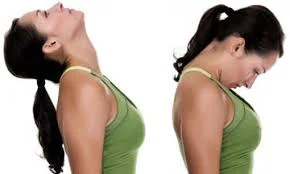
This stretch improves flexibility and mobility by working the front and rear of your neck:
Either sit in a chair or stand upright. Lower your head gradually until your chin comes into contact with your chest.
Maintain this posture for five to ten seconds. Then go back to where you were.
After that, tilt your head slightly back and maintain this posture for five to ten seconds.
Do the stretch five times in each direction.
Be aware that if you have spondylosis, a kind of OA in the neck, tilting your head slightly back may make your symptoms worse.
Please discontinue this portion of the exercise if this applies to you. To preserve mobility, carry on with the exercise if it doesn’t affect you.
Head tilt
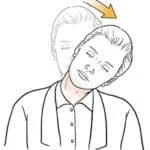
- The sides of your neck are worked by this opposite movement:
- Either sit on a chair or stand up straight.
- Keeping your left shoulder down, slowly tilt your head toward your right shoulder. To make the stretch more intense, it might occasionally be helpful to grip the bottom of your chair with your left hand.
- After holding this posture for five to ten seconds, bring your head back to the center.
- Holding your right shoulder down while tilting your head toward your left shoulder, repeat on the left side.
- For five to ten seconds, maintain this posture.
- Do this entire routine five times.
Neck Rotation:
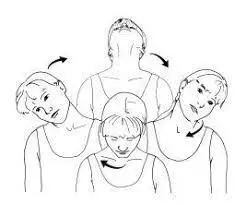
- Maintain proper posture whether standing or sitting.
- Maintaining a straight chin, slowly move your head to the right.
- Return to the center after holding this posture for five to ten seconds.
- For five to ten seconds, slowly move your head to the left. Next, go back to the middle.
- On each side, repeat five times.
Neck Retraction:
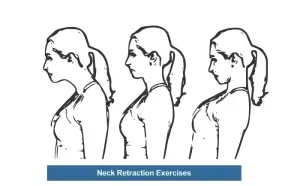
- This is how the back of your neck should feel:
- Sit down with your shoulders back and your head straight. Make a double chin by pulling your chin straight in.
- Hold this position for five to ten seconds and feel the stress in your neck.
- Go back to where you were.
- Do this five times.
Chin Tuck:
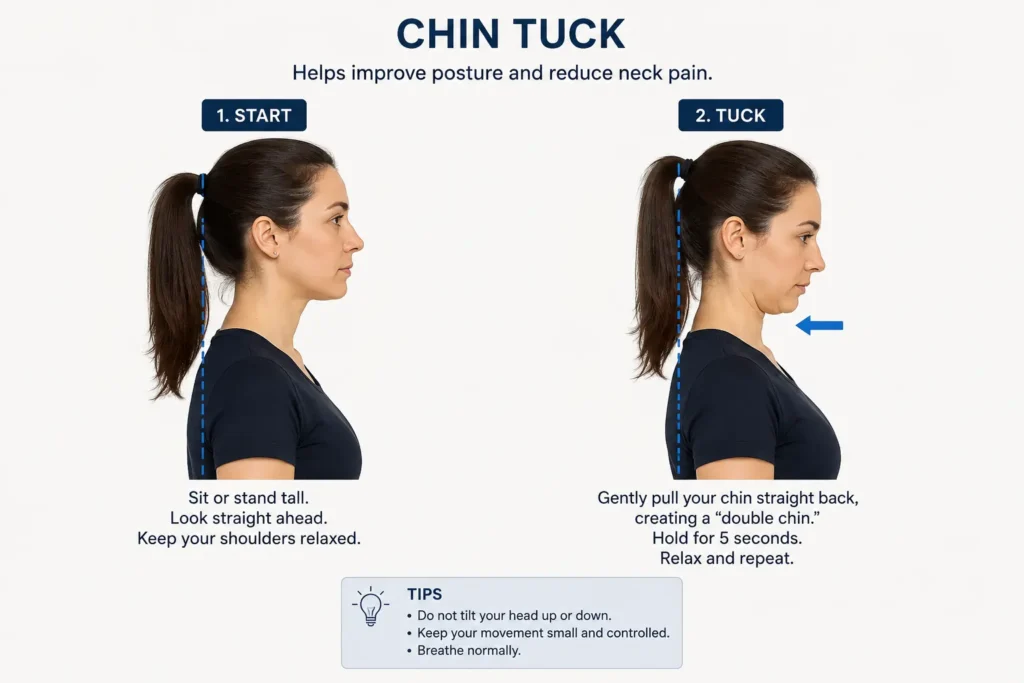
Chin tuck in the sitting position
You can perform chin tucks almost anywhere. Whether you’re seated or standing. It strengthens the muscles in your neck.
- Keep your chin parallel to the floor
- Straighten your head.
- Push your chin back toward your chest to form a double chin.
- Move the back of your head away from the base of your neck while keeping your chin tucked in.
- Take three deep breaths while maintaining this position.
- Repeat with your chin in its typical posture.
Chin tucked in supine position:
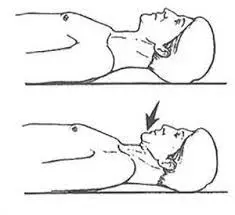
- It’s a great idea to stretch just before getting out of bed in the morning. Rest flat on your back with a small towel roll under your neck.
- Put your chin in.
- Repeat with your chin in its typical posture.
Standing with your chin tucked against a wall:
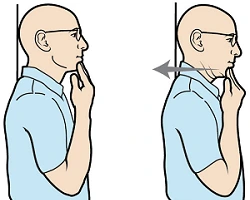
This exercise will help you with your posture.
- Place your shoulders, back, and head flat on a wall.
- Put your chin in.
- Hold for a short while.
- Repeat with your chin in its typical posture.
- Place both arms, palms out, on the wall while maintaining the same starting position.
- Your arms should be raised and lowered in reference to the wall.
- Whether you’re seated or standing, tuck one hand’s two fingers into your chin.
- Bring your head closer to your chest by applying a little pressure with your other hand on top of your head until you feel a stretch. Hold the stretch for 20 seconds.
Stretching the Upper Trapezius and Scalene:
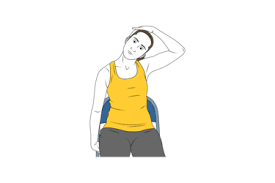
This will stretch the neck and upper back muscles (Scalene & Upper Trapezius), which can become quite stiff in individuals with forward neck syndrome.
- Either rise or take a seat to begin.
- Place one hand on the opposite side of your head and the other behind your back.
- Now bring your head down to your shoulder.
- For a deeper stretch, gently press your head down while placing your hand on top.
- After completing both sides, hold for 20 to 30 seconds.
Shoulder Roll:
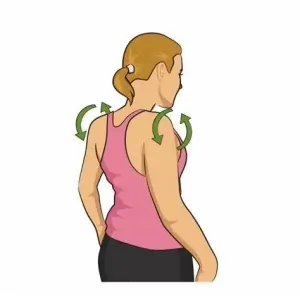
- Don’t ignore your shoulders as you focus on your neck. Exercising your shoulders will strengthen the muscles that support your neck.
- A simple, fundamental exercise to maintain the fluidity of your neck and shoulder joints is the shoulder roll:
- Place your feet shoulder-width apart and take a seat or stand.
- In a single fluid action, roll your shoulders up, back, and down.
- Do this five times.
- Next, roll your shoulders up, forward, and down five times in reverse.
Posture alignment:

- Improved posture not only reduces pain but also improves strength and flexibility. Numerous exercises are beneficial.
- Knowing what proper posture is for walking, sitting, and standing is a great place to start.
- If you spend a lot of time using a computer at a desk, maintaining good posture is very important.
- To maintain proper posture while working:
- Make use of a chair that provides back support.
- Keep your feet flat on the ground, use a mouse that doesn’t strain your wrists, position your keyboard so that your hands and wrists are not strained, and put your screen at eye level.
- Proper posture requires awareness as well as practice. By exercising and forming healthy habits, you might try to improve your posture when bending over. For example, keep your phone or other screen at eye level to prevent bending over it.
Exercises to avoid
- Understanding which exercises could make stiffness worse might also be useful before working out.
- There isn’t any reliable clinical data at this time to suggest that certain activities improve or aggravate neck pain.
- A combination of manual treatment, strength training, stretching, and movement retraining is suggested by best practices.
- Exercise, however, is thought to be among the most successful ways to relieve persistent neck pain.
- When selecting the best exercise routine for your body, pay attention to any painful symptoms. You can then determine what works and what doesn’t.
- To prevent an arthritic flare-up, be aware of these movements both during exercise and in your routine:
Things to avoid
A person with neck arthritis should try to avoid the following:
- Smoking: This makes certain drugs less effective.
- Inappropriate computer stance: When spending a lot of time at a desk, it’s important to make sure your chair supports your neck and back.
- Poor posture: One should strive to avoid slouching and adopt proper posture.
Conclusion:
Neck arthritis is a common condition that can cause pain, stiffness, and limited movement, but it does not have to prevent you from living an active and healthy life. With early diagnosis, proper posture, regular exercise, physical therapy, and healthy lifestyle habits, most people can successfully manage their symptoms and improve their neck function. Gentle stretching and strengthening exercises help maintain flexibility, reduce discomfort, and support the muscles that protect the cervical spine.
If your symptoms are severe, persist despite self-care, or include numbness, tingling, weakness, or loss of balance, it is important to seek medical evaluation promptly. A personalized treatment plan can help relieve pain, improve mobility, and prevent further complications. By staying consistent with your exercises and making simple ergonomic adjustments in your daily routine, you can protect your neck, reduce flare-ups, and enjoy a better quality of life.
FAQs
What is the most effective way to treat neck arthritis?
A combination of conservative, non-surgical treatments is the most effective way to treat cervical spondylosis, or neck arthritis. Physical therapy and focused exercise to strengthen the neck and upper back are the core of therapy, with over-the-counter NSAIDs (like ibuprofen) helping to control discomfort and inflammation.
When does neck arthritis first appear?
Cervical spondylosis, or neck arthritis, often first appears in your 30s and 40s. Up to 90% of people show symptoms by the age of 60, since it is a normal “wear and tear” process. But not everyone who has it shows symptoms.
How may neck arthritis be identified?
A medical professional must do a clinical assessment in order to diagnose cervical spondylosis, or neck arthritis. A thorough medical history and physical examination to assess your neck’s range of motion, muscular strength, and reflexes are usually the first steps. Doctors sometimes request imaging tests—such as X-rays, MRIs, or CT scans—to see bone spurs, joint space constriction, and nerve compression.
Which sleeping posture is ideal for those with neck arthritis?
With neck arthritis, sleeping on your side or back is preferable to sleeping on your stomach. To keep your spine neutral, use a memory foam support or a shaped cervical pillow. Your head and neck should not lean too far to one side, up, or down…
What should you avoid doing if you have neck arthritis?
You should avoid wearing soft cervical collars, sleeping on your stomach, holding your phone between your shoulder and ear, and hard stretching if you have neck arthritis. Additionally, you should stay away from demanding, startling activities like heavy lifting, contact sports, and neck-straining exercises like overhead presses or sit-ups.
What causes arthritis pain in the neck?
When the protective cartilage on the vertebrae and facet joints deteriorates, neck arthritis (cervical spondylosis) develops. Painful friction, inflammation, and the development of bone spurs (osteophytes), which can squeeze adjacent nerves and restrict the spinal canal, are all caused and on by this wear and strain.
References:
- Cervical spondylosis. (2026, February 5). Cleveland Clinic. https://my.clevelandclinic.org/health/diseases/17685-cervical-spondylosis
- Pollock, D. M. (2022, December 23). What to know about neck arthritis. https://www.medicalnewstoday.com/articles/neck-arthritis
- Watson, S. (2022, February 23). 5 neck exercises for arthritis. Healthline. https://www.healthline.com/health/osteoarthritis/neck-exercises