Shoulder Blade Pain
Introduction
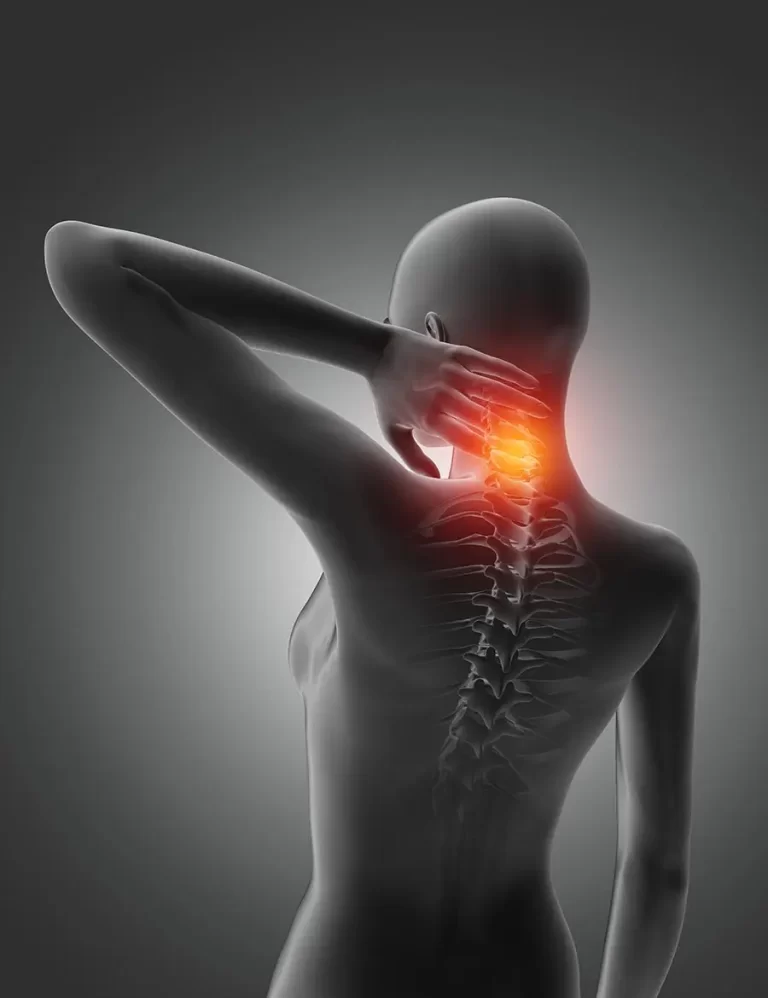
Shoulder blade pain, also known as scapular pain, is a common complaint that affects people of all ages and activities. The shoulder blade, also known as the scapula bone, is a triangular-shaped bone on the upper back that joins the upper arm bone (humerus) to the clavicle.
Shoulder blade tenderness can be described as a dull pain, intense pain, or a chronic, nagging sensation that commonly spreads to the neck area, upper back area, and arms. This discomfort can be caused by a variety of circumstances, including muscular strains, accidents, and more significant underlying medical issues.f
The scapula, or shoulder blade, is the bone that connects the clavicle bone to the humerus. The scapula bone makes up the posterior side of the shoulder girdle. It’s a strong, flat, triangular bone.
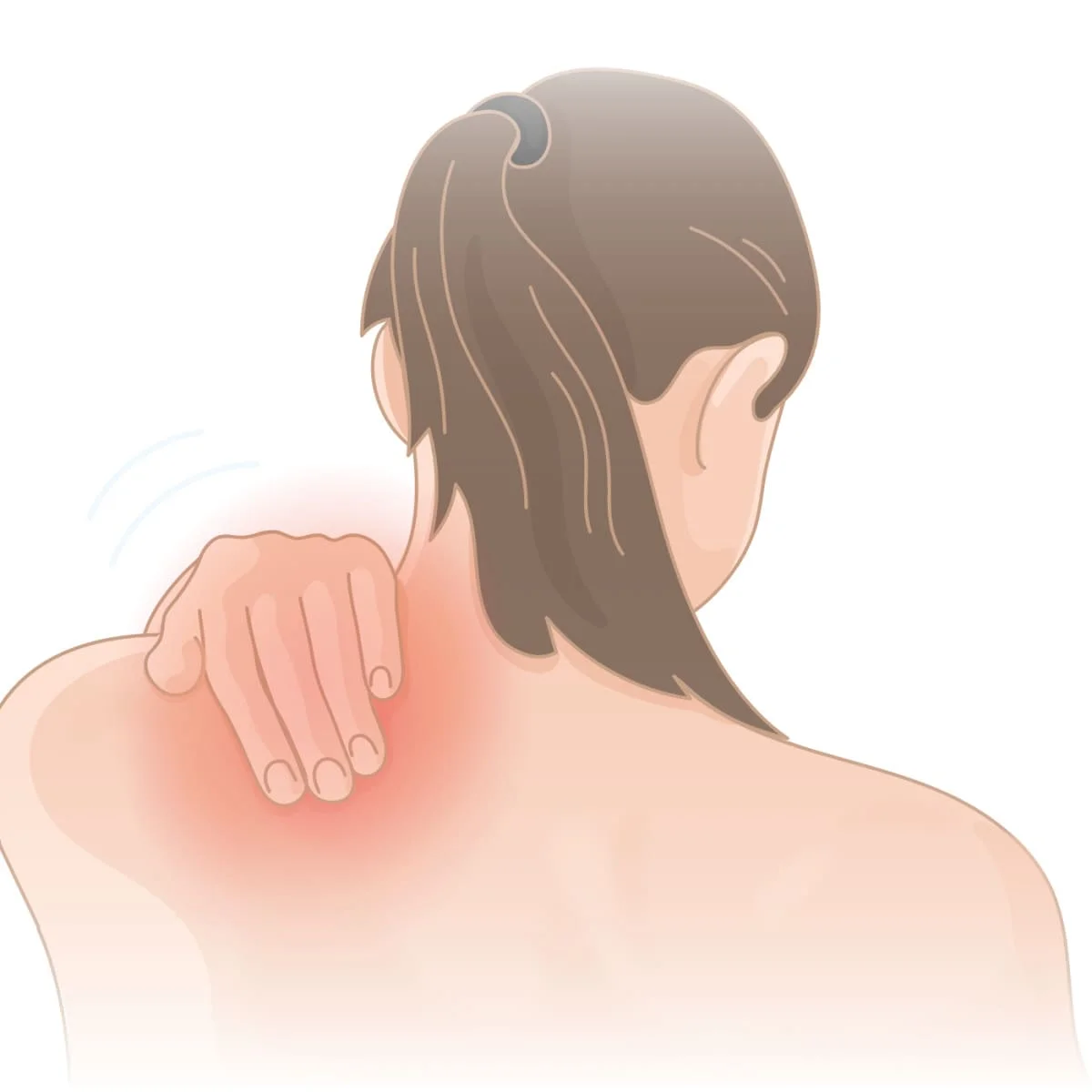
People with shoulder pain typically experience tingling, dull pain, or shooting pain in the upper back between their shoulder blades. The region around or behind the shoulder area is sore. It aches. However, in other circumstances, it might indicate a more serious health issue.
Cause Of Shoulder Blade Pain
There are several possible reasons for pain between your shoulder blades. Damage to a shoulder area muscle or tendon around the shoulder blades is a common cause of this pain. More serious complications are possible.
- Muscle strains
- Muscle strains can occur as a result of poor posture, heavy lifting, prolonged computer usage, exercise, or even sleep. Injuries or trauma to other parts of the body can produce discomfort between the shoulder blades.
- Rotator cuff tears
- Spine fractures,
- Shoulder dislocations and other trauma-related conditions
Another cause of shoulder blade pain
- Degenerative disc disease
- Scoliosis
- Osteoarthritis-related problem in the joints around your neck area, spine, or ribs.
- Spinal stenosis (narrowing of the spinal cord) and acid reflux.
- Fibromyalgia and Shingles
- Myofascial Pain Syndrome
- Certain malignancies, such as lung cancer, lymphoma, liver cancer, esophageal cancer, mesothelioma, and tumors that spread to the bones.
- Nerve Compression
Heart attack. Shoulder blade pain is occasionally a reliable indicator of a heart attack, particularly in women. Other symptoms may include chest discomfort and shortness of breath.
Aortic tear. Thoracic aorta rupture, also known as aortic dissection, happens when there is a rip or rupture in the internal layer of the aorta, a major blood vessel that branches out from the heart. This might result in a sudden, intense aching in the upper middle back area.
Pulmonary embolism. People who have a pulmonary embolism describe a sudden, acute pain in their shoulder blades, which is often accompanied by shortness of breath. This can occur when blood clots in their legs break off and go to their lungs.
Symptoms
The scapula, commonly known as the shoulder blade, is a wide, flat, triangular bone placed midway up the back. You have two of them: one on each side of the patient’s back.
A network of muscles supports and attaches to the scapula bone, allowing it to move and stay in place. These muscles allow you to move your arms in all directions.
When an accident or condition weakens or destroys these muscles, the posture of the scapula may shift. The dyskinesia condition refers to a change in the position or mobility of the scapula.
Shoulder blade pain may be caused by more serious conditions such as heart attacks, cancer, or blood clots.
Symptoms of shoulder blade pain may include
Symptoms of scapula pain include weakness in the affected arm, limited range of motion, cracking sounds when moving the shoulder, visible projection of the scapula (known as “winging”), and tilted body posture on the affected side.
Anatomy
Our shoulder blades (medically known as the scapula bone) are a vital feature of the shoulder joint region. The majority of the bone is triangular in form and lies over the rear section of our rib cage; there are three protrusions at the top.
The acromion is an oblong protrusion from the top of the shoulder joint that provides a bridge over the rotator cuff muscles and forms a junction with the collar bone (clavicle).
The coracoid process is a smooth, hook-shaped protrusion in the front of the shoulder region.
The scapula may move up (elevation), down (depression), forward (protraction), backward (retraction), and rotate up and down.
Nerve problem
- Tingling, pins & needles
- Numbness and weakness are common symptoms of nerve disorders. Other locations near the shoulders may also experience symptoms. One or both arms or shoulders may be simultaneously affected.
The bursitis
Patients with shoulder bursitis may have persistent, dull, throbbing shoulder blade pain that is accompanied by grating, cracking, or crepitus sounds or sensations when they move their arms.
Posture
Patients may complain of an excruciating ache in the space between their shoulder blades that seems to become worse after spending a lot of time in one posture (such as working at a computer).
Muscle Problems
Patients report a dull aching that seems to worsen with arm movement and gets better with rest. This usually affects only one arm or shoulder simultaneously.
- Muscle strain
Patients have dull pain, throbbing shoulder or shoulder blade area pain that seems to worsen with arm motions and becomes better with a rest period. Their shoulder ache hardly ever radiates down their arm.
A new fitness regimen
Repeated overhead arm exercises, such as lifting or transferring weights, carrying bulky items, such as a backpack, and sleeping uncomfortably
According to the patient, it usually manifests as a dull ache around one or both shoulder blades that worsens with activity and becomes better with rest. The region may also be sensitive to the touch.
These pains and sensations typically do not extend downward into the hand.
In addition to hearing or experiencing crepitus (popping and cracking noises) that worsen with arm motions, patients describe deep, dull, and aching pain across their shoulders and shoulder blades. Additionally, patients may suffer from arm weakness. These kinds of conditions might appear gradually due to usage or degeneration, or they can appear quickly due to an accident.
Only one side may experience this type of pain as it moves down the arm and into the shoulder blade area.
Trigger points, also known as myofascial trigger points, are sensitive, pea-sized lumps in the muscle that are typically created when muscles are kept in shortened postures as a result of overuse or poor or unnatural posture (ergonomics).
Small, tight bands in the muscular fascia are called trigger points. They typically occur in the shoulder blade region and are characterized by a dull, deep, aching pain that may radiate down to the arm.
Diagnosis
Your doctor may also do tests on your body’s muscular and resistance capabilities in order to identify the reason of your shoulder blade disease.
Additionally, they could order imaging tests such as
- CT scan X-ray
- An MRI
Medical Treatment
- Take over-the-counter analgesics.
- Pain and inflammation can be quickly reduced by using over-the-counter medications. Ibuprofen, naproxen, aspirin, and paracetamol are all good choices.
- Your doctor will start the diagnosis process by going over your symptoms and medical history with you. After that, they will physically inspect your scapula and shoulder joint to identify any weak spots, sore spots, or tight areas.
Physiotherapy Treatment
Cross-body stretch
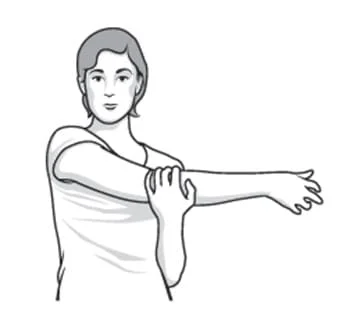
The rhomboid and trapezius muscles are used while reaching across the body, and shoulder pain may originate from any of these muscles. The cross-body stretch is one therapeutic exercise your therapist could recommend to stretch the trapezius and rhomboid muscles and lessen shoulder blade pain.
- Either sit upright on the edge of a sturdy chair/table or stand upright.
- Stretch your right arm slowly across your chest till your left hand can grasp it.
- For five to ten seconds, maintain this cross-body shoulder stretch position. A muscular stretch should be felt in the space between your shoulders. Pulling the right arm toward your chest with your left hand will intensify the stretch.
- Return to the beginning posture after releasing the stretch.
- To extend the other side, repeat these positions.
- Continue doing this until you have stretched the muscles in both shoulders.
Rounded-shoulders stretch
The shoulder muscles between your shoulder blades are used in motions that lead a patient to reach their arms in front of them. In order to lessen pain between the shoulder blades, they can also be used to stretch the shoulder muscles. Your physiotherapist may recommend the rounded-shoulders pull as an exercise that incorporates this type of action.
- Maintain proper posture while standing or sitting on the edge of a sturdy chair.
- Raise both arms slowly in front of you until they reach shoulder height.
- With the patient’s palms facing away from the patient, clasp your hands together.
- Lower your head to the side of your chest.
- Stretch the patient’s arms forward until you feel a muscle stretch between your shoulder blades and your shoulders are rounded. Use your muscles to move your shoulder blades apart.
- For five to ten seconds, maintain this muscular stretch.
- Take a ten-second break after returning to the starting position.
- Continue doing the previously mentioned actions until you have done so three times.
Arm circles:
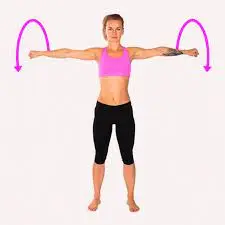
- With your arms straight down your sides and your feet shoulder-width apart, you are standing straight.
- Next, move your arms forward in large circles.
- Make sure your arms remain straight.
- After a few repetitions, move your arms in a circle backward by switching to the opposite way.
- Do this workout three times a day and ten times in a single session.
Shoulder rolls:
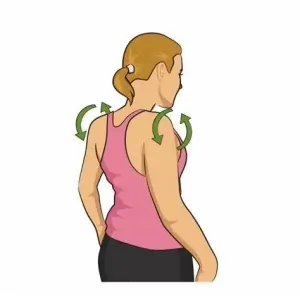
- You are either seated or standing.
- Start this exercise with your back straight and your arms by your sides.
- Next, carefully raise the patient’s shoulder joint in the direction of your ears.
- Return to the slow starting position after holding this exercise for 10 to 15 seconds.
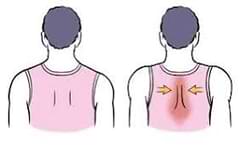
- You’re standing erect.
- Bring the elbow joint inward and back.
- Pull the blades of the shoulder joint back and down.
- Next, go back to where you were before.
- Do this workout three times a day and ten times in a single session.
Eagle arm stretch:
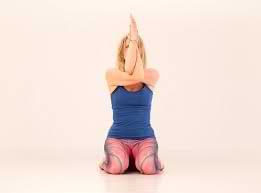
- Your feet are hip-width apart when you stand.
- Lift your arms to the sides as you inhale.
- Swing your arms in toward your body as you exhale.
- Next, let the right arm pass beneath the left.
- Place the left elbow joint into the crook of the right elbow joint.
- To reach for one another, start with your palms together.
- Hold the backs of your hands together while keeping your palms apart.
- Next, inhale deeply three or four times.
- With the left arm crossed beneath the right, release the stretch and repeat on the opposite side.
- Do this stretching exercise three times in one session and three times per day.
Surgical Treatment
surgery necessary to relieve shoulder blade pain and discomfort.
The doctor claims that almost all patients with shoulder blade pain respond to nonsurgical treatments such as medication, exercise, rest periods, and activity changes. Surgery is often saved for situations involving:
Severe pain in the shoulder blades
Inability to respond to more conservative measures
Scapular fractures and arthritis-related problems that can be surgically treated
If your doctor does suggest surgery, it may involve repair of tendons in your upper back or shoulder, or removal of scar tissue. Surgery to replace shoulder muscles may also be an option.
Prevention
- Maintaining proper posture is essential in day-to-day living.
- One of the easiest ways to avoid any shoulder blade problems is to practice good posture.
- Maintain proper posture every day by sitting up straight and avoiding slouching.
- You need to be adjusted to ergonomic office furniture, such as chairs and cushions.
- When using a computer or desk, one must only sit for brief periods of time and stretch often.
- Physical fitness
- Lifting big objects can potentially result in injuries, so always exercise caution when doing so. However, if you attempt to move a big object, your knee joint will initially flex.
- Warm up first at all times.
- Before beginning a workout or exercise session, always warm up with a little stretching.
- It helps patients avoid injury and prepare their muscles for activities.
- Keep up a healthy lifestyle at all times.
- Consume healthy food and get enough rest.
- Regularly perform the workout.
- Always look for strategies to deal with everyday stress and have a cheerful outlook.
Long-Term Outcomes
Your doctor could suggest flexibility and strengthening exercises. Once the reasons for your dyskinesis have been treated and normal scapular position and motion have been restored. This is particularly crucial if you perform hard or repeated shoulder and arm motions during work or during social activities. You should perform these exercises 3 to 5 times a week or as directed by your physician.
FAQs
What deficiency causes shoulder blade pain?
Physical conditions, including fibromyalgia, polymyalgia rheumatica, and ankylosing spondylitis, have also been mistakenly identified as symptoms of hypovitaminosis D, such as diffuse or migrating pain that affects several areas (particularly the shoulder, pelvis, ribs, and lower back).
Where is the pain in the shoulder blades?
The most common symptoms of shoulder blade pain are aching and/or discomfort around the scapula, particularly at the top and medial (inside edge). When you attempt to use the affected arm hard, it may seem weak or “dead.” Weariness caused by repeated activities, especially those performed upwards.
How can shoulder blade pain be prevented?
Ice packs: If shoulder pain occurs after an accident, applying a cold pack will help reduce swelling and numb the region.
Application of heat.
stretching.
Avoid hard lifting.
Make your posture better.
Painkillers
What signs of shoulder blade pain are present?
A restricted range of motion that makes it challenging to raise your arm over your shoulder; a cracking sound when you move your shoulder; a rounded posture on your affected side; and a noticeable protrusion of the scapula known as “winging.”
How are your shoulder blades massaged?
Your greatest massage tool is a foam roller or massage ball. Locate a sensitive place by rolling the foam roller or ball beneath your shoulder blade. Once you’ve located the point, carefully roll in a circle, up and down, or side to side. Spend at least a minute doing this. It should feel like a pleasant, liberating pain, like you’re breaking free of something. Use this massage technique once or even twice a day to feel nice.
References:
- Scapular (Shoulder blade) Disorders – OrthoInfo – AAOS. (n.d.). https://orthoinfo.aaos.org/en/diseases–conditions/scapular-shoulder-blade-disorders
- Patel, D. (2023, July 24). Shoulder blade pain – Cause, symptoms, treatment. Shoulder Blade Pain. https://samarpanphysioclinic.com/shoulder-blade-pain/