Malasana (Garland Pose)
Introduction:
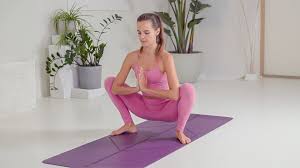
Garland Pose (Malasana) is a deep squat in which the feet are grounded, the spine is raised, and the sit bones are forced toward the floor. This deep squat involves a lot of movement, but its main function is to open the hips. Malasana, a basic Hatha yoga pose, is still used in contemporary yoga systems, but with certain changes.
Humans are naturally predisposed to do the movement and shape of the body in this yoga pose. In truth, squatting comes naturally to certain people, particularly small children. Humans have traditionally squatted for a number of years to prepare food, plant seeds, defecate, and perform other tasks. However, when they developed into modern, civilized beings, they began to use technology and sit on chairs. The natural sitting pose became increasingly irrelevant to a person’s everyday existence as technology advanced.
Malasana is a sitting pose in which the feet are slightly wider than hip-width, the toes point forward, the elbows push the inner thighs outward, the palms pull the knees apart in Anjali Mudra, and the sit bones push together toward the floor while the spine lengthens upward. This beginner-level pose’s intensity tests the entire body’s mechanics because it calls for stability and movement in the ankles, knees, hips, pelvis, and spine.
By keeping the arms and shoulders moving, the namaste position’s hands aid in chest expansion. This aids in releasing any shoulder and neck stiffness. Since the lower back, pelvis, and hips are the places where emotions are stored, the pushing action of the hips down and the rising action of the spine upwards help relieve any physical and emotional stiffness. Many pupils can profit from this fantastic practice because of its nature.
By relieving stiffness caused by either long desk yoga sessions or accumulated Apana Vayu (the downward flow of energy), teens can improve the stability and strength of their hips and pelvis through hip yoga. Additionally, including this practice in regular yoga, particularly in the morning, can benefit the digestive system (the pressure on the abdominal muscles helps enhance the operation of the colon).
When incorporated into prenatal yoga in the third trimester, this position can assist in easing pregnancy and facilitate natural birthing. The increased blood flow helps activate and balance the hormones and strengthens the uterus, which helps reduce menstrual issues. Therapeutic yoga can also use classic Hatha and Yin Yoga poses to help with sciatica, constipation, infertility, impotence, or irregular urination. This pose gradually calms the mind and grounds the soul. This enhances the body’s energy conduits and balances the chakras.
When done correctly, Malasana opens up the hip flexors, provides a deep stretch to the groin muscles, and releases the second, or Sacral Chakra (Swadisthana), which is in charge of the flow of creative, sexual, and reproductive energies. Your self-esteem is raised by this pose. It increases your self-awareness and boosts your confidence.
Garland Pose Hands On Heels, and Bound Garland Pose Forward Bend (Baddha Malasana Forward Bend) are two of the many versions of Malasana that are commonly featured in Iyengar Yoga. These poses can also serve as advanced exercises after Malasana. However, Garland Pose with Block Under Hips (to aid in stability), Garland Pose on Tiptoes (for complete beginners), or Garland Pose Blanket Under Heels (Malasana Blanket Under Heels) can be considered for learners who might find the practice of Malasana difficult (some may not be able to ground their feet, some may not be able to balance their body, etc.).
Since garland pose variations can be generated from garland pose, garland pose is regarded as a base pose. Garland Pose can be used in flow yoga sequences since it increases the body’s energy.
How to Do Garland Pose:
To get the most out of this pose, let’s learn how to enter Malasana. Here are detailed instructions:
- Stand in Tadasana by bringing your feet together. In this posture, raise your spine, pull in your stomach, and raise your shoulders and spine while taking a few deep breaths.
- In Namaste, bring your palms close to your chest and make your chest strong and expansive.
- Inhale deeply, then bend your knees and sit on your feet and soles as you exhale. Keep your feet together while keeping a space between your knees.
- When you are in this position with your legs bent, your lower back will be stretched rearward to provide you with initial balance because your body will be tilting forward. This is typical, although during the first few practice sessions, one may balance their body on their toes if they are unable to sit on their feet and soles.
- To become comfortable in this pose during the first practice sessions, one could also slightly separate the feet. To get the most out of the Garland Pose, however, one should try to sit with their feet together and their knees apart.
- With the elbows near the inner thigh, place the Namaste arms between your inner knees. To spread your knees further outward, gradually press your elbows deeper into your thighs once your body feels comfortable.
- In order to keep pushing your knees apart, place your hands on the floor near your feet if taking your arms in Namaste does not help you balance your body.
- Start inhaling and exhaling slowly, bringing the lower back and spine inward and straight with each exhale while keeping the elbows deep within the thighs. making sure the buttocks stay near the ankles.
- To exit the pose, place your palms on the ground, slowly raise your entire body, stand up, release your shoulders and back, and maintain your composure while breathing normally. In order to be prepared to return to Malasana for more comfort, bring the body back into Tadasana and take a few breaths here.
Benefits of Garland Pose:
The advantages of Malasana (Garland Pose) are as follows:
- Stretches, Strengthens, and Lengthens: Sitting in this squatting position strengthens the feet, ankles, knees, legs, and lower back while stretching the hips, groin, adductors (inner thighs), ankles, and back torso. Additionally, sitting upright in this position makes room in the spinal column and lumbar spine. The benefits of the Anjali Mudra’s hand placement are discussed in the link. However, the shoulder, elbow, wrist, and upper back are strengthened when the arms are actively used to press the legs apart.
- Flexibility and Range of Motion: Malasana is a deep hip opener that enables the practitioner to strengthen and reach the pelvic floor muscles. Frequent execution of this pose relieves all tension and stiffness in the lower back, legs, and hips. As a result, learners’ hip and knee joints become more flexible, making it easier for them to perform sitting meditation postures like Lotus Pose or Siddhasana. Additionally, the hands’ position strengthens the shoulders and chest and causes the muscles to grow, which enhances flexibility and blood flow.
- Chest, Diaphragm, Breath: Malasana is a little heart-opener while the hands are in Namaste Mudra. By enlarging the shoulders and chest, this exercise gives the ribs more room to grow. Consequently, the lungs’ capacity and function are improved.
- Awareness and Focus (Concentration): To get the most out of Garland Pose, it is crucial to open the hips, push the sit bones toward the floor (without touching it), lengthen the spine, look forward, contract the navel to keep the back supported, broaden the chest to open with the support of the shoulders, and ground the entire foot together. learners can gradually advance to more difficult poses like Garland Pose Hands Under Feet (which requires more awareness because the feet are balancing on the hands) and Squat Pose (which requires greater internal hip movement), to name a few.
- Alignment and Posture: Garland Pose is a useful technique to combat the tension that results from spending too much time in a chair. The lower abdominals and pelvic floor are raised by the solid base provided by the feet. Additionally, the upper back is engaged when the shoulders are widened, and the chest is raised forward by pressing the knees apart with the arms. This motion raises the base of the rib cage and diaphragm and permits the middle spine to lengthen. learners will eventually have a more toned body overall, with less hunchback, less excess belly fat, and generally more toned legs. Therefore, it can be included in power yoga poses.
- Energizing, De-stressing, and Relaxing: People’s stress levels have increased due to the modern lifestyle, and the majority of these consequences manifest as poor posture, which is caused by tense muscles in the thighs, lower back, and hips. As a result, as this grounding position is practiced, the hips gradually loosen up with extended stays, which finally lessens the tension. Conversely, the body is revitalized and energized by the better outward movement of air (apana), which clears the way for a new influx of prana. Stress levels are down, and the neurological system is relaxed when the body and mind are invigorated.
- Stimulation and Organs/Circulation and System: By activating the pelvic, core, and abdominal muscles, Malasana improves digestion by massaging and affecting the internal organs. Consequently, the reproductive system is likewise stimulated. But as the pose is released, new blood flows across the entire body, affecting the metabolism and other body systems. Additionally, the weight of the body on the ankle in this squat position guarantees adequate blood circulation, which enhances leg muscle activity.
- Therapeutic, Healing, and Conditions: Included in therapy yoga, this pose can help with diabetes, mild cases of IBD (Inflammatory Bowel Disease), irregular urination, infertility, diastasis recti, or any other problem related to internal organ function. Additionally, the effect on the back muscles can help with lumbar and sacrum-related problems that cause back pain, sciatica-related conditions (not very severe), shoulder stiffness in learners who work long hours at a desk, and generally relieve the tense torso and lower back.
- Balance and Emotions: Malasana is a naturally surrendering pose. The Muladhara and Swadisthana chakras are balanced and activated. They become more patient and compassionate toward themselves and others around them as a result of this activation, which also contributes to emotional stability.
- Others: Included in women’s yoga, this posture strengthens the uterus, activates and balances hormones, and reduces menstrual issues. It’s also a great pose to add to prenatal yoga (third trimester), which can ease pregnancy and facilitate natural birthing. After the first 40 days of healing, this pose is beneficial for new mothers. When incorporated into a morning yoga practice, Malasana helps relieve constipation, ease bowel movements, and release trapped gases in cases of bloating and flatulence.
- Level-Up Poses: Malasana can be used as a prelude to Torso Stretch Pose (Bharadvajasana), Half Moon Pose (Ardha Chandrasana), Split Pose (Hanumanasana), Goddess Pose (Utkata Konasana), or similar poses because it is a lovely hip-opening exercise that also strengthens the knees, feet, and ankles.
Contraindications of Garland Pose:
Even though the Garland posture is a beginner-level posture, yoga instructors should be aware of the following precautions:
- Injury and Surgery: learners who have had abdominal surgery or are recovering from injuries to their shoulders, wrists, elbows, rib cage, lower back, hips, or pelvis should refrain from using this pose. learners who have knee or ankle injuries should also avoid this pose because it puts a lot of strain on these joints.
- Strengths and Weaknesses of the Body: This posture should be avoided by learners who have recent or ongoing lower back or knee pain, ligament tears at the knee or ankle, knee arthritis, low bone density, severe sciatica, hip replacement surgery, or any other condition that could cause pain or discomfort. A block under the hips or a folded blanket under the heels should always be appreciated by pupils who are on their toes and unable to lower their heels for any reason, including lack of flexibility. learners should avoid this pose if they are feeling lightheaded, nauseated, or experiencing vertigo. Hip-opening poses such as Happy Baby Pose (Ananda Balsana), Extended Child Pose (Prasarita Balasana), or Frog Pose Variation can be practiced by those who have tight hips or groin.
- Others: Women in their first and second trimesters should refrain from this exercise since it places a lot of strain on the abdomen, even though it is advised for pregnant women. Additionally, it is not recommended to open the hips till then. Senior adults have weak knees and ankles; yoga instructors should practice slowly with them. Athletes shouldn’t perform this posture as a calming position right after running since the pressure on the calves and ankles could worsen the tissues surrounding the knees and ankles.
Modifications of Garland Pose:
The following advice may help make the Malasana pose simple and maximize the benefits of the yoga practice:
- Blocks beneath the feet or buttocks: To start learning how to balance the body, one could put blocks beneath the feet and buttocks.
- Sit on Toes: If you are unable to sit on your feet, start practicing on your toes. As your balance improves, your body will eventually return to your feet.
- Blanket under Heels: Placing a blanket beneath your heels may provide more support so you may move forward without losing your balance.
- Rolled yoga mat: To improve lower back support and avoid the body slumping forward and placing additional strain on the knees, one could use a rolled yoga mat beneath their feet.
- Spread Your Feet: If you’re new to Malasana, you can spread your feet hip-distance apart.
Garland Pose Breath Awareness:
It is impossible to perform any asana without being conscious of one’s breath. If breathing is coordinated, the body moves smoothly. Thus, this is the Malasana breathing technique.
- Breathe in, descend from a basic standing position while bending your knees, and then exhale while fully seated on your feet.
- Take a breath, extend your shoulders and chest, bring your arms out from inside, and lay them on the ground in front of you. This is where you should fully exhale and remain for a few breaths.
- Now take another breath, press your stomach deep inside, move your entire body forward, wrap your arms over your legs, and then fully exhale.
- Breathe in once more, extend your shoulders and chest further, wrap your arms around your legs, grab a finger from behind, and interlock them before fully exhaling.
- Start breathing normally and slowly. With each exhale, pull your arms farther back and push your pelvis toward the floor by squeezing your lower abdomen.
- Breathe in once more, let go of your arms, shoulders, and chest, and then release your breath as you rise.
- With your palms on the ground, take a seat, fully extend your legs, exhale, and relax your spine.
- Breathe normally, let your body be loose, and relax your entire body.
Conclusion:
Garland Pose (Malasana) is a straightforward but effective yoga pose that promotes improved digestion, strengthens the hips and pelvic area, and increases flexibility.
It enhances balance and fosters serenity with consistent practice. It can be a very helpful complement to any regular yoga practice if done correctly and consistently.
FAQs:
Is Malasana secure at night?
Is Malasana secure at night?
In general, Malasaña is safe, especially in places with good lighting. It’s advisable to be mindful of your surroundings and keep an eye out for pickpockets in crowded areas, just as in any bustling city neighborhood.
Why is Malasana so enjoyable?
Although people who are accustomed to spending their days in seats may find this deep squatting position taxing, it’s a useful and healing shape. Malasana is more than just a stretch; it invites a serene, grounded presence, promotes digestion, and restores mobility by utilizing your natural range of motion.
Can piles be caused by Malasana?
Malasana encourages regular bowel movements and eases pressure on the rectum by having the feet flat on the ground when squatting. Constipation is a common cause of piles, and this pose helps avoid them.
Does Malasana make the hips bigger?
Malasana is a great way to strengthen the lower body, open the hips, improve posture, and improve digestion. Additionally, it promotes pelvic floor health and mental relaxation. How much time should you spend in Malasana? Depending on how comfortable you are, you can hold Malasana for 30 to 60 seconds.
In Malasana, should you drink water?
In Malasana, drinking warm water facilitates healthy evacuation and bowel movements. Avoid combining hot and cold water: According to Veerya Virudha, combining chemicals with different potencies can result in residues or free radicals that can cause illnesses.
How much time should I spend in Malasana?
Gradually increases strength, relieves hip and knee strain, and promotes improved posture. Under your sitting bones, place a yoga block, bolster, or cushion. Hold comfortably for two to three minutes.
Why am I unable to sit in Malasana?
In Malasana, any bodily asymmetry will be visible. One hip being higher than the other, one knee collapsing, or one shoulder being higher than the other are common misalignments to search for. To achieve lower body asymmetry, raise your hips so they are parallel to the floor using a block, cushion, or other prop.
Will belly fat be reduced with Malasana?
As a supporting practice for weight control rather than a direct fat burner, Malasana (Garland Pose) helps reduce belly fat by strengthening the core, increasing metabolism, and toning abdominal muscles. It targets the lower body and midsection in particular, helping with digestion and posture, which helps reduce bloating.
How long does it take to sit in Malasana?
For beginners, Malasana (Garland Pose) is usually held for 30 to 60 seconds. Intermediate to advanced practitioners can hold it for two to five minutes for deeper, more therapeutic benefits. It is advised to practice for two to five minutes every day to increase hip mobility, flexibility, and digestion.
Who ought to stay away from Malasana?
Siddhi Yoga Malasana (Garland Pose) should be avoided for those with significant ankle problems, acute lower back pain, recent hip or pelvic surgery, or knee injuries (ligament tears, arthritis). It can exacerbate pre-existing damage and place a great deal of strain on these joints. Modifications should also be practiced by beginners with restricted mobility or balance problems.
What would happen if we practiced Malasana daily?
Frequent Malasana practice can support digestive system health. The advantages of Malasana for your gut can be enhanced by combining it with deliberate, deep breathing while in the pose. Malasana may help if you have lower back pain.
Does Malasana help with constipation?
Indeed, Garland Pose, also known as Malasana, is a very efficient way to relieve constipation. It increases abdominal pressure, stimulates the digestive system, relaxes pelvic floor muscles, and helps release trapped gas to facilitate bowel movements by simulating a natural deep squat.
Does Malasana help with constipation?
Indeed, Garland Pose, also known as Malasana, is a very efficient way to relieve constipation. It increases abdominal pressure, stimulates the digestive system, relaxes pelvic floor muscles, and helps release trapped gas to facilitate bowel movements by simulating a natural deep squat.
What are the benefits of a malasana pose?
Malasana, also known as Garland Pose, is a deep, yogic squat that strengthens the lower body and core while opening tight hips, groin, and ankles. It eases lower back pain, promotes better posture, and facilitates digestion by compressing the abdominal organs. This pose is a great way to combat the negative consequences of extended sitting.
References:
- Malasana Yoga(Garland Pose)| Yoga sequences, benefits, variations, and Sanskrit pronunciation | Tummee.com. (n.d.). Tummee.com. https://www.tummee.com/yoga-poses/garland-pose
- Wikipedia contributors. (2025c, September 2). Malasana. Wikipedia. https://en.wikipedia.org/wiki/Malasana
- Giubilaro, G. (2025, January 9). 7 steps to Master Garland Pose (Malasana). Yoga Journal. https://www.yogajournal.com/poses/7-steps-master-garland-pose-malasana/
- Smith, E. N. (2024, November 20). Yoga pose primer: Malasana (Garland pose) – Strengthen your pelvic foundation. YogaUOnline. https://yogauonline.com/yoga-practice-teaching-tips/yoga-practice-tips/yoga-pose-primer-malasana-garland-pose-strengthen-your-pelvic-foundation/
- Finserv, B. (2025, November 17). Health benefits of Malasana. https://www.bajajfinserv.in. https://www.bajajfinserv.in/insurance/health-benefits-of-malasana