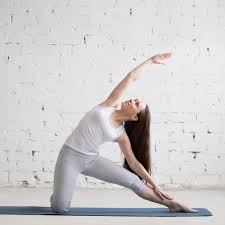
Parighasana (Gate Pose)
Introduction:
Parighasana (Gate Pose) is a gentle side-stretching yoga posture that improves flexibility in the spine, hips, and hamstrings. It helps open the chest and shoulders while enhancing lateral body mobility.
Asana means seat or position in Sanskrit, and Parigha means door or gate. Thus, the term Parighasana (Gate Pose). The extended arm in this pose resembles a lock or latch. Parighasana is a Hatha yoga pose that involves kneeling and emphasizes a “lateral” stretch of the upper body. Even though it’s a position for beginners, some learners may find it difficult to balance on one knee while looking up to finish the stretch.
Nearly every muscle, including the gluteus, hamstrings, quadriceps, claves, core muscles, hip flexors, psoas, triceps and biceps, pelvic floor muscles, and shoulders, is either extended or engaged (contracted) during Gate Pose. This pose’s lateral stretch promotes the usage of the intercostal muscles, which further support the lungs’ optimal function.
Additionally, they move the body from the sagittal plane to the coronal plane, which collectively strengthen the spine and increase the range of motion of the several muscles that support the knees, hips, shoulders, and spine.
How to Do Parighasana:
Here are detailed instructions for performing Parighasana (Gate Pose):
- Place your knees hip-width apart on your mat. Pull the navel in slightly and ensure that the pelvis is neutral, not tucked or arched. To stand (or rather, kneel) tall, roll your shoulders back, and extend your spine. Your knees, hips, and shoulders should all be stacked in a straight line. Lightly place your hands on your hips. Here, take a couple of deep breaths.
- Step your right leg out to the right side while exhaling. The left knee, which lies on the mat, is aligned with the right foot. Place your right palm on the side of your thigh while turning your right toes up toward the sky and plantar flexing your right ankle. Only the right heel is now touching the mat.
- Take a breath, then stretch your left arm toward the ceiling, lengthening your left side of the body in the process. The quadriceps, or outer thighs, will stretch all the way to the tips of your fingers. With the shoulder away from the ear, the left arm is positioned near it.
- Breathe out, then lean laterally to the right while maintaining an open chest. The right toes are being hovered over by the left fingertips. The goal is to get a proper lateral stretch rather than to touch the toes. The right hand rests on the knee or shin bone after sliding down the right leg. Don’t push it; instead, let it slip in the direction of the ankle.
- Push the right hip forward and turn the chest toward the sky with the subsequent breath. Continue pushing the hip forward, or hip extension, to prevent the right hip from compressing in this position. Lastly, turn your head toward the ceiling while exhaling.
- For eight to ten breaths, maintain this pose.
- Exhale and slowly return your torso to the center while sliding your right hand back to your right thigh or hip to exit the position. Bring your left arm to your side after releasing it. Breathe in, take a step back with your right foot, and return to standing on both knees. Here, you can unwind in Balasana before moving to the opposite side and doing the same exercise.
Benefits of Parighasana:
The several advantages of Parighasana (Gate Pose), which involves stretching and using a variety of muscles, are described below:
- Stretches, Strengthens, and Lengthens: Parighasana targets many body parts. It stretches the inner thigh, calves, and hamstrings on the outstretched leg. The psoas muscles (hip flexors), outer thighs (quadriceps), obliques, intercostal muscles, triceps, and latissimus dorsi (the largest muscle in the back) are all stretched when the knee is on the ground. The obliques, pelvic floor, and glutes are strengthened by this pose. It aids in side body lengthening. This pose is highly helpful for athletes, runners, and sportspersons because it also helps stretch the IT band.
- Flexibility and Range of Motion: Because it facilitates the lateral expansion of the hip flexor, Gate Pose is a hip opener. The “Quadratus Lumborum,” which spans from the pelvic floor to the lowest rib, is targeted by lateral stretches. It is one of the main reasons for lower back pain and is in charge of stabilizing the pelvis. By releasing lower back stiffness, parighasana helps improve the range of motion of the spinal muscles.
- Chest, Diaphragm, and Breath: When the intercostal muscles are stiff, the lungs are unable to fully expand, resulting in shorter and smaller breaths. Stretching the intercostal muscles on the extended side facilitates the lungs’ complete expansion during breathing. This makes it possible to breathe more deeply even when the asana is not being performed.
- Alignment and Posture: Alignment is crucial to getting the most out of Gate Pose. Pupils should be instructed to refrain from flexing their hips, since this will pull their pelvis behind and increase the strain on their lower back. Engage the pelvis and keep it square (push it forward) to prevent this. learners can be introduced to this position with the help of the wall by resting the balls of their feet on it in order to first comprehend this alignment. This strengthens the glutes and activates the deeper pelvic muscles. This minor alignment change makes it possible for the hips to open even further; it can be incorporated into sessions for individuals who spend a lot of time sitting (at work or when traveling), as well as for teen yoga learners.
- Organs and Stimulations: By stretching and tightening the deeper muscles, the lateral bend aids in stimulating the internal organs. The gallbladder, liver, and large intestine are located on the right side, whereas the stomach, small intestine, and pancreas are located on the left. One side of the abdomen is compressed during the lateral stretch, which lowers blood flow in that region. The organs experience a “Squeeze and Release” motion as a result, which boosts their effectiveness once blood flow is restored. Stretching the organs on the extended side promotes organ stagnation.
- Therapy & Healing: First of all, the chest’s increased capacity to expand aids in improving respiratory system performance. Over time, this helps lessen the frequency and severity of allergies. Second, because the armpit contains lymph nodes that are essential to the body’s immunity, raising the arm overhead activates the lymphatic system. This facilitates the body’s lymphatic flow, which carries antibodies. Therefore, with the necessary props to help learners stay in the pose longer, therapy yoga can incorporate this practice for those who require it. Because of the lateral stretch, this position can aid with back pain and, to some extent, improve digestion in people with IBD-related disorders.
- Chakra and Balancing: The side bend energizes the body by increasing the prana that travels from the heart to the Third Eye Chakra. Additionally, there is a downward flow of energy during the release from the pose, known as Apana Vayu (removing the surplus out), which guarantees energy balance and, eventually, equilibrium in the first four chakras.
- Preparatory posture: For more complex lateral twists like Parivritta Janu Sirsasana and Sage Visvamitrasana, learners who are able to stay in this posture for a longer period of time can use Gate Pose as a preparatory pose.
Contraindications of Parighasana:
learners must be guided into and out of Gate Pose (Parighasana), a difficult beginner-level pose, using appropriate cues and instructions. Additionally, there are a few safety measures to be aware of, which are discussed below:
- Injury: The following safety measures should be followed when dealing with different types of injuries:
- Knee Injury: A blanket or a rolled-up mat can be placed beneath the knees in cases of minor knee injuries (or rehabilitation). This position, such as the Gate position on a chair, can be performed with a chair in the event of severe knee injuries.
- Ankle/Rib Cage Injury: Until the injury has completely healed, the posture should not be performed. This is because the rib cage is naturally forced to open in Gate Pose, which could worsen the pain or symptoms. This pose is best avoided by learners with ankle issues because it demands the extended leg’s ankle to bear weight and maintain balance. This could place excessive strain on the damaged joint.
- Shoulder Injury: learners who have injuries to their arms or shoulder joints can practice this posture by placing their hand on their hip rather than raising their arm overhead.
- Wear and Tear: Gate Pose should not be performed by learners healing from any type of wear and tear in the deeper tissues, such as in the calves, hamstrings, gluteus, rotator cuff damage, etc.
- Heart Problems and Surgeries: Because the Gate Pose stretches the diaphragm and heart muscles, it may be painful for those who have recently had heart surgery or received a pacemaker. This position should be rigorously avoided in such situations.
- Hernia: This position will stretch the abdominal muscles and walls; it is not recommended for those who are experiencing or recovering from hernia problems or procedures. Recovery may suffer as a result of this.
- Pregnancy: This position should not be performed by pregnant women in the third trimester as it may strain their lower back, ribs, and uterus.
Conclusion:
A powerful side-stretching yoga pose, Parighasana (Gate Pose) expands the chest, strengthens the legs and core, and improves spinal flexibility. Frequent practice enhances general body balance, breathing ability, and posture.
It is a beneficial supplement to both beginner and advanced yoga routines because it also fosters a sense of steadiness and tranquility.
FAQs:
Which chakra is Parighasana?
Parighasana balances the Root and Sacral Chakras and activates the Heart Chakra (Anahata). To balance energy, the side bend promotes downward Apana Vayu and upward Prana Vayu.
What is Parighasana’s other name?
In modern yoga, Parighasana, also called the Gate Pose, is a kneeling pose that provides your legs, hips, core, and sides with a lot of lateral stretch.
What conditions make Parighasana inappropriate?
The additional contraindications for Gate Pose Forward Bend (Parighasana Uttanasana) are as follows: Strength and Weakness of the Body: This pose should be avoided for learners who have spondylitis, acute lower back pain, or other spinal conditions. This difficult pose should also be avoided by learners with weak joints or arthritis in the knees.
Can a marriage benefit from Parigha yoga?
Nakshatras that are not included here should be avoided since they are inappropriate. 12. The Yogas Vyatipata, Dhruva, Mrityu, Ganda, Vajra, Shoola, Vishkambha, Atiganda, Vyaghata, and Parigha are to be disregarded.
Which muscles are targeted by Parighasana?
Gate, also known as Parighasana in Sanskrit, is a standing yoga position for beginners. This pose works the hamstrings and shoulders in addition to the abs, obliques, and spine. Gate increases breath awareness, extends the pelvic and side body, and tones the abdominal organs.
What is the recommended duration for holding Parighasana?
Let your body settle into the stretch by holding Parighasana for five to ten breaths on each side. You can stay as long as it feels comfortable if you’re concentrating on deep flexibility, but make sure to practice equally on both sides to keep your balance.
What is Parighasana’s other name?
In contemporary yoga, Parighasana, also known as the Gate Pose, is a kneeling pose.
References:
- Yoga Journal. (2025b, March 24). Gate pose. https://www.yogajournal.com/poses/library/gate-pose-2/
- Gate Pose Yoga(Parighasana)| Yoga sequences, benefits, variations, and Sanskrit pronunciation | Tummee.com. (n.d.). Tummee.com. https://www.tummee.com/yoga-poses/gate-pose
- Allen, W. (2025, August 26). Parighasana. https://myyogateacher.com/yoga-asana/parighasana
- Gate pose- Parighasana – The Yoga Collective – How to do gate pose. (2020, April 10). The Yoga Collective. https://www.theyogacollective.com/poses/gate-pose-parighasana/
- Yoga Vastu. (2021, June 3). Parighasana – Yoga Vastu. https://yogavastu.com/p/parighasana/