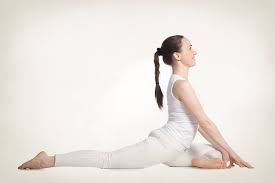
Kapotasana (Pigeon Pose)
Introduction:
Kapotasana (Pigeon Pose) is a deep hip-opening yoga posture that helps release tension stored in the hips, glutes, and lower back. It is especially beneficial for improving flexibility, reducing stiffness, and relieving discomfort caused by prolonged sitting.
The Sanskrit word “kapota” means “pigeon,” hence the English translation is simply “pigeon pose.” Moving from Camel Pose Variation, it falls within the category of advanced-level postures where the torso is in a deep backbend. The knees, shins, upper feet, and head are grounded in the final position.
At a higher level of practice, the Throat Chakra is activated by placing the crown of the head on the soles of the feet, which affects the neck and throat. The most difficult part of this posture is stretching the back in a small area away from the floor, rather than the flexibility of the entire back. In contrast to the bending of the spine, it resembles a deep connection between the upper and lower body.
This posture stretches the thighs and groin, strengthens the muscles of the lower back, neck, legs, and pelvis, and is a powerful hip and heart opener. It also provides a good massage to the abdominal organs. Hatha, Ashtanga, Iyengar, and Advanced Hot Yoga all incorporate the traditional pose of kapotasana.
Even while this position is extremely difficult and can only be performed by learners who have some understanding of breath-body-mind coordination, it also benefits learners on a spiritual level when done mindfully and carefully. It encourages trainees to focus on the deeper parts of the mind and is part of the Ashtanga or Iyengar method. According to Patanjali, the practice promotes Pratyahara, Dharana, and Dhyana, three of the eight limbs of yoga.
Teens’ yoga can be a creative method to address any stress or anxiety-related problems they may have. Despite the fact that breath-body coordination is a difficult discipline, it is crucial that teenagers comprehend it better.
First, yoga instructors might think about using props like a chair or a bolster yoga wheel to assist learners feel more confident and be able to hold the position for longer. Kapotasana can be used in flow yoga sequences since it increases the body’s energy.
How to Do Kapotasana:
- Start with your spine straight and kneeling.
- Take a breath, open your chest upward, and gradually arch your back.
- Deepen the backbend by slowly lowering your head back.
- One by one, slide your hands down toward your heels.
- To deepen the stretch, press your hips forward while holding your heels.
- Continue to hold the pose and breathe steadily.
- Return one hand to your lower back, then the other, to let go.
- Return your torso to an upright position gradually.
Benefits of Kapotasana:
Pigeon position requires both an open mind and a rigid body to be understood. It is best performed after practicing a variety of less difficult postures that lead to Kapotasana because it is a difficult pose. Understanding the benefits of Kapotasana (Pigeon Pose), which are listed in ten points below, is crucial to getting the most out of this practice.
- The entire spine becomes more flexible with Kapotasana.
- Pigeon Pose increases your strength by allowing your limbs to extend to their fullest.
- The new blood flow to the head activates the Crown Chakra.
- Stretches the abdominal, psoas, thigh, groin, ankle, throat, and chest, among other muscles.
- An excellent hip opener is the pigeon pose.
- Keeps the body’s organs healthy by activating them.
- Breathing is improved by stretching the diaphragm muscles.
- The backbend and chest expansion both boost prana flow.
- Pigeon posture is an excellent pose for women in general because it makes effective use of the pelvic floor muscles, which aid in reproduction.
Contraindications of Kapotasana:
Because Kapotasana (Pigeon Pose) is an advanced position, it is best performed under the supervision of a professional. It is also crucial to take certain precautions. Ten contraindications to Kapotasana (Pigeon Pose) are listed below:
- Insomnia
- Migraine
- Hypertension
- Spondylitis
- Depression
- Injury to the shoulders, neck, or spine.
- Back pain or stiffness.
- Weak organ functions.
- Women who are menstruating or pregnant.
- Any type of respiratory infection.
Conclusion:
Deep backbends like Kapotasana (Pigeon Pose) strengthen the spine, increase hip and thigh flexibility, and forcefully open the chest. It improves posture, increases energy, and encourages emotional release with consistent practice and appropriate technique. To prevent strain or injury, it should be done carefully and with sufficient preparation.
FAQs:
Is the pigeon pose harmful to the hips?
One of the best stretches for expanding the hips and relieving tension in the hip flexors and glutes is the pigeon pose. Low back pain, bad posture, and restricted mobility can all be caused by tight hips, particularly if you spend a lot of time sitting down during the day.
What can I do in place of the pigeon pose?
The Yin Yoga pose known as Deer Pose, which may be more comfortable for your front knee, is arguably the most visually identical substitute for Pigeon. The front leg adopts a straight angle, just like in the most intense variation of Pigeon, but the position permits the pelvis to tilt to the side and rest on the mat.
Pigeon position is associated with which chakra?
Sacral Chakra
The second chakra, the sacral chakra, is located in the hips and is referred to as the emotional epicenter. Maybe this explains why many people experience intense emotional reactions when performing hip openers, particularly Pigeon Pose.
Is pigeon beneficial for the hips?
The pigeon pose helps increase hip range of motion by working the piriformis, glutes, and hip flexors. Additionally, it might strengthen the muscles supporting the lower back and hips. Because pigeon position stretches the muscles and tendons surrounding the spine, it may also help ease pain in the lower back.
Is the pigeon pose bad for your health?
Indeed, owning pigeons or being around them frequently can be harmful to your health. The fungus and bacteria found in pigeon droppings and feathers can cause serious respiratory conditions such as cryptococcosis, histoplasmosis, and “Pigeon-breeder’s lung” (hypersensitivity pneumonitis). Long-term exposure can cause irreversible lung damage and, in extreme situations, necessitate a lung transplant.
Does the pigeon position alleviate trauma?
Since the hips are sometimes described as a “storage center” for emotional tension and stress, Pigeon Pose (Eka Pada Rajakapotasana) is especially useful for releasing trauma stored there.
What would happen if I did pigeon pose every day?
This is my assessment after performing the 3-minute pigeon pose daily for a week. Regular practice of the pigeon posture can help avoid hip stiffness, promote mobility, decrease physical lower back pain, and reduce stress for anyone who works a desk job or leads a sedentary lifestyle.
Does the pigeon pose harm the knees?
Put a block beneath the front thigh, close to the groin, if the pigeon position is too strenuous or the hips aren’t level. If the pigeon position is not done carefully and with the right alignment, it might strain the knees. Start with adjustments and gradually increase your strength and flexibility if you’re new to the pose.
In pigeon pose, why do people cry?
Everything is present. Your psoas, the muscles that tense when you are unable to fight or escape, are locked in place, causing you to freeze and hold them instead. For this reason, even if nothing “bad” happened today, Pigeon Pose can make you cry. The mail that has been sitting in your hips for years is finally being delivered by your body.
Why is Pigeon Pose so challenging?
Because it works the glutes and other tight spots in the body, the pigeon pose can be difficult. Most people have restricted mobility in this area because their glute muscles are not sufficiently stretched or strong. It can, therefore, be difficult to assume the proper alignment and maintain the posture.
Who shouldn’t strike the pigeon pose?
Not everyone is suited for the Single-Leg Pigeon position. You should try an option like the reclining pigeon (also known as “thread the needle”) if you have a knee replacement, have undergone knee surgery, or just have knee pain despite your best efforts to optimize your alignment.
What is the yoga term for the pigeon pose?
Kapotāsana, often known as Pigeon Pose, is a modern yoga technique that involves kneeling and backbending. “Pigeon” is another name for asanas based on Rajakapotasana, the One-legged King Pigeon pose.
Why is Kapotasana so challenging?
Your torso and hip flexors are really tense when it’s low. To straighten your arms in Kapotasana B, there is less room between your shoulders and your hands.
What does the term “kapotasana” mean?
Since asana means “pose” and kapota means “pigeon” in Sanskrit, kapotasana literally translates to “a posture mimicking a pigeon.” Sitting with one leg bent and the other straight out behind you will give you an idea of this.
References:
- Pigeon Pose Yoga(Kapotasana)| Yoga sequences, benefits, variations, and Sanskrit pronunciation | Tummee.com. (n.d.). Tummee.com. https://www.tummee.com/yoga-poses/pigeon-pose
- Kapotasana: Pigeon pose. (2014, June 26). https://yogainternational.com/article/view/kapotasana-pigeon-pose/?srsltid=AfmBOoo1IVuN6ad03WMgLamezOturYutXq-ALoDeiL0-JjKIPV1souQ2
- Yoga Journal. (2025g, March 24). Pigeon pose. https://www.yogajournal.com/poses/one-legged-king-pigeon-pose/
- Yoga Vastu. (2022, June 4). Kapotasana – yoga vastu. https://yogavastu.com/p/kapotasana/
- Bisht, H. (2026a, March 2). Benefits of Kapotasana (Pigeon Pose) and How to Do It by Dr. Himani Bisht. PharmEasy Blog. https://pharmeasy.in/blog/health-fitness-benefits-of-kapotasana-and-how-to-do-it/


One Comment