Ustrasana (Camel Pose)
Introduction:
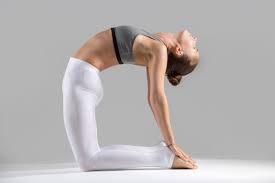
Ustrasana (Camel Pose) is a deep backbend yoga posture that stretches the front of the body while strengthening the back muscles.
This pose opens the chest and bends the back at an intermediate level. The upper abdomen and chest resemble the back of a camel, with the entire spine bent backward. The Iyengar Yoga tradition originated this position, which has its roots in modern yoga. Our intermediate Iyengar sequence includes it. Leaning backward and inward, this pose places emphasis on the thighs and the entire back. Perfect alignment of the body’s movement is crucial in this pose.
The link between the breath and the movement of the back should occur very consciously as the back is arched to its maximum. The pelvic region is tightened by gradually pushing the tailbone in the direction of the navel. To make the pose more comfortable, make sure the lower abdomen is drawn in and upward, allowing the lower spine to settle deeper inside. To enter the posture, the chest should be expanded and contracted at the appropriate times. When practicing this pose for the first time, it is often beneficial to have an experienced teacher guide you.
Senior citizens, pregnant ladies, postpartum women, and women who are menstruating should avoid this posture due to the backbend and movement dynamics. Gymnasts and dancers can benefit from this activity. Kneeling Cat Swan Flow and Cat Cow Pose, Reclined Supported Wide Legged Thunderbolt Pose, Stomach Pumps Flow (Supta Salamba Pada Prasarita Vajrasana Udara Pumps Vinyasa), and Half Camel Pose Twist Prep Flow (Ardha Ustrasana Parivrtta Prep Vinyasa) are excellent preparatory asanas and flows that improve the flexibility of the spine and can be performed before Camel Pose (Ustrasana).
Since camel posture variations can be generated from camel pose, camel pose is regarded as a base pose. All advanced back-bending poses, such as King Cobra Pose (Raja Bhujangasana), Pigeon Pose (Kapotasana), Pigeon Pose B (Kapotasana B), Half Camel Pose Variation Raised Toe (Ardha Ustrasana Variation Raised Toe), and similar poses, benefit greatly from Camel Pose (Ustrasana). Camel Pose is a wonderful counterpose to Navasana (Boat Pose) and can be incorporated into flow yoga sequences since it increases the body’s vitality.
The Heart Chakra (Anahata Chakra), the energy center for both self-love and universal love, is activated by Camel Pose (Ustrasana). In this pose, the practitioner first aligns the body with breath and becomes comfortable with the minor pain. This encourages the person to let go of their emotional distress to purify their emotions. It instills in people the qualities of generosity, empathy, and concern. The neck stretch activates the Throat Chakra, which physiologically regulates the thyroid glands and emotionally enhances the practitioner’s ability to communicate clearly.
Since ustrasana variations can be generated from ustrasana, ustrasana is regarded as a base posture. Ustrasana can be used in flow yoga sequences since it increases the body’s energy.
How to Do Ustrasana:
The detailed instructions for performing the Camel Pose (Ustrasana) are as follows:
- Start by positioning yourself in the middle of the yoga mat. In Thunderbolt Pose (Vajrasana), bend both knees and sit on your heels. Take a few deep breaths while sitting with your hands on your thighs. Then, elevate your spine and press your lower back against the heels beneath you.
- As you raise your body away from your heels and straighten your back, drop to your knees. Support can be obtained by folding the mat’s corner and putting it beneath your knees or by putting a blanket beneath your knees. To focus, elevate your body and look forward while taking a few deep breaths. Tuck in your stomach as well. Keep your knees hip-distance apart now. The feet, knees, and hips should all be perfectly aligned. Keep your feet and legs closer together than your knees behind you. As a result, the ankles and knees are straight. Pay attention to how your feet are resting.
- With your elbows pointed back, place your hands behind you below your hips. Holding your hips, take the shoulders behind you. To support the back, keep the thumbs pointed forward and the other four fingers behind. Here, take a few breaths.
- Make sure the thighs are straight and tight. Since the thighs are stretched in this pose, it is essential to have tight, vertical thighs.
- Inhale deeply, then rest both palms on your heels behind you. Here, pull the spine inward, raise the heart and chest, release the head and neck backward, and feel the stretch in the neck. Don’t overstretch in a rush; do this carefully instead.
- Take a calm breath and focus on the neck and lower back, where the greatest stretch is felt. With each breath, try to raise the chest and heart while pushing the spine deeper inside.
- The arms and legs should support the body’s weight equally. Once you’ve taken a few breaths, carefully relax your hands and your entire back while bringing your shoulders and neck into a comfortable posture. Rest in Vajrasana (Thunderbolt Pose) by sitting on your knees and heels once again.
- In Child Pose (Balasana), fully unwind. In the last pose, it’s important to close your eyes. It prevents vertigo and makes it easier to maintain the pose for extended periods of time.
Benefits of Ustrasana:
This yoga pose strengthens the back, gives it a strong appearance, and tones the muscles surrounding the spine by making the body resemble a camel’s back. Benefits of Camel Pose (Ustrasana) include the following:
- Lengthens, Stretches, and Strengthens. The anterior body (chest, abdomen, quadriceps, and psoas muscles) is stretched in camel pose. It tones the hamstrings and glutes. This posture is an excellent counterpose to Boat posture (Navasana), where the core is activated with toning and strengthening, because the abdomen and core are stretched to their sustainable best. As the front chest opens up in this pose, the shoulders are also strengthened. The large belly and thigh fat are lessened by the tone of the arms, shoulders, and legs. The backbend creates flexibility by stretching the neck and lowering cervical strain.
- Flexibility, Range of Motion, Alignment, and Posture: Camel Pose increases spinal mobility because we never put the spine through a backbend in our normal activities. We’re probably seated or hunched over with our backs bent forward. By performing a backbend, we flex it in the opposite direction, which improves posture. Poor posture is a result of the digital lifestyle and desk-bound occupations, which also cause stress in the neck and shoulders and aching mid and lower back muscles. Ustrasana corrects poor posture and its negative effects on the body and psyche by strengthening the spine and stretching the entire body in camel posture. The camel pose helps to shape the body and successfully decreases fat in the arms, hips, thighs, and stomach.
- Chest, Diaphragm, and Breath: The opening of the chest is a component of Camel Pose. It promotes a healthy heart, improves blood circulation throughout the body, and stretches the muscles in the chest. Cardiovascular fitness is the outcome of improving the chest cavity. The diaphragm’s expansion helps with breathing.
- Awareness and Focus (Concentration): This pose is a little difficult. When performing the backbend, the practitioner must be conscious of their breath. In order to avoid jerking their shoulders or lower back, students must do this action carefully. Following alignment, the practitioner must intentionally open their heart and raise their hips with each breath. After some time, the initial pain goes away. It’s crucial to position the legs hip-width apart and to expand the shoulders while bending the neck. To release this pose, concentration is also required. It’s equally crucial to release your arms, backbend carefully, and settle into Vajrasana (Thunderbolt Pose) slowly and gradually.
- Camel Pose (Ustrasana) is a detoxifying pose that is energizing, de-stressing, and relaxing. It improves appetite, food excretion, and digestion by increasing circulation to the digestive tract. The body is energized by an efficient digestive system. Additionally, the backbend reduces tension and revitalizes the brain by opening the chest and toning the spine. A calm mind improves focus, fosters creativity, and produces a more positive outlook.
- Organs and Stimulation: The camel position works the muscles in the area of the neck where the parathyroid and thyroid glands are located. These glands are stimulated and perform better as a result of this stretching. Thyroxin, the hormone that controls metabolism and the health of the body’s joints and bones, is thus produced in a balanced manner. Additionally, by stretching the abdomen, this yoga pose stimulates the endocrine glands and relieves conditions of the testes, pineal glands, and ovaries. etc. The body’s urogenital system benefits, and the uterus is toned.
- Therapeutic, Healing, and Circulation and Systems: Ustrasana improves the digestive, respiratory, endocrine, lymphatic, skeletal, and circulatory systems in a subtle but powerful way. The technique of opening the chest improves the respiratory system and can be used to treat conditions like bronchitis and asthma. Therapists can use the abdominal stretch to treat conditions including constipation, colitis, and appetite loss since it stimulates the digestive system. By treating genito-urinary disorders of the kidneys, bladder, ovaries, testes, and prostate, it also helps the reproductive system. It works well for treating uncomfortable and irregular menstruation (the position should not be performed when menstruating). The neck stretch effectively stimulates the thyroid and parathyroid glands. Therefore, this pose can be used to treat hormonal issues associated with these glands. Additionally, it works well for spondylitis and vocal issues. Additionally, the neck stretch activates the lymph nodes and salivary glands. Salivary gland activity improves the initial stage of digestion, and lymph node activation aids in the removal of toxins from the body. By relaxing the nervous system and toning the spinal muscles, spinal toning from the lumbar to the cervical spine improves spinal health.
- Balance and Emotions: Camel Pose (Ustrasana) gives the practitioner strength, confidence, and self-esteem. With the chest opening, it opens the Heart Chakra (Anahata Chakra), the energy center for both universal and self-love. The Throat Chakra (Vishuddha Chakra) is stimulated by the neck stretch, which helps the practitioner communicate more clearly. Ustrasana is an incredibly vulnerable pose that strengthens the mind and gives one the stamina of a camel. The physical practice moves the emphasis from the initial mild physical pain to the mild emotional pain and finally to the profound emotional purification and mental clarity that result from persistence. Let’s say someone lacks communication and experiences frequent emotional problems as a result of possessiveness, jealousy, or selfishness. In that situation, this pose washes them and provides them with clarity to speak, much like a waterfall.
- Others: Gymnasts and dancers can benefit from this activity. It is an excellent pose for children and teenagers to strengthen their bodies and minds as they mature.
- Preparatory Pose: All advanced back-bending poses, such as King Cobra Pose (Raja Bhujangasana), Pigeon Pose (Kapotasana), Pigeon Pose B (Kapotasana B), Half Camel Pose Variation Raised Toe (Ardha Ustrasana Variation Raised Toe), and similar poses, can be prepared with Camel Pose (Ustrasana).
Contraindications of Ustrasana:
The Camel Pose (Ustrasana) contraindications are as follows:
- Injury and Surgery: Because this pose activates all of the aforementioned joints, practitioners with knee, neck, spine, ankle, wrist, and ankle ailments should avoid it. Additionally, this pose should be avoided by those who have had hip, knee, or spinal surgery in order to prevent strain and additional damage.
- Lack of Body-Breath Connections: This position should be avoided by practitioners who do not have body-breath connections. In order to perform the backbend, proper knee and foot alignment is crucial, as is breath awareness. They risk jerking their knee and lower back joints if they lack this coordination. In the same vein, even letting go of the pose requires bodily awareness. Teachers of yoga must first educate their students on this idea.
- Physical Strength and Weak Body: This pose should be avoided by students who suffer from high blood pressure, migraines, or neurological conditions like epilepsy. It is not recommended for such individuals to perform backbends and neck stretches since they send energy up to the brain. The posture should also be avoided by practitioners who struggle with vertigo and balance, since it may make their dizziness worse. These patients experience stress due to strain on the jugular vein and the carotid artery, which are two blood vessels on either side of the neck that supply blood to the brain. The major arteries in this region are connected to the jugular vein. One of the several veins in the neck that return deoxygenated blood to the heart after draining it from the face, brain, and neck is the jugular vein. The strain of this backbend is too much for people with advanced spondylitis, herniated discs, and acute back pain. This pose should be absolutely avoided for students who have experienced trauma or anxiety because it is both physically demanding and emotionally taxing. People who have experienced trauma should be treated gently because it’s a vulnerable pose that reveals emotions. This pose can evoke deep-seated feelings and be highly emotionally strong, depending on the trauma.
- Others: Senior adults, pregnant ladies, postpartum women, and women who are menstruating should avoid this position because of the backbend and movement dynamics.
- Therapy and Restorative: Yoga instructors must be aware that Camel Pose (Ustrasana) should only be performed on healthy students with strong bones, joints, and musculoskeletal systems in order to strengthen the back or treat digestive or reproductive disorders. This position cannot be used as therapy for elderly people or students with weak bodies.
Modifications of Ustrasana:
- The neck and back must be flexible to perform the Camel Pose. However, there are simple ways to practice this yoga pose if you find it difficult for your back.
- You might utilize a chair by putting it near your back and pushing your legs against the chair’s legs to lessen the strain on your lower back while performing this yoga pose. Here, kneel in front of the chair with your back close to it after setting some cushions on it. Stretch your arms behind you while holding onto the chair’s arms for support, then place your back on the chair’s seat.
- By kneeling in front of the wall with your stomach near the wall, you may use the wall as a support and pull your complete body close to the wall. Bring your arms behind you and move backward while pushing the wall with your stomach and using the support. If this is your first time, make sure you have someone to assist you.
- Starting with just one arm, you can gradually gain confidence with your back by exercising with one arm elevated and the other bent back while holding onto your heels. You might reach the full Camel Pose after repeatedly practicing with both arms.
- If someone has a stiff neck or finds it difficult to “push” it down, you might first provide some support by putting a cushioned stool right next to the neck. To prevent it from slipping, you may position this stool near the wall.
- If your knees are sensitive, you can give them extra confidence by supporting them with thick blankets or pillows.
- You might take the arms behind you and set them on a chair or the wall if they don’t reach the floor or your heels.
Ustrasana Breath Awareness:
- It takes some knowledge of the breath’s flow to breathe with the back bent backward and the neck balanced in the air:
- As you take a breath, stand on your knees and legs with your soles pointing up and your toes contacting the ground.
- Breathe in, keep both arms on your hips, and bend your back downward and backward while gradually lowering your neck to a comfortable position. Here, let out all of your breath.
- Breathe gently, elevate your chest, push your lower back inward, push your abdomen up, and tighten your abdominal muscles.
- The body should be brought into a comfortable position by the gentle inhalation and exhalation.
- Every time you breathe in, elevate your chest and spine, and as you exhale, relax your body.
- Breathe in this pose for a few rounds, or as long as you can hold it. Then, slowly release the pose with a breath.
- Breathe in, release the neck first, then carefully remove each hand from the heels one at a time before returning the body to its starting position. This is where you really exhale.
- Now that you are sitting on your knees and heels, stretch your body forward onto the floor so that your forehead touches the ground.
Conclusion:
Ustrasana is a strong, heart-opening backbend that strengthens the back muscles, increases spinal flexibility, and opens the chest to facilitate better breathing. It also increases vitality and relieves emotional strain. This pose can improve posture, boost confidence, and support general physical and mental well-being with consistent practice and correct alignment.
FAQs:
Does Ustrasana promote hair growth?
Ustrasana is regarded as one of the best natural hair growth treatments since it balances any thyroid gland problems that may be causing hair loss, in addition to directing blood flow to the scalp.
Does Ustrasana help with obesity?
As part of an all-encompassing fitness regimen, Camel Pose (Ustrasana) is a yoga pose that can help with weight loss. The position calls for the use of the core muscles, which, with time, may contribute to the development of core strength. A solid core can help with weight management and is crucial for general fitness.
Does Ustrasana make you taller?
Another series of yoga poses to gain height is called Ustrasana, or Camel Pose. The Camel Pose comprises a deep backbend that strengthens the spine, expands the chest, and stretches the entire front body.
What are typical Ustrasana errors?
Although ushtrasana appears to be powerful, these minor errors subtly undermine its advantages and put strain on the spine. Typical slip-ups include a sinking chest, hips that wander back, weight thrown onto the hands, and sluggish glutes that expose the lower back.
How much time should be spent in Ustrasana?
It’s not necessary to hold Ustrasana for a long time to be effective. A decent starting point for most practitioners is 20 to 30 seconds, or three to five breaths. Prioritize quality over quantity: maintaining the posture for minutes is not as crucial as deep breathing, correct alignment, and attentive muscle engagement.
What gives Ustrasana its name?
The yoga practice known as Ustrasana, or Camel practice, entails a deep backbend from a kneeling position with the hands reaching back to grip the heels. The name is derived from the Sanskrit terms “ustra,” which means “camel,” and “asana,” which means “pose,” because the pose is similar to that of a camel.
Who shouldn’t perform Ustrasana?
Ustrasana contraindications
The camel pose should be avoided by those who have spinal or back issues. This pose should be avoided by those who have high or low blood pressure. This pose should also be avoided by patients who have migraines or vertigo. Patients with leg ailments and pregnant women should also avoid this pose.
References:
- Yoga Journal. (2025a, February 25). Camel Pose. https://www.yogajournal.com/poses/camel-pose/
- Rakshak, & Rakshak. (2024d, August 23). Ustrasana (Camel Pose) | Steps | Benefits- The Art of Living. The Art of Living – Making Life A Celebration. https://www.artofliving.org/in-en/yoga/yoga-poses/ustrasana-camel-pose
- Camel Pose Yoga(Ustrasana)| Yoga sequences, benefits, variations, and Sanskrit pronunciation | Tummee.com. (n.d.). Tummee.com. https://www.tummee.com/yoga-poses/ustrasana
- Wikipedia contributors. (2026a, January 23). Ustrasana. Wikipedia. https://en.wikipedia.org/wiki/Ustrasana
- Sankhe, A. (2026, March 2). Benefits of Ustrasana (Camel Pose) and How to Do It by Dr. Ankit Sankhe. PharmEasy Blog. https://pharmeasy.in/blog/health-fitness-benefits-of-ustrasana-and-how-to-do-it/