Bitilasana (Cow Pose)
Introduction:
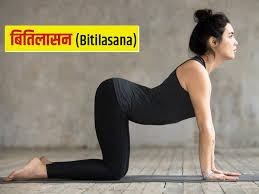
Bitilasana (Cow Pose) is a gentle, beginner-friendly yoga posture that is commonly practiced as part of the Cat-Cow sequence.
“Bitila” means “cow” in Sanskrit. Additionally, as was previously mentioned, Bitilasana, also known as Cow Pose, is typically performed in a dynamic manner with Cat Pose. Here, the body movement is similar to both the cow and the cat when the exercise is performed in a dynamic manner.
The comfortable condition of a cow and the deep stretch of a cat. That’s how Cat Cow Pose got its name. Because the action is more with the spine (a combination of two movements), it increases the flow of prana by improving the spine’s flexibility. This foundation pose is typically performed to increase stability when doing backbend poses.
How to Do Bitilasana:
The steps to perform Bitilasana, also referred to as the Cow Pose in English, are listed below.
- In Vajrasana, begin by sitting in the middle of the mat on your knees and shins with your hips on your heels.
- Here, relax your body and inhale deeply while extending your spine upward.
- Take a breath and extend your arms straight out while placing your palms on the ground in front of you.
- Breathe in, raise your torso off the mat and heels, and land on all four feet (your knees and palms).
- Promote alignment by aligning the palms with the knees while maintaining hip spacing between them. Pace them slightly behind in line with the knee while keeping the upper feet flat on the ground. As a result, the feet, knees, and palms should all line up.
- Maintaining alignment, ensure the torso is parallel to the floor, the knees are just below the hip joint, and the palms are just below the shoulders.
- After you’re comfortable with the alignment and position, shift your body’s weight to the middle of your spine so that it doesn’t fall over your shoulders or wrists.
- Here, take a few breaths while staring directly ahead. Pay attention to how your body moves and how you breathe.
- Take a breath, lift your neck, move your tummy closer to the floor, and curve your lower back inward. Tighten your tummy by extending your hips outward and slightly upward.
- Start the slow, deep breathing after stretching the neck farther upward and molding the entire back to the maximum inward curve resembling the letter “U.”
- The body should now resemble a cow, with its back spreading upward and outward. A cow may stand in this position for hours with strength and stability when its neck is rising upward.
- To get the most out of this pose, begin with deep, calm breathing, engaging both the diaphragm and abdominal muscles. Here, you will stretch deeply as you exhale, dragging both extremities of the body upward and outward while drawing the belly in. As you inhale, you will loosen the body while keeping the neck in place and extending the buttocks out.
- Using the core muscles will help to maintain stability and balance while ensuring that the body weight is not directed into the wrists and shoulders.
- Watch how the upper back, chest, and belly move while you remain in this position for roughly four breaths.
- Breathe in, letting go of the body, and anticipate relaxing when you exhale. Relax and return to sitting in Vajrasana after releasing yourself from the pose. To repeat the Cow pose exercise, inhale once more and maintain the pose for at least eight breaths.
- Because the movement of the spine with contractions of the different muscles helps to enhance flexibility and posture, Cat Pose and Cow Pose are typically performed together.
- After letting go of Bitilasana, fully relax in Wide Child’s Pose.
Benefits of Bitilasana:
Despite how simple this posture appears, keep in mind that the alignment and breath are what allow one to get the most out of the exercise. The following lists several advantages of practicing Bitilasana, also known as Cow Pose:
- It increases the spine’s flexibility
- Enhances the body’s prana while flexing the spine
- Relieves tension in the shoulders, neck, middle back, and lower back.
- Maximizes the strength of the core muscles.
- Strengthens the wrists, shoulders, and arms.
- Strengthens the knee, shoulder, and hip joints.
- It improves digestion by gently massaging the abdominal muscles.
- An excellent pose that promotes restful sleep and lessens stress and insomnia.
- Enhances the posture of the body.
- An excellent position to lessen PMS symptoms.
- An effective pose for both pregnant and postpartum women.
- Regarded as an excellent starting position for the majority of advanced backbend poses.
- The Cow Pose, like most positions, increases body and breath awareness.
- This pose is beneficial for anyone with fibromyalgia.
- Triggers the Vishuddhi Chakra (Throat Chakra), Muladhara Chakra (Root Chakra), and Manipura Chakra (Solar Plexus).
Contraindications of Bitilasana:
Here are some things to consider when performing Bitilasana, also known as Cow Pose, to prevent further harm to the body:
- Blood Pressure
- Migraine
- Spondylitis
- Shoulder, wrist, neck, hip, knee, and back injuries
- Knee and wrist arthritis
Conclusion:
Bitilasana, also known as Cow Pose, is a mild yet powerful yoga pose that opens the chest, strengthens the spine, and encourages better posture. It promotes deep, deliberate breathing while easing neck and back stress.
It is perfect for both novice and expert practitioners since it promotes general spinal health and relaxation when done regularly, especially when combined with its counterpart (Cat Pose).
FAQs:
What advantages does Bitilasana offer?
A fundamental yoga practice that improves spinal mobility, extends the neck and chest, and eases back pain is bitilasana, often known as cow pose. It stimulates the abdominal organs, enhances posture, and improves coordination by coordinating movement with breath when done in a flowing motion (usually with Cat Pose).
What gives a cat cow its name?
Why is the section referred to as “cat cow”? Cat Cow, also known as “Bitilasana,” is derived from the words “bitil,” which means “cow,” and “asana,” which means “posture.” The cat and cow postures expand the chest and lungs while stretching the hips, lower back, and core muscles. Breathing becomes easier as a result.
How long should I hold the cat cow position for?
Raise your head to a slightly elevated position. Pulling your head back is not appropriate. Arch your back, squeeze your buttocks toward the ceiling, and push your belly toward the floor. Once more, maintain this position for at least 15 to 30 seconds, or as long as you feel comfortable.
What differentiates Bitilasana from Marjaryasana?
Bitilasana/Cow stretches the front of the shoulders, chest, core, and back of the hips while strengthening the spine and back of the shoulders. In contrast, Marjaryasana/Cat strengthens the front of the shoulders, chest, core, and back of the hips while stretching the spine and back of the shoulders.
References:
- Yoga Journal. (2025b, February 25). Cow pose. https://www.yogajournal.com/poses/cow-pose/
- Cow Pose Yoga(Bitilasana)| Yoga sequences, benefits, variations, and Sanskrit pronunciation | Tummee.com. (n.d.). Tummee.com. https://www.tummee.com/yoga-poses/bitilasana
- Yoga, P. (n.d.-a). Cow Pose (Bitilasana) Benefits, Steps & Tips – Pratham Yoga. Pratham Yoga. https://www.prathamyoga.com/blog/cow-yoga-pose-bitilasana-benefits-steps-and-tips
- Wikipedia contributors. (2025d, September 13). Bidalasana. Wikipedia. https://en.wikipedia.org/wiki/Bidalasana