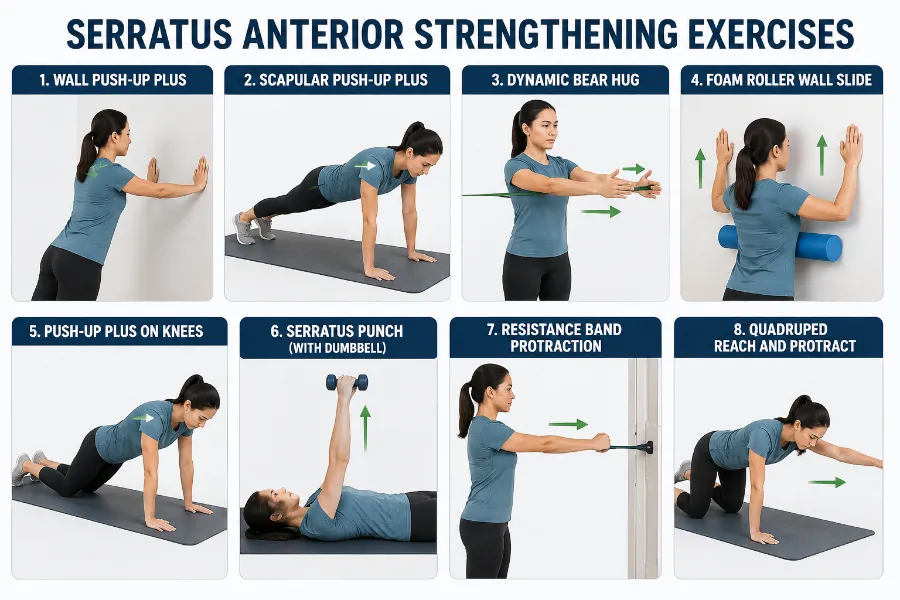
10 Best Serratus Anterior Strengthening Exercises
Introduction
One major muscle that runs down the side of the rib cage is the serratus anterior. It plays a key role in shoulder blade stability, proper shoulder movement, and overhead arm function. When this muscle is weak or not working efficiently, it may contribute to shoulder blade winging, poor posture, shoulder pain, and difficulty with lifting or reaching overhead.
Serratus anterior strengthening exercises are designed to improve the muscle’s ability to protract, upwardly rotate, and stabilize the shoulder blade against the rib cage. Strengthening this muscle can help improve shoulder mechanics and support better control during daily activities, exercise, and sports. These exercises can be especially useful for people experiencing scapular instability, rounded shoulders, shoulder weakness, or reduced shoulder control. Simple movements such as wall slides, serratus punches, push-up plus, and resistance-band exercises can effectively target the serratus anterior when performed with proper technique.
In this guide, we will discuss some of the best serratus anterior strengthening exercises, including how to perform them correctly, recommended repetitions, and common mistakes to avoid. Always perform the exercises in a controlled manner and stop if you experience sharp or worsening pain.
Benefits of Serratus Anterior Exercises
- Overhead mobility may benefit from it.
- Even when you’re not working out, you raise your arms many times a day.
- Strengthening greatly facilitates the scapula’s upward rotation.
- Scapular dyskinesia is less likely to affect you. The phrase “scapular dyskinesia” refers to abnormal shoulder blade movement during arm movement.
- Rotator cuff injuries are less common. Injuries to the rotator cuff can occur, particularly in athletes.
- These might be avoided with strong serratus anterior muscles.
- It could be useful for other lifts. Most lifts at home or at the gym work your shoulders and core.
- Your weights may be better for some workouts if you’ve never performed serratus anterior exercises.
- If your body fat percentage is low enough, it looks good. Beyond all of the previously mentioned.
- If you train your serratus anterior frequently enough, it may give you that torn appearance right below the armpits.
Exercises
Serratus Wall Slide
Why Do It:
Wall slides could be a fantastic option if you can’t perform physically demanding tasks or go down on the ground. Shoulder impingement frequently causes pain, which wall slides can help to reduce. Shoulder impingement is a common occurrence for swimmers, throwers, and other overhead sports.
How to Do It
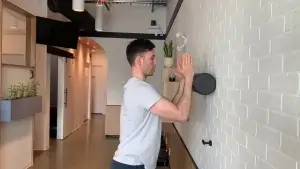
- Stand approximately one foot away, facing a wall.
- With your elbows a few inches above your shoulders, bend your arms and place them on the wall.
- Slide your elbows down the wall gently until they are below your shoulders while keeping your palms facing one another.
- Avoid letting a “pull” emerge from the triceps during sliding by keeping all movement in the shoulder.
- Do it again.
Dumbbell Pullover
Why Do It:
This exercises the chest, back, triceps, and core in addition to the serratus anterior. You may advance to your heart’s content because you’re utilizing a dumbbell instead of just your bodyweight for this exercise. Additionally, it facilitates shoulder movement above the head.
How to Do It:
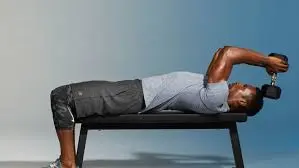
- Lying on a flat bench, hold one dumbbell in both hands (much like a dumbbell bench press, but with just one dumbbell). Your feet have to be flat on the floor.
- With your arms straight, raise the dumbbell above your chest.
- Now, drop the dumbbell behind your head while bending your arms slightly until your pecs and lats start to stretch. You should always be using your core.
- Return the dumbbell to its initial position over your chest.
Hold/Repetition: For the required number of repetitions, keep going.
Serratus Anterior Punch
How to do:
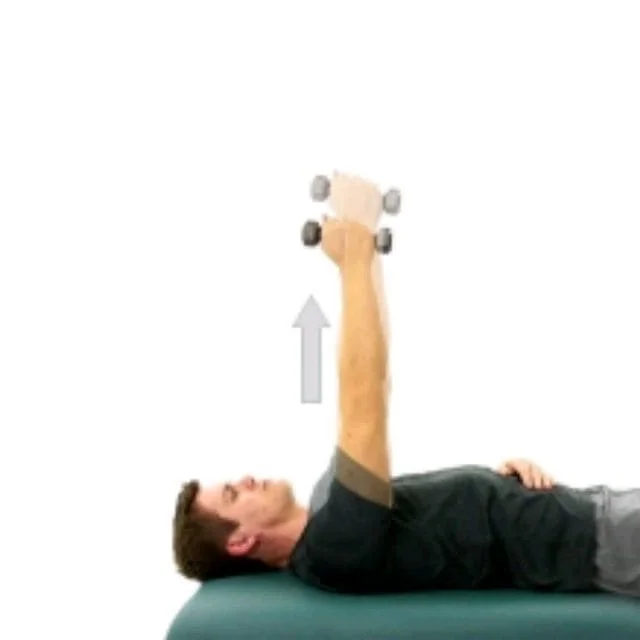
- With your back flat, lie down on a bed.
- Raise your arm over your face while holding a weight in one hand.
- Punch straight up in the air from here, then relax your shoulder as far as you can while maintaining a straight arm.
- Imagine the bone of your arm slipping into the socket of your shoulder.
Hold/Repetition: 3 x 10-15 repetitions
Amount: 1-2 daily
Bear Hug
How to do
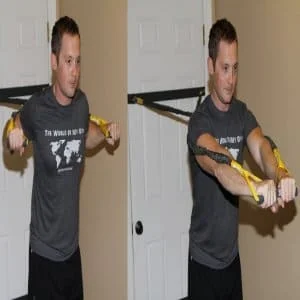
- Wrap a theraband over the center of your shoulder blades while maintaining a straight posture.
- At a 90-degree angle, extend your arms straight out to your sides.
- Pull the band forward and inward as if you were hugging someone while maintaining the straightest possible arms.
- Hold the posture for five seconds once your hands touch, then go back to the beginning.
- During this exercise, try not to shrug your shoulders.
Hold/Repetition:
3 x 10-15 repetitions
Amount: 1-2 daily
Wall Push-Ups
How to do
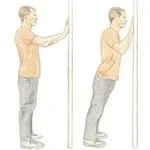
- Place your arm extended on a wall with your palm flat and push slightly forward toward the wall.
- Keeping your elbow straight, move your body forward in a straight line while holding your arm stationary so that your shoulder feels pushed back.
- Next, press back against the wall so that your shoulder advances once again.
- Picture your shoulder blade extending around your ribs and then returning.
Hold/Repetition:
3 x 10-15 repetitions
Amount: 1-2 daily
Point Scapular Push-Up
How to do
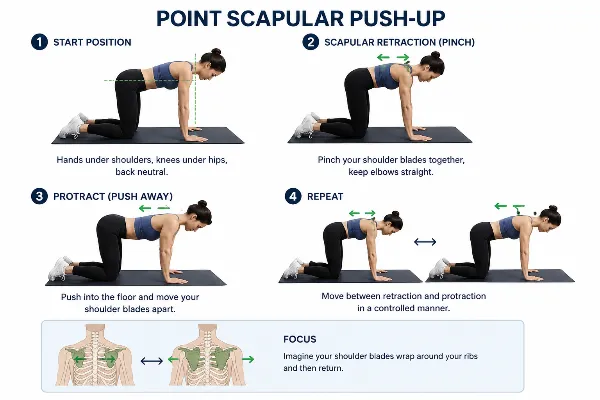
- Put yourself on all fours and make sure your legs are parallel to one another, your hands are directly under your shoulders, and your knees are exactly under your hips.
- Pinch your shoulder blades together as you drop your body toward the ground, being careful to keep your elbows straight (you will only move a few centimeters!).
- In order to move your shoulder forward and start the separation of your shoulder blades, push back into the floor.
- Imagine that your shoulder blades bend around your ribs and then return.
Hold/Repetition:
3 x 10-15 repetitions
Amount: 1-2 daily
Single Arm Split Stance Press
How to do
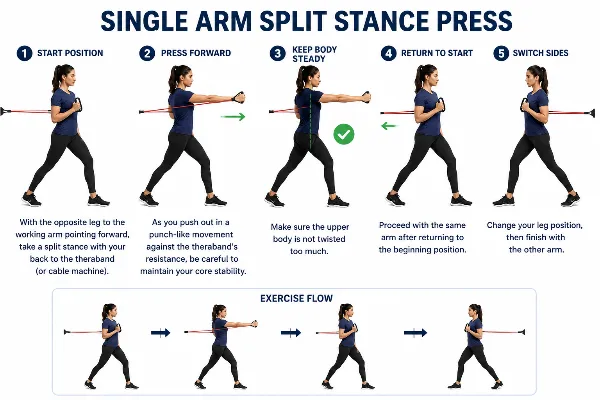
- With the opposite leg to the working arm pointing forward, take a split stance with your back to the theraband (or cable machine).
- As you push out in a punch-like movement against the theraband’s resistance, be careful to maintain your core stability.
- Make sure the upper body is not twisted too much.
- Proceed with the same arm after returning to the beginning position.
- Change your leg position, then finish with the other arm.
Hold/Repetition:
3 × 8–12 repetitions per arm
Amount: 1-2 times daily.
Scapular Push-Up Plus
How to do
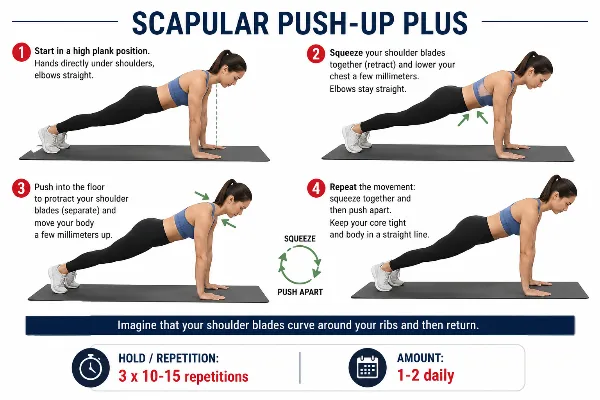
- Make sure your hands are exactly behind your shoulders while you perform a push-up or plank.
- You will only travel a few millimeters, so make sure your elbows stay straight as you drop your chest toward the floor, squeezing your shoulder blades together.
- In order to move your shoulder forward and start the separation of your shoulder blades, push back into the floor.
- Imagine that your shoulder blades curve around your ribs and then return.
Hold/Repetition:
3 x 10-15 repetitions
Amount: 1-2 daily
AB Rollout
Why Do It:
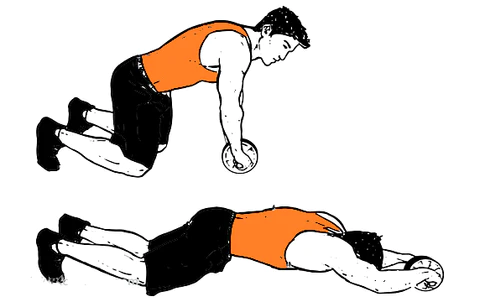
It’s one of the hardest and greatest ab workouts on our list, but that’s a plus. It aids in strengthening the serratus anterior and other core muscles. Improved posture may result from regular ab rollouts. You could become better at lower body workouts like deadlifts and squats,s as they call for a strong core.
How to Do It
- Drop to your knees and grasp an ab wheel.
- Let the ab roller roll out as far as you can after engaging your core. Maintaining a straight back is important.
- After some time, roll back to the starting position to reverse the action.
- Do it again.
How do you stretch the serratus anterior muscle?
Although the serratus anterior doesn’t need much static stretching, its range of motion may be unintentionally limited by tension in nearby muscles like the pecs or upper traps. To relieve any tension, you might wish to include these stretches at the conclusion of your workout:
Use a foam roller for active release. Place a foam roller below your armpit while resting on your side and gently massage it back and forth. When you come into a tight position, hold for a few seconds. Stretch your chest in the doorway. At shoulder height, place your arms on either side of a door frame. Feel your pecs expand as you push your chest through the doorway and lean forward a little.
A more restful stretch. Using your other hand, reach behind your back and draw your upper arm down across your body while lying on your side with it stretched overhead. Your front shoulder and chest should feel somewhat stretched as a result.
Strengthening of the serratus anterior at the barre
A Bar Exercise Method class will provide you with plenty of opportunities to improve your serratus anterior. Common barre movements, including push-ups, planks, rhomboid pulls, and oblique punches, are all good ways to strengthen this muscle.
Conclusion
Serratus anterior strengthening exercises can help improve scapular stability, shoulder mobility, posture, and overall upper-body function. Exercises such as wall slides, scapular push-ups, serratus punches, and resistance-band movements can gradually build strength and improve coordination between the shoulder blade and arm.
Serratus anterior strengthening exercises are an important part of maintaining healthy shoulder mechanics and stable scapular movement. A strong serratus anterior helps the shoulder blade move smoothly against the rib cage and supports activities that involve reaching, pushing, lifting, and overhead movements.
Including exercises such as wall slides, serratus punches, scapular push-ups, push-up plus, and resistance-band exercises in a regular strengthening routine can help improve scapular control and upper-body stability. Start with simple movements, focus on proper technique, and gradually increase repetitions or resistance as your strength and control improve.
For the best results, perform these exercises with controlled movements and proper form, and progress gradually as your strength improves.
Avoid exercises that cause sharp or worsening pain. If you have a shoulder injury, persistent pain, or significant weakness, consult a physiotherapist or healthcare professional for an individualized exercise program.
FAQs
How do you strengthen your anterior serratus?
Focus on exercises where you improve your shoulder blades forward over your ribcage without bending your elbows or shrugging your shoulders to strengthen the serratus anterior, the essential muscle for scapular protraction and shoulder stability.
Does serratus make you stronger?
By increasing shoulder stability and allowing safe weightlifting, strengthening your serratus anterior muscle strengthens your upper body.
Can poor posture cause scapular winging?
Actually, a winged scapula can result from poor posture. A forward-leaning, slouched posture weakens certain muscles and overworks others. The shoulder blade cannot rest flat on your ribs due to this imbalance.
What are the best serratus anterior exercises?
Due to its maximum muscle activation during electromyography (EMG) testing, the Push-Up Plus is generally regarded as the best overall exercise for the serratus anterior.
How long does it take for the serratus anterior strain to heal?
A more severe or moderate strain may take up to six weeks to recover, but a minor serratus anterior strain usually takes two to four weeks.
The majority of Reddit users agree that serratus and intercostal strains heal slowly and frequently need six weeks of rest to fully recover. This muscle is easily re-aggravated throughout daily activities since it plays a major role in breathing, twisting, and shoulder movement.
How to train serratus anterior with dumbbells?
The Dumbbell Serratus Punch, which concentrates on extending (pushing forward) your shoulder blades, is the best direct dumbbell exercise for the serratus anterior (the “boxer’s muscle” along your ribs).
References
- Snyder, J. (2025, March 17). Best exercises for serratus anterior, levator scapulae and rhomboids (Part 2). Medbridge. https://www.medbridge.com/blog/best-exercises-serratus-anterior-levator-scapulae-rhomboids-part-2
- Method, B., & Method, B. (2025, December 11). The 7 best Serratus anterior exercises and how to do them. Bar Method. https://barmethod.com/blog/the-most-neglected-muscle-during-exercise-the-serratus-anterior/