Top Exercises for Tight Upper Trapezius Muscle
Introduction:
The trapezius muscle is responsible for moving and twisting your shoulder blade, supporting your arm, and extending your neck. Stress and anxiety can readily settle there because of the amount of labor it does. This especially affects the upper section of the trapezius in your lower neck.
To ease the strain in your shoulders, neck, and upper back, try some exercises.
Why do my trap muscles hurt?
Tight traps can be caused by a few things, such as:
- Bending over while seated for extended periods of time. Long-term use of any position can result in joint and muscular pain, even if there is no such thing as perfect posture. For instance, you’ll have to utilize your traps for extended periods of time if you’re confined to a posture where your shoulders are raised, like bending over a computer. If you don’t take a break, this might create soreness across your trap muscles, particularly the upper region. The good news is that frequent movement snacking can effectively prevent and treat upper back pain.
- Tension on the muscles. Certain exercises, such as lifting or push-pulling movements, place additional strain on the trapezius, which stabilizes the upper back and neck. However, this does not suggest that these exercises are harmful or dangerous. Overdoing it, however, could cause a strained trapezius muscle.
- Strain. Research shows that trapezius muscle activity increases under stressful conditions. We carry tension in our shoulders, which can place additional strain on the trapezius. You may be more susceptible to experiencing and being disturbed by trapezius pain if you are under a lot of pressure because tension can also lower your pain threshold.
Why You May Have Tight and Tense Trapezius Muscles:
The main issue is frequently poor posture. Slouching over your phone or in front of your laptop probably isn’t helping your traps because everything surrounding the head needs to work harder to maintain the weight when the head is out of its regular posture.
Tight trap muscles can also result from past trauma or injury, in addition to stress and tension. A whiplash injury is one instance of an injury to the neck, shoulders, or upper back that may cause the trapezius muscles to stiffen as a protective response.
Variations in the strength and flexibility of other muscles can also lead to overcompensation and pressure on the trap muscles. Additionally, be mindful of repetitive movements: Reaching aloft constantly or carrying heavy goods on one shoulder are examples of routine tasks that might strain the trap muscles.
Trapezius stretches for tightness and pain relief:
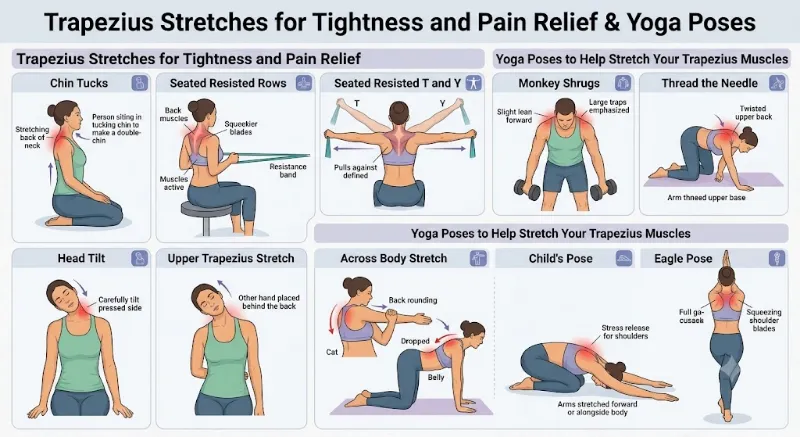
Chin tucks:
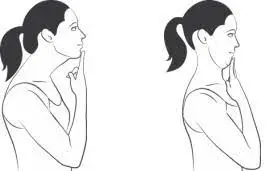
By strengthening the front neck muscles, this could reduce the load on the upper trapezius muscle in terms of neck stability.
How to do it:
- While standing comfortably, turn your head slightly to bring your chin closer to your chest.
- With your jaw muscles relaxed, retract or glide your chin back.
- Let your neck muscles relax to get back to the starting position.
Seated resisted rows:
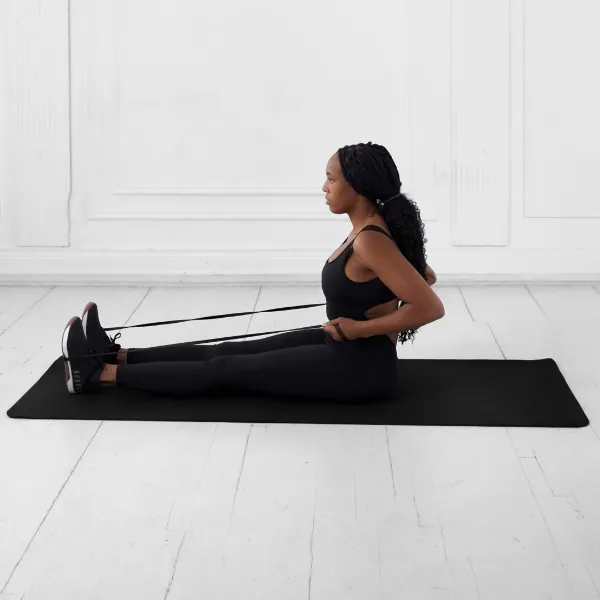
You can reduce the tension on your upper trapezius by strengthening your middle trapezius muscle.
How to do it:
- Holding the ends of a resistance band in each hand, secure the middle of the band around the bottom of one or both feet.
- Stretch your arms toward your feet and lengthen your legs to create tension in the band.
- Bend your elbows and pull the band in your direction to bring your hands to the side of your ribs.
- Extend your arms once more to return to the starting position.
Seated resisted T and Y:
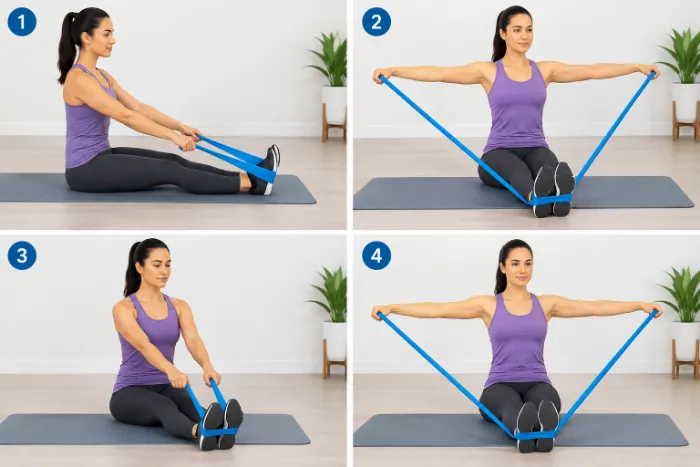
Because it targets the top, middle, and lower areas of your trapezius muscle, this is an excellent exercise to build the complete muscle.
How to do it:
- Holding the ends of a resistance band in each hand, secure the middle of the band around the bottom of one or both feet.
- Stretch your arms toward your feet and lengthen your legs to create tension in the band.
- Put your arms in a “T” shape by moving them out to the sides and away from one another. When you reach shoulder height, stop.
- To come back to the beginning position, bring your arms back together.
The bottom portion of the trapezius muscle is often weaker than the upper portion. Doing any activity that requires a lot of lower trapezius movement, such as painting a ceiling or lifting boxes, might cause the muscle to strain. It is effectively strengthened to avoid damage by the Resisted Y, which necessitates lifting high.
How to do it:
- Holding the ends of a resistance band in each hand, secure the middle of the band around the bottom of one or both feet.
- Stretch your arms toward your feet and lengthen your legs to create tension in the band.
- Lift your arms to form a “Y” shape.
- Return to the beginning position by lowering your arms.
Monkey shrugs:

These facilitate overhead movements, such as raising something above your head, and assist in strengthening your upper trapezius.
How to do it:
- Sit up straight with your arms by your sides.
- As your elbows rise and extend to the sides, slide your hands up your sides in the direction of your underarms. Relaxing your shoulders is OK.
- Return your hands to the initial position by sliding them down.
Thread the needle:
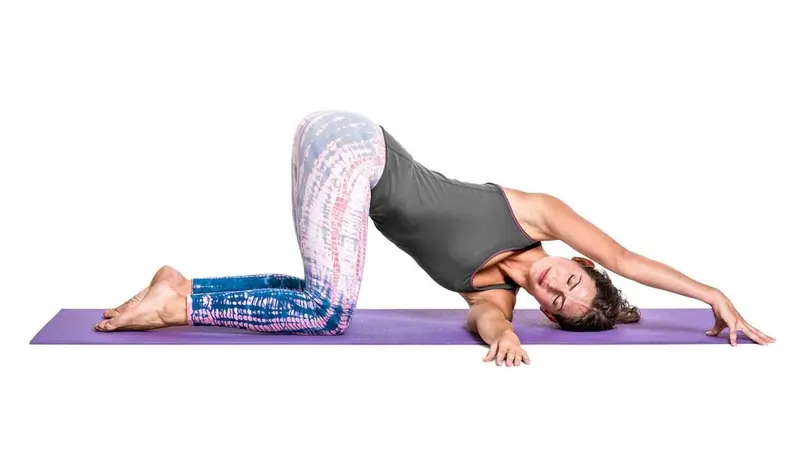
This is one of the best trapezius stretches for relieving pain. It is helpful to stretch and move your middle trapezius muscle if it stiffens up during the day.
How to do it:
- Start on all fours on a yoga mat, placing your hips behind your knees and your hands precisely under your shoulders.
- Raise one hand off the ground and reach it under your abdomen to the opposite side as you lower your shoulder toward the floor. As you perform this mild twist, let your head and chest spin.
- Hold the stretch after twisting as far as it feels comfortable.
- Repeat on the opposite side after carefully returning to the beginning position.
Head tilt:
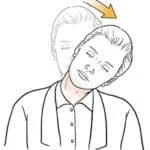
This simple exercise helps to stretch your upper trapezius muscle. Just move your head to the right and then to the left to lengthen the entire muscle.
How to do it:
- To begin, take a comfortable seat or stand.
- As you progressively bend your head to the side, lower your ear toward your shoulder.
- Hold this position and then raise your head back to the starting position. On the other side, repeat.
Upper Trapezius Stretch:
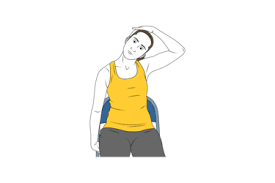
- Start by maintaining proper posture, relaxed shoulders, and an upright sitting or standing position.
- Tilt your head slightly to one side to bring your ear closer to your shoulder.
- For a more forceful stretch, place your hand on the opposite side of your head and gently press.
- Hold for 20 to 30 seconds, then repeat on the opposing side.
- Do this two or three times in total.
Cross-body Stretch:
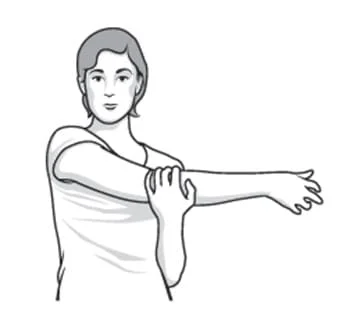
- To begin, stand with both arms by your sides.
- Raise the arm that has to be stretched until it is 90 degrees parallel to the ground.
- Just above the elbow, wrap the opposite arm over the arm you are extending.
- Using the other arm, draw the stretched arm closer to your chest. The shoulder should feel stretched.
- Repeat two to three times in total.
Yoga Poses to Help Stretch Your Trapezius Muscles:
Certain yoga poses can also help relax tight trapezius muscles.
Cat-Cow:
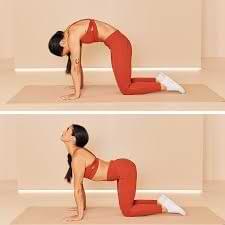
- Start on all fours with your back in a neutral position.
- Arch your back into an extended position and raise your tailbone toward the sky.
- Next, round your shoulders and draw your belly button toward your spine to achieve a flexed position. Perform ten to fifteen repetitions.
Balasana (Child’s Pose)
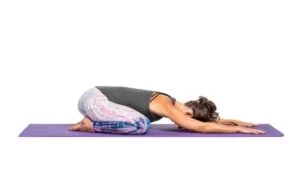
- Start on your hands and knees.
- Push back with your hands while keeping your head relaxed, bringing your hips closer to your heels and your chest closer to the floor.
- Hold for 20 to 30 seconds, then repeat two or three times.
Eagle Pose:
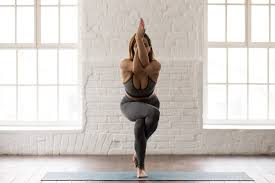
- You can stand or sit in this position.
- Bring your arms out to the side first, then start to cross your right arm under your left.
- You can place your hands on your shoulders or bring the palms together.
- Raise your elbows gently.
- Hold this position for 20 to 30 seconds, then repeat two to three times on each side.
The Benefits of Stretching Your Trapezius Muscles:
One of the key benefits of extending your traps is that it will increase the range of motion in your neck. It may feel wonderful to have more range of motion in your neck. Sometimes we don’t realize how much stress we are carrying until we release it.
Stretching your traps can also help you stay in better alignment and reduce your risk of shoulder, neck, and upper back problems.
Trapezius–Knot Release Techniques:
Trapezius muscle tension can be relieved in a variety of ways, either at home or with the help of a physical therapist.
The muscle knot on top of your shoulder is a sign that your muscle is inflamed, even if it doesn’t hurt too much. Your shoulder’s range of motion may be adversely affected by trigger points in the upper trapezius muscle, raising your risk of injury. This is particularly true if you perform a lot of overhead movements.
A very small study found that stiffness in the upper trapezius can reduce shoulder range of motion, raising the risk of rotator cuff injury. However, this study also showed that ischemic compression, usually referred to as trigger-point release, may be an effective treatment for upper shoulder muscle knots in 12 elite basketball players.
Release Your Trigger Point:
Physical therapists and massage therapists frequently do trigger-point release. However, you may use a lacrosse ball, tennis ball, or massage ball to test this method on yourself. Try it while standing as well as on your back.
- Place your back up against a wall.
- Lean against the ball that is placed squarely on the lump behind your upper trapezius. Apply enough pressure to provide acceptable pain.
- Press harder after holding until 50% of the pain has subsided.
- Hold this pressure for as long as the pain goes away, which is usually between 30 seconds and several minutes.
Stretch It Out:
Stretching for trapezius knots can help ease tightness on top of your shoulders. Hold each stretch for 20 to 30 seconds while you repeat three times on each side.
- On the unaffected side, sit upright and tilt your ear toward your shoulder.
- To gradually increase the amount of stretch, place your palm on top of your head.
- Turn your head slightly and repeat to target different trapezius muscle fibers.
Apply Cold or Heat:
Inflammation is indicated by acute or immediately post-exercise trapezius pain. To reduce blood flow and inflammation in this kind of pain, apply ice to the affected muscle for ten to fifteen minutes.
Apply heat for 15 to 20 minutes to improve blood flow and aid in muscle relaxation if you have a trapezius knot that just won’t go away and is painful and irritating.
Squeeze Your Scapula:
Strengthening a muscle with a trigger point increases the tension on the already irritated muscle and could aggravate it.
However, you don’t have to completely forego physical activity. You may enhance your posture and lower your chance of overusing your upper-trapezius muscle by doing upper back strengthening exercises. Scapular squeezes don’t even require you to get up from your computer.
- On a level surface, sit up straight.
- Squeeze your shoulder blades together as if you were trying to grasp a pencil between them while keeping your arms at your sides.
- After two to three seconds of holding, let go.
- Do this ten times, building up to three continuous sets.
Make sure your upper trapezius muscle is relaxed when performing this exercise. Try it in front of a mirror to avoid shrugging your shoulders.
Get a Massage:
Consider hiring a professional massage therapist to assist you in relaxing your muscles if self-massage isn’t working. The twisted ball of muscle fibers can be broken up by a massage therapist using a number of techniques.
Perfect Your Posture:
Trapezius trigger points can be aggravated by bad posture, particularly when seated at a computer. Thus, make sure you’re set correctly by using these guidelines:
- Additionally, ensure that your thighs are parallel to the ground.
- Make sure your shoulders are relaxed, and your wrists and forearms are in line while positioning your keyboard and mouse.
- Position your computer monitor at eye level, approximately an arm’s length from your face.
FAQs:
How can a tight upper trapezius be released quickly?
A stiff upper trapezius muscle can be easily released with heat treatment, focused stretches, and mild self-massage.
What causes extremely tight trapezius muscles?
Muscle imbalances, bad posture, overuse, and stress are typically the causes of very tight trapezius muscles.
Which sleeping posture is ideal for treating trapezius pain?
Sleeping on your back or on your side with your non-painful side down is ideal if you have trapezius muscle pain. The upper trapezius and neck muscles are strained or stretched when you sleep on your stomach or directly on the uncomfortable side.
What is the best exercise for the upper trapezius?
Since the shoulder shrug’s main purpose is to elevate the scapula, it is the most efficient and straightforward exercise for working the upper trapezius.
What is the fastest way to build trapezius muscles?
Combining difficult, direct isolation exercises with increasing overload two to three times a week, together with a high-protein diet and regular recovery, is the quickest approach to developing your trapezius.
How to release overactive upper traps?
To relax and release hyperactive upper traps, combine self-myofascial release with active stretching and lower-trap or scapular-depressor strengthening to resolve the underlying movement imbalance
How to tell if your upper traps are weak?
Constantly tight muscles, tension headaches, flat-looking collarbones, or an inability to shrug and control your shoulder blades during overhead exercises can all signal weak upper traps.
What dissolves muscle knots?
Myofascial trigger points, a medical term for muscle knots, do not really dissolve, but instead relax and release when blood flow is restored and the tension in the locked muscle fiber is reduced.
References:
- Stelter, G. (2026, October 13). Stretches to loosen your trapezius muscles. Healthline. https://www.healthline.com/health/fitness-exercise/trapezius-stretches#catcow-pose
- Dpt, C. A. P., Mba, J. L. M., & Dpt, D. P. P. (2026, September 9). 7 best trap stretches to loosen tight trapezius. hingehealth. https://www.hingehealth.com/gb/en/resources/articles/trapezius-pain-exercises/
- Weingus, L. (1970, January 1). The best stretches for targeting tight trapezius muscles. https://www.onepeloton.com/blog/trap-stretches
- Cf-L, A. B. P. D. (2025, September 20). 6 ways to release a lump in your trapezius muscle. EverydayHealth.com. https://www.everydayhealth.com/workouts-activities/lump-in-the-trapezius-muscle/