Exercises to Fix Tech Neck Hump: Best Exercises & Stretches
Introduction:
A common cause of shoulder and neck pain and stiffness in many people is dowager’s hump, a type of thoracic hyperkyphosis. This abnormal curvature of the upper back is common in the elderly and can be caused by several factors, such as changes in sensation and weakening of the muscles.
The good news is that patients no longer have to deal with the persistent pain and cosmetic issues caused by this illness. Learn more about Dowager’s Hump, its possible causes, and some easy stretches that can help improve and reduce related symptoms by reading on.
What is a tech neck hump?
The rounded hump that develops at the base of the neck where the upper back begins is known as a tech neck hump. This hump, which is frequently a noticeable protrusion that can extend from the spine, is an obvious indication of bad posture, particularly when the head is leaned forward. Our posture may be impacted in numerous ways, and these sorts of obvious abnormalities are the consequence of repetitive actions that exert too much strain on the spine.
Looking down at a phone or computer screen on a regular basis may seem like a harmless posture error. It’s perhaps one of the biggest posture issues you may have. The center of gravity of the head is shifted by repeatedly tilting the head forward or gazing down. As a result, weight is moved forward from its normal resting posture. After years of executing the same activity, the body will change to make it easier, requiring the spine to exert more effort to maintain alignment. This includes the position of your spine throughout your body. A tech neck hump appears at the base of the neck as a result of moving forward to make up for this.
Poor posture causes postural tension and perhaps pain in the short term. Over time, it causes the spine’s actual form to change. You can recognize the tech neck hump once you experience it. Fortunately, with persistence, awareness, and the appropriate posture realignment tools, those same tendencies may be identified and reversed.
A prominent hump or curve in the thoracic spine that gives the impression of a rounded hunchback is known as Dowager’s Hump. This is not the same as buffalo hump, which is usually caused by an accumulation of extra fat around the base of the neck and upper back. Although they both affect the curvature of the neck and upper back, Buffalo hump and Dowager’s hump are two separate conditions.
Patients with Dowager’s Hump usually have a forward head position in addition to this obvious bulge in the upper back. Because it puts a lot of strain on the neck muscles and joints, this forward head position may be a key contributing factor. This extra strain can eventually result in a variety of symptoms and changes in the curvature of the spine.
Symptoms of Dowager’s Hump:
Some indications of Dowager’s Hump include the following:
- Visible Hump: The most noticeable symptom is the rounded hump on the upper back, typically located at the base of the neck or the upper thoracic spine.
- Neck and Shoulder Pain: Because of increased stress on these muscles, many people with Dowager’s Hump have pain, stiffness, or pain in the neck and shoulder regions.
- Back Pain: Back pain, especially in the upper back, can also be caused by kyphosis.
- Limited Mobility: One typical symptom of upper back pain is reduced range of motion and flexibility, which makes it challenging to carry out specific tasks.
- Muscle Weakness: The weakening of the muscles supporting the thoracic spine can lead to muscular imbalances and weakness.
- Headaches: Because of the changed posture and increased strain on the neck and upper back, some people with Dowager’s Hump may have persistent headaches.
Causes Of Dowager’s Hump:
Poor posture, osteoporosis, congenital factors, sensory abnormalities, and other medical issues are among the causes of Dowager’s Hump. Changes in the strength of the muscles around the thoracic vertebrae create Dowager’s Hump, regardless of the precise etiology. Overuse, tension, and a shift in posture result from other muscle groups having to compensate as these muscles weaken.
If they don’t get therapy, patients with Dowager’s Hump may experience pain in their arms, shoulders, and neck. In addition to the obvious aesthetic issues, many people with Dowager’s Hump experience persistent headaches and pain; thus, it’s critical to treat this condition as soon as possible.
Treating Tech Neck Hump:
The positive news is that Dowager’s Hump therapy may work. Key stretches and exercises can ease strain on the neck and upper back, lessen headaches, and assist in correcting the curvature associated with Dowager’s Hump when combined with additional therapies such as medication, massage, posture correction, and education. To ensure the greatest care and results, physical therapists will collaborate with medical specialists. The treatment plan must include physical therapy.
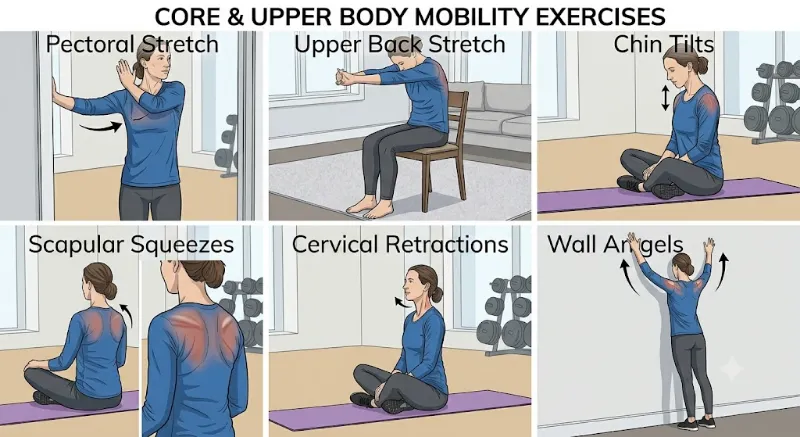
6 Stretches to Reduce Tech Neck Hump:
It’s important to speak with a medical expert, such as a physical therapist, before beginning any kind of treatment for a thorough evaluation and customized advice. By doing this, the physical therapist can identify any problems, diagnose them, and administer the appropriate therapies to reduce the possibility of unfavorable side effects and maximize the benefits.
Patients with Dowager’s Hump may be recommended the following exercises by a physical therapist:
Pectoral Stretch:
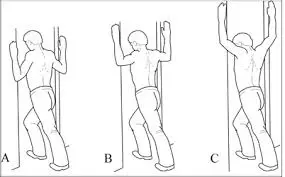
- Place your feet hip-width apart and stand in a doorway.
- With your elbows at shoulder height, press your forearms up on the door frame.
- Slowly step one foot forward.
- Gently bring your chest forward while maintaining a straight back.
- The front of your shoulders and your chest should both feel stretched.
- For 20–30 seconds, hold.
- Repeat 2-3 times while relaxing.
Advice: Avoid bouncing, move gently, and stop if you have severe pain or numbness.
Upper Back Stretch:
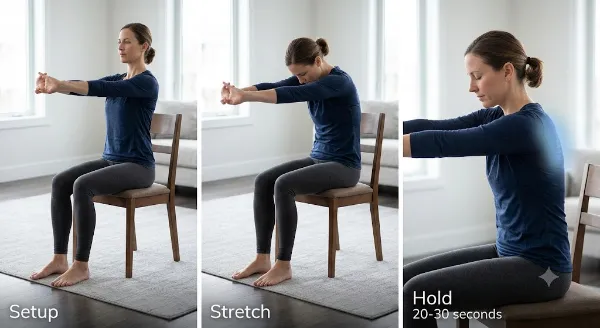
- With your feet flat on the ground, sit up straight on a chair.
- Interlace your fingers while extending your arms straight in front of you.
- Gently circle your upper back and slowly extend your hands forward.
- Bring your chin close to your chest.
- Avoid shrugging and maintain a relaxed shoulder position.
- While breathing normally, hold the stretch for 20 to 30 seconds.
- Slowly go back to where you were.
- Repeat two or three times.
The muscles around and between your shoulder blades should feel somewhat stretched.
Take proper care: Avoid forcing the stretch or movement into areas of intense pain, tingling, or numbness.
Chin Tilts:
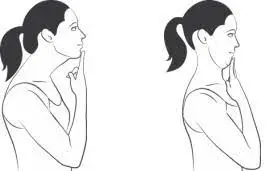
- Whenever you’re standing or sitting, keep your shoulders relaxed and your back upright.
- Keep your attention fixed on the front.
- Make a soft double chin by slowly tucking your chin in.
- Keep your attention focused and avoid lowering your head.
- Maintain the posture for three to five seconds.
- Calm down and go back to where you were.
- Repeat eight or ten times.
Important point: The movement will need to be modest and deliberate. Instead of pain, you should experience a slight activation or stretch around the neck and upper cervical muscles.
As a precaution, stop if you feel tingling, numbness, acute neck pain, or dizziness.
Scapular Squeezes:
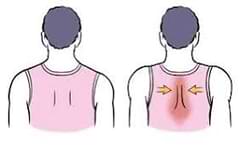
- With your shoulders relaxed and your back straight, sit or stand up straight.
- Make sure your arms are at your sides.
- As if you were attempting to hold a pencil between your shoulder blades, slowly draw them back and toward one another.
- Do not shrug your shoulders toward your ears; instead, keep them down.
- Give the squeeze three to five seconds.
- Let your shoulder blades relax slowly.
- For two to three sets, repeat 10 to 15 times.
Key point: Instead of pulling your chest forward, concentrate on moving your shoulder blades.
Precaution: There should be no pain throughout the movement. Don’t arch or squeeze your lower back too much.
Cervical Retractions:
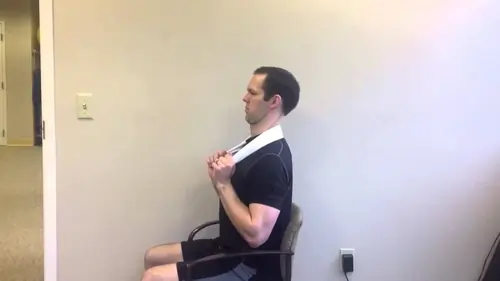
- Whenever you’re sitting or standing, keep your shoulders relaxed and your back straight.
- Keep your gaze fixed on the front.
- Make a soft double chin by slowly turning your head straight back.
- Don’t glance up or down; instead, keep your chin level.
- Maintain the posture for three to five seconds.
- Return your head to the neutral position slowly.
- Repeat eight or ten times.
Important points:
- Instead of moving downward, the movement should be straight backward.
- Maintain a calm and relaxed posture.
- The exercise should be done slowly and without straining.
- It’s normal to feel a slight stretch or activation of the muscles in the back of the neck.
As a precaution, stop if you experience tingling, numbness, disorientation, severe pain, or symptoms that spread to your arm.
Wall Angels:
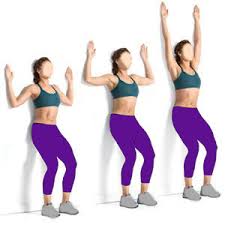
- Place your back up against a wall.
- Maintain a distance of six to eight inches between your feet and the wall.
- Bring your pelvis, head, and upper back gently toward the wall.
- Make a W shape with your arms by bending your elbows to around 90 degrees.
- Slide your arms slowly upward until they are above.
- Your hands and elbows should be as near to the wall as is comfortable.
- Return your arms to the starting position slowly.
- Repeat eight to twelve times.
Important points: Move carefully, avoid shrugging your shoulders, and prevent your ribs from flaring. Instead of being uncomfortable, the workout should feel controlled.
Prevent text neck from taking over:
Change how you hold your phone:
To avoid having your head too high or slouched forward, bring the screen to eye level. Instead, maintain a neutral spine so that your shoulders and ears line up. This will prevent you from maintaining a forward-looking posture for extended periods.
Take phone breaks:
Even if it’s only for two or three minutes per hour, taking frequent breaks from the computer might be beneficial. My first recommendation for avoiding and treating tech neck is to break the habit of looking down, but most individuals are unlikely to be able to do so. Therefore, I advise individuals to deliberately take breaks from their phones. Use a sticky note or set reminders on your computer or phone. These seemingly little clues can have a significant impact.
Try the Text Neck app:
An Android app called Text Neck provides instantaneous, real-time posture feedback. Additionally, there is an optional buzzer or vibration alert to let you know when you’ve reverted to negative habits.
Do 10 minutes of yoga:
Yoga is the finest method for treating and preventing neck and back pain since it integrates breath exercises, improves movement patterns, and raises body awareness. Tight rhomboids and other muscle imbalances are the root cause of neck pain, but regular yoga practice can help level them out. Doing the exercises mentioned above or practicing yoga for ten minutes each day can have an impact.
Why does neck pain from phone use happen more than ever?
The result of years of bad practices is a huge neck hump. One of the biggest issues with poor posture is that you may not even be aware of it, even though it might not seem like a concern. People’s growing reliance on digital gadgets is reflected in the development of tech neck humps. It is the outcome of nearly continual screen access and the lack of true ergonomic solutions in the design of current devices.
Forward Head Posture and Its Hidden Weight:
The muscles at the back of the neck are severely strained while looking down at a phone, even though it may not seem like a difficult exercise. The weight is transferred to other muscles that have to exert more effort to compensate when the neck is tilted forward.
Your neck muscles must perform about the same amount of work while gazing down at a 45-degree angle as when lifting a 50-pound bag of potatoes. Changes become more noticeable the longer these muscles are subjected to this strain and additional weight. See our page on how posture impacts neck alignment for more details.
Poor Ergonomics at Home and at Work aggravates the Problem:
Desk and office jobs occupy a significant portion of many people’s days. There are a few common ways to set up ergonomic support for your body while working, even at home. You might easily lose your natural alignment if your desks and chairs are not adjustable or are positioned wrongly. The neck is forced into an abnormally bent posture to ease the strain on the muscles while slouching on a hard-backed chair or hunching over a laptop without support.
Prolonged Device Use Encourages Bad Habits:
Tech neck humps are the result of hours and hours of misalignment piling on top of one another rather than a single error. You end up holding one form for too long when you spend hours looking at a screen, whether it’s for work, browsing social media, or watching a movie. These attitudes become more established the more time you spend staring down at a screen.
Simple digital posture correction changes:
Fortunately, similar behaviors that you may develop as a result of extended screen usage are also among the simplest to break. You may begin realigning your posture without giving up your electronics. When it comes to establishing consistency and achieving significant improvement, the most effective adjustments are the small ones, such as wearing ergonomic support clothing at work.
Raise Your Screens to Eye Level:
Bring your gadgets up to your eye level. You should be staring straight at the screen rather than up or down to maintain your neck in its natural posture. By not having to glance up or down at a screen, you may avoid the extra weight and needless tension that come with it.
Use Movement As A Daily Reset:
Your muscles may quickly lose their normal posture if you spend hours staring down without pausing to move. Even if you know your posture will be impaired, taking time to reset during the day can help, since movement resets that posture. This can be accomplished with mild extension exercises that promote spinal extension. Another simple method for gradually stretching the upper back after extended desk work is to perform shoulder rolls or basic side bending.
Stay Aware Of Your Shoulder Positioning:
The issue is not limited to forward head posture. Another major cause of a tech neck hump is rounded shoulders. One of the main causes of poor posture from using technology is rounding across the upper back, which pushes the neck forward.
The upper back muscles will remain active if you are aware of your shoulders moving forward or downward. You’ll see a correction in your posture if you deliberately keep your shoulders lowered.
FAQs:
How to get rid of a tech neck hump fast?
Raising all digital devices to eye level, opening your tight chest muscles against a wall corner, and doing regular chin tucks will all help eliminate a tech neck hump caused by bad posture. Retraining your upper back and cervical spine requires regular, everyday exercise in order to achieve true structural improvement.
Can a neck hump be fixed with exercise?
Indeed, certain workouts, stretches, and regular lifestyle changes may frequently relieve or lessen a neck hump caused by bad posture and forward head carriage.
Is a tech neck hump reversible?
However, assuming there is no serious permanent bone disease or extensive structural damage, a posture-related tech neck hump may frequently be greatly reduced or reversed with regular daily stretching, upper back strengthening, and ergonomic modifications.
Is a neck hump bone or fat?
Depending on your particular kind, a neck hump may be caused by fat or bone/spinal alignment. It is either a structural forward bend of the upper spine or a soft buildup of adipose tissue.
Is it too late to fix a neck hump?
No, fixing a neck hump is almost always possible. Regardless of age, in the majority of cases, whether caused by bad posture or an accumulation of fat pads, it can be considerably decreased or controlled with regular adjustments.
How to rehab a tech neck?
Fixing forward head position and reducing muscle strain caused by staring down at phones or computers are the goals of tech neck rehabilitation. Daily stretches, deep neck flexor strengthening, upper back activation, and workplace modifications are the mainstays of treatment.
Can sleeping without a pillow reduce neck hump?
A neck hump cannot be corrected by sleeping without a pillow. A structural neck hump requires specific daytime posture correction, stretching, and strengthening activities to alter tissue length and muscle balance, even though giving up a thick pillow can stop your head from being pulled further forward.
References:
- Kutschke, I. P. (2010). The effects of the Alexander Technique training on neck and shoulder biomechanics and posture in healthy people. In eScholarship@McGill (McGill). https://doi.org/10.82308/9914
- Okhrimenko, I., Tomenko, O. A., Leonenko, A. V., Cherednichenko, S. V., Krasilov, A. D., Liakhova, N., & Baldetskiy, A. A. (2023). CADETS’ MOTIVATION FOR MOTOR ACTIVITY AS AN IMPORTANT FACTOR IN IMPROVING THEIR HEALTH. Polski Merkuriusz Lekarski, 51(3), 260–267. https://doi.org/10.36740/merkur202303113
- Gittleman, E., & Dryden, E. A. (1969). Melville’s Thematics of Form: The Great Art of telling the truth. The New England Quarterly, 42(4), 599. https://doi.org/10.2307/363479