
Physical Therapy For Hip Pain: Causes, Exercises, and Recovery
Introduction:
Hip pain is a common condition that can stem from anything from arthritis to sports injuries. Hip pain is often treated at home with over-the-counter painkillers and a break from physical activity. However, more therapies could be required if the pain continues or increases.
What is hip pain?
Hip pain is pain or tenderness in or around the hip joint. The point of contact of two bones in your body is called a joint. Your thigh bone joins your pelvis at the hip joint. One of the biggest joints in your body, the hip joint is used all the time for movement, weight support, and balance.
Hip pain can be anything from a little difficulty to a more serious problem that requires medical attention. Which area of your hip joint is affected will determine where you experience pain. You may get hip pain:
- around the area surrounding or above your hip.
- further within your hip joint.
- in the lower back. Sometimes hip pain can radiate to the thigh or lower back.
The pain may come and go. For instance, you may experience hip pain when walking or moving, but it goes away when you relax. Additionally, some people experience pain at different times of the day. When you get up in the morning, you can have additional pain. Hip pain is also frequently experienced at bedtime, particularly if you sleep on the same side as your sore hip.
Hip pain is typically manageable at home with over-the-counter painkillers and a vacation from physical activity. If your hip pain is severe enough to interfere with your everyday activities or make it difficult for you to move, see a doctor. If your pain continues for more than a few days without improving, see a professional.
What causes hip pain?
A number of illnesses, such as arthritis, hip injuries (fractures, labral tears, and dislocation), bursitis, and structural problems, can cause hip pain. Hip injuries and hip pain are more common among athletes who move their hips in all directions, such as athletes who do gymnastics and dancers.
Arthritis:
Your joints become painful and inflamed when you have arthritis. Arthritis in the hips is frequent. Symptoms include hip pain, edema, and joint stiffness. Hip pain can result from a variety of arthritic conditions, such as:
- Osteoarthritis.
- Rheumatoid arthritis.
- Ankylosing Spondylitis
Bursitis:
Bursitis is painful swelling in a small, fluid-filled sac called a bursa. The pockets that cushion bones and other tissue are called bursae. An inflamed and swollen hip bursa is known as hip bursitis. The two most common kinds of hip bursitis are:
- Iliopsoas bursitis.
- Trochanteric bursitis.
Injuries:
Pain can result from any accident that damages the components of your hip joint. Hip injuries often come on by:
- injuries caused by repetitive strain.
- injuries sustained in sports.
- traumas such as auto accidents or falls.
The following are some of the most frequent injuries that result in hip pain:
- strains in the hip muscles.
- syndrome of the iliotibial band.
- labral tears in the hips.
13 Exercises for Relieving Hip Pain:
These are the following exercises for relieving hip pain and improving mobility:
Knee Lifts:
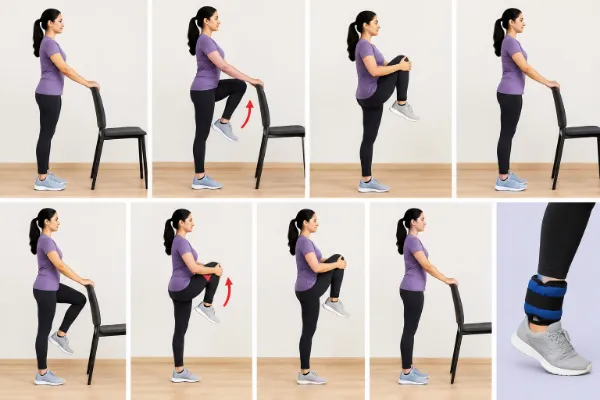
To perform knee lifts:
- If you need support, stand upright and use a chair, wall, or table.
- Raise the right knee toward the chest while maintaining a straight left leg.
- To assist in drawing the knee closer to the chest, try placing both hands on top of it.
- For ten seconds, hold the stretch.
- Gently return the right leg to the floor by releasing the knee.
- Repeat the preceding steps with the opposite leg after switching legs.
On each knee, perform this exercise ten to fifteen times. Additionally, people might wish to try performing up to four sets of the same number of repetitions.
Ankle weights can be added over time to improve resistance.
Butterfly stretch:

To perform a butterfly stretch:
- With both legs out in front of you, take a seat on the floor.
- Press the soles of the feet together while bending the legs at the knees.
- Gently press both knees toward the floor by placing a hand on top of them. Stretch the knees by applying pressure, but do not push them farther than is comfortable.
- Some people might prefer to bend forward at the waist while maintaining a straight back in order to prolong the stretch.
- After 15 to 30 seconds of holding the stretch, let go.
Do the stretch two or four times.
Double hip rotation:
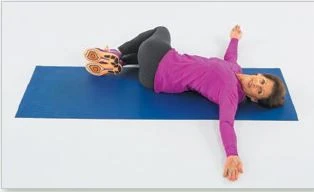
To perform double hip rotations:
- Lie down on your back.
- When the feet are flat on the ground, bend the knees and bring them closer to the torso.
- Gently turn your knees to the left to lower them toward the floor. Keeping the shoulders on the ground, turn the head to face the right.
- For 20 to 30 seconds, maintain this posture.
- Return the knees and head to their initial positions slowly.
- On the other side, repeat.
This is an activity that people might wish to perform in sets.
Hip and lower back stretch:

To perform hip and lower back stretches:
- Bend your knees and pull them closer to your body while lying flat on your back until your feet are flat on the ground.
- Pull both knees in toward the chest with your hands.
- With each deep breath, bring your knees closer to your shoulders.
- Hold the position for 20 to 30 seconds after going as far as is comfortable. Take regular breaths.
You might also want to try performing the same exercise three times.
Hip extension:
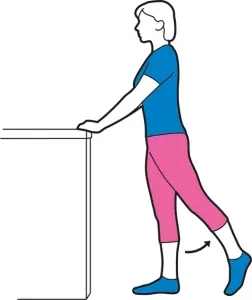
To perform hip extensions:
- Maintain a straight posture with your feet shoulder-width apart and your legs straight.
- Hold onto a chair, table, or wall for support while extending both arms out in front of you.
- Lift the left leg backward without bending the knee while maintaining a straight right leg.
- Clench your buttocks tightly and hold the posture for five seconds after lifting your leg as high as you can without hurting yourself.
- Repeat the preceding steps with the opposite leg after switching legs.
For each leg, repeat this stretch four to six times.
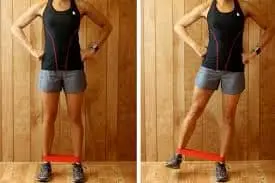
Hip abduction:
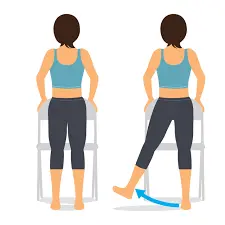
To perform hip abduction exercises:
- Maintain a straight posture.
- Use a solid surface, like a wall, table, or chair, for support if needed.
- Lift the right leg out to the right side, beginning with the feet together. Avoid twisting your hips and maintain a straight left leg.
- After holding the posture for five seconds, carefully bring the leg back to its initial position.
Perform this exercise on one leg ten times, then switch to the other leg.
Heel-to-buttock exercise:
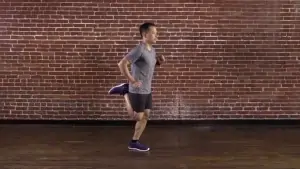
To perform heel-to-buttock exercise:
- Maintain a straight posture with your feet shoulder-width apart and your legs straight. Hold onto a chair, table, or wall if you need assistance.
- With the top of the foot toward the floor, bend the left knee and raise the heel toward the left buttock. Make sure the knees are aligned and the right leg remains straight.
- For 20 to 30 seconds, maintain the posture.
- Return to the starting position after lowering the leg slowly.
- On the other side, repeat the process.
For each leg, try to complete five to ten repetitions.
Mini squat:
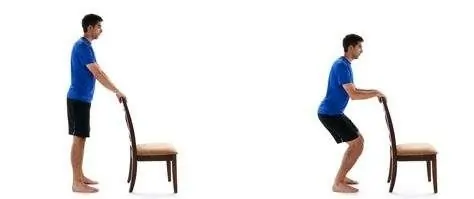
To perform mini squats:
- Place your feet shoulder-width apart and stand straight.
- Hold onto a chair, table, or wall for support if needed.
- Bend the knees till they are above the toes to gradually reduce the body while maintaining a straight back. The feet need to stay flat on the floor.
- After a few seconds of holding this posture, slowly straighten your legs to get back to the beginning position.
Perform these small squats ten times.
Short-arc quadriceps exercise:
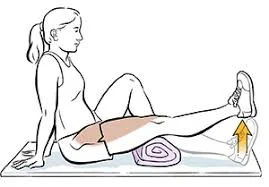
To perform short-arc quadriceps exercises:
- Place a pillow, foam roller, or rolled-up towel under your right knee and lie flat on your back.
- Bend the knee as you slide the right foot back toward the buttock.
- Press the back of the knee onto the towel and completely extend the knee to engage the left thigh. The left foot and lower leg will therefore rise off the ground.
- After holding the posture for five seconds, carefully return the left leg to its initial position.
Perform five to ten lifts on one leg before moving to the other.
Static gluteals:

To perform static gluteals:
- During the exercise, maintain your legs straight while lying flat on your back.
- The gluteal muscles should be tightened.
- After ten seconds of holding the posture, let go.
Perform five to ten repetitions. Additionally, people might wish to try performing two or three sets of the same number of repetitions.
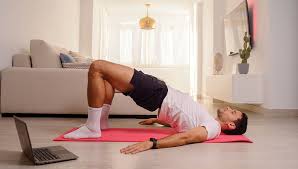
Glute bridge:
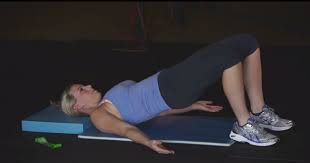
To perform a bridge:
- Lie flat on your back with both legs bent at the knee and your feet resting on the ground. With the palms facing down, keep your arms at your sides. If needed, support the head and neck with a small cushion.
- Lift your hips while gradually contracting your glutes and core. Maintain your upper back and shoulders on the ground.
- Maintain the posture for five seconds.
- Beginning at the top of the spine, gradually lower the pelvis and back toward the floor. Until the entire back is flat against the floor once more, roll down through the spine.
Do this exercise ten times.
Chair stand:
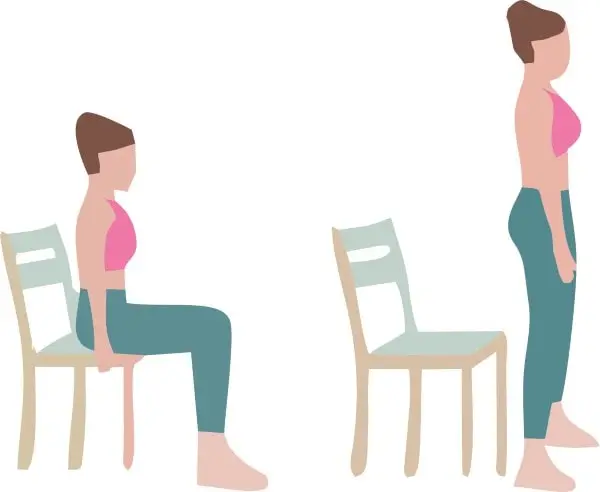
To perform a chair stand:
- A chair should be positioned with its back against a wall.
- Bend your knees and place your feet flat on the floor while seated on the front portion of the seat. Put each hand on the opposite shoulder and cross your arms.
- Lie back into the chair by turning at the hips.
- Slowly stand up after bending your upper body forward once more. While doing this, maintain a straight head, shoulders, and back.
- Return to your starting position and slowly sit down again.
Before progressively increasing the number of repetitions to 12, perform this exercise four to six times.
Pelvic tilt:
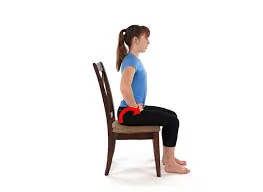
To perform a Pelvic tilt:
- In a neutral position, lie with your back on the ground. Keep your toes facing forward while bending your knees.
- The gap under the lower back decreases as you pull the belly button in toward the spine, causing the tailbone to tilt forward.
- Hold your glutes taut for five seconds.
- Go back to a neutral spine and relax.
Do this exercise five to ten times. Additionally, people might wish to try performing 20 repetitions in five sets.
RICE method for hip pain:
The RICE protocol may often be used at home to treat hip pain:
- Rest: To prevent aggravating the injury, cease the physical activity that was causing it.
- Ice: During the first day following your accident, apply an ice pack or cold compress for ten to fifteen minutes each hour. You can use ice every three to four hours after a day. Avoid putting ice directly on your skin.
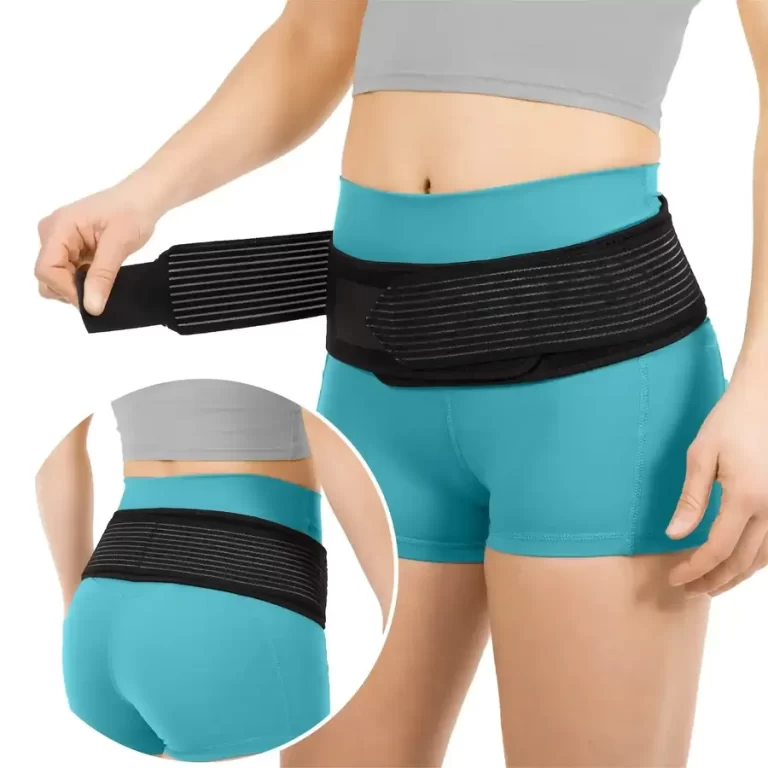
- Compression: Compression reduces swelling and improves blood flow to your damaged hip. Put a wrap or compression bandage around your hip. To assist in maintaining pressure on your hip, you can also wear compression trousers or shorts.
- Elevation: If at all possible, raise your lower body and hips above your heart. Use a pillow, blankets, or pillows to support your leg.
Medications for hip pain:
Medication may be suggested by your healthcare professional to treat your hip pain and other symptoms.
The majority of patients can use acetaminophen (Tylenol®) or over-the-counter NSAIDs (ibuprofen, aspirin, and naproxen). Consult your doctor before using these drugs for longer than ten days in a row.
How can you prevent hip pain?
Hip pain may not always be preventable, particularly if it results from an unplanned injury or a problem with your hip joint’s inherent structure.
When participating in sports or other physical activities:
- Put on the appropriate safety equipment.
- If your hip suffers during or after exercise, don’t “play through the pain.”
- After a physical activity, give your body time to relax and recover.
- Before engaging in physical activity or sports, warm up and stretch.
- After exercising, stretch and cool down.
To lower your chance of getting hurt, follow this general safety advice:
- Make sure no waste in your house or workplace might harm you or others.
- When reaching for objects at home, always use the appropriate tools or equipment. Avoid standing on worktops, tables, or chairs.
- If you have trouble walking or are at higher risk of falling, use a cane or walker.
Precautions for Exercises for Hip Pain:
- Start slowly: Increase repetitions, resistance, or duration gradually after starting with mild motions.
- Avoid exercising when in excruciating pain: If your hip pain is acute, severe, or becoming worse, cease extending or using your muscles.
- Exercises should be done gently and with good control to avoid abrupt or violent movements.
- Keep your alignment correct: When performing squats, step-ups, and strengthening exercises, maintain appropriate position of the hip, knee, and foot.
- First, warm up: Before beginning strengthening activities, take five to ten minutes to stroll gently or try another comfortable activity.
- Stay away from overstretching: Don’t push the hip into very wide ranges of motion.
- Adjust workouts as necessary: If symptoms aggravate, decrease resistance, repetitions, and range of motion.
- Permit recovery: Give your muscles enough rest in between strengthening exercises and refrain from overstressing the sore hip.
- When needed, make use of assistance: If you feel unstable while performing standing and balancing exercises, hold onto a stable chair, wall, or countertop.
- Stop if symptoms worsen afterward: Reduce the intensity or stop exercising if pain or stiffness noticeably increases and does not go away.
- Seek professional evaluation: If hip pain is severe, ongoing, accompanied by noticeable weakening, or interferes with walking or everyday activities, see a physician or physiotherapist.
- Seek immediate medical attention following a serious injury: Assessment should be done as soon as possible if there is an evident deformity, acute pain after a fall or trauma, incapacity to bear weight, or sudden severe symptoms.
Important: The source of hip pain determines the right workouts. Exercises that are helpful for minor muscular tightness might not be useful for an acute injury, fracture, severe flare-up of arthritis, or any other underlying disease.
FAQs:
Which exercise is best for hip pain?
Standing hip abduction and glute bridges are frequently advised to stabilize the joint and reduce strain, but there is no one ideal exercise for hip pain because treatment depends on the precise reason for your suffering.
What sleeping position is best for hip pain?
The ideal sleeping position for hip pain is on your back with a pillow under your knees because it distributes your body weight evenly and reduces joint tension.
Is walking good for painful hips?
Walking lubricates the joint and develops supporting muscles, so it is typically beneficial for mild-to-moderate hip pain and arthritis. However, you must stop if it causes acute or increasing pain.
What is the main reason for hip pain?
The most frequent cause of hip pain is osteoarthritis, which occurs when the joint’s protective cartilage gradually deteriorates.
What is a red flag for hip pain?
Red flags for hip pain are grave indicators that point to a significant injury, infection, fracture, or underlying systemic illness that needs to be treated right away.
What are the early signs of hip problems?
Mild pain in the pelvis, inner hip, or front of the thigh is frequently the first indication of hip issues, and it might get stronger with movement or prolonged sitting.
How long will hip pain go away?
Depending on the underlying reason, hip pain can linger anywhere from a few days to many months.
How can I naturally heal hip arthritis?
Low-impact exercise, heat and cold therapy, and anti-inflammatory vitamins are natural treatments for hip arthritis pain.
References:
- Dowell, D., Haegerich, T. M., & Chou, R. (2016). CDC Guideline for Prescribing Opioids for Chronic Pain—United States, 2016. JAMA, 315(15), 1624. https://doi.org/10.1001/jama.2016.1464
- Hatefi, M., Babakhani, F., & Ashrafizadeh, M. (2021). The effect of static stretching exercises on hip range of motion, pain, and disability in patients with non‐specific low back pain. Journal of Experimental Orthopaedics, 8(1), 55. https://doi.org/10.1186/s40634-021-00371-w
- Torriani, M., Souto, S. C. L., Thomas, B. J., Ouellette, H., & Bredella, M. A. (2009). Ischiofemoral impingement syndrome: an entity with hip pain and abnormalities of the quadratus femoris muscle. American Journal of Roentgenology, 193(1), 186–190. https://doi.org/10.2214/ajr.08.2090