Wrist Mobility Exercises for a Stiff Wrist
Introduction
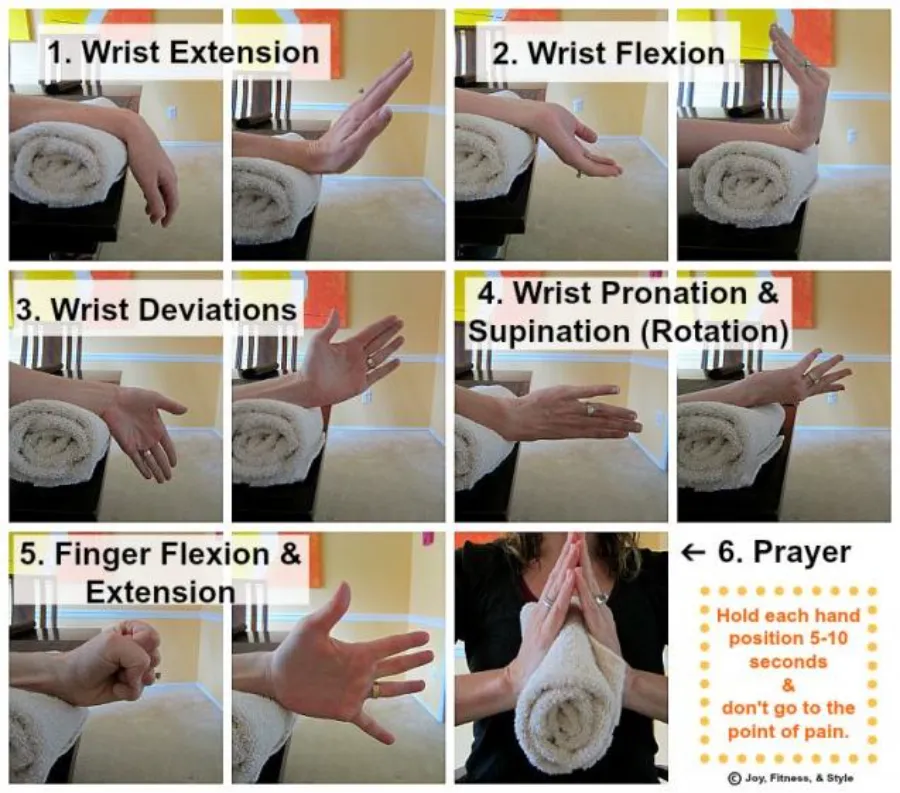
Wrist stiffness is a common problem that can make everyday activities such as typing, writing, lifting objects, cooking, exercising, or even opening a door uncomfortable. It may develop after prolonged computer or smartphone use, repetitive hand movements, an injury, immobilization, arthritis, or reduced flexibility of the muscles and joints around the wrist. When wrist mobility becomes limited, movements such as bending the wrist forward and backward, turning the forearm, or moving the hand from side to side may feel tight or painful.
Wrist mobility exercises are gentle movements designed to improve flexibility, joint movement, and overall function of the wrist and forearm. Regularly performing exercises such as wrist flexion and extension, wrist circles, side-to-side movements, forearm rotations, and gentle stretches can help maintain a comfortable range of motion and reduce stiffness.
These exercises may be particularly useful for people who spend long hours at a desk, perform repetitive hand activities, or are gradually returning to normal movement after a period of inactivity. Exercises should be performed slowly and within a comfortable range, without forcing a painful movement.
If wrist stiffness is severe, follows a significant injury, or is accompanied by persistent swelling, numbness, weakness, or worsening pain, evaluation by a doctor or physiotherapist is recommended before beginning an exercise program.
Exercises
Raised Fist Stretch
How to do
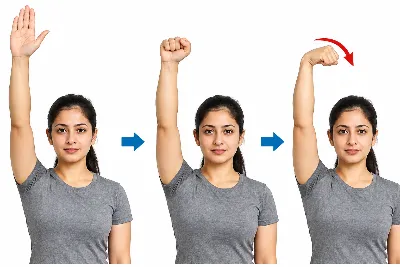
- With one arm raised next to the head and the hand outstretched, begin.
- Keeping the thumb outside of it, make a fist.
- Until a stretch is felt, move the fingers in the direction of the wrist.
- For three to five seconds, hold the stretch.
- After ten repetitions, switch to the other hand and repeat the stretches.
Wrist Rotation
How to do
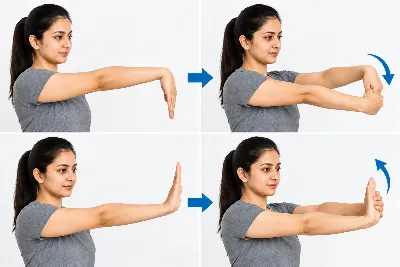
- Stretch one arm in front of the body.
- Point the palm away from the body and the fingers down slowly until you feel a stretch.
- Gently move the elevated hand closer to the body with the other hand.
- For three to five seconds, maintain this posture.
- Until you feel a stretch, point your fingers toward the ceiling.
- Gently pull the elevated hand closer to the body with the other hand.
- Hold this posture for three to five seconds.
- After doing this three times, switch to the other hand and repeat the stretch.
Prayer Position
How to do
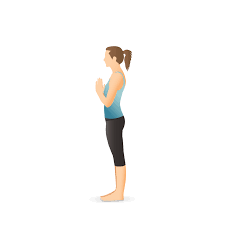
- In a prayer position, place your elbows on the table and bring your palms together.
- Until you feel a stretch, lower the sides of your hands toward the table.
- Hold your palms together.
- For five to seven seconds, maintain this posture.
- Relax.
- Do this three times.
Hooked Stretch
How to do
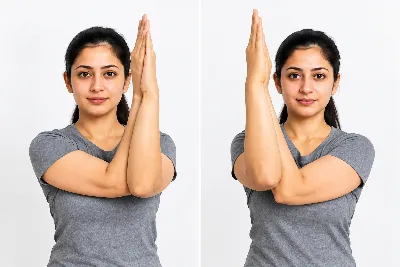
- Pull both arms toward the center of the body by hooking one elbow behind the other.
- The shoulders should feel stretched.
- Put one arm over the other until the palms are in contact.
- For twenty-five seconds, maintain the posture.
- Repeat on the opposite side after switching arms.
Finger Stretch
How to do
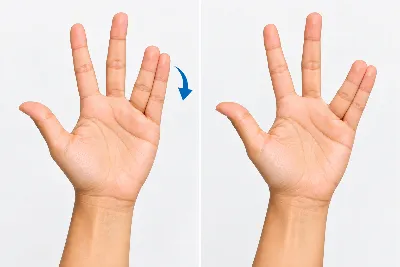
- Bring your ring and pinky fingers together.
- Keep the ring finger separate from the middle and index fingers.
- For one to two seconds, hold the stretch.
- Do the stretch ten times.
- This exercise can be performed with one hand at a time or at the same time with both hands.
Alternate Finger Stretch
How to do
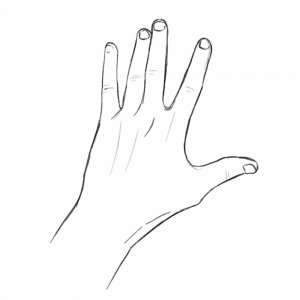
- Bring your ring and middle fingers together.
- Take the index and pinky fingers away from them.
- Do the stretch ten times.
Fist Opener
How to do
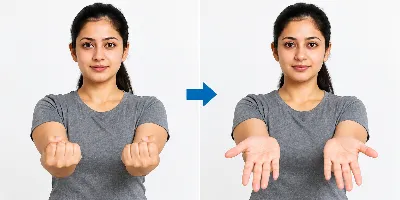
- Make fists with both hands, palms up, and hold them in front of the body.
- Stretch the fingers together until the hands are open and flat.
- Ten times over, repeat the movements.
Sponge Squeeze
How to do
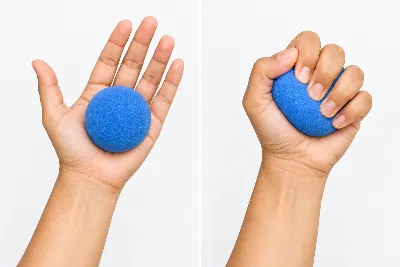
- Make a fist with a sponge or stress ball.
- For ten seconds, maintain the posture.
- Relax.
- Do this ten times.
- This exercise can be performed with one hand first, then the other, or with both hands together.
Windshield Wiper Wrist Movement
How to do
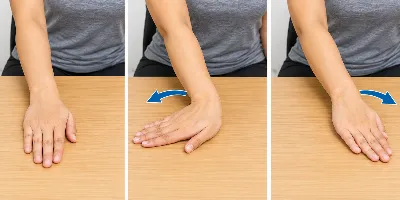
- Place the hand face down on a table to start.
- Point the hand as far to one side as you can without using your wrist.
- For three to five seconds, hold it there.
- On the opposite side, repeat the process.
- On each side, repeat the movement three times.
Finger Extension Stretch
How to do
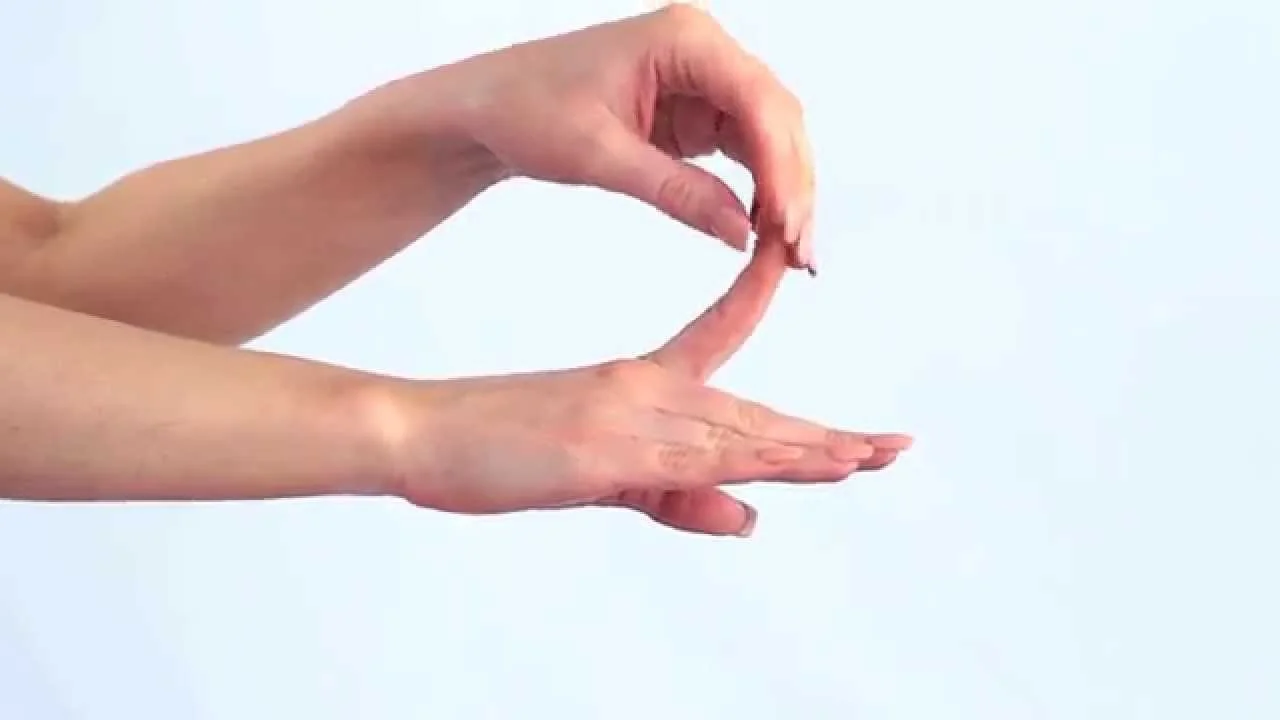
- Using the other hand, grasp a finger.
- Pull the finger gently back and away from the hand.
- For twenty-five seconds, hold the stretch.
- Continue using the other fingers.
Wrist Strengthener
How to do
- Put yourself on your hands and knees with your palms on the ground, and your fingers pointed toward your body.
- Lean forward slowly while maintaining straight elbows.
- For 20 seconds, maintain the posture.
- Repeat the stretch when you’ve relaxed.
Weighted Wrist Extension
How to do
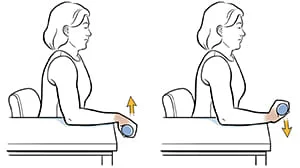
- With your affected hand, grasp a weighted handle or a can.
- Holding the item, place your palm down.
- Bend your wrist slowly to raise your hand, then return it to its original position.
- Perform three sets of ten repetitions.
- You could possibly try with somewhat heavier items.
Tendon Glide
Additionally, tendon glides improve your range of motion.
How to do
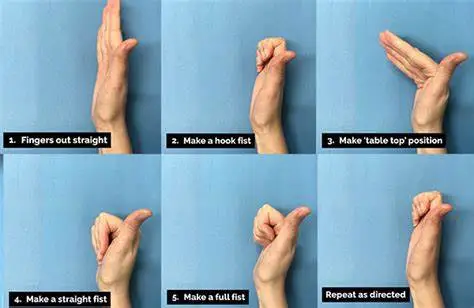
- Make a high-five movement with your hand.
- At your top joints (distal interphalangeal joints) and middle joints (proximal interphalangeal joints), bend your fingers down toward your palm.
- For five seconds, maintain this bent posture.
- Put your fingers back where they were.
- Perform three sets of ten repetitions.
Wrist Radial Deviation Strengthening
How to do
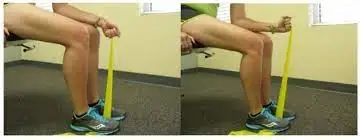
- As if you were about to shake hands, extend your affected wrist.
- For instance, your right palm should be pointing left when you exercise your right hand.
- Use a firm surface to support your hand or place your other hand under your wrist.
- Tilt your wrist up toward the ceiling and back down while holding a can or small weight.
- Perform 15 repetitions in two sets on the affected wrist.
Dumbbell Wrist Flexion
Alternative weights or resistance bands can also be used for wrist flexion exercises.
How to do

- With your palm toward the ceiling and your wrist and hand off the edge, place the back of your forearm on a table, bench, or chair while holding a light dumbbell.
- Raise the dumbbell as far up near your wrist as you can while maintaining arm stability.
- After pausing, gradually return to the beginning.
- Do eight to twelve repetitions on each side in two to three sets.
Dumbbell Wrist Extension
Wrist extension exercises can be done with a resistance band or a light household object if you don’t have a dumbbell.
How to do
- With your palm facing down and your wrist and hand off the edge, place your forearm on a table, bench, or chair while holding a light dumbbell.
- Curling your palm up and back toward your arm until the wrist is completely extended will raise the dumbbell while keeping your forearm still.
- After a little pause, carefully return the dumbbell to its initial position.
- Do eight to twelve repetitions on each side in two to three sets.
Dumbbell Wrist Supination and Pronation
It’s important to perform this exercise from behind the elbow rather than the shoulder. You may begin without using weights to improve the technique.
How to do
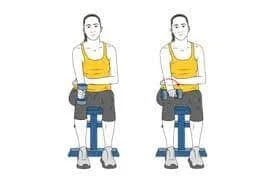
- With your palm toward the floor and your wrist and hand off the edge, place your forearm on a table, bench, or chair while holding a light dumbbell.
- Turn your hand gently so that your palm is toward the ceiling while keeping your upper body still.
- Do eight to twelve repetitions on each side in two to three sets.
Dumbbell Wrist Radial and Ulnar Deviation
Keep your forearm on the support and just go as far as you can throughout this exercise. You may wish to start by practicing without weights.
How to do

- With your palm toward your midline, rest the side of your forearm on a table, bench, or chair in a neutral posture while holding a light dumbbell.
- Lift your hand up and back toward your arm such that it tilts toward the ceiling while maintaining a flat arm.
- After pausing, go back to the beginning position and tilt your hand in the direction of the floor.
- Do eight to twelve repetitions on each side in two to three sets.
Benefits of Wrist Mobility Exercises for a Stiff Wrist
Wrist mobility exercises can help restore comfortable movement and make everyday hand and wrist activities easier. Common benefits include:
Improves wrist flexibility – Helps increase movement in wrist flexion, extension, and side-to-side directions.
Reduces stiffness – Gentle, regular movement can decrease the feeling of tightness and improve joint mobility.
Improves range of motion – Helps the wrist move more freely during daily activities and exercise.
Supports better circulation – Movement encourages blood flow to the muscles and surrounding tissues.
Reduces muscle tightness – Helps relax tight forearm and wrist muscles that may restrict movement.
Improves hand function – Better wrist mobility can make gripping, writing, typing, lifting, and household tasks more comfortable.
Supports wrist strength – Improved mobility provides a better foundation for performing strengthening exercises effectively.
Improves coordination – Encourages smoother movement between the wrist, hand, fingers, and forearm.
May reduce pain – Gentle mobility exercises may help with mild stiffness caused by prolonged inactivity or repetitive activities.
Helps prevent future stiffness – Regular wrist movement can help maintain flexibility, particularly for people who spend long periods typing or performing repetitive hand tasks.
When To See A Doctor About Wrist Pain?
- It’s critical to pay attention to your body because there are several possible reasons for wrist pain.
- Any signs of a fracture or dislocation are present.
- Your ability to move the affected area is impacted by the pain.
- Your ability to perform everyday tasks is restricted by the pain.
- Your wrist is bruised or swollen.
- After two to three weeks of wrist pain workouts, your symptoms don’t improve.
Conclusion
Wrist mobility exercises are a simple and effective way to reduce stiffness, improve flexibility, and restore comfortable movement in the wrist and hand. Regular practice can help improve range of motion, decrease muscle tightness, and make everyday activities such as typing, writing, gripping, lifting, and exercising easier.
These exercises are especially helpful for people who experience stiffness due to prolonged inactivity or repetitive hand movements. For the best results, perform each movement slowly and within a comfortable, pain-free range. If wrist stiffness is accompanied by persistent pain, swelling, numbness, weakness, or follows an injury, consult a doctor or physiotherapist before continuing the exercises.
Although mild stiffness may improve with regular movement, exercises should not cause sharp or increasing pain. If wrist stiffness continues for a long time or is associated with significant swelling, numbness, tingling, weakness, or a recent injury, it is advisable to consult a doctor or physiotherapist for proper assessment. With the right exercises, proper technique, and regular practice, wrist mobility can gradually improve, making everyday hand movements easier and more comfortable.
FAQs
How to loosen a stiff wrist?
Gentle active range-of-motion exercises and specific stretches, such as the Cleveland Clinic’s Wrist Flexor and Extensor Stretches, can help release a tight wrist.
How to increase wrist mobility?
Daily active range-of-motion exercises, mild stretches, and slow, progressive lifting movements can all help you increase wrist mobility.
How to build bone density in the wrist?
By combining weight-bearing exercises, targeted resistance training, and a healthy diet, you may increase the density of your wrist bones. When bones are subjected to frequent loading and impact, they become stronger.
What causes tightness around the wrist?
The most common causes of wrist stiffness include restricted movement after an accident, tendon irritation from overuse, and joint inflammation from arthritis.
Where to massage for wrist pain?
Target important sites like Pericardium 6 (PC 6) on the inner wrist and associated trigger points throughout the forearm to alleviate wrist pain using acupressure and self-massage.
What deficiency causes stiffness?
The most common dietary cause of muscle stiffness is low magnesium, although overall joint and bone stiffness is often caused by a lack of vitamin D.
References
- The Healthline Editorial Team. (2026, January 28). Stretches for wrists and hands. Healthline. https://www.healthline.com/health/chronic-pain/wrist-and-hand-stretches
- Stinson, A. (2026, January 16). How to stretch your hands and wrists. https://www.medicalnewstoday.com/articles/324489
- 10 of the best wrist strengthening exercises. (2023, November 20). PureGym. https://www.puregym.com/blog/best-wrist-strengthening-exercises/