Exercises for a Stiff Ankle After Walking
Introduction:
For daily movements like walking, running, and jumping, the human ankle is a complicated joint. Unfortunately, it can also become stiff for a number of reasons, from overuse of the joint to severe illnesses.
Visit physiotherapy if you have tight ankles. Every day, we treat patients with tight ankles utilizing exercises, mobilizations, manual therapy, and soft tissue treatment around the calf. The number of patients who benefit greatly from basic manual treatment for their ankles is incredible.
A frequent complaint that affects a significant percentage of people is ankle stiffness. In addition to typical foot diseases like osteoarthritis, plantar fasciitis, or Achilles tendinitis, it is a common sign of poorly treated ankle sprains. Ankle stiffness may be a consequence of the illness in certain situations, but it may also be the main cause in others. Traditionally, there are two ways in which the ankle becomes less mobile. Either dorsiflexion or plantar flexion.
Here are some of the most common causes of ankle stiffness:
- Overuse: Overuse, which occurs when the ankle is repeatedly stressed by activities like jogging or participating in sports, is the most frequent cause of ankle stiffness. The joint may become stiff as a result of tendinitis, bursitis, and even sprains.
- Injury: Ankle injuries can sometimes result in stiffness. Stiffness can result from common injuries such as sprains, strains, fractures, and dislocations.
- Age: As we age, the cartilage that covers and cushions our joints begins to break down, making them naturally stiffer. Ankle stiffness, which is particularly prevalent in older people, may result from this.
- Shoes: Ankle stiffness can also result from wearing shoes that are overly tight or don’t fit properly. This is due to the possibility of mobility restriction caused by the shoes, which might result in discomfort and stiffness. Additionally, they might result in foot abnormalities like crushed toes or bunions, which can potentially impact the ankle.
- Tight muscles can also lead to ankle stiffness. This is because stiffness may result from tight muscles limiting the joint’s range of motion. This is most frequently observed in the calf muscles.
Why does the ankle get stiff?
Consider how often you perform end-range dorsiflexion on your ankles each day—probably not very often. The body will adjust, just as with any other motion, and you will lose dorsiflexion mobility if you don’t offer it an incentive. The prevalence of significant heel lifts may surprise you if you look at the shoes people wear. In the end, this will reduce the amount of dorsiflexion your ankle really travels into regularly by putting your foot in a more plantarflexed position.
Improving those stiff ankles is the goal of this post! The foot and ankle will eventually get stiff following an ankle fracture that may or may not require surgery. Tightness of the joint and surrounding soft tissue results from this part of the body being immobilized, which prevents it from moving as freely as it would during regular activities.
Why ankle stretches matter:
If you experience stiffness or pain in your ankle, there are several stretching exercises that may provide relief. Spending a few minutes each day on stretches can help build strength and flexibility, which in turn can decrease discomfort and enhance your ability to move freely.
However, if you have an injury, it is important to speak with your doctor before beginning any new exercise routine. You may be better off resting, or you may need to follow certain instructions until you recover. Be sure to warm up before you begin. Engage in 5 to 10 minutes of low-impact physical activity, such as walking or cycling indoors.
Additionally, you should be mindful of any pain you feel when stretching. Even though you may feel sore, you should talk to your doctor about true pain.
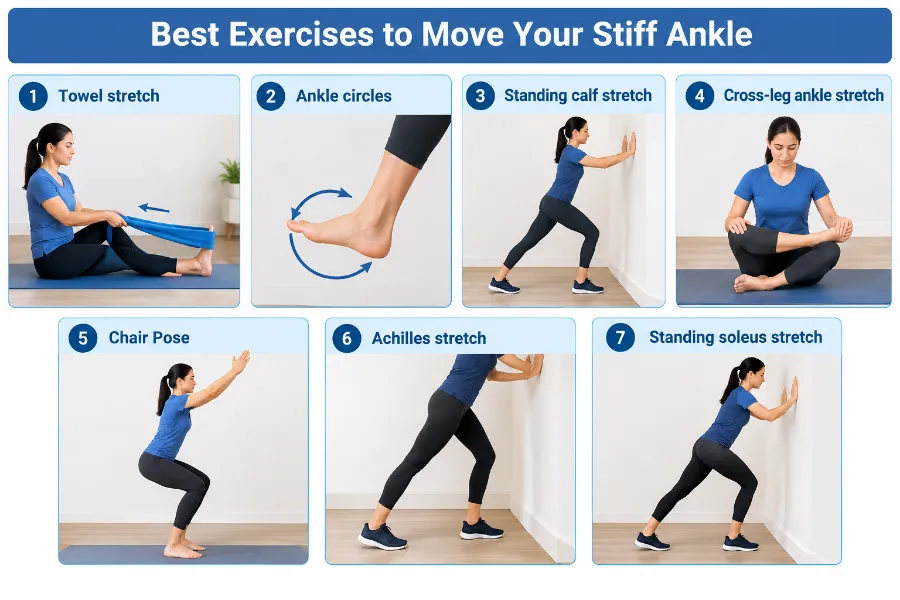
Best exercises to move your stiff ankle:
After walking, do these exercises for a stiff ankle:
Towel stretch:
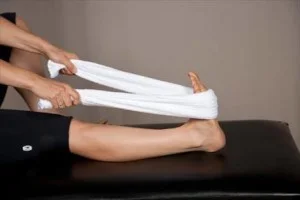
The muscles in the ankles and lower legs will be stretched by the towel stretch.
To perform a towel stretch, follow these steps:
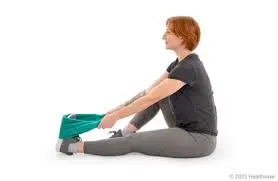
- Sit with both legs straight out in front.
- Holding the towel at both ends, wrap it around the top of the foot.
- To make the toes bend back toward the torso, gently pull the cloth.
- After 30 seconds of holding the position, let go for another 30. After three repetitions of this stretch, switch to the opposite side.
Ankle circles:
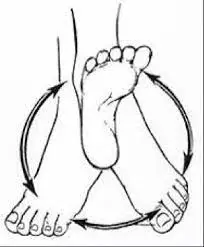
Ankle circles help with range of motion.
- While sitting or lying down, gently roll your ankle in a circle to the left, then switch directions to the right.
- Try drawing the letters in the air with your feet; it might be easy. Lead with your big toe.
- Focus just on your feet and ankles, not your full leg, and make little movements.
For circles, try doing 10 in each direction with each foot. If you’re doing the alphabet, complete 2 sets of this exercise on each foot.
Standing calf stretch:
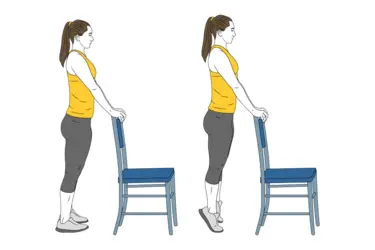
To increase the tension during the stretch, you can take a standing position.
- Lean forward gradually until the backs of your legs start to stretch.
- Maintain this stretch for 30 seconds, then switch to the opposite side. There will be 3 rounds in total.
Cross-leg ankle stretch:
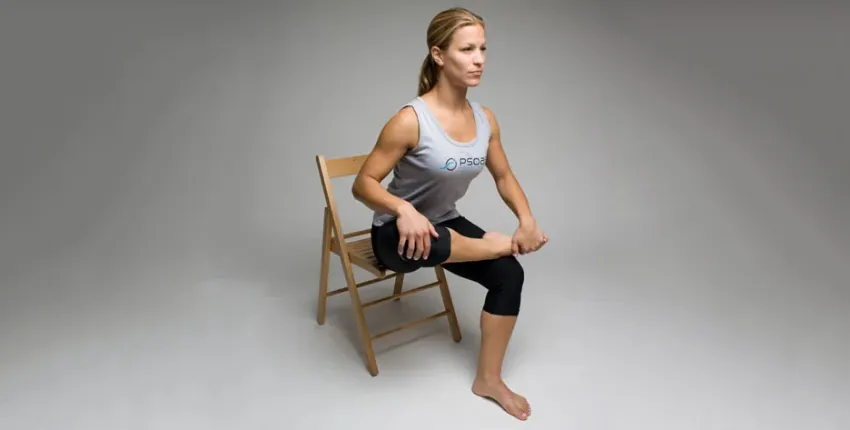
To do this:
- With your left leg crossed over your right knee, take a comfortable seat.
- Hold your right foot with your hands. Next, as if you were pointing your toes, bend your left toes and ankle down with your right hand.
- You should feel a nice, gentle pull across the top of your foot and ankle. Maintain this position for 30 seconds, then switch to the other side.
Chair Pose:
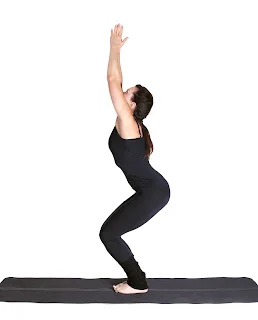
To assist in stretching your ankles, you may need to try some yoga poses. For example, the Chair Pose (utkatasana) is a great option for practitioners at any level.
- Stand tall in tadasana. Raise both arms aloft, palms facing inward, and take a breath.
- Soften your knees as you breathe out, lowering your thighs so they are parallel to the floor.
- The tops of your thighs and your torso should form a straight angle.
- Hold for 30 to 60 seconds.
- To exit, inhale and straighten your knees.
Achilles stretch:
Stretching the Achilles tendon is very similar to the well-known calf stretch.
- Start by placing your hands at eye level on a wall or other support, like a chair.
- Step your left foot one foot behind your right.
- Bend your right knee while keeping your left heel on the ground until your left leg begins to extend.
- The trick is as follows: To stretch your Achilles tendon, softly bend your back knee.
Standing soleus stretch:
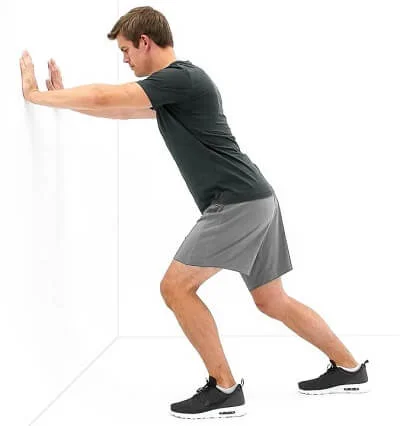
Athletes often notice that their calf (soleus) muscles are tight. To stretch this deep muscle, do the following:
- Face a wall or other support while standing a few steps away from it.
- With your heel flat on the ground, extend one leg back.
- You can move your other leg in the direction of the support. Repeat this stretch three times after holding it for thirty seconds.
When to stop:
If your symptoms worsen or new pain occurs, stop these exercises.
If your ankle pain worsens after following this advice, we recommend that you discuss your symptoms with a health care professional.
Do’s for a Stiff Ankle After Walking:
- Start by moving your ankles gently, such as ankle rotations.
- Gently stretch your calves and Achilles tendon. Warm up before performing ankle exercises.
- Perform exercises with slow, controlled movements.
- Do wear comfortable, supportive footwear while walking.
- Do stay hydrated and allow adequate recovery after long walks. Gradually increase the distance traveled and the intensity of your exercise.
- If exercise causes sharp pain or an increase in pain, be sure to stop.
Don’ts for a Stiff Ankle After Walking:
- Don’t force the ankle into painful or extreme positions.
- Don’t continue exercising through severe pain or swelling.
- Don’t suddenly increase walking distance or intensity.
- Don’t ignore persistent stiffness, swelling, instability, or difficulty walking.
- Don’t perform vigorous stretching immediately after a painful injury.
- Don’t use poor-fitting or unsupportive footwear for long walks. Do not return to strenuous exercise immediately after an ankle injury.
FAQs:
Why does my ankle stiffen up after walking?
Ankle stiffness after walking is often associated with muscle tension, tendon inflammation, or early changes in the joints.
How to loosen up a stiff ankle?
You can relieve ankle tension by performing daily mobility and stretching exercises that improve dorsiflexion, the movement that draws your toes toward your shin.
How long does it take for ankle stiffness to go away?
Depending on the underlying cause, ankle stiffness typically lasts from a few days of mild strain to weeks or months to completely disappear.
How to build ankle strength?
The best way to build ankle strength is through a combination of resistance band training, calf raises, and single-leg balance exercises to engage all supporting muscles.
How to unstiffen your ankle?
Ankle tension can be alleviated by daily mobility and stretching exercises that improve dorsiflexion, a movement that draws the toes toward the shins.
What is the difference between ankle mobility and flexibility?
Ankle flexibility is how far your calf muscles and tendons can passively stretch, while ankle mobility is your ability to actively control and move your ankle joint through that range of motion.
How long is physical therapy for an ankle?
Ankle recovery can take 1 to 3 weeks for a minor sprain and 3 to 6 months for a severe tear or fracture.
Why are my ankles stiff in the morning and after sitting?
Stiff ankles in the morning or after sitting happen because joint fluid thickens and muscles tighten during rest, but gentle movement quickly helps.
References:
- Physio, S. (n.d.). 5 Best Exercises to Move Your Stiff Ankle – Surrey Physio. Surrey Physio. https://www.surreyphysio.co.uk/top-5/5-best-exercises-to-move-your-stiff-ankle/
- Cscs, A. M. P. D. (2026, May 12). Exercises for stiff ankles. Prehab. https://theprehabguys.com/exercises-for-stiff-ankles/
- Marcin, A. (2017, July 13). 8 ankle stretches to try at home. Healthline. https://www.healthline.com/health/fitness-exercise/ankle-stretches
- NHS Inform. (2026, July 28). Exercises to help with ankle pain | NHS Inform. NHS Inform. https://www.nhsinform.scot/illnesses-and-conditions/muscle-bone-and-joints/leg-and-foot-problems-and-conditions/exercises-for-ankle-pain/