Chair Exercises for Seniors at Home
Introduction
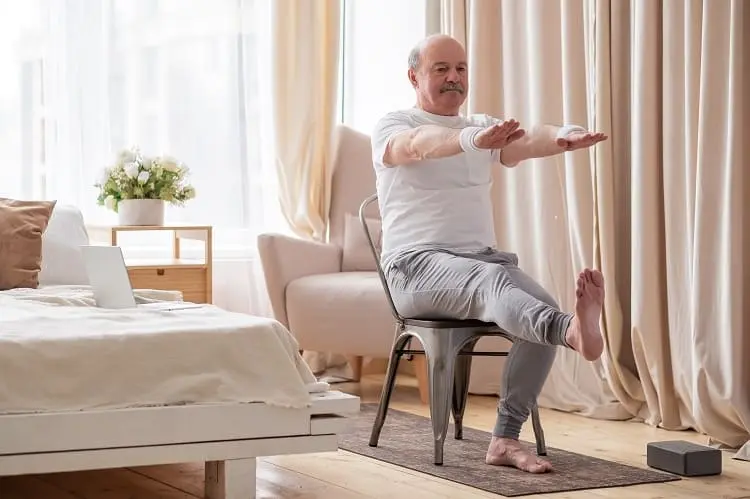
Chair exercises are usually advised for those who are 65 years of age or older and for those who use wheelchairs or walkers. Anyone who struggles with balance or movement can benefit from them.
It may seem too wonderful to be true that chair exercises might help you age more gracefully. However, chair workouts might help you better handle the difficulties of performing daily tasks, according to a study.
Researchers discovered in those studies that maintaining a chair exercise routine enhanced items like
- Improved strength.
- Better balance.
- Improved walking.
To put it another way, chair exercises might not be the secret to weight loss or getting ready for a hot yoga session. On the other hand, they can improve your strength and endurance. As a result, you could be more adept at tasks like vacuuming, carrying a pot of water from the sink to the stove, loading clothes into the dryer, and walking short distances.
As you get older, a chair exercise routine can help you maintain your independence and successfully carry out your daily responsibilities.
Who can benefit from chair exercises?
- Every age group has a wide variety of physical fitness and activity capabilities. Naturally, some fitness believers continue to lift weights at the gym and run 5Ks long after they retire. And there’s no reason not to maintain that pace if your health permits it.
- Chair exercises, however, could be a good fit for you if physical activity is harmful to you.
- Chair exercises may help anybody with mobility or balance issues, and we usually recommend them to those who are 65 years of age or older, as well as those who need wheelchairs or walkers.
- This is by no means a detailed list of chair exercises. After all, there are certainly countless methods to increase your daily mobility, even if you’re sitting still.
- However, he recommends these as some of the greatest chair exercises that may help you maintain your strength and flexibility as you age and are generally well tolerated.
- As we age, we lose muscular mass, so it’s critical to retain strength. To engage the muscles throughout your entire body, I recommend doing a regimen that targets many muscle groups.
- To put it another way, your chair workout regimen should ideally focus on all of your main muscle groups, including your arms, core, legs, and more.
- To begin, take a seat in a chair that is stable and has a firm bottom and back. Avoid falling onto a couch or other chair. Nothing on wheels, either. Armrest-free dining room table chairs are often a suitable option.
- Most individuals may safely perform these exercises on a daily basis. Suggest working up to two or three sets of ten if permitted, beginning with one set of ten.
Chair exercises for Seniors at Home
These are the chair exercises that seniors may do at home.
Seated leg extensions
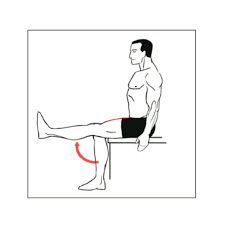
- With both feet on the floor and your legs parallel to your hips, take a seat.
- Put your butt in front of the chair.
- Maintain a straight back and pulled shoulders.
- It is as close as close as close as close to the floor.
- Put your leg back on the ground after a short period of holding.
- Perform ten reps on a single leg. Next, move to the opposite leg.
Muscles worked: Leg muscles.
Pelvic tilt
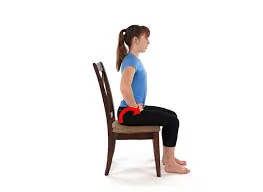
- The back of the chair should be in touch with your back. Maintain both legs on the ground.
- Maintain a still upper back and shoulders.
- Using your buttocks and abdominal muscles, gently press your lower back into the chair’s back while pulling your tailbone under you.
- After a few seconds of holding, let go.
- Ten times over, repeat.
Muscles worked: abdominal and back
Toe raises
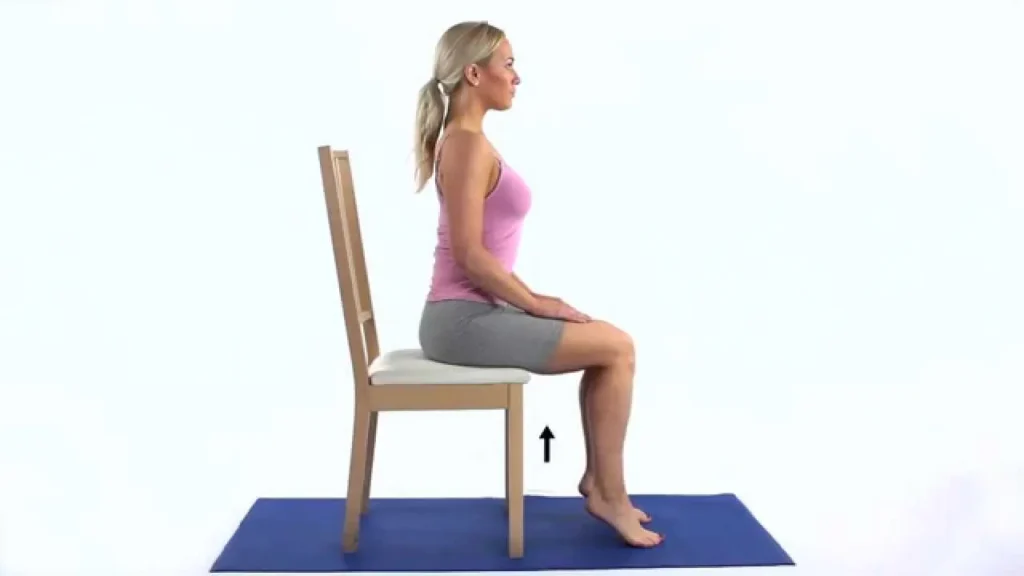
- Sitting on the ground with both legs on the floor.
- Raise both of your feet’s toes as high off the ground as you can without suffering any discomfort. Keep your heels on the ground and the rest of your body still.
- Bring your toes down to the floor.
- Do this ten times.
Muscles worked: front of lower legs.
Shoulder blade squeeze
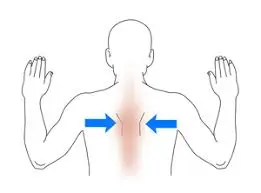
- Sitting on the ground while keeping both legs on the floor.
- Bend your arms at the elbows to bring them parallel to the floor.
- Press your shoulder muscles. Gently pull back together. Keep your arms by your sides. As you push back, they must brush against your ribs.
- After a brief moment of holding, let go.
- Do this ten times.
Muscles worked: back and upper chest.
Many of us have poor posture, which makes our shoulders round as our heads drag them forward. You can get the strength to reposition your shoulders with this kind of exercise.
Thigh squeeze
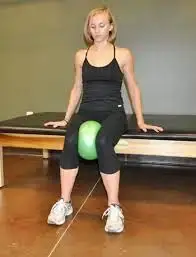
- Sit on the ground with both legs on the floor.
- Put your butt in front of the chair.
- Place your hands outside your knees.
- As you press your knees apart, use your hands as assistance.
- For five seconds, hold.
- Do this ten times.
Muscles worked -Hips/inner thighs
Bicep curls
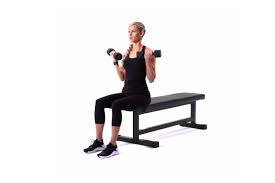
Bicep curls steps:
- Sit on the ground with both legs on the floor.
- As much as you can, flex one arm at the elbow.
- Return it to its lower position.
- After ten reps, switch to the opposite arm.
Try adding some weight if you find that simple. If you have wrist weights, use them or hold a can of food.
Muscles worked: arm muscles
Arm raise
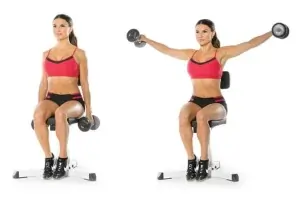
- Sit on the ground with both legs on the ground.
- Maintain a straight back and look forward.
- With the thumbs pointing up, place your hands.
- Raise both arms to a 45-degree angle and to shoulder height.
- Raising your arms midway between your sides and squarely in front of you is the goal.
- For ten repetitions, lower and repeat.
Muscles worked: arms, shoulders, and upper back.
Marching
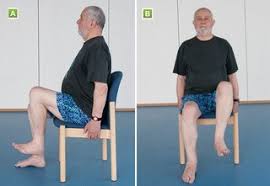
- You may increase your hip range of motion by raising your knees. If your body allows it, you can march while standing and support yourself on the back of a chair.
- Or choose to march while seated, like this:
- Sit on the ground with both legs on the floor.
- If you require assistance, shuffle your buttocks toward the front of the chair and grasp onto it.
- Keep your knee bent and raise it a few inches.
Muscles worked: hips and legs.
Side bend stretch
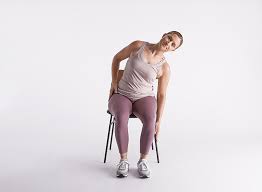
- Sitting on the ground with both legs on the floor.
- Lift your right arm straight over your head.
- Keeping your feet firmly planted and your buttocks firmly in place, bend as far to the left as feels comfortable.
- Let go and return to a straight posture.
- Five times over, repeat.
- To repeat on the other side, bend to the right and lift your left arm.
Muscles worked: Abdominal Muscles.
Chair rise
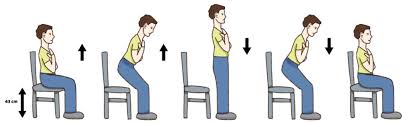
- This exercise helps strengthen the muscles in the thighs and buttocks. One day, one may attempt to complete this activity without using one’s hands.
- Sit toward the front of the chair with your knees bent and your feet flat on the floor. Make sure the distance between your knees is shoulder-width.
- Put your hands on the seats on each side of the chair. Keep your chest slightly forward while maintaining your neck and spine straight.
- Take a slow breath. Bend forward and let your weight fall on the front of your feet.
- Breathe out and carefully get to your feet, using your hands as little as possible.
- Breathe in, then gently return to your seat while maintaining as much control as you can.
- Work your way up to 10 to 15 repetitions, starting with fewer.
Muscles worked: thighs and buttocks
Seated neck rotation
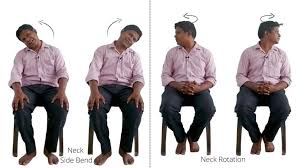
- This exercise may be useful for increasing neck flexibility and mobility as well as for relaxing the neck muscles.
- Look straight ahead while sitting upright in a chair.
- Don’t raise your shoulders.
- Turn your head slowly to face your left shoulder as much as is comfortable.
- Return to the beginning after holding for five seconds.
- Repeat on the right side.
- Try to do 3 rotations on each side.
Muscles worked: neck muscles.
Seated cat-cow
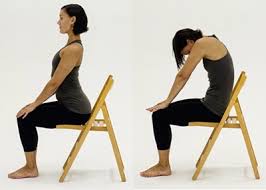
- This exercise may increase the spine’s flexibility and mobility.
- Sitting upright in a chair, place your feet shoulder-width apart on the floor.
- Point your toes forward and place your hands on your knees.
- Using only your upper body, stretch your spine and press your chest toward the ceiling. Squeeze your shoulder blades together as if you were holding a writing instrument between them. (Cow)
- Gently move your spine forward while rounding your shoulders.
- Start again and repeat the process.
- Aim for eight to twelve repetitions.
Muscles worked-spine
Seated straight leg rise
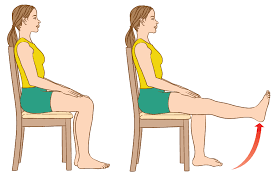
- Strengthening the inner thighs and lower abdomen can be achieved with this workout.
- With your feet flat on the ground, sit upright in a chair.
- One leg should be raised and straightened.
- Hold for ten slow counts.
- Repeat with the opposite leg after lowering it.
- Aim for ten reps on each leg.
Muscles worked: lower abdominal
Knee abduction and adduction
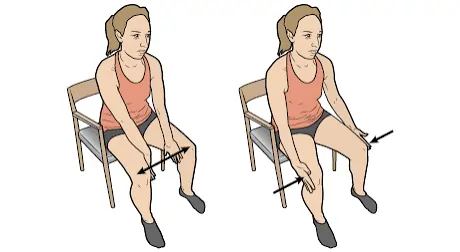
- Both inner and outer thigh strength may be improved with this workout.
- Your feet should be flat on the floor while you sit in a chair.
- Put your hands inside your knees.
- As your hands apply counterpressure, gently press your knees against them.
- After three seconds of holding, let go.
- Put your hands outside of your knees.
- As your hands apply counterpressure, gently press your knees against them.
- After three seconds of holding, let go.
- Please repeat this exercise for thirty seconds.
Muscles worked-thighs
Upper body twist
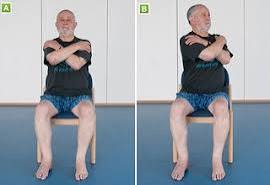
- This exercise can help improve and maintain upper back flexibility.
- Sit up straight on a chair.
- Feet flat on the floor.
- Lift your arms and reach for your shoulders.
- Turn your upper body as much to the left as is comfortable without changing your hips.
- Hold for five seconds.
- On the right side, repeat.
- Try doing this five times on each side.
Muscles worked-upper back
Chest stretch
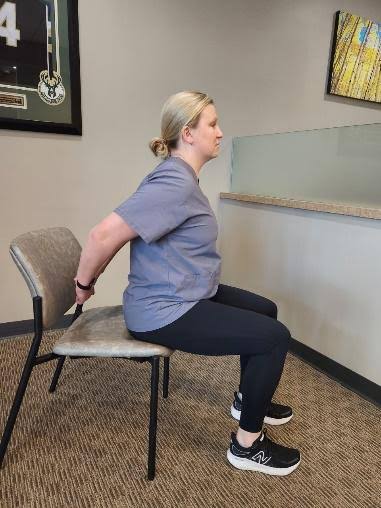
- Posture may be strengthened and improved using this workout.
- Sitting upright in a chair far from the back, place your feet flat on the floor.
- Bring your shoulders down and back.
- Stretch your arms to the side.
- As you gently press your chest forward, feel it extend.
- Hold for five to ten seconds, then release.
- Try to complete five repetitions.
Muscles worked: back and arms
Wrist circles
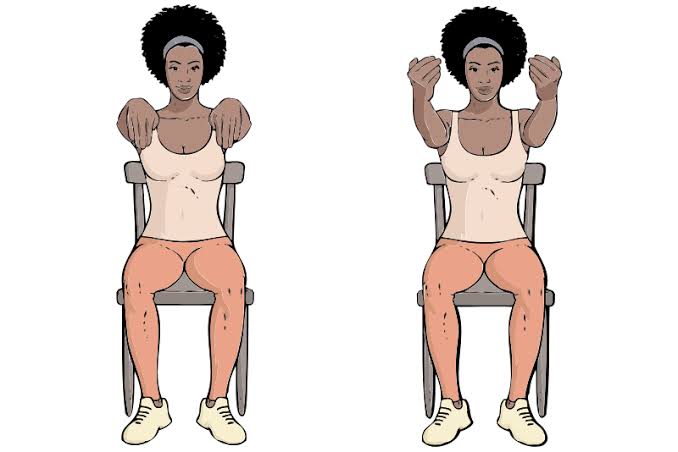
- Sitting in a chair, place your feet hip-width apart.
- Make fists with your hands and extend your wrists in front of you.
- Eight to twelve times, rotate both wrists in the same direction.
- Repeat eight to twelve times in the other direction.
Muscles worked: forearm muscles
Forward bend
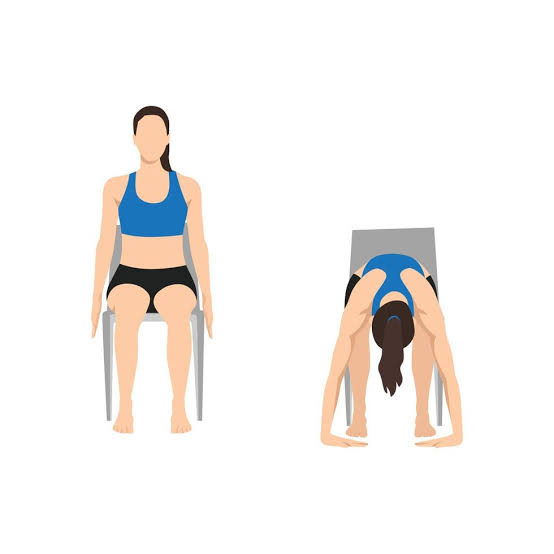
- Sit in a chair with your feet hip-width apart, your arms at your sides, and your back straight.
- Bring your chin to your chest and pull down as much as you can.
- Return to a sitting posture slowly.
- Four to six times, repeat.
Muscles worked: back, sides of muscles
Keep safe when performing chair workouts.
- Safety First:
- Just push until you can feel your muscles contracting. Not to the point of discomfort or weariness. Keep in mind that your goal is to gain strength and muscle. You will only regress if you overdo it.
- Exercise-related muscular pain is common. However, your body is warning you to stop exercising if you have any joint discomfort or if it doesn’t go away.
- Consult a healthcare professional, such as a primary care physician or physical therapist, if you’re unsure whether chair exercises are appropriate for you. They may evaluate your current fitness level and suggest an exercise regimen that best fits your objectives and accounts for any constraints you may have.
- The most important suggestion for properly working out from a sitting posture is to find a comfortable chair.
- Choosing an armless chair will also give you more space to move about.
Chair exercises for seniors: Improving strength, flexibility, and energy levels
- The secret to aging healthily is to continue being active as you age. In terms of reducing your risk of heart disease and cognitive decline, physical activity can help you stay able to carry out daily tasks like lifting grandchildren or pets, getting out of bed, and going grocery shopping in the morning.
- However, as you become older, you might not be able to perform the same exercises that you could do with ease in your 20s, 50s, or even 60s. Chair exercises can assist with that, especially if you have difficulty balancing or moving around. Strength, flexibility, and endurance may be developed and maintained using chair-based exercises. They also provide a strong base for exercise and ease pressure on sore knees or unsteady ankles.
Benefits of Chair Exercises for Seniors
The answer to the question of whether working out in a chair is useful is clearly yes. Somewhat inactive people can start exercising again with chair workouts.
Among the possible advantages are:
- Improve your balance. Seniors are more likely to experience falls, which may be painful and disable them. It has been proven that chair-based workouts improve balance, which reduces the risk of falls.
- Strengthen your muscles. Chair exercises can help you build your glutes, quadriceps, hamstrings, and core—all of which are essential for balance. You’ll be able to walk longer with more comfort as a result, and you may even find yourself returning to pickleball or running in the future.
- Provide proper posture. Tightness in the neck, upper back, and chest can be relieved with chair exercises that focus on upper body stretching. Both reduced discomfort and a more upright posture may result from that.
- Reduce the pain of arthritis. Chair exercises help reduce typical arthritis-related discomfort by improving the flexibility of your upper and lower body. Additionally, everyday actions like putting on shoes will be made much easier by this increased flexibility.
FAQs
Does the chair workout for seniors really work?
Yes, seniors can benefit greatly from chair exercises. They offer a low-impact, safe method of improving flexibility, balance, and muscular strength. By reducing pressure on joints, they allow older persons or those with restricted mobility to preserve the independence essential for everyday tasks safely.
What is the best chair exercise for seniors?
The most effective chair exercises for seniors concentrate on improving joint mobility, strengthening the lower body, and strengthening the core. Leg extensions for knee stability, sitting marching for circulation, and sit-to-stands for functional strength are all crucial exercises. Always prioritize a sturdy, non-rolling chair and maintain proper, upright posture.
Does the 7-minute chair workout really work?
Yes, the 7-minute chair workout is helpful, but how well you complete the exercises, your goals, and your present level of fitness will all affect how successful it is.
What is the most effective chair workout?
The greatest chair workout routines are low-impact, mobility-level-appropriate exercises that focus on cardio, strength, and flexibility while seated. Top programs include organized digital and print guidelines created by physical therapists as well as free guided YouTube videos.
How to do exercise while sitting on a chair?
Exercising while seated is a great way to improve circulation, reduce stiffness, and stay active. To begin, take a tall seat with your feet flat on the ground and your core active. A few easy, everyday exercises may effectively target your entire body.
References:
- Clinic, C. (2024, April 18). 11 chair exercises for seniors, older adults and people with limited mobility. Cleveland Clinic. https://health.clevelandclinic.org/chair-exercises-for-seniors
- WebMD Editorial Contributor. (2025, January 26). Best chair exercises for Seniors. WebMD. https://www.webmd.com/fitness-exercise/best-chair-exercises-for-seniors
- Seguin-Fowler, R., Graham, M., Ward, J., Eldridge, G., Sriram, U., & Fine, D. (2020). Feasibility of a yoga intervention to decrease pain in older women: a randomized controlled pilot study. BMC Geriatrics, 20(1), 400. https://doi.org/10.1186/s12877-020-01818-y
- Society, P. O. P. O. F. I. O. P. a. G. S. a. B. G. (2011). Summary of the Updated American Geriatrics Society/British Geriatrics Society Clinical Practice Guideline for Prevention of Falls in Older Persons. Journal of the American Geriatrics Society, 59(1), 148–157. https://doi.org/10.1111/j.1532-5415.2010.03234.x