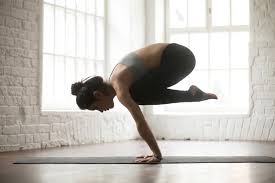
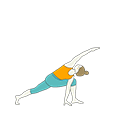
Parivrtta Parsvakonasana (Revolved Side Angle Pose)
Introduction:
Parivrtta Parsvakonasana (Revolved Side Angle Pose) is a dynamic standing yoga posture that combines a deep twist with a strong lower-body foundation.
This variation, part of the Ashtanga Primary Series, also helps enhance hip stability, core strength, and arm and shoulder flexibility.
In order to stimulate the visceral organs in the chest and abdomen, Parivrtta Parsvakonasana is a deep twisting pose that calls for balance. The spine’s muscles become stronger and more flexible during this twist, and the internal organs immediately receive new blood after the position is released. As an asymmetrical pose, it promotes stability and balance with both sides of the body via repetition.
Parivrtta Parsvakonasana is a deep twisting pose that requires balance to activate the visceral organs in the chest and abdomen. The internal organs receive fresh circulation as soon as the position is loosened, and the muscles of the spine become stronger and more flexible during this twist. As an asymmetrical pose, it encourages balance and stability with both sides of the body via repetition.
The Revolved Eight Point Crescent Moon Pose: How to Do It:
The detailed instructions for performing Parivrtta Parsvakonasana (Revolved Eight Point Crescent Moon Pose) are provided below:
- Start the exercise by standing at the short end of the mat in Tadasana (Mountain Pose), with your feet together, your spine extended, your shoulders back, and your chest out.
- Take a breath, raise your left leg, extend it as far as you can, and place the toes of your left foot on the ground behind you while maintaining a square hip position.
- Breathe out, adjust the distance, and bend the right leg at the knee while maintaining alignment with the right foot.
- Now stand in Ashta Chandrasana (Crescent High Lunge Pose), balancing on the toes of your back feet while raising your arms and looking forward.
- Hold this position for two to three breaths. Keep your shoulders and hips square.
- The left armpit should then rest on the outside of the right knee and thigh as you bend and rotate your shoulders to the right. Push the right thigh inside while doing this, extend the left arm, and place the left hand on the ground at the outside of the right foot.
- After the whole twist, fully exhale. To achieve the full twist and correct alignment, adjust the right foot, hip, left shoulder, chest, and abdomen.
- After you’re comfortable, take a breath, raise your right arm, extend it above your head, and rotate your shoulders. Feel the strain on the sides of your right chest, back, and belly as you extend your right hand’s fingers as far as you can.
- Breathe out and raise your gaze. Maintain equilibrium while taking deep, slow breaths.
- As you inhale, loosen your body while keeping your alignment. When you exhale, push your left hand toward the floor and twist your torso upward and outward to support your right arm’s deeper extension.
- The right leg’s outer thighs, arms, shoulders, chest, abdominal muscles, neck, and back leg’s calves should all feel stretched.
- For the first three to four breaths, stay balanced in the Revolved Eight Point Crescent Moon Pose. To get the most out of the twist, make sure the shoulders, feet, hips, chest, and head are all in alignment.
- To release, tilt your head, lower your right arm, let go of your left hand as you inhale, and slowly rise to finish the entire inhalation. Breathe out and return to Tadasana (Mountain Pose), standing back.
- Take two deep breaths to relax and rest. Repeat on the opposite side, bringing the right leg behind you, twisting to the left, and maintaining the position for three to four breaths. Hold the position for six breaths after releasing and repeating the exercise for the second round.
- Let go and relax.
Benefits of Revolved Eight Point Crescent Moon Pose:
The following is an explanation of the additional benefits that come from these poses:
- This twist can help learners with fatty liver symptoms since it stimulates the internal organs, which aids in the liver’s detoxification and toxin release. When the pose is maintained for an extended period of time with correct alignment, this keeps the body active while toning the liver.
- The Manipura Chakra (Solar Plexus) is activated with a major focus on digestion because Parivrtta Parsvakonasana concentrates on the abdominal region. learners with IBS (Irritable Bowel Syndrome) or IBD (Inflammatory Bowel Disease) may benefit from this.
- It is stated that the intestines are the brain of the stomach, and the practice of Revolved Eight Point Crescent Moon Pose helps to release the twist and give new, oxygenated blood to the intestines.
- Along with the intestines and the stomach, the kidneys, too, are replenished, helping learners who are diagnosed with stones in either the kidney or gallbladder.
Contraindications of Revolved Eight Point Crescent Moon Pose:
The following postures’ contraindications are described, along with the extra safety measures to be aware of:
- Seniors who struggle with balance can rest their back legs on the wall. This assistance will enable them to concentrate on their respiration, which can also be difficult given the twist.
- This position should not be performed by women who are menstruating because it puts pressure on the pelvis and lower abdomen.
- learners who are experiencing vertigo should exercise caution since, although the twist will benefit the cervical spine, it might cause more harm than good if done carelessly or in a hurry.
Conclusion:
The Revolved Eight Point Crescent Moon Pose is a potent fusion of core strength, flexibility, and balance. It strengthens the legs and core, increases general body coordination, and aids in improving spinal mobility.
Regular practice of this pose can improve your posture, increase stability, and sharpen your focus. It becomes an effective asana for developing mental clarity and physical strength when done with attentive breathing and correct alignment.
FAQs:
Is parsvakonasana beneficial for balance?
Regular Parsvakonasana practice improves your sense of balance and increases your body’s general flexibility. The deep lateral stretch promotes hip, hamstring, and spinal suppleness.
Who ought to stay away from padahastasana?
People with severe back pain, sciatica, heart illness, high blood pressure, or an abdominal hernia should not perform padahastasana. Additionally, it is not recommended for expectant mothers, particularly in the second or third trimester.
Who shouldn’t perform parsvakonasana?
Individuals with problems related to high or low blood pressure. individuals who have recently had injuries to their hips, spine, neck, shoulders, hamstrings, or arms. those suffering from heart conditions. those who experience persistent headaches or migraines.
Does Padahastasana help with obesity?
The position is very useful for treating obesity in the abdomen. Additionally, padahastasana helps with frozen shoulder, sciatic pain, and lower back pain. The posture enhances blood flow to the legs and brain, which is beneficial for focus. The entire body is used in the hands-to-feet position.
Can back pain be relieved with Parsvottanasana?
Better alignment, a lower incidence of back pain, and more mobility are all supported by increased spinal flexibility. Parsvottanasana is a great complement to any program focused on spinal health because of its increased range of motion, which is essential for preserving a healthy back and avoiding stiffness.
Does Padahastasana make you taller?
A deep forward-bending yoga pose is called Padahastasana, or Hand to Foot Pose. The Surya Namaskar sequence includes it. By extending the spine, activating the growth support glands, and improving posture, it naturally promotes height rise.
What is Parsvottanasana’s strenuous side stretch?
A standing yoga practice that requires a forward bend is called Parsvottanasana, sometimes referred to as Pyramid practice or Intense Side Stretch. One leg stays front while the other stretches straight back with the foot turned out.
What is the recommended duration for holding Padahastasana?
Three to five breaths
From a standing position, perform Padahastasana. Hold for three to five breaths. Bend your knees and slowly stand back up. To increase flexibility, repeat within a fluid sequence.
Is Parsvottanasana suitable for beginners?
Therefore, Parsvottanasana (also known as Pyramid Pose or Intensive Side Body Stretch) is a good pose for both novice and experienced learners. It helps the learner identify and then work on any tension in the wrists and legs and prepares them for more difficult practice.
Which chakra is Parsvottanasana?
Balance and Emotion: This pose activates three chakras: the Sacral Chakra (forward bend), the Root Chakra, and the Throat Chakra (tucking the chin to the chest). This pose improves our capacity to draw energy from inside ourselves to awaken our true nature and balance emotions.
What safety measures are in place for Parsvottanasana?
Injury and Surgery: learners should avoid this position if they have any injuries to their ankles, knees, legs, hips, hamstrings, rib cage, spine, lower back, shoulders, or neck. Additionally, this pose should not be performed by learners who have had hip, cardiac, or abdominal surgery.
In Parivrtta Parsvakonasana, what should you stay away from?
Physical Strength and Weak Body: This activity should be avoided by learners who have weak bodies, joints, arthritis in their knees, or who are experiencing the early stages of knee ligament deterioration. learners with migraines, vertigo-related balance problems, or high blood pressure should also avoid this pose.
What does Parivrtta Parsvakonasana mean?
The Sanskrit words Parivrtta, which means “to turn around” or “revolve,” Parsva, which means “side or flank,” Kona, which means “angle,” and Asana, which means “posture,” are the origin of the term. Revolved side angle posture is the usual English term for Parivrtta Parsvakonasana.
What is parivrtta parsvakonasana?
Parivrtta Parsvakonasana, sometimes called the revolved side angle position, is a standing yoga pose in which you twist your spine. The Sanskrit terms “parivrtta,” which means revolving, “parsva,” which means side, “kona,” which means angle, and “asana,” which means pose, are where yoga earned its name.
References:
- Revolved eight-point Crescent Moon Pose Yoga(Parivrtta Parsvakonasana)| Yoga sequences, benefits, variations, and Sanskrit Pronunciation | Tummee.com. (n.d.). Tummee.com. https://www.tummee.com/yoga-poses/revolved-eight-point-crescent-moon-pose
- Revolved eight-point Crescent Moon Pose (Parivrtta Parsvakonasana) steps | Tummee.com. (n.d.). Tummee.com. https://www.tummee.com/yoga-poses/parivrtta-parsvakonasana/steps
- Revolved eight-point Crescent Moon Pose (Parivrtta Parsvakonasana) Preparatory-Poses | Tummee.com. (n.d.). Tummee.com. https://www.tummee.com/yoga-poses/parivrtta-parsvakonasana/preparatory-poses
- Smith, E. N. (2023, August 11). Revolved half moon pose. YogaUOnline. https://yogauonline.com/yoga-poses/revolved-half-moon-pose/