Seated Forward Bend (Paschimottanasana)
Introduction:
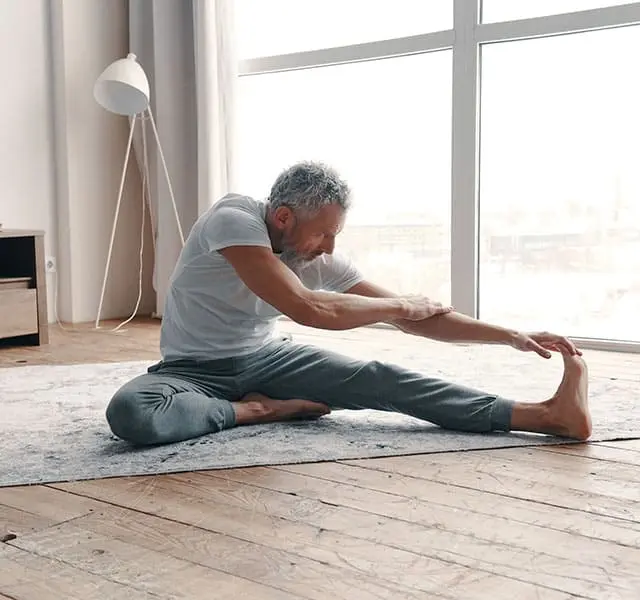
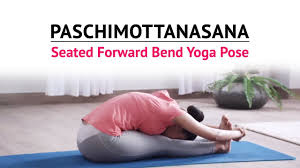
Seated Forward Bend (Paschimottanasana) is a classic yoga pose that gently stretches the entire back of the body, especially the hamstrings, spine, and lower back.
“Paschimottanasana” is made up of three Sanskrit terms. Uttana means stretch, asana means seat or stance, and Paschima literally means west, although in this context it refers to the back of the body.
This asana gets its name from the tremendous stretching of the entire back. In light of this, it is highly recommended to do a warm-up yoga routine to stretch the spine and release tense hamstrings. But when done as part of Hot Yoga, this seated forward fold helps to warm up the muscles, makes it easier to stretch a little farther, and increases range of motion.
In Paschimottanasana, the muscles on either side of the spine extend symmetrically while the spine remains horizontal and the back remains straight in a forward bend. This maintains the health of both the heart and the spine by keeping the heart lower than the spine. Additionally, bending from the pelvic area on the extended legs provides a vigorous stretch to the hamstrings, hips, and lower back.
This helps the ovaries, gonads, and adrenal glands operate regularly and increases blood flow to the pelvic area. Therefore, when incorporated into yoga for athletes, the Seated Forward Bend Pose can help relieve muscular tension and be a great therapeutic pose for learners with diabetes, hypertension, and menstrual disorders. It also improves strength and flexibility in the lower back and legs.
Leaning forward in Paschimottanasana is also linked to humility and bowing, which denotes a gracious retreat. This encourages us to draw energy from within and awaken our inner selves by further balancing the chakras and opening up energy channels in the body. Thus, from a spiritual perspective, Seated Forward Fold Pose is an excellent approach to practice Pratyahara, the fifth limb of yoga, which is to shift your attention inward and withdraw your senses from the outside world.
Additionally, by letting go of a little tension with each exhale, this yielding technique helps the heart and brain relax. As a result, daily practice of Paschimottanasana can help quiet the mind, relieving stress and mild melancholy, lowering anxiety and exhaustion, and encouraging sound sleep. This prevents inner restlessness by calming the nerves and calming the mind.
Intelligent Yoga Sequences include a traditional Hatha Yoga and Ashtanga Yoga (basic series) stance that, when performed with a bolster, performs wonderfully as a lovely cool-down practice after practicing yoga flows like inversions and advanced backbends.
Because it may be used to create variations of the forward bend position, the seated forward bend pose is regarded as a base pose.
How to Do Seated Forward Bend Pose?
The detailed directions for performing Seated Forward Bend Pose (Paschimottanasana) are provided below:
- Start the exercise by taking a long, comfortable seat with your legs extended straight forward in the Staff Pose. Put your palms on the ground at your hips and roll your shoulders back. Here, take a couple of deep breaths.
- Squeeze your thighs until the back of your legs at the knee joints firmly touch the floor. The knees will be raised off the ground at the beginning.
- Now, sit tall, with your spine straight, your belly tucked in, and your toes spread wide. Instructors of yoga ensure that pupils do not become hollow.
- Take a breath now and raise your arms. Breathe out, lower your hands, and take a step forward to grasp your big toes. Pupils who are unable to grasp their big toes may be instructed to place their hands in line with their shins on the floor outside of their legs.
- Breathe in, raise your head to look up, and then exhale, bend forward, expand and bend your elbows, and use them as levers to bring your trunk forward till it touches your knees and forehead. Stretch your neck and trunk, place your elbows on the floor, and touch your knees first with your nose and then your lips.
- Yoga instructors should always encourage their pupils to stretch their arms and shoulders and to bend straight from the back, using the pelvic region. After that, the back will become flat, and the hump will go away.
- After you’re at peace in Paschimottanasana A, let go of your toes and completely encircle your feet with your hands. Grip the right wrist with the left hand, or vice versa, beyond the extended feet, to accomplish this.
- Take roughly six deep, calm breaths while in Paschimottanasana. After closing their eyes and using their breath to release any tension or stiffness in any area of their bodies, learners can settle into the posture while taking calm, deliberate breaths. Lift and extend your front torso somewhat with each exhale, then release a little more fully into the forward bend.
- learners must learn to maintain a passive head and soft neck muscles during all forward extensions. Avoid giving in to your emotions. To further bend, extend the trunk’s sides.
- Exhale, lift your head off your knees to look up, let go of your hands, and, as you inhale, pull your pelvic bone up and forward to allow your spine to fully extend. In Dandasana Hands Back, gradually release the hands by your sides and then relax.
- learners can also perform a few rounds of Seated Cat Cow Pose to relieve tension in their spines.
- Beginners or learners who are unable to sit tall with their back straight due to a lack of flexibility or other reasons can be supported by cushions, a folded blanket, or a block under their hips. Alternatively, they can be asked to bend their knees slightly to straighten their back, and if it is comfortable, they can then gradually straighten their legs one after the other.
- The use of a strap or towel should always be encouraged if reaching the toes is difficult or causes you to feel cramped. In this situation, yoga instructors should advise learners to resist with their feet and pull the strap with their arms.
Benefits of Seated Forward Bend Pose:
The severe front bend pose known as Seated Front Fold Pose (Paschimottanasana) helps balance the upper and lower bodies. All forms of yoga frequently use this symmetrical stance, which has the advantages listed below. These are:
- Stretches, Strengthens, Lengthens: The hamstrings, calves, gluteus, pelvic, and back muscles are all severely strained when performing Paschimottanasana, which involves bending straight from the pelvic region onto the outstretched legs. The forward bend tones the back muscles and lengthens the spine from the cervical to the lumbar. In the final posture, the wrists grab beyond the outstretched feet, strengthening the shoulders and enabling the practitioner to draw the torso forward with each exhale. This improves the flexibility of the spine. Furthermore, bending forward onto the outstretched legs effectively tones the abdominal muscles, which improves core strength, in addition to strengthening the knee and hip joints as well as the surrounding tissues and muscles.
- Flexibility and Range of Motion: The forward bend in Paschimottanasana opens the lower back and provides a strong stretch to the hamstrings, gluteus, hips, and lower back. However, the pose may be difficult in nature due to stiff or taut hamstrings and limited hip, pelvic, knee, and spine range of motion. However, the flexibility and range of motion of the associated muscles and joints can be increased with time and longer holds, which can help learners get ready for more difficult forward bends like the Standing Forward Fold Pose, the Wide Angle Seated Forward Bend Pose, and the Single Leg Forward Bend Pose.
- Chest, Diaphragm, and Breath: When the core and abdominal muscles are used in Paschimottanasana, the breath is affected, which can occasionally make deep breathing difficult. However, the pupils’ respiration will naturally improve when they are told to extend their arms and shoulders while bending forward, as well as to widen their chest and rib cage. The lungs are thereby prepared for deeper breathing by this deliberate exercise of keeping the shoulders and chest wide.
- Awareness and Focus: Maintaining a flat back while maintaining the shoulders wide and the chest open helps focus and memory. Basic awareness is crucial given the intensity of this activity, which places pressure on the spine, chest, and abdominal cavity. As a result, it was necessary to carefully assist learners into and out of the stance in time with their breathing. They will intentionally be able to maintain a light and relaxed body, improve their breathing, and cultivate a sense of focus and concentration through this breath-body-mind link.
- Alignment and Posture: By lengthening the spine in Seated Forward Fold Pose, you can improve your posture by toning your legs and abdomen and strengthening your back and spine. To do this, learners must use their quadriceps to keep their thighs squeezed so that the back of their legs and knee joints firmly rest on the ground; learn to lengthen the spine from the base; bend from the pelvic region; broaden their chest before entering the forward bend, which will help create space in the rib cage and intercostal muscle; avoid tensions in their neck and shoulders by keeping them relaxed; and use the proper breath (exhaling as you bend forward). With all of these lessons, pupils will eventually develop a well-toned body, which will eliminate excess fat by toning the muscles in their legs and belly and minimizing the hunchback caused by prolonged sitting with poor posture in front of office desks. In order to improve alignment and posture, yoga instructors should think about incorporating a partner for a creative practice that involves deep shoulder opening.
- Energizing, De-stressing, and Relaxing: Every forward-bending stance affects breathing, making it rhythmic, soft, and deep. While deep mindful breathing helps remove stiffness at the lower back, hips, and pelvis (places where undesired energies are held), the extension of the spine in Paschimottanasana helps preserve the natural space between vertebrae, allowing for the unimpeded flow of prana. When taken as a whole, this aids in the body’s detoxification and allows prana, or energy, to freely flow from the base of the spine to the top of the head. In turn, deep breathing while bending forward promotes relaxation and calmness in the body and mind.
- Organs and Stimulation: The liver, kidneys, ovaries, and uterus are stimulated when the chest and core are compressed to place the forehead on the knees or lower in the ultimate position. Additionally, it keeps the pelvic and abdominal organs from becoming sluggish by toning and massaging them. If done consistently, it may even aid in better digestion. Additionally, the pelvic area receives more oxygenated blood as a result of the severe stretch, which supports the healthy operation of the gonads, ovaries, and adrenal glands.
- Therapeutic, Healing, and diseases: When taught carefully and under the right direction, the Seated Forward Fold Pose can be therapeutic. Because it strengthens the lower back, leaning forward while keeping the back flat can be incorporated into yoga poses to prevent or treat minor sciatica and neck and shoulder pain, which are frequently caused by bad posture. For learners with diabetes, hypertension, IBD (Inflammatory Bowel Disease), urinary control issues, infertility, or impotence—as long as they are generally physically fit—this practice is a lovely addition due to the active and powerful involvement of the pelvic region.
- Balance and Emotion: Leaning forward in Paschimottanasana is emotionally linked to bowing and humility, which denotes a gentle retreat. As a result, the Root Chakra, Sacral Chakra, and Manipura Chakra are all balanced and activated, encouraging us to draw energy from within to awaken our inner selves and regulate our emotions. As a result, this practice of submitting with each exhale relieves some tension and calms the heart and brain. This calms the mind and soothes the nerves, preventing inner irritation. As a result, regular practice of Paschimottanasana can help relax the brain, relieving stress and moderate melancholy, lowering anxiety and exhaustion, and encouraging restful sleep.
- Others: This pose, which is part of yoga for women, will assist ease menstrual issues, particularly during menstruation. This position will help athletes and runners release tense muscles due to its intense lower-body stretch. This pose, which is part of Power Yoga Sequences, helps tone the body by eliminating extra fat around the thighs and tummy. This pose, which is a part of yoga for children, will stimulate hunger. This pose can be taught to learners who suffer from migraines because it is soothing.
- Level-up Poses: After consistent practice of Paschimottanasana (Seated Forward Bend Pose), learners can proceed to more difficult poses like Seated Straddle Pose, Trianga Mukhaikapada Paschimottanasana, Monkey Pose Forward Bend, or Revolved Wide Angle Forward Bend Pose.
Contraindications of Seated Forward Bend Pose:
Before teaching Paschimottanasana, yoga instructors should consider the following safety measures:
- Injury and Surgery: learners should avoid this position if they have recently had hip or abdominal surgery or if they have injuries to their knees, hips, pelvis, shoulders, rib cage, or spine. learners should not practice this forward bend if they are healing from injuries to their hamstrings, calves, ankles, shoulders, or any other part of their ligaments or tissues.
- Strengths and Weaknesses of the Body: Extra caution should be used while guiding learners who have weak ankles, hamstrings, or knees into this pose practice. Although there might not be a contraindication, caution should be used to prevent pain or damage. This posture should be avoided for learners with advanced cervical and lumbar spondylitis, sciatica, slipped discs, SI-joint instability, hernias, diarrhea, ulcers, or hypertension because it causes a profound extension of the spine. This stance should also be avoided by cardiac patients who have recently had heart surgery.
- Lack of Body-Breath Connection: Because the bend deepens with each expiration, this position requires breath awareness. Second, since the goal of this position is to maintain a straight back rather than bend forward, it is crucial to maintain an aligned spine without hunching. This pose should not be recommended for learners who do not have a body-breath connection. Even pupils with asthma or other respiratory conditions should practice slowly and under the supervision of a qualified instructor.
- Others: Abdominal pressure is not recommended for pregnant ladies; they should avoid this pose. When teaching yoga to senior folks, instructors should go slowly. Women can perform a posture while menstruating, but they should do it with a pillow or bolster beneath their belly for support. Beginners or learners who are unable to sit tall with their back straight due to a lack of flexibility or other reasons can be supported by cushions, a folded blanket, or a block under their hips. Alternatively, they can be asked to bend their knees slightly to straighten their back, and if it is comfortable, they can then gradually straighten their legs one after the other. The use of a strap or towel should always be encouraged if reaching the toes is difficult or causes you to feel cramped. In this situation, yoga instructors should advise learners to resist with their feet and pull the strap with their arms.
Modifications of Seated Forward Bend Pose:
Below is an explanation of the various techniques to perform Paschimottanasana without straining your muscles:
- If it’s hard to reach the toes, you might start by reaching for the ankles and gradually work your way up to the toes.
- You can support the knees by laying a blanket or flat pillow underneath them if the backs of your knees are stiff and you can’t put your legs on the floor without bending them.
- The hips cannot sustain forward bending if the hamstrings and lower back are extremely tight. In this situation, you could put a flat pillow or blanket under your buttocks. The hip and abdominal muscles won’t be stressed by this assistance.
- Holding the toes is necessary to achieve the most stretch, but if you can’t, you can use a strap over your outer feet, hang on to it, and obtain support.
- Put a blanket over the thighs in front of you and extend your spine to reach your toes if you feel a lot of stress in your lower belly or chest. You can stay in Paschimottanasana for a longer period of time because the blanket’s support will assist you in breathing.
- Sometimes, all it takes to avoid artificial support for the body in any yoga pose is to perform the proper stretches and preparatory poses. However, one must undoubtedly take it slowly and use as much assistance as possible for the stretches if they are healing from a back or leg ailment.
Seated Forward Bend Pose Breath Awareness:
To get the most out of any yoga pose and establish a connection with your inner self, you must pay attention to your breathing. This is how it works in Paschimottanasana:
- Remain calm while sitting in Dandasana (Staff Pose) and raise your spine with a few deep breaths.
- Now take a deep breath, extend your arms above your head, and then slowly exhale while bending forward, maintaining a straight back.
- Reach for the toes in front of you while exhaling completely. Then, relax your neck and place it between your knees.
- Maintain this posture while taking calm breaths that link each expiration to the movement of your body. Every exhalation makes it easier for the body to move, so try going deep down with each breath and energy release.
- After a few moments, you might just raise your head, keep your gaze forward, and concentrate on the lower back stretch.
- Release your head, return to the position, and begin breathing slowly once more. Repeating this exercise can help you shift your chest closer to your shin and relieve tension in your upper shoulders and neck.
- To exit the posture, take a deep, steady breath and raise your hands, head, neck, chest, upper and lower abdomens, and then your entire upper body with your arms extended. Then, release your arms and sit in Dandasana.
- Another way to relieve lower back tension is to put your hands on the floor on the sides of your buttocks and press your lower back in as your neck falls smoothly backward and your chest rises. Stay in this position, relaxing your entire body and your breathing.
Conclusion:
The powerful yet soothing pose known as Seated Forward Bend (Paschimottanasana) powerfully stretches the hamstrings, spine, and lower back while encouraging relaxation. It enhances flexibility, facilitates digestion, and lowers stress levels with consistent practice.
Instead of straining the stretch, concentrate on good alignment and moderate breathing to let the body gradually expand up and safely reap the greatest benefits.
FAQs:
Does Paschimottanasana help with knee pain?
This forward fold relieves stiffness by stretching the back of the knees and hamstrings. When done carefully, it improves leg flexibility and eases joint stress.
Does Paschimottanasana help with back pain?
Because Paschimottanasana (Seated Forward Bend) reduces tension by deeply extending the hips, hamstrings, and spine, it is often effective in relieving lower back pain. It works very well for stiffness caused by extended sitting. However, people who have sciatica, herniated discs, or severe back pain should avoid it or first see a doctor.
Does Paschimottanasana make sleep better?
However, Paschimottanasana can be beneficial. The parasympathetic nervous system is triggered when you lean forward. As a result, you feel at ease right away. You can sleep better if your mind is at ease.
Which type of yoga is better for the liver and kidneys?
Twisting and backward-bending positions that compress and stimulate abdominal organs, boost blood flow, and aid in detoxifying are among the best yoga poses for liver and kidney health. Ardha Matsyendrasana (Half Lord of the Fishes), Dhanurasana (Bow Pose), Bhujangasana (Cobra), and Paschimottanasana (Seated Forward Bend) are among the best poses.
Does Paschimottanasana help those with high blood pressure?
Seated Forward Bend, or Paschimottanasana
This asana is simple to do and offers numerous advantages for the body and mind. In addition to aiding in the reduction of belly fat, it also helps reduce tension and return elevated blood pressure to normal.
Does Paschimottanasana enhance blood flow?
Paschimottanasana encourages better circulation throughout the body, particularly in the back, legs, and pelvis. The forward fold promotes the effective flow of new, oxygenated blood to muscles and organs by compressing and then releasing pressure on different blood arteries.
Which two advantages does Paschimottanasana offer?
Paschimottanasana aids digestion, eases tension, calms the mind, increases flexibility, and stretches the shoulders, hamstrings, and spine. It stimulates the abdominal organs and promotes blood circulation.
Which chakra does Paschimottanasana activate?
By igniting your digestive fire, Paschimottanasana yoga activates your Manipura chakra, which regulates the body’s energy balance. The pancreatic and digestive organs are thought to function better and more efficiently when this chakra is activated.
Who shouldn’t perform Paschimottanasana?
The pose should be avoided by anyone with sciatica, hamstring issues, slipped discs, or back pain. The posture should be avoided for those who have diarrhea, asthma, or stomach ulcers since it puts additional strain on the abdomen. Pregnant women should avoid the Paschimottanasana.
When is the ideal time to perform Paschimottanasana?
The greatest time to conduct Surya Namaskar to warm the body is early in the morning, when you are doing the asana. This prepares the body for the actual Paschimottanasana by making it somewhat warm and flexible.
Is it possible to lose belly fat with Paschimottanasana?
Yes, Paschimottanasana (Seated Forward Bend) helps reduce belly fat by stimulating abdominal organs, aiding in digestion, and training the abdominal muscles via regular practice. Here are the top six yoga poses to attempt. Over time, it can reduce belly fat by strengthening the core, compressing the stomach region, and enhancing metabolism.
What advantages does Paschimottanasana offer?
A fundamental yoga pose, Paschimottanasana (Seated Forward Bend), offers a powerful stretch to the entire back of the body and has several advantages, such as better digestion, less stress, and enhanced flexibility in the hamstrings and spine. Additionally, it promotes improved blood circulation to the pelvic area, eases anxiety, and calms the mind.
What is the seated forward bend pose, also known as Paschimottanasana?
A fundamental yoga practice, Paschimottanasana (Seated Forward Bend) calms the nervous system while stretching the entire back body, from the heels to the neck. It improves flexibility, stimulates the digestive system, and lowers stress by sitting with the legs outstretched and folded forward from the hips.
References:
- Paschimottanasana Yoga(Seated Forward bend pose)| yoga sequences, benefits, variations, and Sanskrit pronunciation | Tummee.com. (n.d.). Tummee.com. https://www.tummee.com/yoga-poses/seated-forward-bend-pose
- Yoga Journal. (2025a, February 25). Seated forward bend. https://www.yogajournal.com/poses/seated-forward-bend/
- Seated forward fold – Paschimottanasana – The Yoga Collective. (2022, April 13). The Yoga Collective. https://www.theyogacollective.com/poses/seated-forward-fold-paschimottanasana/
- The Art of Living. (2023, May 23). Paschimottanasana – seated forward bend. Art Of Living (Kazakhstan). https://www.artofliving.org/kz-en/yoga/yoga-poses/seated-forward-bend
- Paschimottanasana – the forward bend in the sitting position | Steps | Benefits | Learn YogaSanas online | Yoga and Kerala. (n.d.). Yoga. https://www.keralatourism.org/yoga/sitting-postures/paschimottanasana