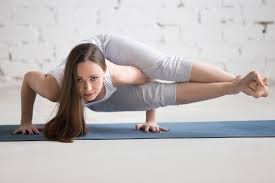
Astavakrasana (Eight Angle Pose)
Introduction:
Astavakrasana, also known as the Eight Angle Pose, is a sophisticated exercise used in advanced arm-balancing and core-strengthening routines. At a higher level, practice aids in maintaining stability and balance and helps the practitioner overcome physical and mental limitations. The primary goals of practice are to increase strength and flexibility.
The Sanskrit terms “asta,” which means eight, and “vakra,” which means curled or bent, are the origin of Astavakrasana, or Eight Angle Pose. Astavakra is described in classical Hindu texts as King Janaka of Mithila’s spiritual mentor. Astavakra’s father, Kagola, made multiple errors when reciting the Vedas when Astavakra was still in his mother’s womb.
The unborn child in his mother’s womb chuckled when he heard this. Kagola, the father, became furious and cursed his kid for being born corrupt. His son, Astavakra, was born twisted at eight points (chest, neck, feet, hands, and knees). Despite his physical limitations, he overcame them to become a great Guru to monarch Janaka, the father of Sita, and a powerful monarch in his own right.
How to Do Astavakrasana:
The detailed directions for performing Ashtavakrasana (Eight Angle Pose) are provided below:
- Start by stretching your legs in front of you while sitting in Dandasana, also known as Staff Pose.
- Bend your right leg, grasp your right foot with your left hand, lift your thighs, and place your right hand beneath your thigh so that your right thigh rests on your right arm’s upper shoulders.
- After positioning the right leg securely over the right shoulder with the left hand, lay the right palm on the floor near the right hip and squeeze the elbows toward the right thigh and hips.
- With the right leg resting on the right shoulder and the shin parallel to the floor, press the right palm toward the ground. Breathe out and raise your hips off the ground by moving them slightly forward and using your core and pelvic floor muscles.
- Maintain your balance while flexing your left ankle and extending your left leg in front of you, just like in Eka Hasta Bhujasana (One Legged Insect Pose).
- For two to three breaths, practice your breathing, balance, and posture while focusing on your core, biceps, and triceps.
- To better support the right leg over the shoulder, take a breath, bend the left leg, and wrap the left ankle around the right ankle from underneath. When the legs are locked, move them to the side.
- Breathe out and engage the necessary muscles by getting comfortable with the ankles wrapped while the hips remain off the ground.
- After you’re comfortable, release your breath and slowly advance your torso, bringing your head and chest forward. Only by deliberately using your abdominal and pelvic floor muscles can you do this.
- You will bend your arms at the elbows to move your torso forward. Increase the strength of your wrist and palm grasp on the floor, raise your hips higher, move forward with your shoulders parallel to the floor, and simultaneously shift your legs to the right side while locking.
- It’s crucial to maintain square shoulders and look forward rather than down. The legs are now extended to the side, the elbows are bent to support the torso, the upper body is parallel to the floor, and the hips are twisted to keep the legs balanced.
- To stay in the Eight Angle Pose for the first two to three breaths, fully exhale and continue to breathe deeply and slowly.
- Recognize every muscle used to maintain the body’s equilibrium.
- Stretch in Dandasana by releasing, lowering the legs, and sitting back.
- Follow the directions for the left side and repeat the process, extending your legs outward while maintaining your balance. First, stay for two to three breaths. Let go and relax.
Benefits of Astavakrasana:
The overall goal of advanced poses is to increase the body’s strength, flexibility, and endurance. However, the same advanced poses can also be used to improve stability and balance in the mind as well as the body. The following are some advantages of practicing Astavakrasana (Eight Angle Pose):
- Stretches and Strengthens: Ashtavakrasana, or Eight Angle Pose, helps to stretch and contract a variety of muscles, including the diaphragm, back, abdominal and core muscles, psoas, pelvic floor muscles, gluteus, hamstrings, quadriceps, and calves. The wrists, elbows, arms, shoulders, chest, hips, knees, ankles, and spine are all strengthened by this stretch.
- Energy and Endurance: Eight Angle Pose is a difficult arm balance pose that helps develop endurance since it stays very close to the ground without touching it. It is practiced to create strength in the body. As a result, maintaining equilibrium is difficult and demands stamina. This endurance prepares the body for difficult balancing positions by boosting its strength and vitality.
- Awareness and Focus: The Eight Angle Pose can be performed with a complete understanding of what is required while in balance by ignoring its limits and concentrating on its finer points. This focus is on strengthening the abdomen and core while lifting the body off the ground with the breath. learners learn to stretch their lower bodies and rotate their torso while in arm balance, thanks to this focus and awareness.
- Balance and Stability: Ashtavakrasana can be accomplished with awareness, concentrating on maintaining stability in both the body and the mind. The physical body aids in balance when there are no mental distractions, and the mind maintains the body’s stability. Thus, it’s a fantastic exercise to improve mental stability and physical balance.
- Internal Organs and Energy: Ashtavakrasana awakens the navel, the location of the Manipura Chakra (Sacral Chakra), while strengthening the abdominal muscles. These muscles contract to increase their strength and flexibility while also activating the organs in the abdominal region. This keeps digestion under control and aids in the body’s energy production. Just by releasing the posture, the contraction of the pelvic floor muscles stimulates the reproductive organs with new blood.
- Power and Confidence: Every difficult position is joyful to do, and it is even more rewarding when it involves many challenges, such as balance, twisting, stretching, and forward bending. The same emotions are brought about by practicing the Eight Angle Pose, which increases confidence and strength in both the body and the mind.
- Toning and Lengthening: The abdominal muscles, legs, arms, buttocks, hips, and sides of the back are all kept well-toned by this general body-strengthening position. It is possible to stretch the spine while maintaining its natural shape when the body is generally toned.
Contraindications of Astavakrasana:
Astavakrasana, also known as the Eight Angle Pose, is a lateral twist and an advanced arm balance. To prevent harm, learners should practice the Astavakrasana (Eight Angle Pose) with a few safety measures in mind. The contraindications for the same are listed below:
- High Blood Pressure and Heart Conditions: Practitioners with high blood pressure, heart conditions, and vertigo should avoid this pose since it can restrict breathing when attempting to hold the body in a forward fold and balance.
- Back Pain or Herniated Discs: This posture should not be performed by learners who have back pain or herniated discs in any section of their spine.
- Pregnant Women: Astavakrasana should not be performed by pregnant women because it puts a lot of strain on the pelvic and abdominal areas, which restricts breathing.
- Injury and Surgery: Astavakrasana (Eight Angle Pose) puts a great deal of tension on all of the body’s joints and muscles. Therefore, learners should refrain from using this posture if they have a physical injury or are recuperating from a recent operation. Shoulder, arm, wrist, neck, hip, knee, lower back, ankle, foot, and pelvic injuries are all contraindications and should be avoided. Additionally, this position should not be practiced by those who have Carpal Tunnel Syndrome.
Conclusion:
Astavakrasana, also known as Eight-Angle Pose, is a potent and sophisticated yoga pose that increases flexibility, strength, and balance. It improves focus and body control while strengthening the arms, shoulders, and core in particular.
This position is a useful addition to a deeper and more difficult yoga practice since it increases confidence and improves coordination with frequent practice.
FAQs:
Is Astavakrasana difficult?
Eight-Angle Pose, or Astavakrasana, is a difficult but rewarding pose that calls for confidence, strength, flexibility, and balance. Astavakrasana is an effective upper-back strengthener, but before attempting it, it’s crucial to strengthen your back and core.
Is it possible to do Ashtanga at home?
Essentially, it’s reasonable to assume that you may encounter some mental arguments, distractions, and temptations to pursue those “more important things.” But in my opinion, you can begin an Ashtanga practice at home, anywhere, as long as you have a mat.
What are typical Ashtanga errors?
Your legs will probably slip down your arms if you keep your arms straight, landing your ass on the ground. To prevent this, first lay a solid foundation by spreading your fingers and placing your hands flat on the ground.
What physical changes does Ashtanga bring about?
Whether or not your weight changes, significant health benefits include increased strength, flexibility, balance, and stress resilience. Many Ashtanga practitioners report enhanced quality of life, altered posture, and increased body awareness, all of which can promote long-term healthy habits.
Is Ashtanga yoga superior to hatha yoga?
Combining the two styles. Hatha Yoga offers a foundation of alignment, breath awareness, and mental peace; many practitioners find value in experimenting with both forms to experience their complementary advantages. With strength, stamina, and a dynamic flow, Ashtanga Yoga expands on that foundation.
Is Astavakrasana beneficial for strengthening the core?
You may keep your yoga practice challenging and develop resilience and confidence by taking on more difficult poses. Astavakrasana stretches your hamstrings and IT bands while strengthening your arms, shoulders, back, and core.
What is the history of Astavakrasana?
Astavakra, a sage who was born with eight bends or angles in his body, is the inspiration behind Astavakrasana, which translates to “eight-angle pose.” Astavakra developed into a renowned scholar and spiritual instructor in spite of his physical limitations.
Is Ashtanga suitable for beginners?
Beginners may need to start with a more manageable practice regimen because Ashtanga Yoga is physically demanding. Here are some broad recommendations: Beginners: You can develop strength, flexibility, and sequence familiarity by starting two to three times a week.
Is Ashtanga the most challenging style of yoga?
Physical Requirements: Ashtanga is definitely physically demanding, requiring stamina, strength, and flexibility. Nonetheless, the approach is made to be easily accessible, enabling changes and adaptations.
What does Astavakrasana mean in English?
Astavakrasana, also known as Eight-Angle Pose, is a sophisticated arm balancing that strengthens the upper body, tests core control, and calls for hip flexibility. This pose, which takes its name from the sage Astavakra, who was reported to have eight bends in his body, represents resilience, concentration, and inner strength.
What is meant by Astavakrasana?
Eight-Angle Pose
One of the more difficult arm balance poses in yoga is Astavakrasana, also known as Eight-Angle Pose. In Sanskrit, “asta” means eight, while “vakra” means bent or curled. It’s a great method to strengthen your arms and wrists and improve your balance and stability.
Is Astavakrasana challenging?
Eight-Angle Pose, also known as Astavakrasana, is a difficult arm balance that calls for strength, flexibility, balance, and focus. This position stretches the hamstrings and back body while strengthening the upper body, core, and abdominals.
References:
- Yoga Journal. (2025d, February 25). Eight-Angle pose. https://www.yogajournal.com/poses/eight-angle-pose/
- Astavakrasana Yoga(Eight Angle Pose)| yoga sequences, benefits, variations, and Sanskrit pronunciation | Tummee.com. (n.d.). Tummee.com. https://www.tummee.com/yoga-poses/astavakrasana
- Wikipedia contributors. (2025a, June 17). Astavakrasana. Wikipedia. https://en.wikipedia.org/wiki/Astavakrasana
- Umel, A. U. (2025, May 22). How to do Astavakrasana (Eight-Angle Pose). Liforme. https://liforme.com/blogs/blog/astavakrasana-eight-angle-pose?srsltid=AfmBOoojXTlJrGOzU-HMvBPzlfsdwogX_wuR8D3WFs-pd47B4owuab_a
- Stephen. (2023, March 31). How to do Astavakrasana – Yoga Pose Tutorial & Benefits. Adventure Yoga Online. https://adventureyogaonline.com/astavakrasana/