Triangle Pose (Trikonasana)
Introduction:
Triangle Pose (Trikonasana) is a classic standing yoga posture that helps improve flexibility, balance, and body alignment.
Asana means “posture,” kona means “angle” or “corner,” and tri means “three” in Sanskrit. Trikonasana, which translates to “three corners,” is also called Triangle Pose in English. This is a standing basic yoga stance for beginners that appears in nearly every type of yoga. Triangle practice, also known as Trikonasana, is a modern yoga practice that originated in Iyengar Yoga. It is an excellent method of stretching the muscles surrounding the spine and opening the hips.
An intensified version of Triangle Pose (Trikonasana) is called Utthita Trikonasana (Extended Triangle Pose). It necessitates more hip flexibility. Additionally, the hamstrings and side abdominal muscles are stretched more forcefully.
However, the Triangle Pose presents a greater challenge to hip flexibility because of the deeper outer rotation caused by the positioning of the arms behind the extended foot. Furthermore, compared to Utthita Trikonasana (Extended Triangle Pose), the hamstrings are not as thoroughly stretched.
Before attempting Triangle Pose (Trikonasana) or Utthita Trikonasana, yoga instructors typically introduce learners to Triangle Pose Hand In Front (Trikonasana Hand In Front), a gentler variation of Triangle Pose, to assess their hip flexibility.
Athletes and runners might benefit from the Triangle Pose (Trikonasana), which stretches the hamstrings and increases running agility. Children and teenagers can also use it. Senior citizens should avoid it since it is a balancing stance that uses the body’s joints. Third-trimester pregnant women should avoid this pose because it puts strain on the hip and knee joints and may cause imbalance owing to the weight of the womb.
This posture is a hip opener; postpartum women who are just developing strength in their hips and pelvis should avoid it. This adaptable stance is a transit pose in many Vinyasa and Power yoga sequences because it makes it simple for the practitioner to move from the Triangle stance (Trikonasana) to the warrior poses.
The Root, Heart, and Sacral Chakras are balanced in Triangle Pose (Trikonasana). The thighs, knees, hips, groin, hamstrings, shoulders, chest, spine, and ankles are all strengthened and stretched. It eases menopausal symptoms, lessens neck and back pain, enhances digestion, and treats sciatica and osteoporosis. Since triangle pose variations can be generated from triangle pose, triangle pose is regarded as a base pose.
How to Do Triangle Pose:
The steps for Triangle Pose (Trikonasana) are as follows:
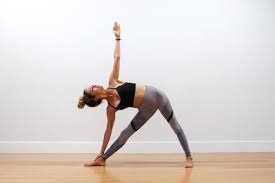
- Breathe deeply while standing in Utthita Tadasana, also known as the Five-Pointed Star Pose.
- Next, pull the right foot inward to a 45-degree angle and turn the left foot outward to a 90-degree angle.
- Take a breath, stretch your torso to the left, and gently bend your hips.
- Breathe out, lower the left hand to the ground, and position it behind the left foot. Breathe in, raise your right arm, and then glance up at it as you release the breath. Place the palms on the yoga block without applying any pressure if they were not completely grounded during the first exercise.
- Breathe in, keep your body flexible, and make sure your feet and hips are perfectly aligned so your body is comfortable.
- To deepen the position, exhale. For roughly six breaths, remain in Trikonasana (Triangle Pose), breathing deeply and stretching your arms and torso.
- Take a breath, release your torso, and realign yourself into Utthita Tadasana, also known as Five-Pointed Star Pose. Repeat on the opposite side, raising the left arm and moving the torso to the right.
- Breathe on your right side for six breaths, then let go to relax. If necessary, repeat once more.
Benefits of Triangle Pose:
The following are advantages of practicing Trikonasana, or Triangle Pose:
- Stretches, Strengthens, Lengthens, Flexibility, and Range of Motion: The thighs, knees, hips, groin, hamstrings, shoulders, chest, spine, and ankles are all stretched and strengthened by Triangle Pose (Trikonasana). When the hand is positioned below the hip joint in Triangle Pose, one side of the hip joint is stretched while the other side flexes, compressing the hip joint and its surrounding muscles. This greatly improves hip flexibility. The shoulders stretch further as the arms reach behind the foot, increasing flexibility.
- Chest, Diaphragm, and Breath: The torso is opened in Triangle Pose when the hips are positioned laterally with stability, and the arms are positioned so that one arm is lifted and the other is behind the foot. One side of the intercostal muscles can stretch deeply thanks to the extended lateral stretch of the spine, while the other side is relaxed. When performed on both sides, this asymmetrical stance expands the ribcage, which helps the lungs. The diaphragm’s flexibility is increased by the chest opening, with more room in the rib cage. The heart and lungs benefit from this.
- Awareness and Focus (Concentration) / Alignment and Posture: There are two sections to Triangle Pose (Trikonasana), one on the left and one on the right. With the feet one leg’s length apart and the knees straight, the practitioner starts by turning the right foot inward by less than 45 degrees and the left foot outward by 90 degrees, while keeping the heels aligned with the hips. The trunk is extended as far to the left as is comfortable, while the arms stay parallel to the floor and are spread out to the sides, palms facing down. The right hand is raised high, and the left arm is dropped below the left foot once the trunk has been fully extended to the left. In the final alignment, the practitioner positions the hands so that the left and right arms appear as a single, vertical straight line. In this position, the arms are extended apart, and the torso opens up. The practitioner turns their head and looks at their right palm. The spinal twist becomes more intense as a result.
- Additionally, the practitioner needs to be conscious of how to release the pose. They must first straighten their upper body on their hips and release their side bend before releasing their legs. There are numerous alignments in this position, including the intricate details of the hip, foot, and spine alignment. This position will aid posture correction and help establish balanced body equilibrium when performed with full attention and understanding.
- Triangle Pose (Trikonasana) is an invigorating, de-stressing, and relaxing pose that strengthens the core. The body’s prana channel is opened by the deep stretch of the major muscles as well as the internal tissues and joints. The improved blood circulation facilitates the body’s energy flow. This position is a crucial transit pose in vinyasa and power yoga sequences because it increases energy.
- Therapeutic, Healing, and Illnesses: Yoga instructors can use Trikonasana, also known as Triangle Pose, to treat sciatica, osteoporosis, infertility, mild depression, and neck pain. For those who suffer from sadness and neck pain, the spinal toning is soothing. This pose can also help relieve lower back pain. This stance tones the urogenital system and genitalia and also opens the groin and inner thighs. It works well for treating infertility, erectile dysfunction, and conditions related to the prostate glands in males, as well as signs of menopause and irregular periods in women. Stretching the abdomen improves digestion, reducing flatulence, acidity, and gastritis. Triangle Pose, or Trikonasana, helps correct the effects of poor posture or a sedentary lifestyle.
- Balance & Emotions: By balancing the Root, Heart, and Sacral Chakras, Triangle Pose (Trikonasana) helps develop an expanded attitude of compassion and care, as well as clear, communicative thinking. By balancing the body and achieving equilibrium, this pose not only increases physical confidence but also fosters mental stability.
- Circulation and Systems: Trikonasana, commonly known as Triangle Pose, compresses the side of the abdominal muscles facing the floor while simultaneously deepening the stretch on the opposite side. The digestive system benefits from this. This demanding stance strengthens the musculoskeletal system by stretching and toning the body’s large muscles and joints. The vigorous stretch and chest opening improve blood circulation throughout the body, strengthening the circulatory system. Spinal toning soothes the neurological system and relieves tension in the spine.
- Others: Because the Triangle Pose (Trikonasana) stretches the hamstrings and increases running agility, it is appropriate for athletes and runners. It is also appropriate for children and teenagers.
- Preparatory Pose: Warrior Pose I, Triangle Pose Flow (Virabhadrasana I Trikonasana Vinyasa), and Fallen Star Pose (Patita Tarasana) can be prepared for by practicing Trikonasana (Triangle Pose).
Contraindications of Triangle Pose:
The Triangle Pose (Trikonasana) contraindications are as follows:
- Injury and Surgery: learners with neck, knee, shoulder, or ankle injuries should avoid this position. Runners and athletes with hamstring or ankle issues should avoid this stance and instead rest the muscle. This pose should be avoided by those who have had hip, knee, or spinal surgery.
- Lack of Body-Breath Connections: Practicing this position without knowing the correct alignment and breath coordination might result in injuries, so anyone with a lack of body-breath connection should stay away from it.
- Physical Strength and Weak Body: To prevent joint dislocation, learners with weak ankles, knees, backs, or shoulders should avoid this position. Additionally, this practice should be avoided by those with migraines, vertigo, or high blood pressure because the balance effort in this posture can cause dizziness and injury.
- Others: Seniors should avoid this pose because it involves balancing the body’s joints. Third-trimester pregnant women should avoid this pose because it puts strain on the hip and knee joints and may cause imbalance owing to the weight of the womb. This posture is a hip opener; therefore, postpartum women who are just developing strength in their hips and pelvic joints should avoid it.
- Therapy and Restorative: This pose should be used by yoga instructors to energize, strengthen, and correct posture. For those with weak bodies, this stance is not recommended. This pose is safe for fit persons to perform. Even though restorative yoga poses offer many therapeutic benefits, energetic stances like Triangle Pose (Trikonasana) are preferable for treating illnesses.
Triangle Pose Breath Awareness:
The breathing techniques for practicing Trikonasana (Triangle Pose) are listed below:
- Inhale from Utthita Tadasana and raise the feet to 45 degrees and 90 degrees, respectively.
- Breathe out and reposition your hips and feet.
- Take a breath, bend your torso to the side, and reach for the floor with your hand.
- Breathe out and put your palm on the ground. Take a breath, lift the opposite arm, and look at the outstretched arm.
- To maintain Trikonasana (Triangle Pose), inhale and exhale.
- To extend into the pose, exhale.
- Take a breath, let go of the hand, and raise your torso.
- In Utthita Trikonasana, exhale and then relax.
- As you practice with the other side, adhere to the same guidelines.
Conclusion:
Strong-standing yoga poses like Triangle Pose (Trikonasana) enhance flexibility, balance, and overall body alignment. It strengthens the legs and core while gently stretching the hamstrings, hips, groin, and spine.
Regular practice of this pose can enhance mobility in daily tasks, improve posture, and increase body awareness. The Triangle Pose is a useful addition to any yoga practice, helping build strength and stability by emphasizing proper posture and calm breathing.
FAQs:
Can legs be strengthened with Trikonasana?
Trikonasana extends the lower back and improves strength and flexibility in the legs and lower joints (knees, hips, and ankles).
When should I avoid Trikonasana?
Injury and Surgery: learners with neck, knee, shoulder, or ankle injuries should avoid this position. Runners and athletes with hamstring or ankle issues should avoid this stance and instead rest the muscle. This pose should be avoided by those who have had hip, knee, or spinal surgery.
Which illnesses does Trikonasana treat?
Benefits of Trikonasana and How to Do It Trikonasana, also known as Triangle Pose, is a therapeutic yoga pose that helps prevent, manage, and relieve symptoms rather than offering a direct “cure.” It promotes circulation, boosts flexibility, and fortifies the legs and core. It is frequently used to treat conditions like obesity, sciatica, back pain, and constipation.
After doing Trikonasana, how does one feel?
Benefits and cautions of the Trikonasana yoga position. One usually feels rejuvenated, grounded, and physiologically balanced after doing Trikonasana (Triangle Pose). Because of improved circulation and the release of tension in the shoulders, hips, and spine, the posture produces a sense of balance between the body and the mind, leaving the practitioner feeling stretched, psychologically at ease, and energetic.
Does trikonasana open the heart?
This energizing pose is intended to open the heart chakra and encourage cardiovascular fitness. The hamstrings and spine extend, the hips open, and the chest expands, giving the side body and deep lower back muscles a beautiful stretch.
What is the recommended duration for holding trikonasana?
Hold for 20 to 45 seconds on each side for one to three sets, depending on how comfortable you are. Triangle Pose, also known as Trikonasana, is a standing pose that grounds the body with powerful legs and wide arms while lengthening the spine and side body.
Can obesity be cured with trikonasana?
By reducing waistline fat, strengthening abdominal muscles, and increasing metabolism, Trikonasana (Triangle Pose) helps manage obesity. Regular practice, together with dietary and other lifestyle modifications, dramatically reduces subcutaneous fat and improves body composition; however, it is not a “cure” in and of itself.
Which five advantages does trikonasana offer?
Trikonasana, also known as Triangle Pose, has five main benefits: it promotes digestion, strengthens the arms and legs, lengthens the body, improves balance, and reduces stress. This standing pose is a comprehensive yoga stance that reduces sciatica, improves hip and spine flexibility, and enhances stamina.
Which body component does trikonasana affect?
Legs, hips, back, shoulders, and chest strengthening: Trikonasana stretches and strengthens multiple muscle groups. Frequent practice opens the chest area, strengthens the lower body, and increases flexibility.
Who is incapable of doing Trikonasana?
The pressure on the arteries in the neck area and the twist of the neck are too much for people with high blood pressure, migraines, or vertigo. They should refrain from this activity because the balancing impact is difficult for them as well.
Which disease may Trikonasana treat?
Benefits of Trikonasana and How to Do It Trikonasana, also known as Triangle Pose, is a therapeutic yoga pose that helps prevent, manage, and relieve symptoms rather than offering a direct “cure.” It promotes circulation, boosts flexibility, and fortifies the legs and core. It is frequently used to treat conditions like obesity, sciatica, back pain, and constipation.
Why is the triangle pose so challenging?
Triangle Pose (Trikonasana) appears surprisingly simple, much like many basic yoga poses. However, this posture poses a significant balance challenge, and proper form requires simultaneous use of your legs, hips, upper body, and lower back.
What drawbacks does Trikonasana have?
If performed incorrectly, such as by compressing the body, bending the front knee, or overextending, Trikonasana (Triangle Pose) can cause lower back strain, neck pain, or knee injuries. High blood pressure, migraines, diarrhea, and recent injuries to the knee, hip, or back should all be avoided or adjusted.
What are the advantages of Trikonasana?
Trikonasana (Triangle Pose): Types, 10 Benefits, Guide, and…Trikonasana, also known as Triangle Pose, is a fundamental standing yoga pose that stretches the sides, hips, and spine by forming a triangle with the body. It enhances balance, flexibility, and digestion while strengthening the legs, knees, ankles, and chest. It also lessens stress and helps with back pain.
References:
- Wikipedia contributors. (2025b, September 21). Trikonasana. Wikipedia. https://en.wikipedia.org/wiki/Trikonasana#:~:text=Description,-Working%20in%20Trikonasana&text=Trikonasana%20is%20performed%20in%20two,in%20line%20with%20the%20hips.
- Triangle Pose Yoga(Trikonasana)| Yoga sequences, benefits, variations, and Sanskrit pronunciation | Tummee.com. (n.d.). Tummee.com. https://www.tummee.com/yoga-poses/triangle-pose
- Potdar, S., & Potdar, S. (2025, November 11). Trikonasana (Triangle Pose) | How to do | Benefits – The Art Of Living. The Art of Living – Making Life A Celebration. https://www.artofliving.org/in-en/yoga/yoga-poses/trikonasana-triangle-pose
- Ezrin, S. (2025, June 2). 8 ways to practice the triangle pose. Yoga Journal. https://www.yogajournal.com/practice/triangle-pose-variations/
- Finserv, B. (2026, March 10). Triangle pose (Trikonasana) – steps, benefits & precautions. https://www.bajajfinserv.in. https://www.bajajfinserv.in/insurance/health-benefits-of-trikonasana