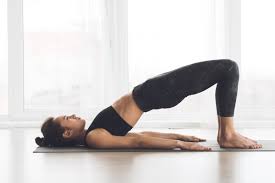
Setu Bandhasana (Bridge Pose)
Introduction:
Setu Bandhasana, commonly known as Bridge Pose, is a gentle back-bending yoga posture that strengthens the back, glutes, and legs while opening the chest and shoulders.
Bridge Pose cultivates the idea of bridging communication and connecting with people and one’s own inner self, although yoga goes beyond the physical alignments. Because Bridge stance variations can be generated from this stance, it is regarded as a base pose.
The Bridge Pose (Setubandha Sarvangasana) is an inverted backbending pose. Bridge Pose is a moderate chest opening that falls within the beginner’s level of asanas under the supine category. This results in a bridge since the entire spine is exquisitely curled away from the floor or mat.
This pose really focuses on spinal toning and strengthens the back because its effects are primarily focused on the spine. This pose helps reduce pain, stiffness, and discomfort in the hip joints while stabilizing them. Additionally, this position helps regulate blood pressure, promotes mental relaxation, enhances digestion, eases women’s menopausal symptoms, and lessens respiratory issues.
Bridge position (Setubandha Sarvangasana), which tones the abdomen and is beneficial for those with thyroid gland imbalance, is a terrific position for melting stomach fat. The Jalandhara Bandha, or chin lock, is triggered when the chin and chest are almost locked.
Bridge Pose (Setubandha Sarvangasana) tones the lower body and abdomen while strengthening the shoulder and back muscles. Plough Pose (Halasana), Shoulderstand Pose (Sarvangasana), Wheel Pose Prep (Urdhva Dhanurasana Prep), Wheel Pose (Chakrasana), and other strenuous postures requiring shoulder, arm, and core strength can be attempted with regular practice. In fact, a lot of yoga instructors advise new students to do the Bridge Pose (Setubandha Sarvangasana) rather than the Chakrasana so they can experience the benefits of a back bend without straining or hurting themselves.
Athletes, runners, postpartum mothers, and teenagers can all benefit greatly from the bridge pose because it is a particularly powerful core-strengthening exercise. The Throat Chakra is activated, and the Root, Sacral, and Manipura Chakras are balanced in this pose.
Bridge posture is regarded as a base posture since it may be used to create bridge pose variations. The Bridge Pose can be used in flow yoga poses since it increases the body’s energy.
Setu Bandhasana (Bridge Pose) Video
How to Do Bridge Pose?
The stages to Bridge Pose (Setubandha Sarvangasana) are as follows:
- First, place your body in Supta Tadasana, or Reclined Mountain Pose. Put your whole back on the ground and gather yourself in this position. Make sure there are no spaces between the spine and the floor as you bring it near the ground. The entire body becomes calm when the spine is fully rested.
- Bend both knees and bring the feet near the hips while taking a deep breath. Put your arms down on the ground next to you. Make sure the distance between your feet and knees is hip-width apart. In this position, fully exhale while maintaining a connection between the body and the breath.
- Take a breath and brace yourself with your arms on the floor next to you. In the direction of the roof, raise your hips, lower back, mid-back, and upper back. Do this vertebra by vertebra. This small stomach tuck produces a minor kumbhak in the breath and supports the lumbar spine.
- Your feet and shoulders take up the majority of your body’s balance while doing this. Engage your quads and tighten your glutes. This strengthens the legs so they can maintain the position. At the same time, roll your shoulders back away from your ears and widen them. The chest is opened by this action. Keep your shoulders close to the floor and avoid lifting them off the mat to strengthen them. Here, there is an independent, small chin lock.
- Tighten your thighs and glutes as you exhale, bringing your feet and shoulders firmly to the floor, and slowly raise your spine off the ground with each inhale. As long as there is no pressure on your shoulders or neck, you can stay in this position. Feel the position by taking four to five breaths here.
- Release the stance by lowering your back slowly, vertebrae by vertebrae, without hurrying. In Corpse Pose (Savasana), extend your legs and unwind.
- An excellent counter-spine relaxing stance to this back-bending pose is the Wind Release stance (Pawanmuktasana).
Benefits of Bridge Pose:
The advantages of Bridge Pose (Setubandha Sarvangasana) are as follows:
- Bridge Pose (Setubandha Sarvangasana) stretches, strengthens, and lengthens the quadriceps, hamstrings, glutes, and pelvic muscles. In order to strengthen the core, the practitioner lifts the hips in this posture and applies pressure to the glutes, outer thigh muscles, and a small belly tuck. The lumbar spine is also supported by the pulled navel. Because it extends and strengthens the spine and the skeletal muscles that are associated with it, such as the latissimus dorsi and erector spinae, this pose is excellent for toning the spine. The hip flexors, neck, and chest are all stretched in this pose.
- Flexibility, Range of Motion, Alignment, and Posture: The lower back and mid-back are raised by the bridge formed by the shoulders and legs. This movement of the spine is supported by the upper back. This corrects sagging shoulders and strengthens them. This pose is an excellent way to restore posture because it tones the lower body while also providing hip stability and spinal toning.
- Chest, Diaphragm, and Breath: In Bridge Pose (Setubandha Sarvangasana), the practitioner intentionally lowers the shoulder blades on the mat while raising the mid-back and lower back. The frontal chest opens when the shoulders are supported by the grounding on the mat. The chest cavity and lung space are expanded due to the modest chest opening. The breath is steady, and the diaphragm is extended. The intermediate practitioner can perform Bridge Pose Variation Hands Support (Setubandha Sarvangasana Variation Hands Support) and Bridge Pose Variation Ankles (Setubandha Sarvangasana Variation Ankles) and feel the chest open more if they stay in Bridge Pose (Setubandha Sarvangasana) for a little longer.
- Relaxing, de-stressing, and energizing: Bridge Pose (Setubandha Sarvangasana) relieves neck strain and back muscle tension. Leg toning relieves leg fatigue and strengthens the knee joints. Stress and anxiety are lessened by the Focus that is produced when the stance is aligned with breath awareness.
- Organs and Stimulation; Therapeutic, Healing, and Illnesses; Circulation and Systems: The nervous system includes the brain and spine as associated organs. In addition to relieving musculoskeletal tension, this pose’s spinal tone soothes the mind and improves nervous system function. The thyroid, lymph nodes, and salivary glands are stimulated when the chin is almost tucked into the neck. Asthma can be effectively treated with moderate chest expansion along with shoulder support. The strengthening of the core tones the abdomen and aids in the reduction of belly fat. Urinary incontinence can be effectively treated by lifting your hip in this stance, which squeezes the rectus and urinary tract.
- Balance and Emotions: Yoga is more than just physical alignment. The idea of bridging—that is, connecting and communicating with others as well as your own inner self—is instilled in the bridge position. In addition to activating the Throat Chakra, this pose balances the Root, Sacral, and Manipura Chakras. A balanced body leads to a balanced mind with emotional fortitude and mental stability.
- Others: Athletes, runners, postpartum mothers, and teenagers can all use this position, which is highly beneficial for strengthening the core.
- Preparatory Pose: Bridge Pose (Setubandha Sarvangasana) tones the lower body and abdomen while strengthening the shoulder and back muscles. Frequent practice gets the practitioner ready to try challenging poses like Plough Pose (Halasana), Shoulderstand Pose (Sarvangasana), Wheel Pose Prep (Urdhva Dhanurasana Prep), Wheel Pose (Chakrasana), and similar ones that need shoulder, arm, and core strength. An excellent counter-spine relaxing stance to this back-bending pose is the Wind Release stance (Pawanmuktasana).
Contraindications of Bridge Pose:
Bridge Pose (Setubandha Sarvangasana) should not be performed in the following situations:
- Injury and Surgery: Students with sprains and strains to their neck and shoulders should avoid this pose entirely because it involves raising the hips and back on a supported shoulder. Additionally, students with ankle injuries or sprains should avoid this position because the feet support the legs. Students who have had hip, shoulder, or spinal surgery should avoid this pose since it requires back bending.
- Lack of Body-Breath Connections: Breath awareness is required for this stance. Breath awareness is required by lifting the hips with inhalation and slightly tucking the stomach to create a kumbhak in the breath. Body awareness is necessary to align the spine by lifting vertebrae one after the other and then releasing them with the same gentleness. In order to prevent jerks and injuries to the spine and hip joints, the yoga instructor should either educate the student or refrain from teaching them this posture if they exhibit a lack of coordination.
- Strengths and Weaknesses of the Body, Therapy, and Restorative: This position should be avoided by students who have weak ankles, knees, shoulders, or core strength. The practitioner typically extends their lower back unconsciously due to weak core strength or a tight hip flexor, which makes room for injury. Because the backbend puts pressure on the neck and spine, yoga instructors must rule out acute cervical spondylitis or herniated disc problems in their students, even if this position is useful in relieving lower back pain. People with high blood pressure should avoid this pose because it puts strain on the carotid artery, an essential artery that supplies oxygenated blood to the brain. Additionally, this posture should be avoided for heart patients who have had surgeries or other conditions since the inverted backbend increases blood flow to the heart, which a weak heart cannot tolerate. If done carefully, this posture can treat a weak knee. However, if a person has had a knee replacement or is in a severe stage of osteoporosis, they should absolutely avoid this pose unless the instructor is precise and meticulous. This posture should be avoided by those who have abdominal hernias because their lax abdominal muscles prevent them from having the core strength necessary to raise their hips and back.
- Others: Children, elderly people, and pregnant women should avoid the Bridge Pose (Setubandha Sarvangasana).
Bridge Pose Modifications:
The majority of asanas can be performed with appropriate guidance and changes if they cause any difficulty at the beginning of the learning stage, at the intermediate level, unless the doctor advises otherwise. Setubandha Sarvangasana, like many other poses, has different methods for mastering the pose. Here are:
- To prevent strain on the neck and upper spine, the entire position can be performed with a blanket under the shoulders and neck.
- If your lower back isn’t flexible enough, you might wrap your arms around your ankles to give your back the support it needs to rise and remain. To add confidence to the pose, the arms and wrists can also be positioned below the hip or lower back.
- Maintaining the stance might be aided by placing a block behind the shoulders or lower back. However, someone else must position the block for you while you are in the posture. You should never attempt to place the block on your own because doing so may cause neck pain.
- To support the back, one could set up a cushioned chair or stool before striking the position. Make sure the stool provides the proper support, isn’t too high, and doesn’t worsen your suffering.
- In order to prevent slippage and provide support for the knees throughout the posture, one could use the wall by placing the feet near it.
- It is crucial to enter the posture gradually. One might begin by creating a little arch of the spine, and as the back and legs become stronger, move into a deeper arch formation. Enter the position with stability in your legs and knees when you are totally confident.
- The first step for someone with weak shoulders and neck is to raise the shoulder just to a comfortable level without bringing it near the chin. Work on this bit by bit.
- To practice putting, just bring the rear of the head’s crown to the ground while using bolsters to support the entire body. You can repeatedly practice this gradual back opening until you are prepared for the actual pose.
Bridge Pose Breath Awareness:
Any position or posture is made more beautiful and effortless by the inhale and exhale that lightens the body. During the practice of asanas, this flow of inhaling and exhalation becomes a habit after extensive practice. The Setubandhasana practice is described as follows:
- Maintain in the supine position and use deep breathing to induce total relaxation.
- Inhale, bend the knees, fold the legs, fully exhale, and stay in this position for a few breaths.
- Breathe deeply while keeping your arms at your sides, lift your body off your hips, and then release the breath once you’ve finished the stretch.
- This position involves locking the chest close to the chin while raising the entire lower back from the hips. Place the knees slightly above the ankles and the thighs parallel to the floor. Maintain calm breathing while adjusting the entire body to the correct alignment and stance.
- When you exhale, maintain a strong grip on the floor with your shoulders positioned to support your upper back and chest.
- Every time you breathe in, loosen up your body, lift your back, and then release the breath to perform the position.
- As you release the breath, lower your body and return your shoulders, chest, legs, and back to the floor with complete relaxation.
- In order to help the spine contract more quickly, start the deep breathing while stretching the entire body, including the legs. Make sure the pose improves and lasts longer by staying here for a few breaths before moving on to the next round.
- Make sure the abdominal muscles are drawn in and tight during the position, and watch out that they don’t expand more than necessary during the inhalation. Even though the breathing should be abdominal, the stomach shouldn’t swell too much because this could make it harder to maintain the stance for an extended period of time.
Conclusion:
Setu Bandhasana, also known as Bridge Pose, is a straightforward but effective yoga pose that gently stretches the chest, neck, and spine while strengthening the back, glutes, and legs. Regular practice of this pose helps enhance circulation, improve posture, and develop spinal flexibility.
Promoting deep breathing and expanding the chest, it also aids in lowering tension and exhaustion. You can promote general body balance, stability, and relaxation by incorporating Setu Bandhasana into your everyday yoga practice.
FAQs:
What is the bridge position called in Sanskrit?
The bridge position is called Setu Bandha Sarvangasana in Sanskrit, which means “bridge.” Setu Bandha Sarvangasana gets its name from the bridge-like shape the body forms in this pose. Ease in the low lumbar region is a big benefit that you will experience right away.
Does the bridge pose raise testosterone levels?
Bridge stance (Setu Bandhasana): This stance is another useful way to support testosterone. Increased circulation to the pelvic region is a benefit of the bridge posture. Additionally, it promotes increased sperm fertility.
In bridge posture, which chakra is activated?
The Root Chakra (Muladhara), Heart Chakra (Anahata), and Throat Chakra (Vishuddha) are all stimulated by the bridge posture. Finding foundation, trust, forgiveness, unconditional love, and straightforward communication are all facilitated by this grounding stance.
Is the bridge beneficial to the brain?
Researchers have found that mentally demanding activities, like bridge, provide regular intellectual and social stimulation, making them ideal for senior citizens. Because of its complexity, the bridge is especially appealing to people who desire to use mental gymnastics to improve their acuity.
What drawbacks does bridge posture have?
Injury and Surgery: Students with neck and shoulder sprains and injuries should avoid this posture entirely because it involves elevating the hips and back on a supported shoulder. Additionally, students with ankle sprains or injuries should avoid this position because the feet support the legs.
For what length of time should I maintain a bridge pose?
With your thumbs on your sides and your fingers pointed toward your lower back, place your hands on your back. Take a deep breath. Try extending your feet farther while in the bridge posture for a more difficult alternative. For thirty seconds, maintain the posture.
Does the bridge pose lower blood pressure?
Setu Bandha Sarvangasana, or Bridge Pose, is a unique pose. Although it can be stimulating, it can also activate three different systems that facilitate a soothing shift and a drop in blood pressure after the pose. Because of this, it’s one of the few yoga poses that may simultaneously calm and elevate the body.
Is it safe to strike a bridge pose?
For both beginners and seasoned yogis or athletes who wish to delve deeper, Bridge Pose (also known as Setu Bandhasana) is a safe and revitalizing backbend. It relieves tension, eases headaches and backaches, and extends and strengthens the front and back of the body.
Is tummy fat reduced by the bridge pose?
Bridge pose, or setu bandhasana, tones the lower body, promotes digestion, and aids in the reduction of belly fat. Downward dog pose, or Adho mukha svanasana, tones the arms and legs, strengthens the core, and enhances blood flow.
Who shouldn’t strike the bridge pose?
Contraindications for Bridge Pose
Injury and Surgery: Students with neck and shoulder sprains and injuries should avoid this posture entirely because it involves elevating the hips and back on a supported shoulder. Additionally, students with ankle sprains or injuries should avoid this position because the feet support the legs.
Can I perform the bridge position every day?
Daily practice of this pose can promote both mental and physical calm! Precautions need to be taken. You should definitely avoid the posture if you have problems with your wrists, shoulders, neck, or lower back. A moderate half-bridge version is recommended for pregnant ladies.
Which muscles are used in the bridge pose?
For the bridge posture, muscles involved are predominantly in your back. Your hamstrings, glutes, and back muscles will all be strengthened by this stance. Additionally, the bridge stance can ease back fatigue and tension. The posture extends your neck, spine, and chest while strengthening your back.
Why is the bridge pose beneficial?
Bridge Pose improves posture and flexibility while strengthening the legs, glutes, and back. Additionally, it promotes general health and vigor by improving blood circulation, reducing stress and anxiety, and stimulating the thyroid gland.
References:
- Yoga Journal. (2021, November 10). Bridge pose. https://www.yogajournal.com/poses/bridge-pose/
- Bridge Pose Yoga(Setubandha Sarvangasana)| Yoga sequences, benefits, variations, and Sanskrit Pronunciation | Tummee.com. (n.d.). Tummee.com. https://www.tummee.com/yoga-poses/bridge-pose
- Taylor, M. (2024, December 12). How to do a bridge yoga pose. WebMD. https://www.webmd.com/fitness-exercise/how-to-bridge-yoga-pose
- Yogitim. (2024, October 4). Bridge Pose (Setu Bandhasana) instructions & photos • Yoga Basics – Yoga Basics. Yoga Basics. https://www.yogabasics.com/asana/bridge/
- YogaRenew. (2025, October 7). Bridge Pose | YogaRenew. https://www.yogarenewteachertraining.com/yoga-poses/bridge-pose/