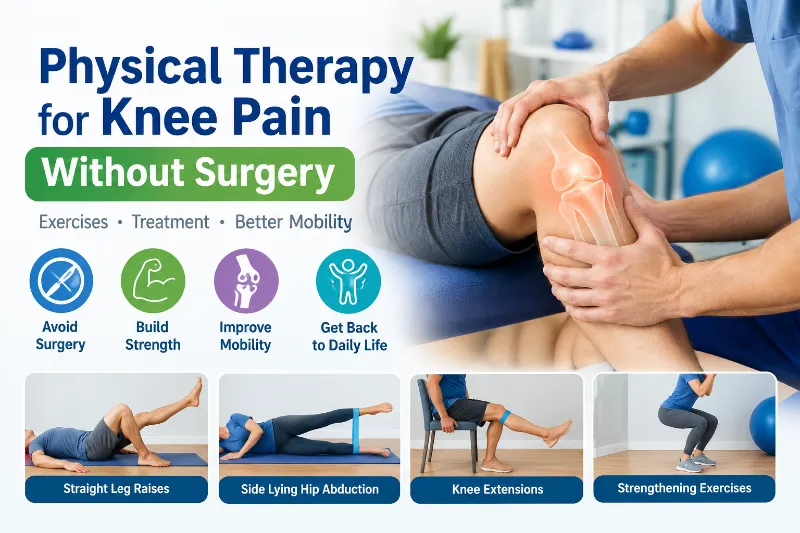
Physical Therapy For Knee Pain Without Surgery
What Is Knee Pain?
Knee pain is soreness in or around the knee joint.
Joints are where two bones meet. Your knee joint links your thigh and lower leg. It’s where your thigh and shin bones connect.
The knee is your body’s largest joint, absorbing and supporting much of your weight as you walk. This is why it is one of the most often damaged joints. Knee joint pain can be both a transitory, short-term condition and a chronic (long-term) concern.
Knee pain may come and go. For example, you may have pain when moving or bending your knee. However, you may feel better after resting. Some people experience pain at varying periods of the day. You may experience greater pain when you first get up in the morning. It is also usual to experience knee pain or discomfort at night, particularly if you were physically active earlier in the day.
Knee discomfort is often treated at home with over-the-counter (OTC) pain medications and a vacation from vigorous exercise.
Causes of Knee Pain
Knee pain is quite frequent among the elderly. As we become older, our joints stiffen and lose flexibility. This is because the fluid inside the joints, which allows them to move smoothly, begins to dry out. When this happens, the bones and joints rub against each other, causing pain. The muscles around the knees may also get weaker. Sometimes the bones become weak and shatter easily, requiring more time to repair.
There are several causes of knee discomfort in older persons.
- Osteoarthritis or arthritis (joint discomfort associated with aging)
- Old injuries that have not healed correctly
- Tears in ligaments surrounding the knee.
- Past bone fractures
- Sitting for too long in cramped or bending postures.
Symptoms of Knee Pain
- Swelling and stiffness in the knee
- Redness and soreness when touched.
- A cracking or popping sound when moving the knee joint.
- Weakness in leg muscles
- Unsteady balance or a sense that the knee will “give out”
- Having trouble rising from a chair or getting up fast
- It is difficult to fully straighten the leg or knee.
How Physiotherapy Helps in Knee Pain
Physiotherapy is one of the most effective techniques to address knee pain without the use of powerful medications or surgery. It improves the way your knee moves and feels. A qualified physiotherapist examines your pain, your posture, and how well your knee functions. Then they lead you through basic, safe exercises that strengthen your knee, reduce swelling, and increase flexibility.
With consistent practice, physiotherapy for knee pain can help with daily movements such as walking, standing, and getting out of a chair. It also improves balance and muscular strength, making your knees feel more solid. Physiotherapy may be done at home or in a clinic, and it gradually improves your knee function and reduces pain.
The Role of Physiotherapy in Knee Pain
Pain Relief:
Physiotherapists use a variety of approaches to treat knee pain, including manual therapy, soft tissue manipulation, and modalities like ultrasound or electrical stimulation. These techniques can help reduce pain and inflammation, making it simpler for patients to participate in rehabilitation exercises.
Restoring mobility:
Knee pain frequently causes restricted movement, either owing to stiffness, edema, or fear of pain. Physiotherapists provide precise stretching and range-of-motion exercises to restore flexibility and joint function, allowing patients to move freely.
Strengthening Muscles
One of the most important aspects of physiotherapy for knee pain is strengthening the muscles that support the joint. Weakness in the quadriceps, hamstrings, or hip muscles can cause knee pain and instability. Strengthening these muscles allows for more uniform distribution of stress over the knee, minimizing joint strain.
Improving balance and proprioception:
Proprioception, the body’s capacity to detect its location in space, is frequently reduced after a knee injury. Physiotherapy involves balancing exercises that retrain the body’s proprioceptive skills, lowering the chance of future injuries.
Modalities For Relief of Knee Pain:
Ultrasound Therapy: This technique uses sound waves to stimulate tissue repair and alleviate pain.
Electrical Stimulation: Techniques such as Transcutaneous Electrical Nerve Stimulation (TENS) are used to reduce pain and improve muscular function.
Heat and Cold Therapy: Heat can relax and loosen tissues, whilst cold therapy can decrease inflammation and dull pain and discomfort.
Exercise For Knee Pain
Straight leg raises
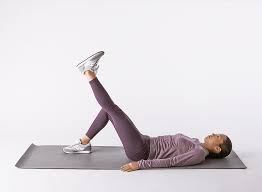
- You can use a mat to cushion your back during this activity.
- Lie down on the floor, one leg bent and one straight in front of you.
- Contract your straight leg’s quadriceps and gradually elevate it off the floor until it reaches the same height as your bent knee.
- Pause at the top for 5 seconds before lowering to the starting position.
- Perform two to three sets of 10 repetitions per leg.
Quadricep squeezes
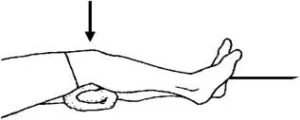
Sit on the floor, couch, or bed with your legs straight out in front of you. Place a rolled-up towel beneath one knee area. Push down on the towel as if to straighten your knee. Pull your toes and foot toward you until you feel your calf muscles stretch and your heel rises off the floor. Hold for 5 seconds, followed by 5 seconds of relaxation. Do this ten times, then repeat with the opposite leg.
Seated knee extensions
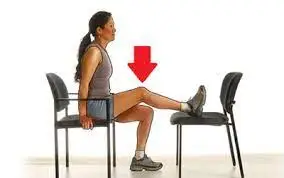
This exercise trains the quadriceps in a wider range of motion. It supports the recovery of the muscle strength needed for walking and climbing stairs.
How To Do It:
Sit up in a chair. Slowly straighten one knee until it is fully extended, hold for a moment, then lower it back down. Perform 10-15 reps on each side.
Benefits:
Strengthens the quadriceps through range
Improves knee control.
Helps in walking and climbing stairs.
Lying pillow squeeze
This is an excellent workout for slowly developing the inner thigh muscles. Begin by lying on your back with your legs bent and a cushion between them. Squeeze your knees together to compress the cushion and tighten your muscles. Hold for 5 seconds, then release. Repeat ten times. Pay attention to your body and ease off if you feel any pain. If you want, you can perform this exercise while sitting in a chair with your feet on the floor.
Calf Stretch
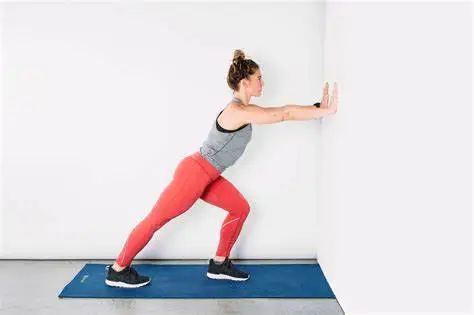
Tight calves can worsen knee pain and impair walking. Stretching promotes flexibility and relieves knee pain and discomfort.
How To Do It:
Stand facing a wall.
- Position one leg forward (knee bent) and the other leg back (knee straight, heel on the ground).
- Gently push against the wall until you feel a stretch in your calves.
- Hold for 15-20 seconds, then change legs.
Benefits:
This is a healthy workout for knee osteoarthritis that relieves stiffness and increases blood circulation.
Hamstring Stretch
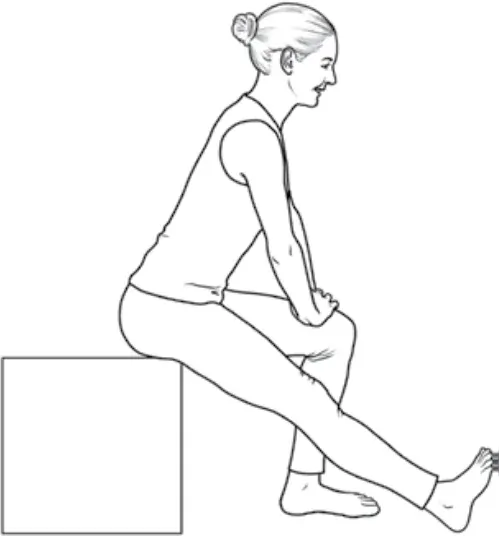
Tight hamstrings can make walking, bending, and other activities difficult. Stretching them increases flexibility and makes daily tasks go more smoothly.
How To Do It:
- Sit in a chair and stretch one leg straight.
- Keep the patient’s back in a straight position and lean forward slightly.
- Hold the stretch for 15-20 seconds before repeating on the other leg.
Benefits:
This is one of the everyday exercises for knee joint pain that promotes flexibility and alleviates soreness.
FAQs
What is the Cause of Knee Pain?
The global rise in obesity is associated with a large increase in the prevalence of arthritis, particularly in the knee joint.
Genetics obviously has a role and has been linked to osteoarthritis, particularly in the joints of the hand and wrist.
Trauma and injury can cause cartilage loss, and improper bone alignment can contribute to osteoarthritis.
Joint instability caused by inadequate ligaments or weakness can result in cartilage loss and, eventually, osteoarthritis.
Could my pain be from osteoarthritis?
Yes. Osteoarthritis, produced by “wear and tear” on the joints, accounts for around 95% of all arthritis-related knee pain. Other forms, such as rheumatoid arthritis, are relatively rarer causes of knee pain and stiffness.
What type of injuries can cause knee pain?
They are mainly knee-twisting injuries, such as an ACL, meniscus, or ligament tear.
Will Knee pain go away on its own?
It depends. Arthritis pain varies in intensity over time. It may not go away entirely, but it does feel better at times. Pain after an accident gradually lessens, but if you have a painful joint, you may be unable to perform some tasks.
What is knee pain?
Knee pain is defined as any discomfort, soreness, stiffness, or swelling in or around the knee joint. It might occur immediately after an accident or gradually as a result of wear and tear, arthritis, or overuse.
References
- Exercises for the knees. (n.d.). Arthritis UK. https://www.arthritis-uk.org/information-and-support/living-with-arthritis/health-and-wellbeing/exercising-with-arthritis/exercises-for-healthy-joints/exercises-for-the-knees/
- Chauhan, L. (2025, September 9). Physiotherapy for knee pain. Resolve360 No.1 Online Physiotherapy Clinic. https://resolve360.app/treatment/physiotherapy-for-knee-pain/
- Patil, S. (2024, October 5). Physiotherapy for Knee Pain: Does it Really Work? Polaris Healthcare. https://www.polarishealthcare.in/post/physiotherapy-for-knee-pain