List of Joints in Human Body
The human body contains numerous joints, which are categorized based on their structure and function.
Here is a comprehensive list of joints in the body, grouped by region:
Skull (Cranial and Facial)
- Sutures – Immovable joints connecting the bones of the skull (e.g., coronal, sagittal, lambdoid, and squamosal sutures).
- Temporomandibular Joint (TMJ) – The joint connecting the jawbone (mandible) to the skull (temporal bone).
Neck
- Atlanto-Occipital Joint – Between the atlas (C1) and the occipital bone of the skull.
- Atlantoaxial Joint – Between the atlas (C1) and axis (C2).
Vertebral Column (Spinal Joints)
- Intervertebral Joints – Between vertebral bodies and intervertebral discs.
- Facet Joints (Zygapophyseal Joints) – Between the articular processes of vertebrae.
Thorax
- Sternoclavicular Joint – Between the sternum and clavicle.
- Costovertebral Joints – Between ribs and vertebrae.
- Costochondral Joints – Between ribs and costal cartilage.
- Sternocostal Joints – Between the sternum and costal cartilage.
Shoulder and Upper Limb
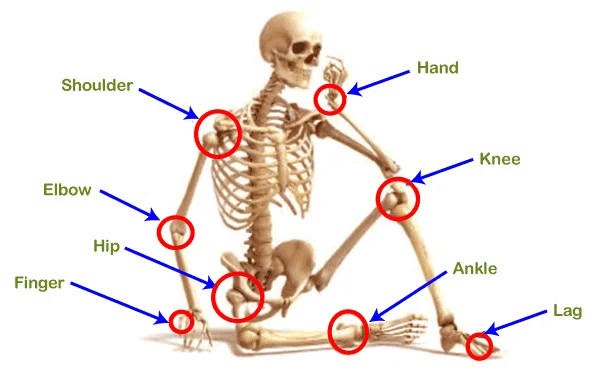
- Shoulder (Glenohumeral) Joint – Between the humerus and scapula.
- Acromioclavicular Joint – Between the acromion of the scapula and the clavicle.
- Elbow Joint – Includes:
- Humeroulnar Joint – Between the humerus and ulna.
- Humeroradial Joint – Between the humerus and radius.
- Proximal Radioulnar Joint – Between the radius and ulna.
- Wrist (Radiocarpal) Joint – Between the radius and carpal bones.
- Distal Radioulnar Joint – Between the distal ends of the radius and ulna.
- Intercarpal Joints – Between carpal bones.
- Carpometacarpal (CMC) Joints – Between carpal and metacarpal bones.
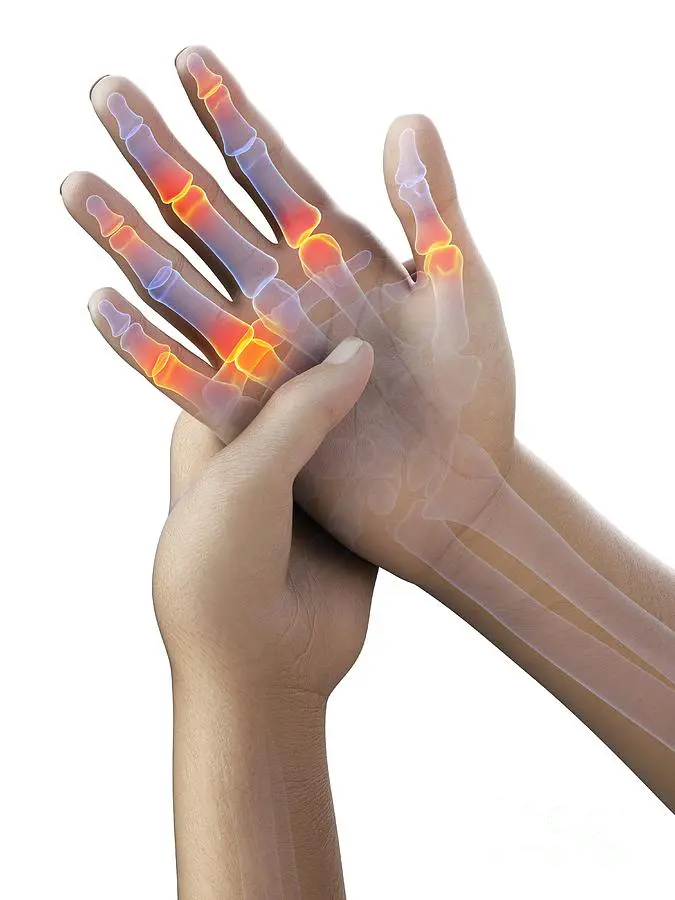
- Metacarpophalangeal (MCP) Joints – Between metacarpals and proximal phalanges.
- Interphalangeal (IP) Joints – Between phalanges:
- Proximal Interphalangeal (PIP) Joints
- Distal Interphalangeal (DIP) Joints
- Thumb Interphalangeal Joint
Pelvis
- Sacroiliac Joint – Between the sacrum and ilium.
- Pubic Symphysis – Between the pubic bones.
Hip and Lower Limb
- Hip (Coxal) Joint – Between the femur and acetabulum of the pelvis.
- Knee Joint – Includes:
- Tibiofemoral Joint – Between the tibia and femur.
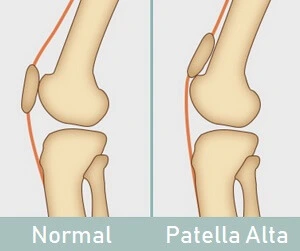
- Patellofemoral Joint – Between the patella and femur.
- Proximal Tibiofibular Joint – Between the proximal ends of the tibia and fibula.
- Distal Tibiofibular Joint – Between the distal ends of the tibia and fibula.
- Ankle (Talocrural) Joint – Between the tibia, fibula, and talus.
- Subtalar Joint – Between the talus and calcaneus.
- Intertarsal Joints – Between tarsal bones.
- Tarsometatarsal (TMT) Joints – Between tarsal and metatarsal bones.
- Metatarsophalangeal (MTP) Joints – Between metatarsals and proximal phalanges.
- Interphalangeal (IP) Joints – Between phalanges:
- Proximal Interphalangeal (PIP) Joints
- Distal Interphalangeal (DIP) Joints
This list covers all the major joints in the human body, grouped by their location and type.