14 Best Exercises for Computer-Related Shoulder Pain
Introduction:
The excessive use of computers in the office has caused an increase in work-related diseases in recent years. According to research, about 70% of work dangers in terms of injuries are associated with computers.
Exercises and stretches, according to experts, are the best ways to prevent these conditions and injuries caused by excessive computer use.
What causes shoulder pain?
We often link shoulder pain to sports like baseball and tennis or to the consequences of shifting furniture around the living room. Few people would ever guess that something as normal and passive as sitting at our workstations is frequently the reason.
But it turns out that spending more than eight hours a day in front of a computer can have a significant impact on the deltoid, subclavius, and trapezius muscles in our shoulders.
What causes tight shoulders?
Tight shoulders may be caused by:
- improper posture
- Long durations of sitting
- Using an improperly positioned desktop or laptop
- Overuse of cell phones, stress, carrying large bags, and injuries
- Symptoms of arthritis
- As one ages, shoulder strain may get worse.
Computer work can cause shoulder pain:
Up to 200,000 keystrokes are made daily by the average computer user.
Your musculoskeletal health may suffer greatly over time as a result of these repeated motions from a comparatively still position for extended periods of time. It may result in:
- poor posture
- joint pain and headaches
- These shoulder injuries, which frequently occur with neck and back strain, are classified as musculoskeletal illnesses by the World Health Organization and other important medical organizations.
Stretches for shoulder tightness:
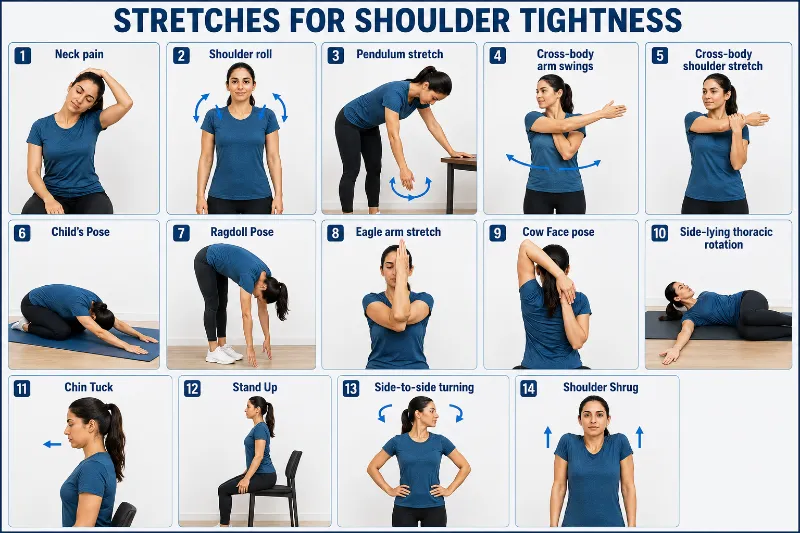
Stretches for the shoulders and neck can help ease stiffness, soreness, and stress. Shoulder positions, neck stretches, and other yoga postures can assist in improving flexibility and lessening stiffness.
A person’s range of motion may be restricted, and pain may result from stiff or tight shoulders. Tension headaches and neck pain may result from improper tightness.
Neck Stretch

Stretches for the neck may reduce tension in the upper shoulders.
- Place your feet hip-width apart.
- Allow the arms to rest at the sides.
- Look forward.
- Try to bring the right ear to the right shoulder by tilting the head to the right.
- The left side of your neck and shoulder should feel stretched.
- Try to bring the left ear to the left shoulder by tilting the head to the left.
- The right side of your neck and shoulder should feel stretched. Hold the position for ten seconds each time.
- On each side, repeat this three times.
Shoulder roll:
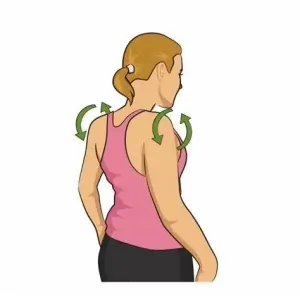
Stretching the shoulders may be done easily with shoulder rolls.
- Place your feet hip-width apart.
- Allow your arms to rest at your sides.
- Inhale deeply and bring your shoulders up to your ears.
- Squeeze your shoulder blades together as you move your shoulders back.
- Breathe out and lower your shoulders.
- Feel the strain at the back of your shoulders as you move your elbows forward.
- Do this ten times.
Pendulum stretch:
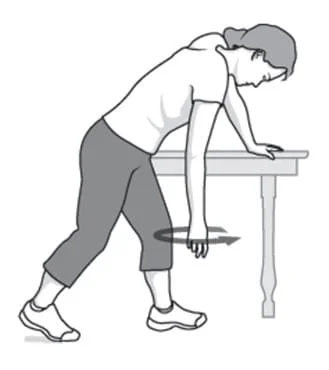
Using the force of gravity, the pendulum is a moderate method of increasing shoulder mobility.
- Place your feet hip-width apart.
- Gaze at the ground while bending forward.
- For support, place your right hand on a table or chair.
- Allow the left arm to dangle.
- Let gravity do most of the work as you gently move your left arm in small circles.
- For 30 to 60 seconds, keep going.
- Modify the movement’s direction.
- Repeat with the opposite arm.
Cross-body arm swings:
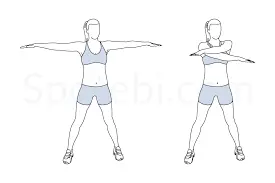
Arm swings improve range of motion and help warm up the shoulder joint.
- Place your feet hip-width apart and stand.
- Squeeze your shoulder blades together as you take a breath and extend your arms to the sides.
- Breathe out and bring your arms slightly closer to one another.
- Keeping both arms straight, cross the right arm beneath the left.
- Squeeze your shoulder blades together as you take a breath and swing your arms back out to the sides.
- Breathe out and slowly bring your arms back together.
- The next time, keep both arms straight and cross the left toward the right.
- Repeat this ten times.
Cross-body shoulder stretch:
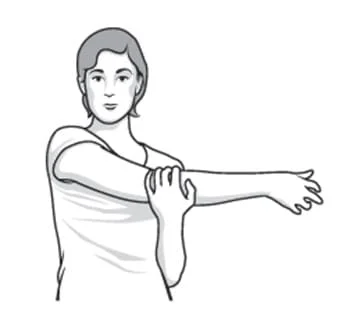
The posterior part of the shoulder may be stretched using the cross-body shoulder stretch.
- Place your feet hip-width apart.
- Extend your right arm straight out.
- On the opposite side of the left leg, bring the right arm across the body such that the hand points to the floor.
- The arm should be bent at the elbow.
- To support the right arm above the elbow, hook the left forearm beneath the right arm.
- Stretch the back of the right shoulder by pulling the right arm farther in and across the body with the left forearm.
- Repeat the stretch on the opposite side after holding it for 20 seconds.
Child’s Pose:
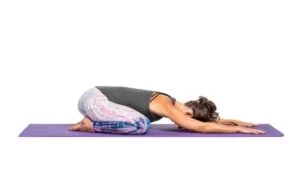
A mild yoga practice that might help extend the back of the shoulders is child’s pose.
- Kneel on a mat or the ground.
- Put your big toes together.
- Lay your knees wide apart.
- Elevate your position.
- Take a breath, then lift your arms above your head.
- Breathe out and extend your arms in front of you as you bow down toward the ground.
- Put your palms on the ground.
- Lower your elbows to the floor.
- Bring the lower back closer to the heels as you relax.
- The back of your shoulders should be stretched.
- Take a deep breath and maintain the posture for at least one minute.
Ragdoll Pose:
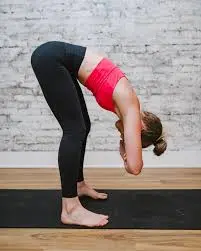
A forward-bending yoga practice that may reduce shoulder pain is the ragdoll pose.
- Place your feet hip-width apart.
- Bend your knees a little.
- Try to touch your toes by bending forward.
- To support the lower back, keep the stomach pressed up against the bent legs.
- Put each hand on the opposing arm’s elbow.
- The crown of the head ought to face the ground.
- Release tension in the shoulders and neck by letting the head hang loosely.
- Hold the posture for at least a minute.
Eagle arm stretch:
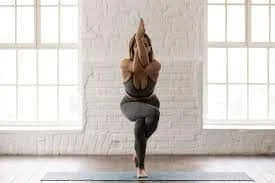
The upper body position in yoga’s Eagle Pose became the basis for the eagle arm stretch. The shoulders may become more flexible as a result of this stretch.
- Place your feet hip-width apart.
- Take a breath and raise your arms to your sides.
- Breathe out and bring your arms closer to your body.
- Permit the right arm to pass beneath the left.
- Place the left elbow in the right elbow’s crook.
- If they reach, bring the palms together.
- Hold the backs of the hands together if the palms are not in contact.
- Inhale deeply three or four times.
- With the left arm crossed under the right, release the stretch and repeat on the opposite side.
Cow Face pose:
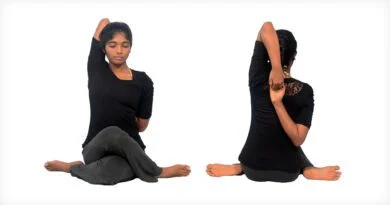
Another yoga practice that stretches the shoulders is Cow Face.
- Place your feet hip-width apart.
- Raise your right arm straight up to the heavens.
- The elbow of the right arm has to be bent.
- Reach your right hand above your head and down your back while keeping your elbow up.
- Extend your left arm in the direction of the floor.
- Stretch the left hand up and behind.
- If it feels comfortable, bring the left and right hands close together and grasp them.
- Inhale deeply three or four times.
- After releasing the stretch, do it again on the opposite side.
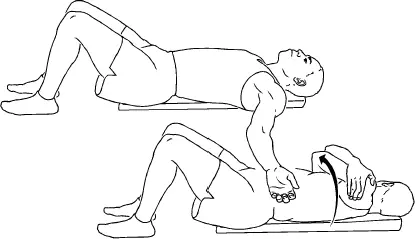
Side-lying thoracic rotation:
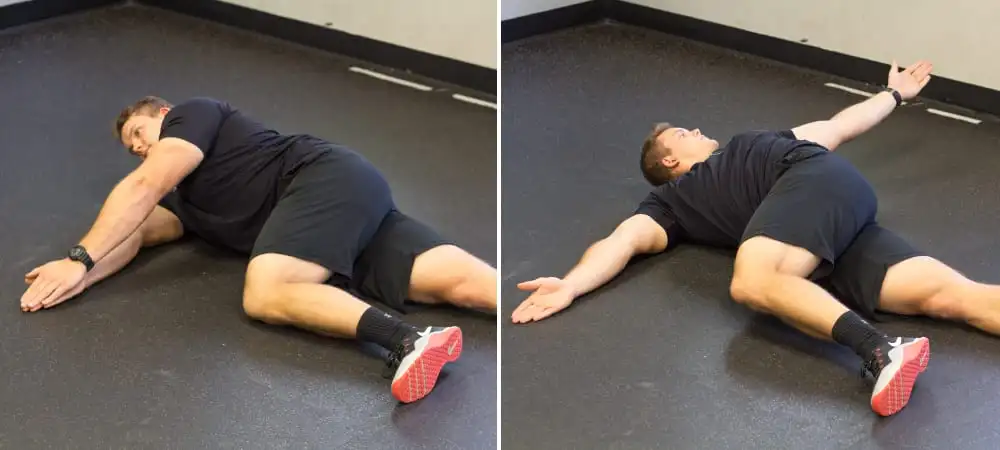
Although it looks difficult, the side-lying thoracic rotation is simple to do. This shoulder stretch enhances shoulder, lumbar, and thoracic spine mobility.
To do a thoracic rotation while side-lying:
- Lie on your right side on a soft mat.
- Bend your knees a little.
- The right arm should be extended straight forward.
- Put the left hand over the right.
- Keep your eyes on the left hand.
- Straighten up your left hand.
- Draw an arch in the air by rotating the left arm toward the floor behind the back.
- Throughout, keep your hips and knees directed to the right.
- Return the left arm to the right hand.
- The drawing action should be repeated several times.
- Practice it on the opposite side after that.
Chin Tuck:
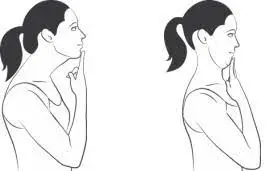
The back of the neck is strengthened by this specific workout.
- Keep your head level and look straight ahead while standing or sitting upright. Place your index finger over your nose. Gently pull your head away from the finger. As you shift your head backward, keep your eyes forward. For three seconds, hold. Do it again.
Stand Up:
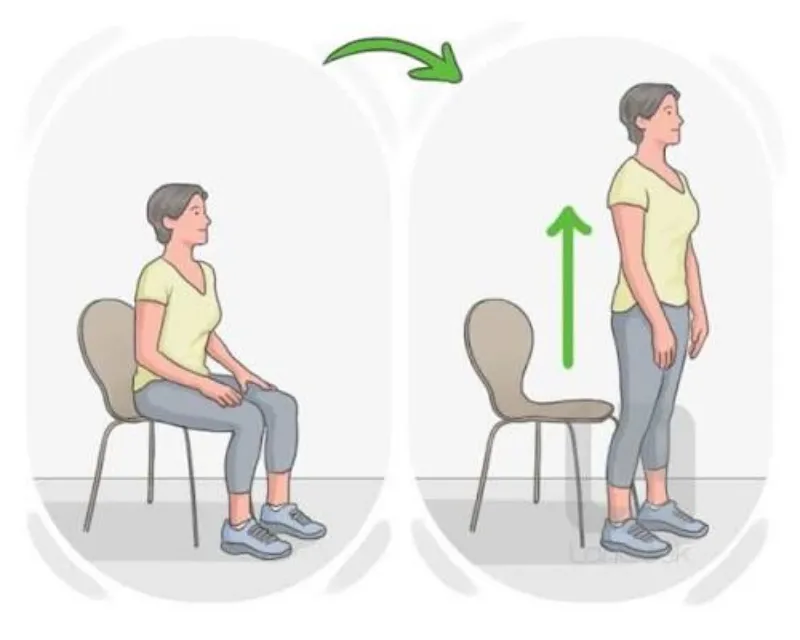
In general, this exercise works every part of the body, but it particularly relieves back and neck pain.
- Put your hands’ heels into your lower back. Draw your elbows downward and backward. Arch your back slowly and face up at the ceiling while keeping your head and neck stable and your chin tucked in. Do it again.
Side to side turning:
In addition to being an eye workout, this exercise aims to relieve tightness in the neck area.
- Turn your head gently to the left and then the right. Aim your chin toward your shoulders while keeping your eyes fixed on the ground. Make a conscious effort to fix your attention on somewhere far away. Do this five times in groups of five.
Shoulder Shrug:
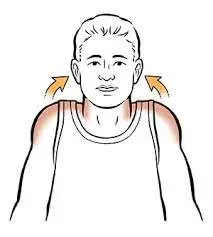
Shoulder tightness can be released with this exercise. Ideally, it should be done as soon as there are any signs of stress or stiffness in the neck or shoulder.
- Raise your shoulders in the direction of your ears until your neck becomes slightly stretched. For three to five seconds, maintain this strain. Now let your shoulders drop to their typical posture. Repeat three times.
Benefits of shoulder stretches:
A muscle’s fibers and the attached fascia, or bands of connective tissue, expand to their full length as the muscle extends. This enhances the muscle and fascia’s capacity to stretch during exercise.
There are several possible health advantages to shoulder stretches. Stretching may:
- reduce tension
- relieve pain
- increase mobility
- reduce the risk of muscle and joint injury
- improve posture
How Often Should You Do These Exercises?
Stability is more important for shoulder pain caused by computers than lengthy workouts. Depending on your symptoms and tolerance, you may complete a basic program one or two times a day.
- Stretching exercises: Perform each stretch twice or three times on each side, holding it for 15 to 30 seconds.
- Exercises for mobility: Do 8–12 controlled repetitions once or twice a day.
- Strengthening exercises: Begin with two to three sets of eight to fifteen repetitions, performed two to three days a week, with enough time for recovery in between.
- Every 30 to 60 minutes when using a computer, take a little movement break. Get up, adjust your posture, and move your shoulders and neck gently.
- Make slow progress: Instead of suddenly raising the effort, you can gradually increase repetitions or resistance as your symptoms improve.
Preventing shoulder pain and tightness:
Shoulder stiffness can be prevented in the first place with regular stretching. Exercise is also crucial. Yoga may improve flexibility and reduce stress and tension.
Use a stand to position the screen at eye level when using a computer. This lessens the chance of shoulder stress and the need to bend the neck and shoulders.
It’s also critical to maintain proper posture. The shoulder roll exercise mentioned above might assist someone in correcting their shoulders if they become aware of their slouch.
Long-term shoulder and neck stress can be decreased by maintaining proper posture when sitting and standing, particularly when spending a lot of time at a desk.
If stretching doesn’t relieve persistent shoulder ache, massage could be beneficial.
Find out how to sit with proper posture here.
Precautions for Computer-Related Shoulder Pain exercises:
- Start slowly: Increase repetitions or resistance gradually after starting with low-intensity exercises.
- Avoid exercises that cause pain: If an exercise produces acute, severe, or worsening shoulder pain, stop.
- Avoid forcing the shoulder beyond a comfortable range of motion or aggressively extending it.
- Keep your posture correct: During exercises, maintain a neutral posture for the head, neck, and shoulders.
- Stay away from shrugging: Instead of continuously raising your shoulders toward your ears, keep them relaxed.
- Take regular breaks by shifting positions, moving your shoulders, and avoiding extended sitting and repetitive computer activity.
- Make use of proper technique: Instead of using force, perform exercises slowly and carefully.
- Use caution when performing resistance exercises: In the beginning, use little resistance, particularly if the shoulder is painful or weak.
- Avoid exercising while experiencing increasing symptoms: Stop exercising and get expert help if pain, numbness, tingling, or weakness increase during or after activity.
- Seek medical or physiotherapy advice: A healthcare expert should be seen if you have chronic pain, severe weakness, loss of shoulder mobility, edema, or pain after an accident.
FAQs:
Can using a computer cause shoulder pain?
It is true that using a computer can lead to shoulder ache. This problem, also known as mouse shoulder, is generally caused by bad posture, prolonged static positions, or reaching too far for a mouse or keyboard.
How to stop shoulder pain when working at a desk?
Keep your mouse close at hand to prevent reaching, adjust your workstation so that your elbows rest at a 90-degree angle, and take brief pauses to extend your upper back and rotate your shoulders to prevent desk-related shoulder pain.
How to quickly heal shoulder pain?
Applying an ice pack for 15 minutes, taking an over-the-counter anti-inflammatory medication like ibuprofen, and resting the joint can all provide rapid relief from shoulder pain.
How long does an overworked shoulder take to heal?
Basic muscular tiredness or light strains in an overworked shoulder often recover in 1 to 3 weeks, but more severe overuse problems like tendinitis or minor strains may require 4 to 6 weeks or more of appropriate rest and treatment.
What is the best posture to improve shoulder pain?
Lying flat on your back with a small pillow or folded towel under your affected elbow and forearm is the ideal resting posture for shoulder pain. This posture puts your shoulder in a comfortable, relaxed position, protects your arm from extending or pushing backward, and takes direct weight off the joint.
What is a red flag in shoulder pain?
When shoulder pain is a red flag, it indicates a more serious condition than a simple muscular strain, such as a significant injury, infection, heart trouble, or tumor.
Why do my shoulders hurt when I sit at my desk?
Because poor posture stresses the upper back, poor ergonomics pull your joints into abnormal angles, and maintaining a static position induces muscular fatigue, desk work can cause shoulder pain. Tight chest muscles and strained shoulder tissues are the results of this ongoing tension.
References:
- Harrison, G., & Harris, A. (2015). Work-related musculoskeletal disorders in ultrasound: Can you reduce risk? Ultrasound, 23(4), 224–230.
- Souri, H., Banerjee, H., Jusufi, A., Radacsi, N., Stokes, A. A., Park, I., Sitti, M., & Amjadi, M. (2020). Wearable and stretchable strain sensors: materials, sensing mechanisms, and applications. Advanced Intelligent Systems, 2(8).
- Zou, Y., Tan, P., Shi, B., Ouyang, H., Jiang, D., Liu, Z., Li, H., Yu, M., Wang, C., Qu, X., Zhao, L., Fan, Y., Wang, Z. L., & Li, Z. (2019). A bionic stretchable nanogenerator for underwater sensing and energy harvesting. Nature Communications, 10(1), 2695.