
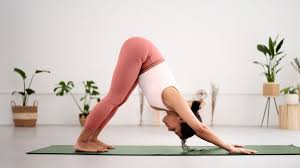
Downward Dog Pose (Adho Mukha Svanasana)
Introduction:
Adho Mukha Svanasana, commonly known as Down Dog, Downward Dog Pose, or Downward-facing Dog Pose, is a yoga inversion pose. It is frequently performed as part of a flowing series of positions, particularly the Salute to the Sun, or Surya Namaskar. Although there aren’t any officially recognized modifications of the asana, there are a few lighthearted versions that help beginner practitioners get comfortable.
Downward Dog strengthens the shoulders and stretches the hamstrings and calf muscles in the backs of the legs. Although an experimental study of pregnant women found it advantageous, some well-known websites have warned against it during pregnancy.
Downward Dog has been referred to as the “quintessential yoga pose” and “deservedly one of yoga’s most widely recognized poses.” As a result, when yoga is portrayed in movies, books, and advertisements, it is frequently the preferred pose. The stance has been used often in Western culture, as seen by the titles of novels, paintings, and television shows.
How to Do Downward Dog Pose?
The head is lowered till it touches the floor, and the body’s weight is supported by the palms and feet. The legs are straight, the feet are a foot apart, the arms are extended straight forward, shoulder-width apart, and the hips are elevated as high as possible.
Different schools of yoga approach the posture in different ways. Iyengar Yoga poses can be performed while prone, placing the hands next to the chest and adjusting the distance between them and the feet. The position is performed as part of Surya Namaskar, the Salute to the Sun, in schools like Sivananda Yoga.
For instance, it is performed after Urdhva Mukha Shvanasana (Upward Dog position) by exhaling, curling the toes under, and lifting the hips. The pose, known as Parvatasana, Mountain Pose in the Bihar School of Yoga, is entered from a lunge (Ashwa Sanchalanasana) in a variation of Surya Namaskar. The hands and feet are slightly closer to one another so that the angle at the hips is sharper.
Variations:
For skilled practitioners, the downward dog is a healing position, but it can be challenging for beginners. The posture can be altered by dropping one forearm to the floor while extending the other hand forward, bending the knees to allow the heels to lift slightly, supporting the heels with a rolled-up yoga mat, or a combination of these.
Other variations include bending one knee and lowering the hip on that side; alternately “pedalling” by bending one knee and raising the ankle on that side, then the other, and hooking each foot in turn behind the other ankle; raising one leg and either stretching it straight out or bending the knee and flexing and extending the foot; alternating between bending both knees and straightening the legs while bringing the shoulders forward directly above the hands; and twisting the body and reaching back with one hand to grasp the opposite ankle.
For instance, a strap from a sturdy waist-level wall anchor around the hips or a bolster beneath the forehead—combined, if necessary, with a wrapped blanket or towel beneath the feet—can be used to support the pose. In order to lessen the strain on the shoulders, the stance can also be changed so that the hands are on top of the back of a chair and the back is horizontal. This is helpful for those who have an injury.
Benefits of Downward Dog Pose:
Stretching your entire body with a downward-facing dog also helps to strengthen and work your:
- Shoulders
- Triceps and biceps
- Abs
- Hamstrings
- Glutes
- Quads
- Hip flexors
- Knee joints.
Adho Mukha Svanasana gives you a brief period of active rest while also increasing your flexibility and control. Additionally, when you are in the inverted V position, blood flow to your head and upper body is increased. However, before beginning this role, you should consult your yoga instructor, personal trainer, or medical professional if you have:
- High blood pressure
- Glaucoma
- Heart issues
- Dizziness
- Fainting spells.
Who should avoid the Downward-facing dog?
You can practice the downward-facing dog if your general health is good. If you suffer from any of the following conditions, it is advisable to avoid this yoga pose:
- High blood pressure
- Carpal tunnel syndrome
- Detached eye retina
- Weak eye capillaries
- Injured or dislocated shoulder
- Diarrhea
- Weak or injured wrists.
Conclusion:
In a similar vein, the beginner’s downward dog yoga pose can aid with muscle soreness, flexibility, and body stretching. Despite the fact that yoga’s benefits are gradual, the outcomes are excellent and fulfilling. To maximize the advantages of yoga, you can work out with professional trainers and combine your fitness regimen with wholesome eating and lifestyle choices. You and your loved ones will live disease-free if you have a healthy lifestyle overall.
However, maintaining a healthy lifestyle with regular exercise and a balanced diet is insufficient. Investing in a suitable health insurance policy will strengthen your safety net.
FAQs:
Are you able to perform the downward dog every day?
This pose should be much more than just a transition pose, which it frequently becomes, because it has so many health benefits. You should do this stance thoughtfully every day for the following five reasons.
Why is it that I have trouble with a downward dog?
In Downward Dog, yoga practitioners frequently experience wrist strain, arm weariness, and tightness in the hamstrings or calves. Additionally, many yoga students find this problematic because the Downward Dog pose is so prevalent in yoga programs.
In a downward dog, where should your weight be?
Maintain the same base that you established in your tabletop position: fingertips clawing the mat, fingers spread wide, and weight evenly distributed among the four corners of your hands. Continue raising your hips, push back the tops of your thighs, and let your heels touch the ground.
How long should you hold a dog with its face down?
After holding Down Dog for five to ten breaths or longer, release onto your knees to exit the position. Stretch and elongate your entire body by repeating this several times throughout your yoga practice, or two or three times during the day.
Who shouldn’t use downward dogs?
If you suffer from carpal tunnel syndrome, you shouldn’t perform inversions like the downward dog. late-stage pregnancy. elevated blood pressure or associated conditions.
Why does a downward dog hurt so much?
Lack of Shoulder Mobility
Additionally, Downward Facing Dog tends to be hampered by this shoulder tightness. According to Walker, “shoulder problems will cause pain and discomfort in the Down Dog.” Tight chest muscles are probably the cause of your lack of mobility if there isn’t a specific injury.
Can blood pressure be lowered by a downward dog?
Participants’ health and well-being were also enhanced by gentler, slower-paced practice, which reduced blood pressure and LDL cholesterol by several points.
What mistakes do downward dogs typically make?
The position being too narrow, or having too little space between the hands and the feet, is a very frequent error. The spine is not healthy in this position. Practically speaking, this is also not very helpful: in Vinyasa routines, you typically move from Downward-Facing Dog to Plank.
How long should a dog be held downward?
To avoid rounding your lower back, the goal of this posture is to stretch your spine so that you can bend your knees as much as necessary. You can gently press your heels back down toward the mat when you’re ready. Take five calm breaths in and out through your nose while holding the stance.
A dog that faces down should be avoided by whom?
This pose should be avoided by those with irregular high blood pressure and heart conditions. Contraindications also include situations of wrist or hand injuries, shoulder injuries, and replacement. It should not be done if you have glaucoma since it may raise the pressure in your brain and eyes.
What is the downward-facing dog’s chakra?
Emotions and Balance: The Heart Chakra (Anahata), Throat Chakra (Vishuddha), and Third Eye Chakra (Ajna) are all balanced by Adho Mukha Svanasana (Downward Facing Dog Pose). The Solar Plexus Chakra is stimulated by the uddiyana bandha (Manipura).
What is the purpose of a downward dog?
The hamstrings, calves, and Achilles tendon are all stretched and widened with downward dog exercises. Downward dog has the advantages of inversions and enhances blood flow throughout your body because your head is lower than your heart. Dog stretches that are performed downward might help release tension in the neck and back.
References:
- Yoga Journal. (2025, July 23). Downward-Facing Dog pose. https://www.yogajournal.com/poses/downward-facing-dog/
- Wikipedia contributors. (2025, November 27). Downward dog pose. Wikipedia. https://en.wikipedia.org/wiki/Downward_Dog_Pose
- Clinic, C. (2025, July 21). Take a ‘Paws’ with downward dog. Cleveland Clinic. https://health.clevelandclinic.org/downward-dog-adho-mukha-svanasana
- Yoga, P. (n.d.). Downward dog yoga for beginners and a simple guide to start practicing. Pratham Yoga. https://www.prathamyoga.com/blog/downward-dog-yoga-for-beginners

One Comment