Knee Pain When Bending: Causes & Treatment
Introduction:
Throughout the day, you bend your knees a lot. Daily tasks like sitting in a chair and ascending stairs require this movement. Exercises like lunges and squats also require you to bend your knees.
Your knees may suffer from the normal wear and tear of daily life. In addition, the area contains bones, muscles, tendons, and ligaments. You may get knee pain when bending your leg if one of these structures is failing.
Home remedies can help with mild causes of knee pain. Others need medical care. Here, we’ll go over the possible reasons for knee pain when bending, as well as the warning signals that you should consult a physician.
What does a knee injury feel like?
A knee injury might result in severe pain, dull aching, or severe, shooting pain, depending on the underlying reason. Your knee could feel sore to the touch, and you might notice swelling.
Additionally, you can experience trouble bending, straightening, or bearing weight on your knee, and you might discover that your knee locks. When you try to walk on a knee injury, you may feel as though your knee is going to give way.
Causes of Knee Pain When Bending:
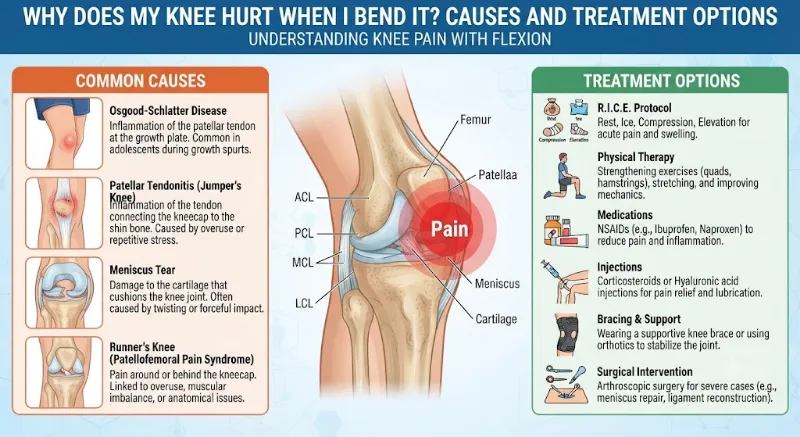
Knee pain when bending can be caused by a number of disorders. Effective therapy begins with determining the precise reason. Among the frequent reasons are:
- One of the main causes is osteoarthritis, a degenerative joint condition that mostly affects the cartilage. As the cartilage deteriorates, patients frequently report experiencing deep pain or soreness on the inside of the knee when bending and straightening. A large percentage of cases of severe knee pain are caused by it.
- Meniscus tears: In the knee, the meniscus serves as a shock absorber. A tear may appear as pain on the inside or side of the knee and can be quite painful, particularly if the knee is twisted or completely bent.
- Runner’s knee, also known as patellofemoral pain syndrome, is a disorder that produces knee discomfort while bending the leg, particularly when running, ascending stairs, or sitting for extended periods of time. It is typically felt near or behind the kneecap. It is especially prevalent in athletes.
- Tendinitis: Pain that is often limited to the front of the knee and gets severe while bending or squatting is caused by inflammation of the tendons (such as the patellar or quadriceps tendon).
- Bursitis: Localized soreness and pain during movement can result from inflammation of the bursae, which are tiny fluid-filled sacs that cushion the joint.
- Ligament Injuries: Depending on the afflicted ligament, sprains or tears to major ligaments such as the ACL, PCL, MCL, or LCL can result in instability and painful sensations, especially side knee pain while bending.
- When bending, Baker’s Cyst, a fluid-filled sac that develops at the back of the knee and is frequently linked to other knee issues, can produce fullness, tightness, and pain at the back of the knee.
- Chondromalacia Patellae: Pain around the kneecap, especially while bending, is caused by softening and degeneration of the cartilage on the bottom of the kneecap.
Common Symptoms to Look Out For:
Knee pain during bending can initially be rather subtle. Many claim that after engaging in physical activity, they get a dull pain. When they move their knee, some people may hear a faint clicking sound. All of these could be early warning indicators that you should be aware of.
Pay attention to the following symptoms as they may indicate a serious condition that requires professional examination:
- Heat or swelling around the knee joint that isn’t typical
- Severe stabbing sensations during or immediately following bending
- An odd sensation of the knee locking or popping
- Visible indications of a malformed knee or unsightly bruising
- Pain that severely restricts your ability to walk or wakes you up in the middle of the night
- Feeling as though your knee is about to collapse or is unable to support your weight appropriately
It’s also important to remember that knee pain doesn’t always remain in the knee. Sometimes discomfort radiates down the leg, and it’s important to see the big picture. This article on when to worry about leg pain and its causes provides crucial background if your symptoms include leg pain in addition to knee pain.
Don’t wait until the agony is intolerable. Physiotherapists are educated to spot problems early and stop them from getting severe.
Home remedies for pain when bending your knee:
Home treatments may help if your knee pain is minimal. What you can do is as follows:
Change your activity:
As you engage in various activities, pay attention to how your knees feel. If a certain movement hurts your knees, stay away from it until you feel better. Limiting your activity or engaging in low-impact activities are some options.
Your joints are less stressed by low-impact exercises. Examples include:
- biking
- swimming
- water aerobics
- walking
RICE:
Knee injuries are among the minor muscular injuries that can be treated with the RICE approach.
The term “RICE” stands for:
- Take a break and don’t put any weight on your knee. This will aid in the healing of the surrounding muscles.
- Pain and swelling can be reduced with ice. Apply ice to the afflicted area several times a day for 20 minutes at a time using a plastic bag or fresh towel.
- To help reduce swelling, compress your knee with an elastic bandage. Make sure the bandage fits snugly but not tightly.
- Elevate your knee above your heart. To reduce edema, do this as much as you can.
Heat:
Applying heat may provide greater relief if you suffer from stiffness or arthritis. Circulation is enhanced by heat.
OTC medication:
Take nonsteroidal anti-inflammatory medicines (NSAIDs) to lessen pain and swelling. You don’t need a prescription for these drugs because they are available over-the-counter (OTC).
Naproxen (Aleve) and ibuprofen (Advil) are common NSAIDs. Unless a doctor instructs you otherwise, always adhere to the dosage and frequency instructions.
Massage:
A massage therapist applies pressure to your muscles, tendons, and ligaments with their hands. This can help control and reduce knee pain.
If sports or overuse are the cause of your knee pain, think about getting a sports massage. Athletic injuries are treated with sports massage.
You can also try: Swedish massage, deep tissue massage, and trigger point massage
Knee exercises:
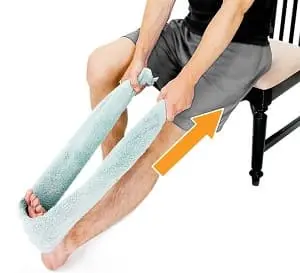
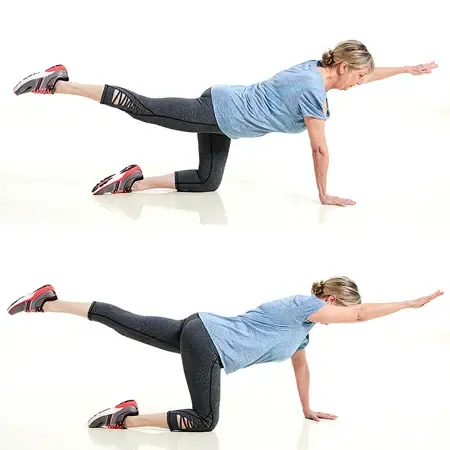
Knee pain can be controlled with knee exercises. Exercises that strengthen the muscles supporting your knee fall under this category. Your knee is under less stress when these muscles are robust and healthy.
Stretching your knees is also crucial. Stretching relieves strain on the knee joint by releasing tension in the surrounding muscles.
Make sure you go slowly. Stop exercising right away if it starts to hurt more.
The Role of Cartilage Damage in Knee Pain When Bending:
Because it cushions bone ends and permits smooth movement, cartilage is essential to smooth joint function. Your knee’s ability to bend comfortably may be significantly impacted by damage to this tissue, whether from an injury or degeneration.
The knee’s cartilage is mostly composed of two types:
The bone surfaces inside the joint are covered by articular cartilage.
Meniscal cartilage: pillows that reduce shock between bones.
Bones crush against one another as articular cartilage decreases from osteoarthritis or trauma, resulting in inflammation and severe pain while bending. Similar pressure sites inside the joint are increased by meniscal tears, which cause discomfort that is particularly apparent during flexion.
Because cartilage lacks blood vessels, it has a limited capacity to mend itself; hence, injury tends to increase in the absence of appropriate management or intervention.
Knee Pain Patterns During Flexion: What They Reveal
The location of pain provides hints regarding underlying issues:
- Front of Knee: Frequently associated with patellofemoral problems like tendinitis or runner’s knee.
- Inside of the knee: Could be a sign of MCL damage or tears in the medial meniscus.
- Outside of the knee: May indicate LCL strain or injury to the lateral meniscus.
- Deep Inside Joint: Articular cartilage is frequently affected by osteoarthritis.
Knee Pain When Bending: Risk Factors That Increase Susceptibility
When flexing their knees, some people are more likely to experience uncomfortable symptoms:
- Aging: Over time, cartilage integrity is weakened by natural wear and tear.
- Obesity: Being overweight increases mechanical stress, hastening the deterioration of joints.
- Athletic Activities: Sports that require quick pauses, jumping, and pivoting raise the chance of injury.
- Poor biomechanics: Uneven knee loads are a result of muscle imbalances or poor gait patterns.
- Previous Injuries: Joints that have experienced trauma in the past are susceptible to future issues.
How to prevent knee pain when squatting and bending:
A knee injury and the ensuing knee pain are not always avoidable. You may lower your risk, though, if you constantly stretch your legs before and after working out, and if you have any knee pain, stop working out. Additionally, you should gradually increase the intensity of your workouts rather than abruptly doing so.
Your chance of suffering a knee injury can also be decreased by engaging in regular stretching and strengthening exercises that focus on the muscles supporting your knees.
Losing extra weight can reduce the strain on your knees and lower your risk of suffering a knee injury if you are overweight.
Use knee pads if your job requires you to kneel frequently to lower your risk of acquiring knee bursitis. Lastly, make sure your shoes are supportive and fit properly.
FAQs:
How to cure knee pain when bending?
If bending your knee causes pain, you should rest the joint and take care of it at home to minimize pain and edema.
Is walking good for knee pain?
Walking strengthens the leg muscles, lubricates the joints, and reduces stiffness; therefore, it is typically beneficial for knee pain.
How to repair knees naturally?
By strengthening supporting leg muscles, controlling weight, and enhancing joint lubrication, you may naturally heal and protect your knees.
Is heat or ice better for knee pain?
Whether knee pain is caused by a recent injury with edema or chronic stiffness determines whether heat or ice is preferable.
What is the best treatment option to heal your knee?
Using the RICE approach (Rest, Ice, Compression, and Elevation) in conjunction with early medical advice is the quickest way to recover from knee pain.
Why is my knee pain not going away?
Untreated structural damage, persistent inflammation, or chronic use that limits the joint’s ability to recover might be the source of your knee pain.
Which fruits reduce knee pain?
Because of their high antioxidant and vitamin content, several fruits enhance cartilage health and reduce joint inflammation.
References:
- Nunez, K. (2025a, June 24). What causes knee pain when you’re bending it, and how’s it treated? Healthline. https://www.healthline.com/health/knee-pain-when-bending
- Spire Healthcare. (n.d.). Knee pain when bending or squatting | Spire Healthcare. https://www.spirehealthcare.com/health-hub/specialties/bones-and-joints/knee-pain-when-bending-or-squatting/
- Whisper, P. (2026, March 16). Why Does My Knee Hurt When I Bend It? 5 Causes You Shouldn’t Ignore. Physio Whisper. https://physiowhisper.com/blog/why-does-my-knee-hurt-when-i-bend-it/