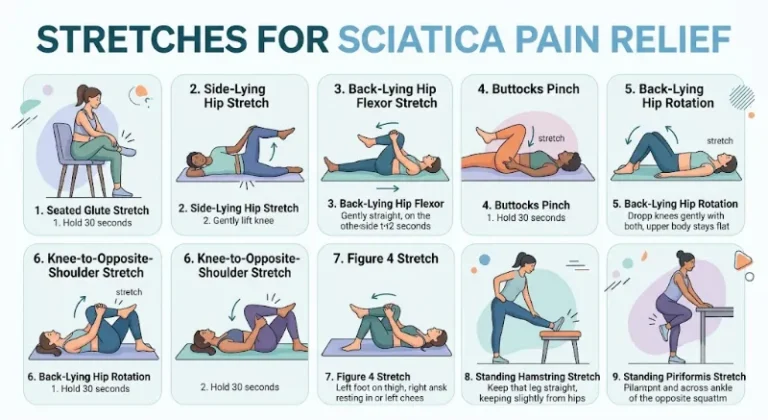
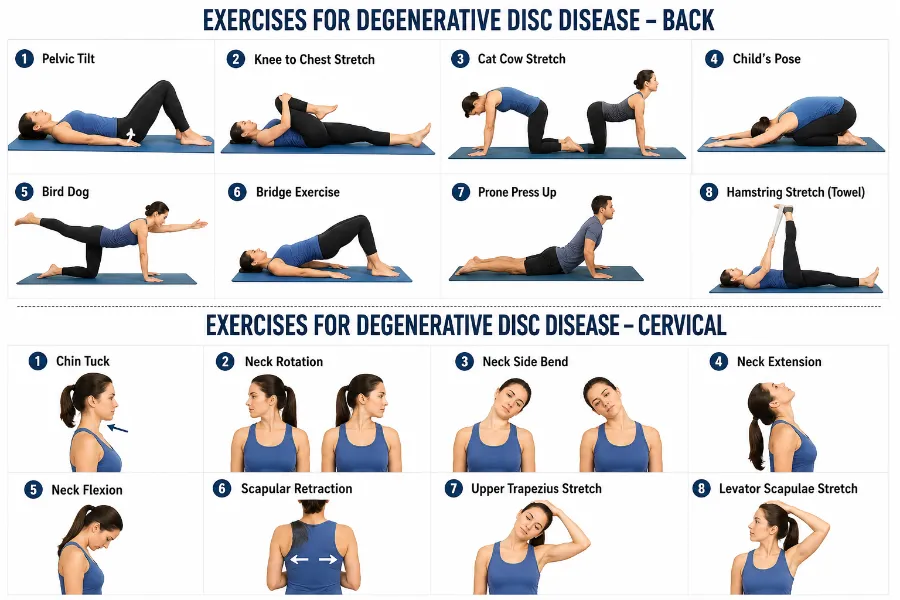
Exercises For Degenerative Disc Disease
Introduction
Degenerative Disc Disease (DDD) is a common condition in which the discs between the spinal bones gradually lose hydration, flexibility, and height over time. This can contribute to back or neck pain, stiffness, reduced mobility, and sometimes pain that travels into the arms or legs. Although disc degeneration is a natural part of aging for many people, regular, appropriate exercise can help improve spinal support and make daily activities easier.
A well-designed exercise program focuses on strengthening the core and surrounding muscles, improving flexibility, maintaining spinal mobility, and building better movement control. Exercises such as pelvic tilts, bridges, bird dogs, gentle spinal mobility exercises, and controlled core-strengthening movements may be useful depending on the individual’s symptoms and condition.
It is important to remember that exercise should be comfortable and controlled rather than painful.
The right exercises and intensity can vary depending on the location and severity of disc degeneration and whether symptoms such as numbness, tingling, or radiating pain are present. If symptoms worsen during exercise, stop and consult a physiotherapist or healthcare professional for personalized guidance.
Importance of Degenerative Disc Disease Exercise
The intervertebral space gets smaller, and the intervertebral cartilage reduces as disc degeneration advances. The pull of gravity and the surrounding muscles cause the spine to become increasingly unstable as the disc height decreases. Due to the reduced spinal activity, the deeper muscles eventually atrophy. This leads to a self-sustaining cycle of disease development and loss of function by progressively destabilizing the spine.
To reduce the disease’s development, a spine specialist may recommend activities that strengthen and stabilize the spine. These activities are referred to as spine stabilization exercises. Typically, a physiotherapist checks their completion. These exercises help alleviate pain, improve spine function, and reduce the restrictions of everyday tasks, according to research. There are several exercises available, but some are particularly beneficial for degenerative disc disease.
Precautions Before Doing The DDD Exercises
Exercises for disc degeneration might help you keep active and increase blood flow. But before you do them, there are several safety measures you must take. This comprises:
- Start by discussing the best exercises for you with your physiotherapist and spine expert.
- The ideal DDD workouts for you will depend on the state of your spine and discs.
- Try to start DDD exercises with a physiotherapist’s supervision. Your proper form and technique will be checked by a physiotherapist.
- Before beginning any activity, always warm up. The muscles will receive more blood as a result. Increased oxygen delivery to the muscles through improved circulation will enhance muscular contraction.
- Follow the recommended range of motion when doing the exercises. Stop performing them right away if you experience any pain.
- When performing high-impact aerobic exercises, deadlifts, squats, or heavy lifting, try not to strain your spine.
- Enhance your posture so that you can exercise with proper posture.
- Frequently switch positions. To avoid overstressing a single muscle group or a specific area of the spine, switch up your workout routine every ten minutes.
Exercises
The top ten workouts for degenerative disk disease are listed below. While some are easy, others might need the guidance of a qualified physiotherapist. After warming up for ten minutes, you may begin these exercises. The following is a list of exercises that stabilize the spine:
Walking

One everyday exercise that might help stop DDD from getting worse is walking. The paraspinal muscles can be strengthened and kept from weakening by walking freely, on a treadmill, or using equipment.
Walking, when done regularly, has been demonstrated to alleviate back pain. The objective is to maintain the activity of the pelvic, abdominal, paraspinal, and spinal muscles without putting undue strain on the spine. There is no distinction between quick and sluggish walking.
Hamstring Stretch
Bending over and attempting to touch your toes will help you stretch your hamstring muscles. As an alternative, you can utilize a chair and do the following:
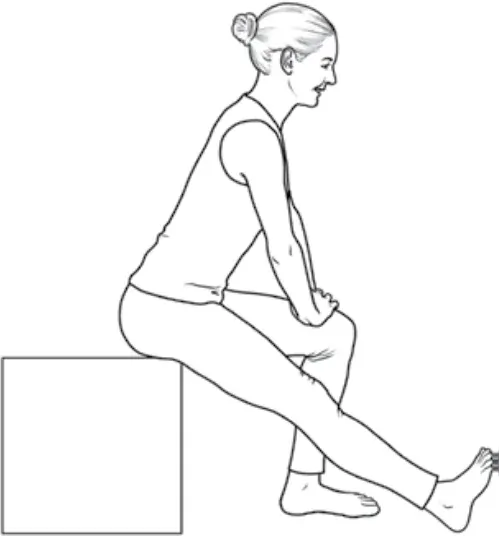
- Take a seat in a chair to begin.
- For this stretch, put another chair in front of you.
- Place one leg on the ground and raise the other leg onto the chair’s seat in front of you.
- Gently stretch your hamstrings.
- For thirty seconds, hold the stretch.
- Gradually extend this to one minute.
- Try this stretch twice a day at first, then every other day if it doesn’t hurt.
Hamstring stretching comes in two varieties.
- Both are passive and active hamstring stretches.
- Without any help, active hamstring stretching is performed against gravity and resistance.
- Since passive stretching is done with help, it is often recommended for DDD because it is more supportive.
- A physiotherapist can assist you with a passive stretch or show you how to utilize an exercise ball or band.
- While there are many types of hamstring stretches, avoid standing workouts, as they may strain your spine more.
Stationary Biking Exercise
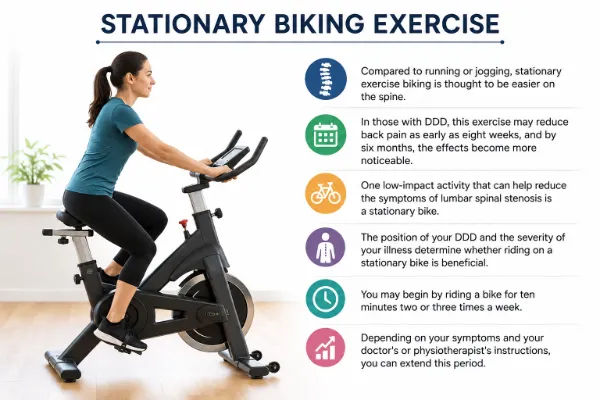
- Compared to running or jogging, stationary exercise biking is thought to be easier on the spine.
- In those with DDD, this exercise may reduce back pain as early as eight weeks, and by six months, the effects become more noticeable.
- One low-impact activity that can help reduce the symptoms of lumbar spinal stenosis is a stationary bike.
The position of your DDD and the severity of your illness determine whether riding on a stationary bike is beneficial. - You may begin by riding a bike for ten minutes two or three times a week.
- Depending on your symptoms and your doctor’s or physiotherapist’s instructions, you can extend this period.
Cat-Cow Stretch
The back varies between flexion and extension during the cat-cow stretch exercise. The steps for the cat-cow stretch are as follows:
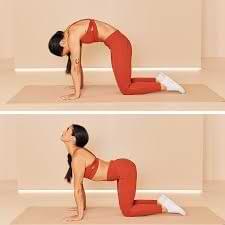
Regarding the Cow Pose:
- Place your wrists under your shoulders and begin on your hands and knees.
- Imagine that your head and spine are in a straight line.
- Take a breath and curl your toes.
- Tilt your pelvis back while lowering the tummy, while maintaining your abdominal muscles tight to your spine.
- Try to look up softly while drawing your navel inward.
For the Cat Pose
- After that, let out a breath and let go of your feet till their tops are level on the ground.
- To keep your abdomen tucked in and round your back, lower your head and look at your navel.
- Continue doing this, softly switching between cow and cat poses.
- Exercises for degenerative disc disease: cat-cow stretch
- For five to ten breaths, repeat this.
- You may also perform this stretch while seated if you are unable to execute it on the floor.
Back Extension
Lower back strength may be developed using back extension exercises. Additionally, they engage the hamstrings and glutes. One thing to keep in mind is to always finish your practice with back extension exercises to avoid overloading your erector spinae muscles.
The stages for the back extension exercises are as follows:
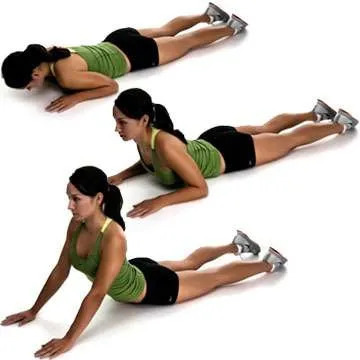
- On a mat, lie down on your stomach.
- Be sure your legs are straight behind you.
- With your hands on the ground, behind your head, or crossed in front of your chest, lower your shoulders. If you’re not familiar with back extension exercises, you can begin with your hands on the floor.
- As you press your hips into the floor, try to raise your upper back off the mat.
- For thirty seconds, hold this stretch.
- This is a workout that you may perform twice a week.
Knee To Chest Stretch
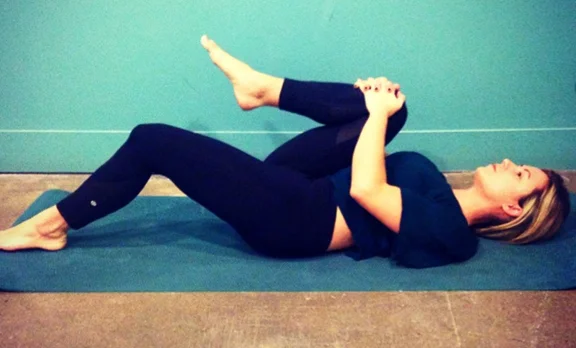
One exercise that can help increase lumbar spine flexion is the knee-to-chest stretch. The abdominal muscles and glutes are strengthened by this workout. A person lies down on a bed for the main stretch. The steps are as follows:
One Knee-to-Chest Stretch
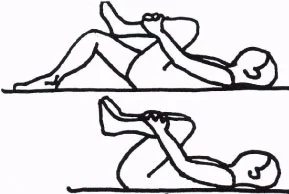
- Lie down on your back to begin
- Bring the other leg up to your chest and circle it with your arms while keeping one leg straight out.
- Hold for thirty seconds.
- On the opposite side, repeat.
- Exercises for degenerative disc disease that reach from the knee to the chest.
- The double knee chest stretch, which involves bringing both knees to the chest, the seated chest stretch, which involves sitting up, and the partial sit-up stretch, which involves a person reclining on a bed and raising their knee without using their arms, are variations of this stretch.
Bird-Dog Stretch
While keeping the spine’s curvature neutral or normal, the bird dog stretch works the core muscles. The steps for this stretch are as follows:
Bird dog stretch exercises for degenerative disc disease
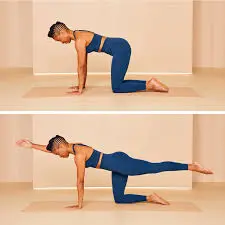
- Start on your hands and knees on a mat.
- Lift your left arm and right leg so they are parallel to the floor.
- Stare at the floor with your chin tucked under.
- For three breaths, hold this position.
- Continue with your right arm and left leg.
- The lumbar spine’s erector spinae muscles are activated by this workout. In a single session, you can perform this exercise two or three times.
Pelvic Tilting Exercise
Pelvic tilting exercises may reduce DDD-related lower back pain and increase lumbar spine range of motion. The rectus femoris, iliopsoas, and erector spinae are among the pelvic muscles that are targeted by the pelvic tilt exercises. The steps are as follows:
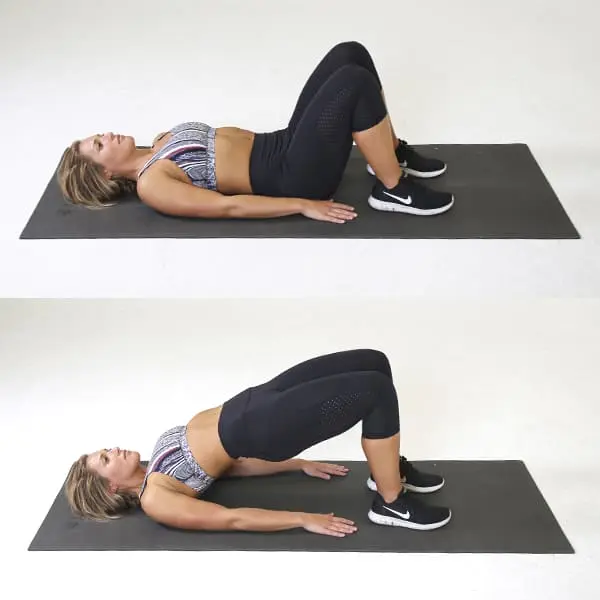
- On the floor, lie on your back.
- Place your feet on the ground and bend your knees.
- Try to raise your pelvis such that it approaches your navel by using your abdominal muscles.
- For ten seconds, push your navel downward.
- Go back to where you were.
- Pelvic tilting exercises for degenerative disc disease
- Do this two or three times. If you are uncomfortable on the floor, you may perform this exercise against a wall.
Psoas Major Muscle Stretch
The psoas major muscle may be stretched with a variety of activities. The frog position, side plank, and lunge stretches are a few of them. The glute bridge exercise is another way to stretch the psoas major muscle. The steps for this exercise are as follows:
- On the ground, lie down.
- Your hands should remain flat on the ground.
- Lift your knees till your feet are flat on the ground.
- Raise your entire pelvis into the air and hold it there for ten seconds.
- Go back to the beginning and do it again.
- Exercises for degenerative disk disease that stretch the psoas major muscle
- In a single session, you can do this two or three times.
Lower Trunk Rotation Exercise
The lumbar spine’s range of motion, flexibility, and rotational mobility can all be improved by the lower trunk rotation exercise. Additionally, it can aid in strengthening the muscles of the spine and pelvis. The lower trunk rotation exercise involves the following steps:
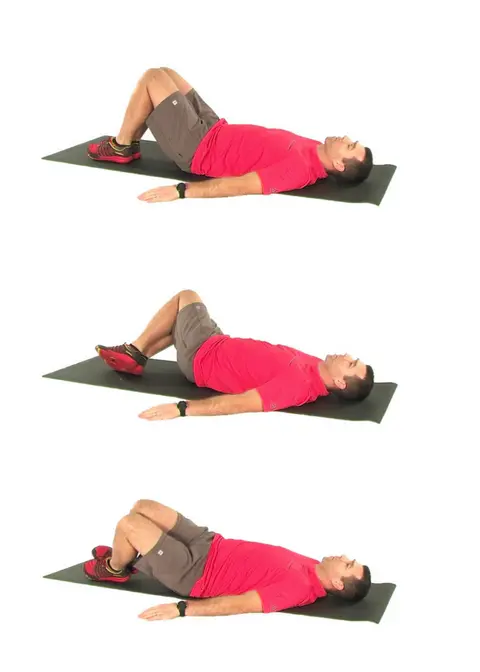
- Maintain a flat back and keep your feet on the ground.
- Bring your knees to one side while bending them.
- For five seconds, hold.
- Bring your knees to the other side while contracting your abdominal muscles.
- For five seconds, hold.
- In a session, try to complete this exercise five times.
What Is Cervical Degenerative Disc Disease?
When the intervertebral discs in the neck begin to degenerate as a result of aging, wear and strain, or injury, cervical degenerative disc disease develops.
The following symptoms may result from this degeneration:
- Persistent stiffness and pain in the neck
- Headaches
- Decreased range of motion
- Tingling or numbness in the arms
- Shoulder or arm muscle weakness
By increasing spinal stability, lowering stress, and improving circulation in the affected regions, regular exercise can be quite helpful in treating symptoms.
However, before beginning any fitness program, make sure the activities are safe to complete by seeing your physician or physical therapist, and take into account these extra precautions:
Avoid making sudden or jerky movements; instead, move slowly.
Any workout that results in severe aches or pains should be stopped.
To avoid putting undue strain on the cervical spine, exercise with proper posture.
To get the most out of your workouts, move slowly and carefully.
Exercise For Cervical Degenerative Disc Disease
Chin tuck
Chin tucks improve posture and strengthen the deep neck flexors.
How to strengthen your neck:
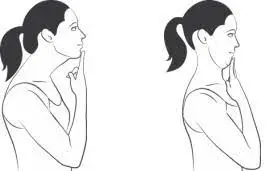
- Maintain a straight spine whether sitting or standing.
- Make a double chin by gently tucking your chin in.
- After five seconds of holding, let go.
- Repeat ten times, then repeat.
Neck Side Bends
This exercise makes the neck more flexible and less rigid.
How to Bend Your Neck Sideways:
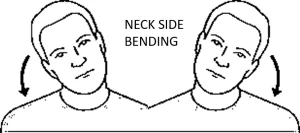
- With your shoulders relaxed, take a seat or stand.
- Tilt your head slowly in the direction of one shoulder until the other side begins to gently stretch.
- After ten to fifteen seconds of holding, go back to the beginning posture.
- On the opposite side, repeat.
- Do three to five repetitions for each side.
Neck Rotation
This exercise reduces stiffness and increases range of motion.
How to Rotate Your Neck:
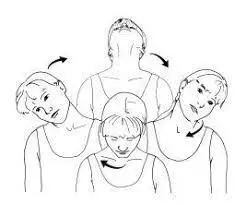
- Maintain proper posture whether sitting or standing.
- Turn your head slowly to one side until you get a stretch.
- Return to the center after holding for ten to fifteen seconds.
- On the opposite side, repeat.
- Do three to five reps on each side.
Shoulder Blade Squeeze
The cervical spine is supported by strengthening the muscles in the upper back.
How to Squeeze Your Shoulder Blade:
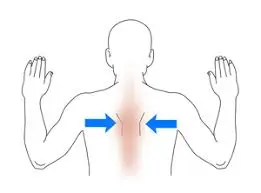
- With your shoulders relaxed, take a seat or stand.
- Hold a pencil between your shoulder blades while you squeeze them together.
- After five seconds of holding, let go.
- Repeat ten times over, repeat.
Upper Trapezius Stretch
This stretch relieves stress in the neck and upper shoulders.
How to Stretch Your Upper Trapezius:
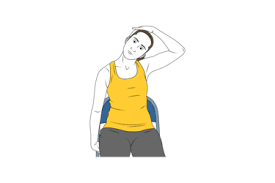
- Stand or sit up straight.
- For a deeper stretch, gently lean your head to one side while holding onto the other side.
- Hold for 15 to 20 seconds.
- On the opposite side, repeat.
- Do two to three reps on each side.
Levator Scapulae Stretch
The muscle that connects the neck to the shoulder blade is the focus of this stretch.
How to Stretch Your Levator Scapulae:
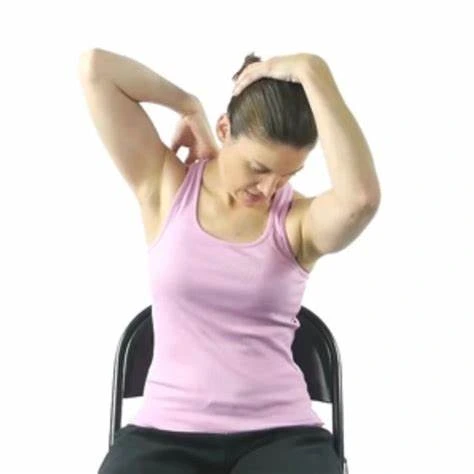
- Maintain proper posture when sitting.
- As if you were staring at your armpit, bend your head slightly to one side and look down.
- To deepen the stretch, use your palm gently.
- After 15 to 20 seconds of holding, switch sides.
- For each side, repeat two to three times.
Isometric Neck Strengthening
Without requiring a lot of activity, these exercises aid in strengthening the neck muscles.
How to Strengthen Your Neck Isometrically:
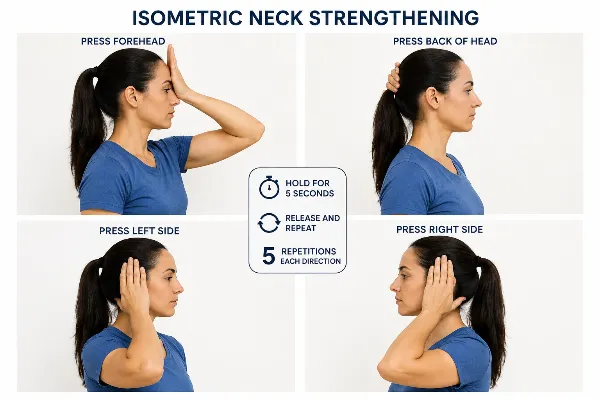
- With your neck resisting the movement, place your palm on your forehead and gently press on it.
- After five seconds of holding, let go.
- Put your palm on the back of your head, then on each side, and repeat the process.
- Do five repetitions in each direction.
Conclusion
Exercises for Degenerative Disc Disease can play an important role in managing pain, improving spinal mobility, and strengthening the muscles that support the spine. A combination of core strengthening, gentle stretching, posture training, and low-impact activities can help maintain function and make everyday movements more comfortable.
Consistency is more important than exercising intensely. Choose exercises that suit your symptoms and perform them with controlled, pain-free movements. Avoid exercises that significantly increase back pain, numbness, tingling, or pain traveling into the arms or legs.
Remember, Degenerative Disc Disease affects everyone differently.
If you have persistent or worsening symptoms, consult a physiotherapist or healthcare professional before starting a new exercise program. With the right approach, regular movement and strengthening can help you stay active and support long-term spinal health.
FAQs
How to treat degenerative disc disease?
Non-surgical treatments for degenerative disc disease include physical therapy, over-the-counter painkillers, and lifestyle modifications that reduce strain on the spine.
What exercises should you avoid with degenerative disc disease in the back?
Avoid deep spinal flexion or twisting, significant axial loading, and high-impact activities if you have degenerative disc disease.
What is the best way to sit if I have degenerative disc disease?
Maintaining your lower spine’s natural bend while keeping your feet flat on the ground and taking periodic movement breaks is the ideal method to sit if you have degenerative disc disease. Because sitting puts more strain on your spinal discs than standing, it’s important to maintain good alignment and make frequent positional adjustments to reduce pain.
How to prevent degenerative disc disease from getting worse?
Even though degenerative disc disease cannot be completely cured, you may delay its course and stop symptoms from getting worse by keeping a healthy weight, exercising often with low-impact activities, giving up smoking, maintaining proper posture, and avoiding extended sitting or heavy lifting.
References
- Markle, J., & Markle, J. (2023, April 2). Degenerative disc disease exercises. Centeno-Schultz Clinic. https://centenoschultz.com/degenerative-disc-disease-exercises/
- Pt, R. M. (2021, January 7). Exercise for Sciatica from Degenerative Disc Disease. Spine-health. https://www.spine-health.com/wellness/exercise/exercise-sciatica-degenerative-disc-disease