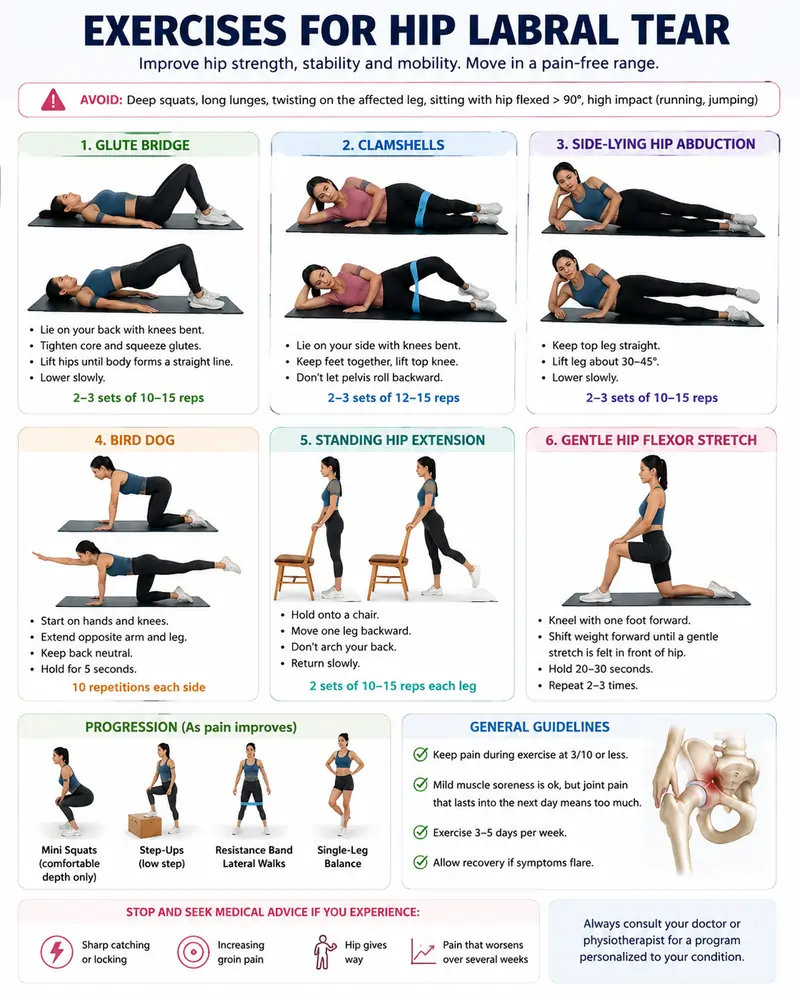
Best Physical Therapy Exercises for Hip Labral Tear
Introduction:
One of the most common diagnoses for hip pain, particularly among athletes, is labral tears. Athletes, dancers, and performers are all likely to experience hip pain at some point in their careers.
However, if you get treatment as soon as possible, hip discomfort and instability don’t have to keep you on the sidelines. To find out more about labral tears and how to treat them.
What is the labrum?
- The fibrous band of cartilage that surrounds the hip socket is called the acetabular labrum, or hip labrum. Its main function is to stabilize the entire lower body by holding the thighbone in place. When the labrum is in good working order, it acts as a rubber seal to control fluid in the joint, facilitating mobility.
- The leg can move in various planes and positions due to the specialized hip joint. Therefore, a hip labral tear is the most typical cause of discomfort or dysfunction. If left untreated, a labrum tear can cause severe discomfort and hip instability.
Symptoms of a labral tear:
It is simple to identify the signs of a hip labral tear. Pain typically starts deep in the pelvis and is followed by lower back, hip, hamstring, or abdominal pain. Patients frequently experience difficulty even when performing basic, stress-free tasks like walking, twisting, or sitting at a desk or in a car.
Symptoms include:
- Hip or pelvic pain when crossing your legs
- Hip pain at end ranges
- Hip pinching, catching, or grating sensation
- Combined flexion, adduction, and internal rotation pain
- Combined flexion, abduction, and external rotation pain
- Pain during a straight leg lift that is resisted
What causes a labral tear?
- Several factors, such as sudden or unpredictable movement, repeated stress, or direct damage to the joint, can result in a hip labral tear.
- Excessive use is a common cause of hip labral tears. In other instances, injuries may arise from untreated structural defects of the bone that only get worse with time.
- Additionally, there are now established workouts and treatments that help repair or heal a damaged joint, restoring hip function and reducing hip labral tear pain.
Common Hip Labral Injury Symptoms and Diagnosis:
Depending on the location and severity of the tear, hip labral injuries may cause different symptoms.
Common signs include:
- Chronic hip or pelvic pain, particularly while moving
- A sensation of the hip joint catching or locking during an activity
- Reduced mobility and increased stiffness, especially after extended sitting
- Weakness or instability that makes it difficult to perform weight-bearing tasks
A physical examination, mobility assessment, and imaging tests such as MRIs or CT scans are usually used in the diagnostic process to assess the degree of labral injury.
How Physical Therapy Helps Recovery:
With pain management, mobility rehabilitation, and strengthening of supporting muscles, physical therapy is essential to hip labral healing. The goals of a tailored rehabilitation program are:
- Using practical methods and procedures to reduce pain and inflammation
- Regaining complete range of motion via restoring hip mobility
- To stabilize the hip joint and strengthen the surrounding muscles.
- Improving motions to avoid accidents in the future
Recommended Exercises for Hip Labral Recovery:
These focused workouts maintain the damaged labrum while assisting in the recovery of strength and range of motion. A physical therapist should always be consulted before starting an exercise regimen.
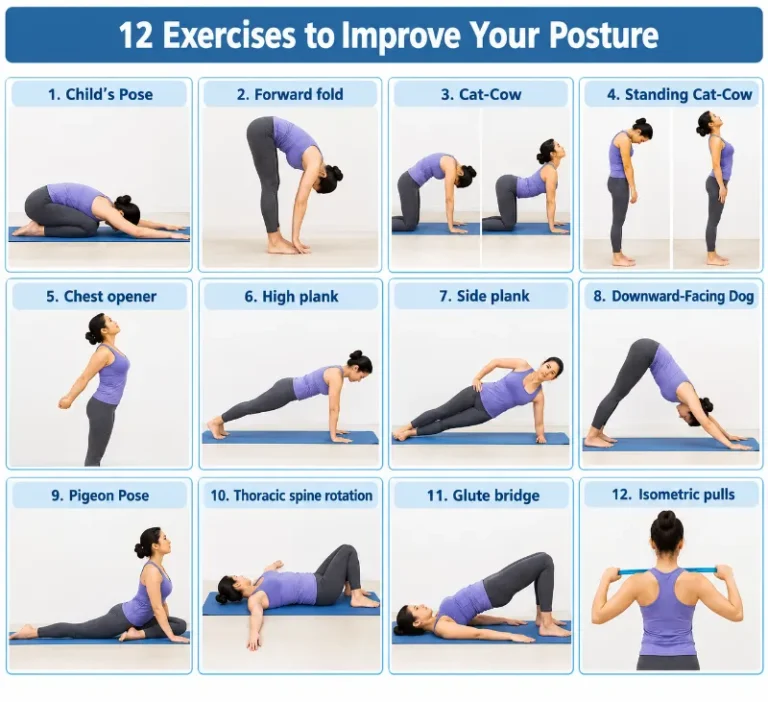
Hip Bridges (Strengthens glutes and core):
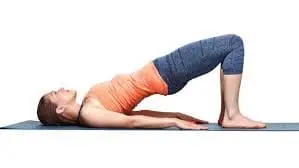
- Rest on your back with your knees bent and your feet flat on the ground.
- As you raise your hips, contract your glutes and engage your core.
- Lower gradually after holding for three to five seconds.
- Repeat ten or twelve times.
Clamshells (Activates hip stabilizers):
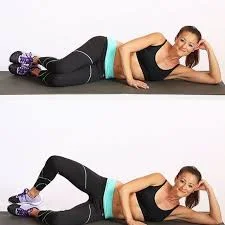
- With your feet together and knees bent, lie on your side.
- Maintaining contact between your feet, raise your upper knee as if you were opening a clamshell.
- Repeat 10–15 times on each side, lowering gently.
Standing Hip Abductions (Improves hip stability):
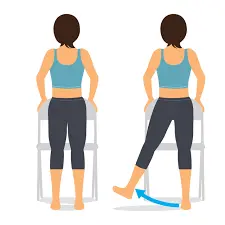
- To maintain your balance, stand on a raised surface and grasp a level surface.
- Maintain control as you raise one leg straight out to the side.
- Go back to the beginning position slowly.
- Do 10–12 repetitions for each leg.
Hip Flexor Stretch (Increases Flexibility):
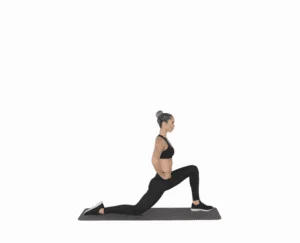
- In a flexion position, bend with one foot forward.
- To extend the front of your hip, move your weight slightly forward.
- Hold each side for 20 to 30 seconds.
Single-Leg Balance (Enhances control and stability):
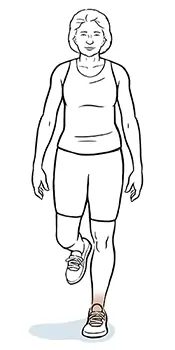
- Stand on one leg
- Hold for 30 seconds.
- Close your eyes or stand on an uneven surface for extra difficulty.
- Switch legs and repeat 2-3 times.
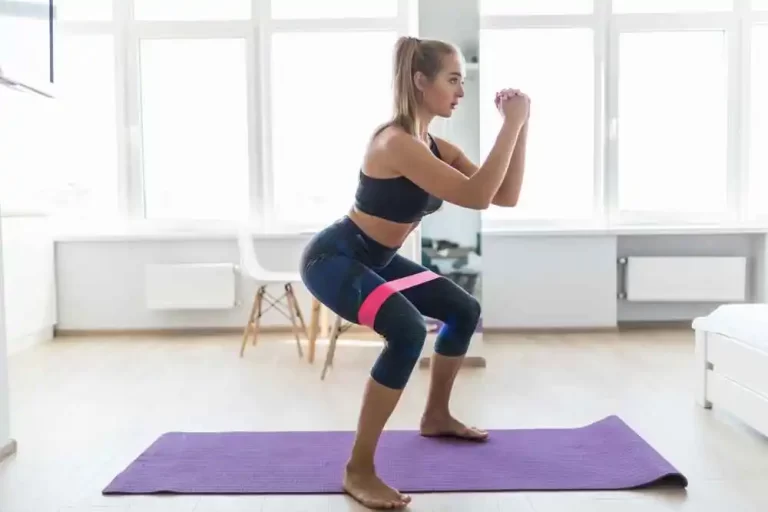
Partial Squats (with resistance band):
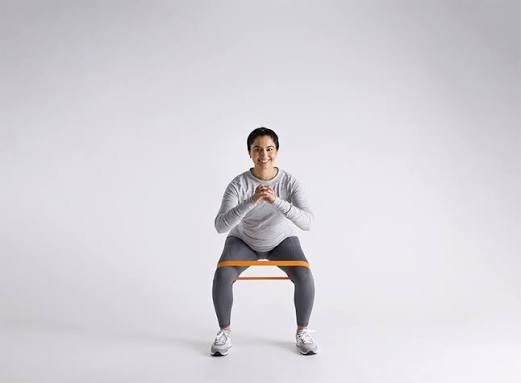
- Start by stretching a band above the knees around both legs.
- With your back slightly arched and your body erect, place your feet shoulder-width apart.
- Lower your hips gradually while bending your knees until your thighs are parallel to the floor.
- Press your thighs outward while squatting, maintaining consistent band tension.
- Do three sets of ten repetitions.
Horizontal squat stretch:
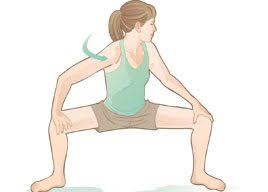
- Start on all fours, placing your knees behind your hips and your hands beneath your shoulders.
- As far apart as you can comfortably walk.
- Lower your upper body and bend your elbows as you draw your hips back. Your inner thighs and hips should feel stretched.
- During this stretch, maintain a relaxed upper back, arms, and neck.
- Work your way up to 60 seconds by holding this posture for 30 seconds.
- Repeat this exercise three times after returning to the starting position. Do this stretch once per day.
Standing inner thigh stretch:

- Place your feet slightly wider than hip-width apart.
- Until you get a stretch down the inside of your opposing thigh, shift your weight to one leg.
- Maintain this posture for around thirty seconds.
- Repeat this stretch three times on each side after returning to the beginning position. Do this workout once per day.
Sitting inner thigh stretch or butterfly stretch:

- With your legs spread wide, take a seat on the floor.
- Bend your knees and bring your soles together.
- Fold forward gradually while keeping your back straight until your inner thighs begin to stretch.
- Maintain this posture for around thirty seconds.
- Bend into the stretch once more after returning to the starting posture. Do this stretch two or three times a day, repeating it three times.
Single-leg bridge:
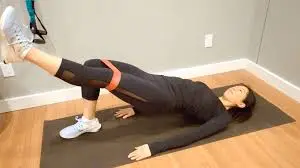
- Lie on your back with your feet flat on the floor and your hands facing downward.
- Without bending your knee, extend your right leg straight.
- Lift your hips off the ground, contract your buttocks and abdominal muscles, and use your left heel to drive into the ground. The muscles in your buttocks should be active, and you should feel a stretch along the front of your hips and thighs.
- Maintain this posture. Hold this posture for two to five seconds.
- Repeat the exercise ten times after returning to the starting position. Do this workout twice a day.
What are the risk factors?
Anybody can suffer an injury or trauma that fractures their hip joint and tears their hip labrum. Athletes who participate in activities that put a lot of stress on their hips run a higher risk, such as the following:
- Hockey.
- Dance.
- Football.
- Soccer.
- Golf.
- Gymnastics.
Can a labral tear heal completely?
- The positive side is that with conservative therapy, many of our patients with labral tears stop having symptoms. Seeing an orthopedist or physical therapist would be the first step in determining whether you may have a labral tear.
- You want a specialist to assess your hip, knee, ankle, and spine mechanics to identify the source of your symptoms because several other conditions might suggest a labral tear.
- Physical therapy, which includes soft tissue mobilization, joint mobilizations, short-term activity modification, and a targeted exercise, stretching, and mobility regimen to be carried out first with your therapist and then on your own as prescribed by your therapist, may be the conservative course of treatment if the symptoms are indeed coming from a potential labral tear.
How long does it take to recover?
- Following a hip arthroscopy surgery, recovery usually takes four to six months. Your surgeon will advise you on what to expect based on your specific needs.
- There may not be a specific recovery period if conservative therapies are being used. This is due to the fact that physical therapy and medicine do not, in theory, heal the tear. However, if you can control your symptoms and they don’t interfere with your daily activities, you might never require surgery.
Advanced Rehabilitation Techniques:
Practical physical therapy methods may speed up rehabilitation in addition to exercises:
- Mobilizations to enhance joint mobility are part of manual therapy.
- Dry needling: Reduces pain and tension in the muscles.
- Electrical stimulation is used in NEUBIE therapy to improve healing and re-educate muscles.
- Instrument-Assisted Soft Tissue Mobilization, or IASTM, promotes tissue healing by reducing scar tissue.
- Cupping therapy: Relieves tense muscles and improves circulation.
FAQs:
Is walking good for a hip labrum tear?
If a hip labrum rupture does not result in a limp, clicking, or severe pain, walking is often safe and advised. The hip joint is kept moving and lubricated by gentle, low-impact exercise, but you should only use flat, level surfaces and cease right away if you have pinching or worsening discomfort.
Can you live normally with a hip labral tear?
It is possible to lead a regular life even if you have a hip labral tear. With activity changes, non-steroidal anti-inflammatory medications, and physical therapy to strengthen the surrounding muscles, many people with them are either pain-free or only have mild symptoms.
What are the early signs of a labral tear?
Sharp, deep joint pain, popping or catching sensations during movement, stiffness, and joint weakness or instability are early indicators of a labral tear, which typically occurs in the hip or shoulder. Physical exercise and extended sitting frequently aggravate these symptoms.
References:
- Louw, A., Schuemann, T., Zimney, K., & Puentedura, E. J. (2024). Pain Neuroscience Education for Acute Pain. International Journal of Sports Physical Therapy, 19(6), 758–767. https://doi.org/10.26603/001c.118179
- De Oliveira, B. I. R., Smith, A. J., O’Sullivan, P. P. B., Haebich, S., Fick, D., Khan, R., & Bunzli, S. (2020). ‘My hip is damaged’: a qualitative investigation of people seeking care for persistent hip pain. British Journal of Sports Medicine, 54(14), 858–865. https://doi.org/10.1136/bjsports-2019-101281
- Groh, M. M., & Herrera, J. (2009). A comprehensive review of hip labral tears. Current Reviews in Musculoskeletal Medicine, 2(2), 105–117. https://doi.org/10.1007/s12178-009-9052-9
- Bedi, A., Dolan, M., Leunig, M., & Kelly, B. T. (2010). Static and dynamic mechanical causes of hip pain. Arthroscopy: The Journal of Arthroscopic and Related Surgery, 27(2), 235–251. https://doi.org/10.1016/j.arthro.2010.07.022