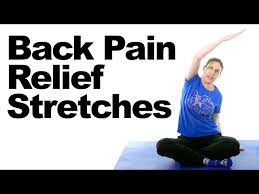
11 Proven Stretches to Help Lower Back Pain
Introduction:
Lower back pain is one of the most common pains people suffer due to extended hours of sitting, poor posture, muscle stiffness, or unexpected strain. The good news is that by increasing flexibility, relieving tense muscles, and promoting improved spinal alignment, basic stretching can offer substantial relief.
These mild, efficient stretches are ideal for anyone trying to reduce pain naturally because they can be performed at home without the need for any special equipment.
You’ll learn 11 tried-and-true stretches in this book that can help you move more freely and pleasantly by easing tense muscles, improving mobility, and easing lower back pain.
Benefits of Proven Stretches to Help Lower Back Pain:
Regularly performing stretches for lower back pain has several physical and functional benefits that help reduce pain and avoid future concerns. These stretches assist in easing stiffness and stress around the spine by increasing flexibility in the hamstrings, hips, and lower back.
They also encourage better posture by relaxing tight muscles that pull your spine out of position. Stretching promotes blood circulation to the lower back area, speeding up recovery and minimizing inflammation.
Additionally, these movements assist in calming the body, reducing stress, and enhancing overall mobility, making daily activities like walking, bending, and lifting much simpler. Overall, including established stretches into your regimen can provide long-term pain relief and boost your quality of life.
11 Proven Stretches to Help Lower Back Pain Video:
Proven Stretches to Help Lower Back Pain:
Child’s Pose:
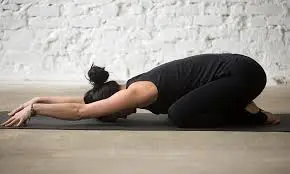
Child’s Pose is a gentle, restorative stretch that deeply relaxes the lower back by stretching the spine and releasing built-up tension. As you fold forward and put your body on your thighs, the posture allows the back muscles to soften while producing a mild stretch across the hips and glutes, which often contribute to lower back soreness.
Additionally, the position promotes deeper, slower breathing, which helps relax the nervous system and lessen stress that could worsen pain. Because it is easy to practice and gentle on the body, Child’s Pose is a good stretch for anybody wishing to calm tense muscles, improve flexibility, and reduce pressure in the lower back after prolonged sitting or physical strain.
Knee-to-Chest Stretch:
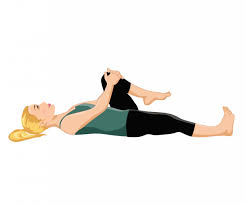
The Knee-to-Chest Stretch is a straightforward yet incredibly powerful exercise that relieves tension in the gluteal and lower back muscles. This stretch provides immediate relief from stiffness and stress by lengthening the lumbar spine and relieving pressure on pinched discs by gently pulling one or both knees toward the chest.
It also helps release the hips, which often contribute to lower back pain when they become tight or immobile. This calming stretch promotes relaxation, improves circulation to the lower back area, and develops overall spinal flexibility, making it a perfect addition to any program targeted at alleviating lower back pain.
Cat-Cow Stretch:
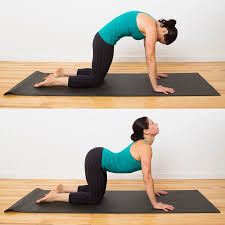
The Cat-Cow Stretch is a smooth, flowing movement that helps enhance spinal mobility and ease lower back stress. By alternating between arching the back (Cow) and rounding it (Cat), this stretch gently warms up the spine, loosens tight muscles, and promotes flexibility throughout the back and core.
The motion helps boost blood flow to the spinal discs and surrounding muscles, relieving stiffness caused by bad posture or lengthy periods of inactivity. Cat-Cow also facilitates deep, controlled breathing, which improves relaxation and lowers stress that might contribute to back stiffness. This dynamic stretch is ideal for reducing lower back pain while enhancing general spine health and body awareness.
Bird Dog Exercises:
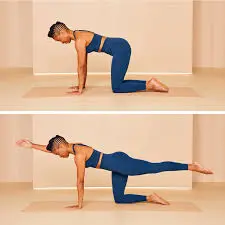
The Bird Dog exercise is a great way to improve general stability and develop the glute, core, and lower back muscles. By stretching one arm forward and the opposite leg backward, you engage deep spinal stabilizers that assist in supporting normal posture and alleviating stress on the lower back.
This regulated, balanced action helps rectify muscle imbalances, promotes coordination, and eliminates unneeded strain during regular activities. Because it produces a neutral spine and trains the body to move with better control, the Bird Dog exercise is very effective for alleviating lower back pain and preventing future pain.
Seated Forward Bend:
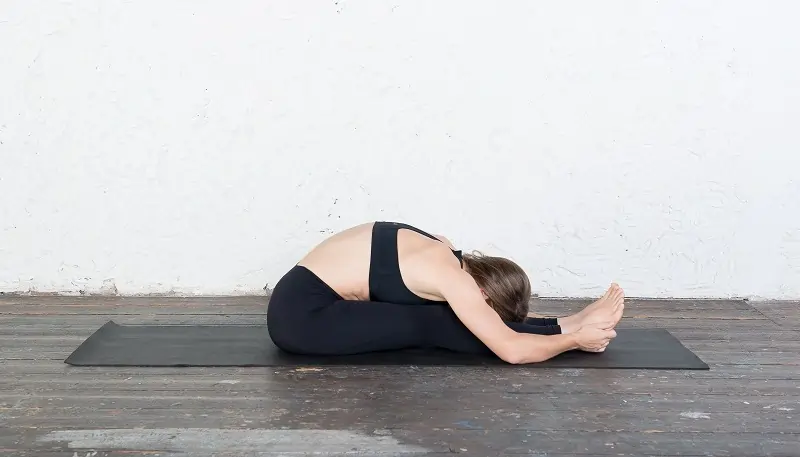
The Seated Forward Bend is a calming stretch that relieves tension in the hips, hamstrings, and lower back—areas that frequently cause lower back pain. As you slowly fold forward from the hips, the spine lengthens and decompresses, alleviating built-up tension along the lower back. Additionally, this stretch increases the flexibility of the hamstrings, which, when tight, can pull on the pelvis and worsen back pain.
The position promotes deep, steady breathing, which helps the body unwind and lets the stretch deepen organically. Regularly performing the Seated Forward Bend can improve general mobility, lessen stiffness, and encourage a peaceful, tranquil attitude that helps relieve lower back pain.
Piriformis Stretch:
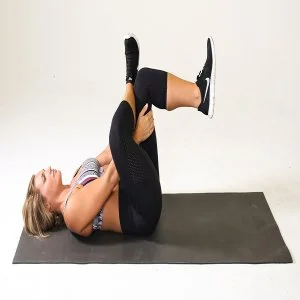
The Piriformis Stretch targets the small but powerful piriformis muscle found deep in the buttocks, which can get tight and irritate the sciatic nerve, leading to lower back and leg pain. By gently crossing one leg over the other and drawing it toward your chest, this stretch helps relieve deep gluteal tightness and reduce strain on the lower spine.
It also improves hip mobility, which is vital for maintaining appropriate pelvic alignment and reducing tension on the lower back. Practicing the piriformis stretch frequently helps improve sciatic pain, reduce stiffness, and promote smoother, more pleasant mobility throughout the lower body.
Side Bends:
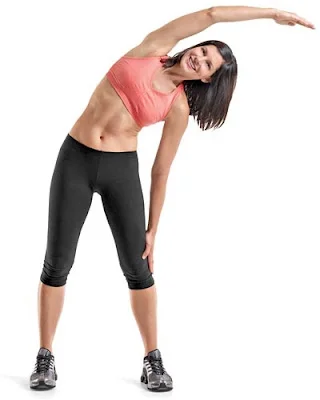
The quadratus lumborum (QL), a deep muscle that frequently contributes to lower back pain, and the oblique muscles along the sides of the torso can both be effectively stretched using side bends.
This method helps reduce stiffness and improve flexibility in the lower back and waist area by gently bending to one side, which lengthens the muscles supporting the spine. Side Bends also promote mobility across the ribs and hips, improving posture and relieving tension that builds up from sitting or standing in one position for too long. Regular side bends can maintain spinal alignment, reduce pain, and improve the comfort of common motions like twisting and bending.
Bridge Pose:
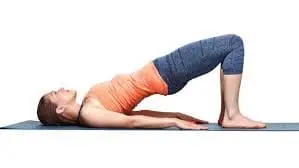
Bridge Pose is a powerful stretch and strengthening exercise that helps treat lower back pain by working and expanding numerous muscle groups at once. As you lift your hips off the ground, the movement works the glutes and hamstrings while gently stretching the hip flexors, which typically become tight from extended sitting and can pull on the lower back.
Additionally, by encouraging the spine to extend and decompress, this pose relieves pressure in the lumbar area. Additionally, Bridge Pose increases core stability and pelvic alignment, all of which are crucial for keeping a healthy lower back. Practicing this pose regularly helps boost spinal support, promote flexibility, and lessen pain during daily activities.
Cobra Pose:
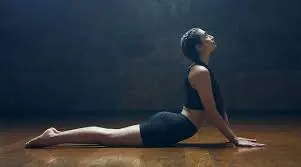
Cobra Pose is a gentle backbend that helps reduce lower back pain by strengthening the spine while opening the chest, abdomen, and hip flexors. As you lift your upper body utilizing the support of your forearms or hands, the stretch encourages extension through the lower back, which can offset the effects of extended sitting and slouched posture.
This posture promotes blood flow to the spine, relieves stiffness, and helps relieve pressure on compressed discs. Additionally, Cobra Pose enhances general back muscular flexibility and improves spinal alignment. Practicing it frequently can help ease tension, enhance mobility, and support a healthier, more resilient lower back.
Seated Spinal Twist:
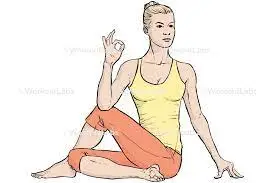
The Seated Spinal Twist is a deeply calming stretch that targets the lower back, hips, and spine, helping release tension that builds up from prolonged sitting or bad posture. This stretch helps realign the muscles supporting the lower back, enhances circulation, and promotes mobility across the spinal joints by gently rotating the body.
The glutes and outer hips, which frequently cause lower back pain when taut, are also stretched by the twisting motion. This position is a useful addition to any regimen meant to lessen lower back pain because it improves posture, increases flexibility, and offers a revitalizing sense of relief.
Hip Flexor Stretch:
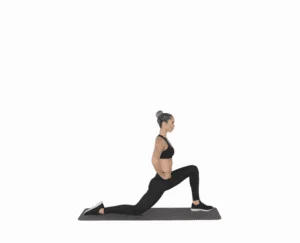
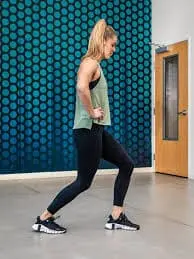
The Hip Flexor Stretch is a key technique for treating lower back pain produced by tension in the muscles at the front of the hips. Long durations of sitting shorten the hip flexors, which can tilt the pelvis forward and create extra strain on the lower spine. By gently lunging forward and opening the front of the hip, this stretch lengthens the iliopsoas and quadriceps, helping reestablish normal pelvic alignment.
The lower back becomes less tense as the hips open, enabling the spine to rest in a more supported and natural position. Practicing the Hip Flexor Stretch frequently improves mobility, reduces stiffness, and supports healthier posture during everyday activities.
Conclusion:
Incorporating these 11 proven stretches into your daily or weekly regimen will drastically reduce lower back pain, improve flexibility, and enhance overall spine health. Each stretch aims to release tension, correct muscular imbalances, and encourage right posture—key elements in preventing and managing pain. With constant practice, your lower back will feel more supported, mobile, and resilient.
Remember to move slowly, breathe deeply, and listen to your body while you stretch. You may eventually have a stronger, more comfortable, and pain-free back thanks to these easy yet powerful exercises.
FAQs:
What not to do in lower back pain?
You should stay away from hard lifting, prolonged bed rest, and high-impact exercises if you have lower back pain. You should also avoid sitting for extended periods and frequent bending or twisting motions. Rather, concentrate on moving gently, using safe lifting techniques, and making ergonomic changes to your workspace and footwear.
What is the most serious cause of back pain?
Your back pain may indicate a more significant issue if it wakes you up in the middle of the night or arises while you’re in specific postures, like lying down. It could be an indication of a more systematic disease, such as an infection, fracture, severe nerve compression, or even malignancy.
What is the king of all back exercises?
The pullup is the king of body-weight exercises for the back, but what if you need to conduct a back workout at home and you don’t have a pullup bar? Contrary to popular belief, you can get a solid back workout at home with very little equipment.
What is the improper sitting position during pregnancy?
Wrong sitting positions during pregnancy include slouching, crossing your legs, and sitting for lengthy periods without rest. These positions can cause back pain, disrupt blood circulation, and put undue weight on your abdomen. It’s vital to sit with your back straight, utilize back support, and keep your feet flat on the floor to decrease stress on your back and assist the baby’s growth.
Which month during pregnancy does back pain begin?
Back pain can occur as early as the first trimester, although it most usually develops in the second trimester, between the fourth and seventh months. It can be caused by weight increase, hormone changes, and adjustments in posture as the body adapts to bearing a pregnancy.
Just above the buttocks, what is the cause of lower back pain?
Lower back pain above the buttocks can arise from muscle strain, difficulties with the spine, such as a herniated disc or arthritis, or nerve disorders such as sciatica. Additional causes include issues with the sacroiliac (SI) joint or diseases like piriformis syndrome, in which a muscle deep in the buttocks compresses the sciatic nerve. This kind of soreness can also result from prolonged sitting, incorrect lifting, and overexertion.
What stretches are helpful for lower back pain?
Effective stretches for lower back pain include knee-to-chest, pelvic tilts, cat-cow, and the cobra stretch, which help release stress, increase flexibility, and strengthen core muscles. For pelvic tilts, lie on your back with bent legs and press your lower back into the floor by tightening your abs. The cat-cow stretch includes going on your hands and knees, then alternating arching your back up and slumping it down.
References:
- Gaikwad, T., & Gaikwad, T. (2024, March 29). 11 top exercises for lower back pain. KCM Clinic – Klinika Leczenia Otyłości, Poradnia Medyczna, Szpital – Jelenia Góra, Wrocław. https://kcmclinic.com/11-top-exercises-for-lower-back-pain/
- Back exercises in 15 minutes a day. (n.d.). Mayo Clinic. https://www.mayoclinic.org/healthy-lifestyle/adult-health/in-depth/back-pain/art-20546859
- Cronkleton, E. (2024, May 20). 7 Lower back stretches to reduce pain and improve mobility. Healthline. https://www.healthline.com/health/lower-back-stretches
- Cadman, B. (2025, April 14). How to strengthen the lower back. https://www.medicalnewstoday.com/articles/323204
- Physio, B., & Physio, B. (2025, June 30). 13 Top Exercises for Lower Back Pain – Benchmark Physio. Benchmark Physio. https://benchmarkphysio.com.au/physiotherapy-exercises-for-lower-back-pain/
- Weg, A., & Wellbank, L. (2025, November 11). 7 stretches to relieve lower back pain, according to experts. Prevention. https://www.prevention.com/fitness/fitness-tips/a69381198/stretches-for-lower-back-pain/
- Cscs, J. R. (2025, October 14). 7 Exercises to stretch and strengthen your lower back. Health. https://www.health.com/stretching-exercises-for-lower-back-11702000