
12 Must-Do Exercises for Ankylosing Spondylitis
Introduction:
A chronic inflammatory disease of the spine and sacroiliac joints, ankylosing spondylitis (AS) frequently results in stiffness, decreased mobility, and long-term postural abnormalities. Frequent exercise is essential for controlling symptoms, increasing flexibility, and delaying the development of AS-related stiffness.
Pain can be decreased, functional movement can be maintained, and the general quality of life can be improved by including focused exercises that emphasize spinal mobility, posture correction, and mild strengthening. The activities listed below are essential for maintaining spine health, enhancing everyday comfort, and enabling people with AS to remain flexible and active.
Benefits of Doing Exercises for Ankylosing Spondylitis:
Frequent targeted exercises for ankylosing spondylitis enhance general spinal flexibility, alleviate pain, and lessen stiffness, making everyday activities more tolerable. By strengthening the back and core muscles, these exercises promote improved posture and help offset the forward-bending tendency that is frequently observed in AS.
Stretching and gentle mobility exercises also improve joint function, lower inflammation, and sustain a greater range of motion over time. Regular exercise improves lung capacity, circulation, vitality, and quality of life for those with chronic illness.
Exercises for Ankylosing Spondylitis:
Deep Breathing Exercises:

Because ankylosing spondylitis might eventually limit chest expansion, deep breathing techniques are quite helpful for those who have the condition. Reducing stiffness in the chest and upper back, maintaining rib cage mobility, and increasing lung capacity are all benefits of practicing regulated breathing.
Put your hands on the sides of your rib cage, sit or stand tall with your spine straight, and slowly inhale through your nose until you feel your ribs stretch outward. After a brief interval of holding, gradually relax your chest and let the entire breath through your lips.
Keep your shoulders relaxed and concentrate on taking calm, deliberate breaths as you repeat this beat multiple times. This easy-to-do but powerful exercise improves breathing, encourages relaxation, and supports improved posture.
Side Stretch:
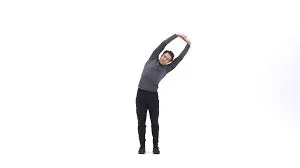
The side stretch is a great way to increase flexibility in the lower back, ribs, and sides of the torso—areas where ankylosing spondylitis can cause tension. Start by maintaining your shoulders relaxed and your spine tall while standing with your feet hip-width apart.
Feel a smooth stretch along the side of your torso and rib cage as you raise one arm overhead and softly lean to the other side. Return to the center and repeat on the opposite side after holding the stretch for a few seconds while taking deep breaths.
This exercise makes it easier to carry out daily tasks with improved comfort and posture by maintaining rib expansion, increasing lateral spinal mobility, and reducing general stiffness.
Knee to Chest Stretch:
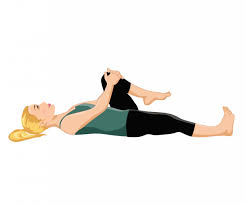
The lower back, hips, and glute muscles—common places of tightness for those with ankylosing spondylitis—all benefit from the knee-to-chest stretch. With your legs outstretched and your spine in a neutral position, lie on your back. Gently grasp one knee with your hands as you slowly raise it closer to your chest, being careful not to push.
As you experience a comfortable stretch in your lower back and hips, keep the opposing leg relaxed on the floor. After a few breaths of holding, switch sides. This stretch encourages relaxation in the supporting muscles surrounding the pelvis and lumbar area, lessens stiffness, and increases lower spine mobility.
Hamstring Stretch:
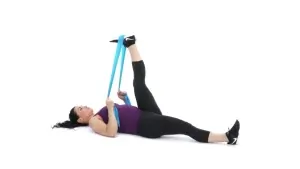
For those with ankylosing spondylitis, the hamstring stretch is especially beneficial for easing tension in the backs of the legs, which can lead to lower back strain. Start by stretching one leg out on the ground while resting on your back.
Gently grasp behind the thigh or calf and raise the other leg as straight as is comfortable. Instead of pulling hard, try to stretch gently and steadily. Feel the lengthening down the back of the raised leg as you hold for a few deep breaths. Repeat after switching sides. This stretch promotes better posture and mobility during daily activities, increases hamstring flexibility, and eases lower back strain.
Cat-Cow Stretch:
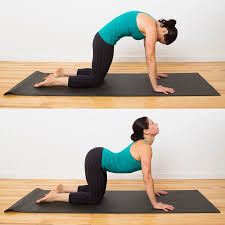
For those with ankylosing spondylitis, the cat-cow stretch is a gentle, flowing exercise that helps increase spine mobility and decrease stiffness. Start on your hands and knees, placing your knees beneath your hips and your wrists beneath your shoulders. Take a breath and raise your chest and tailbone into the “cow” position by gently arching your back.
Breathe out as you tuck your chin and tailbone into the “cat” position and slowly rotate your spine. Breathe in unison as you easily transition between these two positions. This exercise improves posture and movement throughout the day, eases back muscle stress, and increases spinal flexibility.
Bird Dog Exercise:
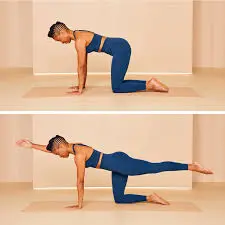
The bird dog exercise is a very good way to strengthen the lower back, stabilizing muscles, and core areas that are crucial for treating ankylosing spondylitis. Keeping your hips level and your core active, extend your right arm forward and your left leg straight back. Hold for a short while while breathing steadily, then go back to the beginning and switch sides.
Instead of emphasizing speed, concentrate on deliberate, gradual movements. This exercise promotes better posture throughout daily tasks, lessens lower back pain, increases spinal stability, and improves balance.
Bridge Pose:
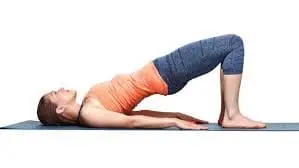
For those with ankylosing spondylitis, the bridge posture is a great way to strengthen the glutes, lower back, and core while also enhancing spinal mobility. Press through your heels, contract your core and glutes, and gently arch your lower back as you slowly raise your hips toward the ceiling.
After holding the pose for a few breaths without going overboard, carefully descend your hips once more. This pose improves total spinal stability, supports good posture, and lessens stiffness in the lower back.
Seated Spinal Twist:
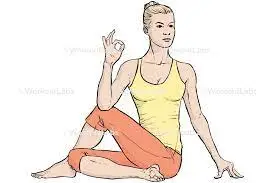
A mild rotation exercise that helps preserve spinal mobility—particularly crucial for treating ankylosing spondylitis—is the seated spinal twist. Place the foot outside the opposing thigh while bending one knee. Using your opposing arm to support the exercise by resting it on your outer thigh or behind you for balance, slowly twist your torso toward the bent knee while maintaining a tall spine.
As you rotate, try not to force the twist; instead, concentrate on keeping your spine long. After a few slow breaths of holding, flip sides. This exercise helps counteract stiffness, reduces tension in the back muscles, and increases spinal flexibility.
Superman Pose:
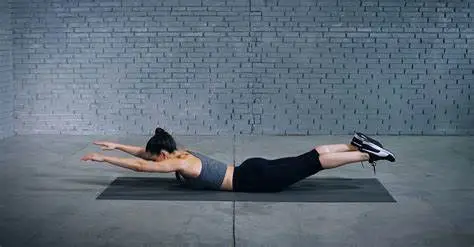
The lower back, glutes, and spinal extensors—muscles essential for stability and posture in people with ankylosing spondylitis—are all effectively strengthened by the superman pose. Start by lying face down on the ground with your legs straight and your arms out in front of you. Maintaining a neutral neck and avoiding any effort, slowly raise your arms, legs, and chest off the ground simultaneously.
Breathe steadily while maintaining the elevated position for a few seconds, then gradually descend back down. By engaging and working the muscles along the spine, this exercise promotes a better upright posture, strengthens the back, and lessens stiffness.
Plank:
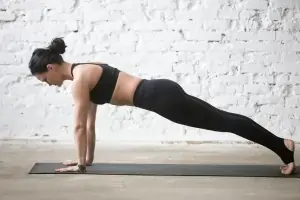
For those with ankylosing spondylitis, the plank is a potent core-strengthening exercise that promotes spinal stability and alignment. Starting with your face down on the floor, raise your body onto your forearms and toes while keeping your elbows just beneath your shoulders.
Maintain a straight line from head to heels by using your legs, glutes, and core. Maintain control and alignment as you hold the pose and breathe steadily. This exercise improves posture for daily activity, strengthens the core, and lessens lower back strain.
Bicycle Crunches:
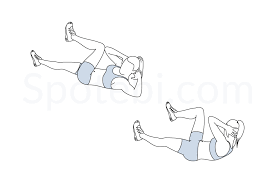
For people with ankylosing spondylitis, bicycle crunches are a great way to develop the core muscles, particularly the obliques, which are crucial for maintaining spinal stability. To begin, lie on your back with your knees raised to a tabletop position and your hands behind your head.
Raise your opposing shoulder and turn your torso such that your elbow meets it as you bring one knee closer to your chest. In a fluid, deliberate pedaling motion, switch sides. Instead of straining your neck or hurrying through the exercise, concentrate on using your core. This exercise helps to improve posture and mobility, strengthen the core, and strengthen the spine.
Swimming:

For people with ankylosing spondylitis, swimming is one of the best full-body exercises since it lets you move freely without straining your joints. Your body weight is supported by the water, which eases the strain on your spine and promotes mild flexibility and movement. Frequent swimming improves posture and lessens stiffness that is frequently linked to AS by strengthening the shoulder, back, and core muscles.
Additionally, the fluid motions and rhythmic breathing enhance lung capacity and chest expansion. Swimming is a low-impact, pain-relieving approach to stay active and preserve spinal health, whether you select freestyle, backstroke, or basic water walking.
Conclusion:
Managing stiffness, lowering pain, and preserving long-term mobility can all be significantly improved by incorporating essential exercises for ankylosing spondylitis into your daily routine. Strengthening exercises, posture-focused motions, and gentle stretching all support the muscles that stabilize the spine while maintaining its flexibility.
Regular practice increases energy levels, posture, and general quality of life in addition to physical comfort; thus, consistency is essential. People with AS can better control their symptoms and go about their everyday lives with more ease and confidence if they keep active and engage in focused exercises like deep breathing, stretches, core strengthening, and low-impact sports like swimming.
FAQs:
How is ankylosing spondylitis treated in China?
Ankylosing spondylitis (AS) is frequently treated traditionally using Chinese herbal medicine. Among these, Yanghe decoction (YHD) clearly relieves AS symptoms, while its effectiveness is still debatable.
How can I tell if my ankylosing spondylitis is becoming worse?
As ankylosing spondylitis worsens, you may feel greater pain and stiffness on both sides of your spine, which may extend up to your neck and midback. Your range of motion may be restricted by achy pain and stiffness, which may also make it difficult for you to maintain an upright posture.
Which is worse, ankylosing spondylitis or rheumatoid arthritis?
Rheumatoid arthritis (RA) frequently has a bigger impact on overall physical functioning and quality of life, but ankylosing spondylitis (AS) can cause more severe spinal and postural disorders. However, neither condition is clearly “worse” because its severity varies from person to person. Both are severe, long-term inflammatory diseases that can result in severe pain, stiffness, exhaustion, and sometimes even disability.
What is ankylosing spondylitis’s underlying cause?
Ankylosing spondylitis (AS), which typically begins in late adolescence or early adulthood, is caused by a combination of genes (particularly HLA-B27) and environmental factors, such as infections or digestive problems, that cause your immune system to mistakenly attack joints, resulting in inflammation, stiffness, and pain, mostly in the lower back and pelvis. A complicated autoimmune reaction may be triggered by an infection or inflammation of the gut, even though genetics loads the gun.
Do push-ups help those with ankylosing spondylitis?
AS is known to shorten the back muscles and spine. Back pain can be decreased, muscle strength can be increased, and shortening can be minimized by strengthening the spine with press-ups.
What foods cause ankylosing spondylitis to flare up?
Avoiding specific foods is crucial to preventing inflammation since some foods can cause ankylosing spondylitis. These include processed foods, dairy products, alcohol, caffeine, artificial sweeteners, and foods heavy in fat, salt, and sugar.
If I have ankylosing spondylitis, should I have children?
The great majority of women with ankylosing spondylitis can anticipate having fertility rates, pregnancies, and deliveries that are comparable to those of the general female population. There is a little increase in the likelihood that the progeny may develop AS in the future.
How can someone with ankylosing spondylitis improve their posture?
To maintain a straight spine when sitting for extended periods of time at work or school, use a chair with a high, firm back. Ensure that the back of your chair is in contact with your tailbone. For additional support, try placing a lumbar support, rolled-up towel, or tiny pillow behind your lower back.
Which sleeping posture is ideal for those with spondylosis?
Back and side sleeping are the ideal sleeping positions for those with spondylosis because they help preserve spinal alignment and lessen strain. Avoid of stomach sleeping, as it might cause the neck and spine to twist. Use pillows to support your neck and knees when you sleep on your back or side to maintain a neutral and aligned spine.
Which fruit is ideal for people with ankylosing spondylitis?
Antioxidants found in strawberries, raspberries, blueberries, and blackberries help reduce inflammation and counteract the effects of free radicals in the body.
Can someone with ankylosing spondylitis go to the gym?
Exercise is essential for managing ankylosing spondylitis (AS), so yes, a patient can work out at the gym. However, it’s important to start cautiously and concentrate on low-impact, appropriate exercises. Mobility, cardiovascular, and strength training should all be part of a gym program, but high-impact exercises must be avoided to avoid joint and spinal problems. For a customized strategy, it is advised to see a physiotherapist. You should also pay attention to your body and cease any workout that results in more than minor pain.
What makes ankylosing spondylitis worse?
Exercise may feel unattainable if you have persistent back pain. Sedentary lifestyles, however, can worsen symptoms. Exercise helps lessen the pain and stiffness brought on by AS and increase joint flexibility.
How should ankylosing spondylitis be treated while pregnant?
NSAIDs are the most often given medications for nonradiographic axial spondyloarthritis (nr-axSpA), a condition that resembles AS. NSAIDs, both prescription and over-the-counter, seem safe up to 20 weeks of pregnancy, but if used longer, they may seriously harm the fetus’s kidneys.
Which type of exercise is ideal for those with ankylosing spondylitis?
Low-impact aerobic exercises like swimming or walking, mild stretches to increase flexibility (like cat-cow and chin tucks), core and strength training to support the spine (like bridges, planks, and bird-dog), and posture-focused activities like yoga or hydrotherapy are the best exercises for ankylosing spondylitis (AS). Without engaging in high-impact exercises that could be painful, a program should concentrate on preserving mobility, decreasing stiffness, and strengthening the core.
References:
- Best exercises for ankylosing spondylitis. (n.d.). WebMD. https://www.webmd.com/ankylosing-spondylitis/ss/slideshow-ankylosing-spondylitis-exercises
- Clinic, C. (2022, September 16). Best types of exercises for ankylosing spondylitis. Cleveland Clinic. https://health.clevelandclinic.org/stretches-exercises-ankylosing-spondylitis
- Spondylitis Association of America. (2025, December 5). Spondyloarthritis and exercise | SPONDYLITIS.ORG. Spondylitis Association of America – Ankylosing Spondylitis. https://spondylitis.org/about-spondylitis/treatment-information/exercise/
- Rodriguez, D. (2023, December 5). 9 Smart exercises for people with ankylosing spondylitis. EverydayHealth.com. https://www.everydayhealth.com/hs/ankylosing-spondylitis-treatment-management/pictures/smart-exercises/
- Franks, I. (2023, September 13). Exercises and postures for ankylosing spondylitis. https://www.medicalnewstoday.com/articles/317854