Back Pain Exercises in Pregnancy
Introduction:
Lower back pain or ache is common among pregnant women. It is among the most typical side effects. Hormones that relax ligaments, weight gain, and a changing center of gravity, particularly between the fifth and seventh months, are typically the causes of the pain.
Women frequently end up lying down or falling onto the couch as a result of this. Contrary to popular belief, getting too much sleep during pregnancy is not advisable. Actually, it’s beneficial to engage in back pain exercises and other suitable physical activities regularly or daily. These are some of the most popular and successful back pain exercises for pregnant women.
It’s important to remember that some pregnant women may not experience relief from back discomfort even after taking lengthy walks, swimming frequently, doing yoga, and shifting postures throughout the day. Exercise is therefore crucial to managing the pain.
During pregnancy, especially in the early stages, backaches and back pain are frequent. Your body’s ligaments naturally soften and stretch during pregnancy in order to get ready for labor. Back pain may result from this tension on your pelvic and lower back joints.
Is Back Pain Just Normal During Pregnancy?
It’s common, too. However, that is not to say you should disregard it. It’s time to get treatment if your back hurts all the time or you have trouble getting through the day in comfort. A licensed physiotherapist can have a profound impact. Keep in mind that your health comes first. Don’t be afraid to get medical help if you have any new symptoms or worsening pain. You can rely on our team.
What causes pregnancy back pain?
The body goes through several changes during pregnancy in order to accommodate the developing fetus and get ready for delivery. Back pain can be caused by a number of these changes:
Pelvic ligaments that loosen and soften to get the body ready for childbirth
Typical weight increase during pregnancy
Your center of gravity is shifting as the unborn child grows.
The good news is that exercise can improve fitness, encourage healthy weight gain, reduce stress, and strengthen and stretch muscles during pregnancy. Regular exercise throughout pregnancy also lowers the risk of postpartum depression, premature delivery, gestational diabetes, and hypertension. The majority of medical professionals advise engaging in moderate-intensity exercise for thirty minutes five days a week. Walking, swimming, yoga, and low-impact aerobics are examples of this.
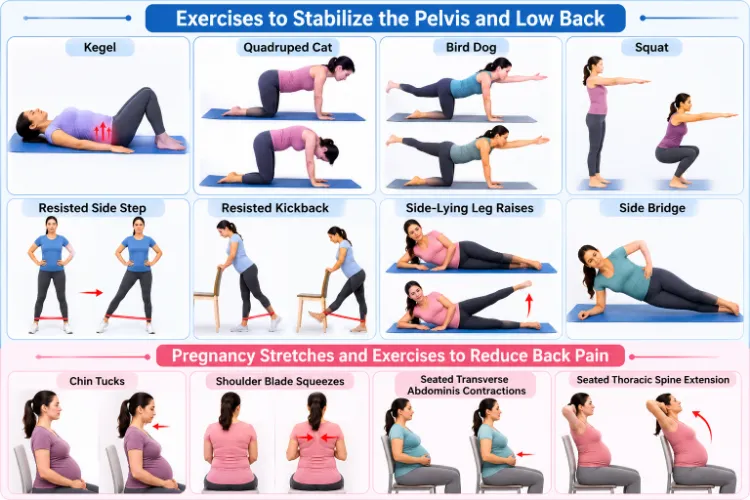
Exercises to stabilize the pelvis and low back:
Kegel:
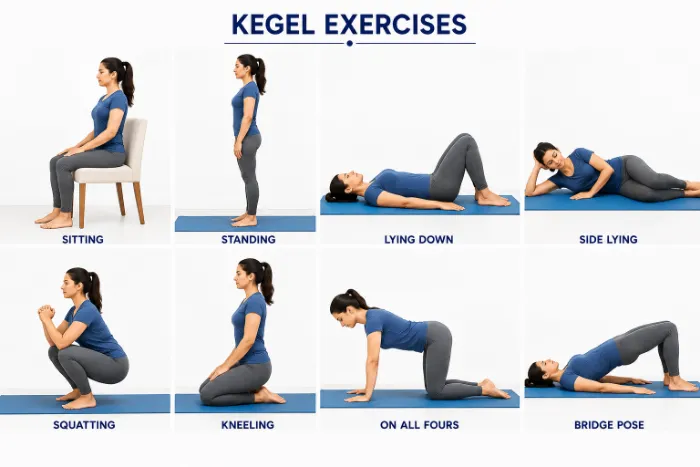
To prepare the pelvic floor muscles for childbirth and the postpartum period, this exercise is typically advised for pregnant women. However, women who have an extremely tight pelvic floor should not use it. Please see a physical therapist if you have a bowel or bladder problem so they can help you with your particular problem.
Kegel exercises can be done in any position.
- Tighten your pelvic floor muscles and count to three to five seconds to begin the workout. Consider drawing up and in as though you are stopping the flow of gas or urine.
- After that, let your muscles relax for three to five seconds.
- Do ten repetitions.
- By clenching your pelvic floor muscles during the exhale and relaxing them during the inhale, you may link your breath to the activity. Any of the exercises listed below can be combined with Kegel exercises.
Cat-cow:
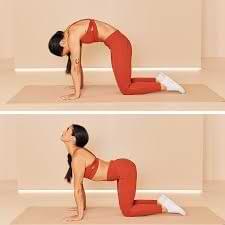
- Place your shoulders over your hands and your hips over your knees as you begin on your hands and knees.
- Breathe out slowly, strengthen your abdominal muscles, raise your spine toward the ceiling, and let your head softly descend toward your chest.
- After ten to fifteen seconds of holding, return to the starting position.
- Do ten repetitions.
Bird Dog:
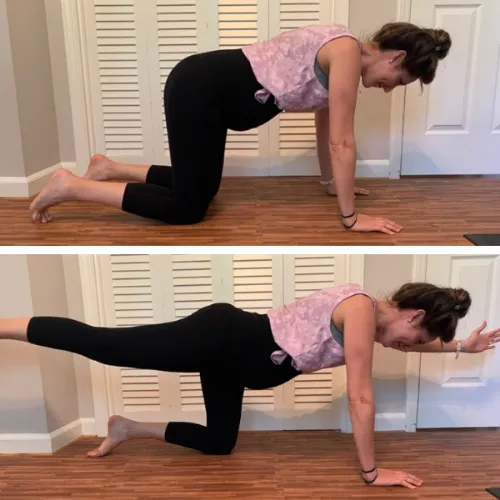
- Place your shoulders over your hands and your hips over your knees as you begin on your hands and knees. Maintain a straight spine while using your abdominal muscles.
- Raise and stretch your left leg and right arm slowly until they are level with your spine.
- Return to the starting position after holding for three to five seconds.
- Next, switch between using your left and right arms for the workout.
- Do ten repetitions.
Squat:
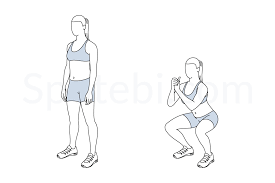
- Place your feet shoulder-width apart as you stand.
- As though you were going to sit in a chair, bend your knees and shift your hips back. Maintain your knees behind your toes.
- Restore your starting position after bending only as far as you feel comfortable.
- Do ten repetitions.
Resisted Side Step:
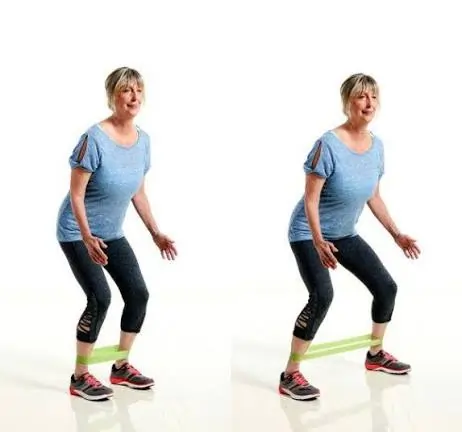
This workout can also be done without a resistance band.
- Put a light resistance band around your ankles or thighs and stand. Maintain a tiny bend in your knees and a slight distance between your feet.
- Ten times, sidestep to the right.
- Next, take ten sidesteps to the left.
Resisted Kickback:
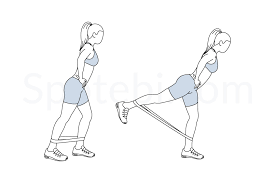
This workout may be done without a resistance band as well.
- Put a light resistance band around your ankles or thighs and stand. Maintain a small distance between your feet.
- Do ten modest, deliberate backward kicks with your right leg.
- Next, use your left leg to execute ten tiny, deliberate backward kicks.
Side-Lying Leg Raises:
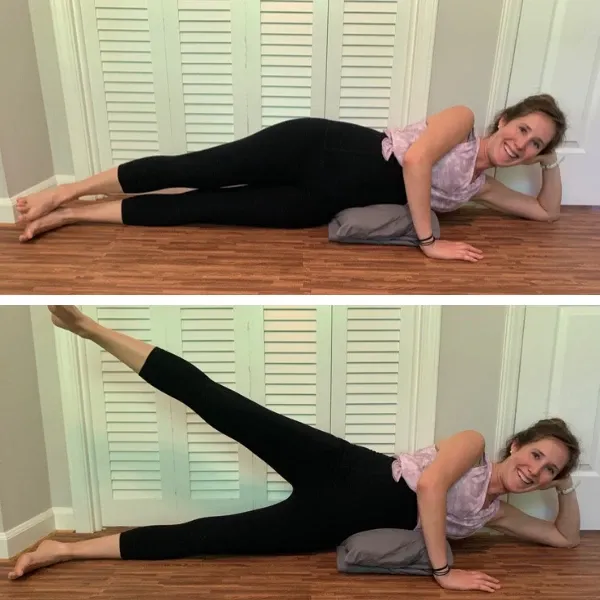
- Keep your ankles, hips, and shoulders in a straight line while lying on your left side. To maintain a straight spine, you could put a small pillow under your side.
- Raise your right leg to a 45-degree angle slowly and deliberately, then drop it.
- Use your right leg for ten repetitions.
- Change to lying on your right side and use your left leg for ten repetitions.
Side Bridge:
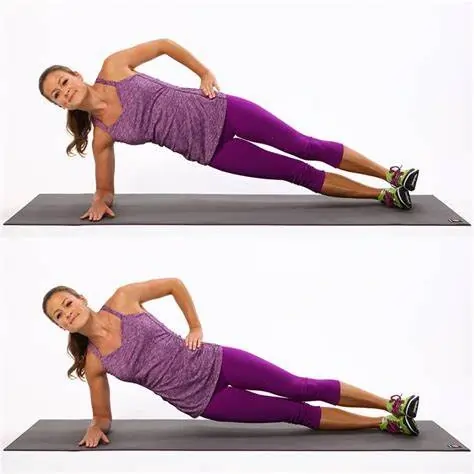
- Bend your knees to a 90-degree angle while lying on your left side. Verify that your knees, hips, and shoulders are all in a straight line.
- Lift your right hip slowly while using your core muscles.
- After three to five seconds of holding this position, carefully return your hips to the floor.
- Do ten reps on each side.
Pregnancy stretches and exercises to reduce back pain:
Prenatal yoga and other activities can help you keep active during your pregnancy. Here are some basic steps to get you started.
Chin tucks:
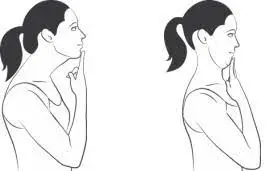
Sit upright with your feet level on the floor and your shoulders back and down:
- Keeping your eyes ahead, gently tuck your chin into your neck to create a double chin.
- Hold for five seconds.
- Calm down and go back to where you were.
- Do this five to ten times.
Shoulder blade squeezes:
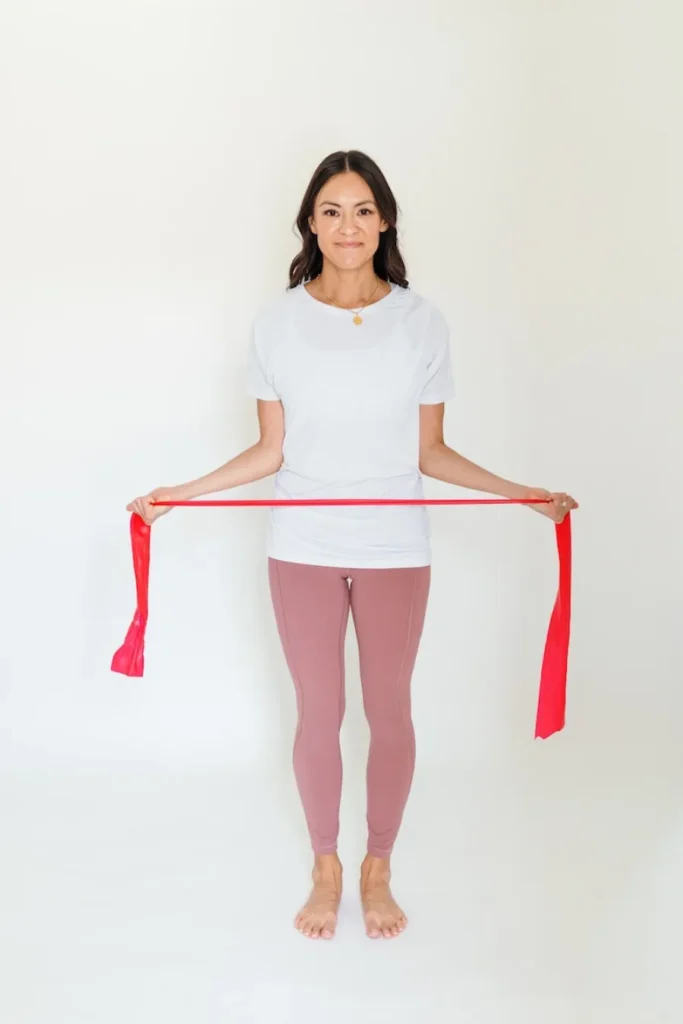
Holding a band in each hand, bend your elbows.
- Squeeze your shoulder blades together softly while pulling on the band and rotating your hands apart. Keep your shoulders away from your ears and lowered.
- After five seconds of holding the squeeze, let go.
- Repeat ten to fifteen times.
Seated transverse abdominis contractions:
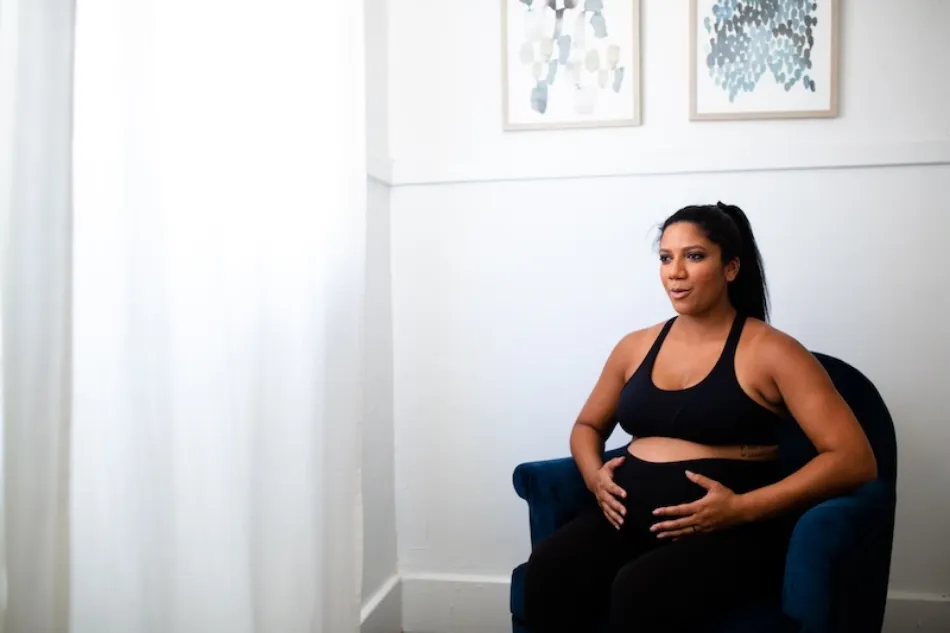
With your feet flat on the ground and your knees bent, take a straight seat:
- Breathe deeply. Without tilting your pelvis or holding your breath, use your core muscles to gently move your belly button toward your spine as you exhale.
- After holding the contraction for five to ten seconds, let go.
- Repeat ten to fifteen times.
Seated thoracic spine extension:
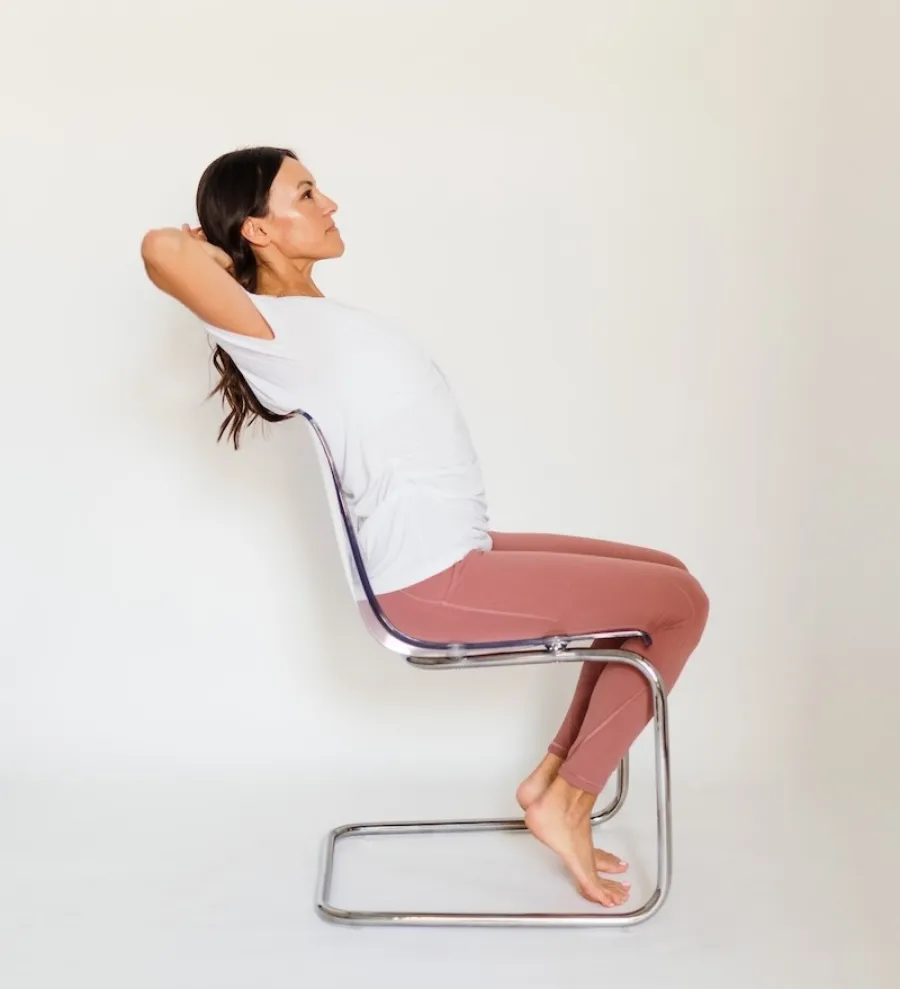
With your hands tied behind your head and your feet flat on the floor, sit upright on a chair:
- While maintaining a solid lower back, take a breath and slowly arch your upper back over the chair’s back support.
- Release your breath as you return to the starting posture.
- Focus on making steady, fluid motions via the upper back as you repeat five to ten times.
Exercise Safety Advice for Pregnant Women:
- Avoid working out while lying flat on your back after the first trimester.
- In this posture, the uterus compresses the inferior vena cava, a vital vein that supplies blood to the heart. You may experience drowsiness, dyspnea, or nausea if this blood flow is restricted. Avoid rough surfaces and work out in a safe place. Your center of gravity will change as you gain weight during pregnancy, which may have an impact on your feeling of balance. Put on supportive footwear.
- To avoid overheating, sip water prior to, during, and following physical activity.
- Don’t work out until you’re exhausted. If you are unable to communicate while working out, reduce the speed or take brief pauses.
FAQs:
What will help with back pain while pregnant?
Wearing low-heeled supportive shoes, using a warm heating pad on your lower back, sleeping on your side with a cushion between your knees, and doing mild low-impact workouts like strolling, swimming, or cat-cow stretches can all help reduce back pain during pregnancy.
Is back pain normal at 35 weeks pregnant?
Because of your changing center of gravity, weight increase, and the relaxation of your joints caused by pregnancy hormones, back pain is rather typical around 35 weeks pregnant. However, chronic back pain may also occasionally indicate early or active labor since you are nearing full term.
In which month does back pain start in pregnancy?
Due to early hormone changes, back pain can begin as early as the first month or two (about weeks 4 to 8), but it usually becomes apparent and persistent around the fifth month (weeks 18 to 24) of the second trimester as the baby develops and changes weight.
Which is the toughest month of pregnancy?
Everybody has a different difficult month; thus, there isn’t just one. Although they are difficult for various reasons, most individuals perceive the first month (or first trimester) and the ninth month (the last stretch) to be the most difficult.
References:
- Knezevic, N. N., Candido, K. D., Vlaeyen, J. W. S., Van Zundert, J., & Cohen, S. P. (2021). Low back pain. The Lancet, 398(10294), 78–92. https://doi.org/10.1016/s0140-6736(21)00733-9
- Ostgaard, H. C., Andersson, G. B. J., & Karlsson, K. (1991). Prevalence of back pain in pregnancy. Spine, 16(5), 549–552. https://doi.org/10.1097/00007632-199105000-00011
- Mannion, A. F., Helbling, D., Pulkovski, N., & Sprott, H. (2009). Spinal segmental stabilization exercises for chronic low back pain: program adherence and its influence on clinical outcome. European Spine Journal, 18(12), 1881–1891. https://doi.org/10.1007/s00586-009-1093-7
- Liddle, S. D., & Pennick, V. (2015). Interventions for preventing and treating low-back and pelvic pain during pregnancy. Cochrane Database of Systematic Reviews, 2015(9), CD001139. https://doi.org/10.1002/14651858.cd001139.pub4
- Sabino, J., & Grauer, J. N. (2008). Pregnancy and low back pain. Current Reviews in Musculoskeletal Medicine, 1(2), 137–141. https://doi.org/10.1007/s12178-008-9021-8