Top Exercises to Improve Thoracic Posture While Sitting
Introduction:
Tight backs and poor posture are among the most common medical conditions we treat at Sport and Spinal Physiotherapy. It is becoming clear that we as a population are not taking the greatest care of ourselves and our posture because of the current lifestyle and employment, which include a lot of sitting and little movement.
This post will teach you the following and explain how the thoracic disc may benefit you:
- The spinal cord
- The impact of modern life on posture and the thoracic spine
- How your posture and thoracic spine impact the rest of your body
- The simplest method for treating a tight thoracic spine and improving posture is the Thoracic Wedge.
An interesting, complex, and vital part of the body is the thoracic spine. It is composed of the ribs and 12 spinal segments and is located in the center of your spine between your neck and lower back. The 12 thoracic vertebrae, which are anatomically classified as T1 through T12, are made to safeguard our essential organs. Additionally, they are designed to facilitate easy breathing, offer robust attachment points for many muscles, and safeguard crucial nerves that connect to our trunk muscles and control our internal organs. The middle portion of our spine’s range of motion is known as thoracic mobility.
The thoracic spine is often less flexible and more rigid than the cervical and lumbar spines because it must protect our essential organs. The very rear of each thoracic component really points downward, and it has thicker ligaments related to it. Therefore, the amount that this portion of the spine may bend backward is limited. The thoracic spine has a little natural curvature because each vertebra is shaped like a wedge, with the rear being slightly bigger than the front.
The effect of modern life on thoracic spine posture:
We often hear the term having good posture, which mostly refers to the thoracic spine’s position.
These days, we spend an increasing amount of time studying, watching TV, working at desks, browsing the internet, and using our phones. On some days, we may also be utilizing computers or tablets on our laps while seated on the sofa. All of these thoracic flexion postures have the potential to cause adverse postural alterations. Driving for long periods of time, nursing infants in uncomfortable postures, and sleeping in the fetal position at night are other situations that can have an impact.
Consider your typical day. You’ll probably be sitting while eating breakfast, driving or taking the bus to work, and then spending most of the day at your desk. When you arrive home, you could find yourself sitting down to use the computer, watch TV, or have dinner. In addition to these additional loading problems, it is already known that the thoracic spine becomes less flexible and accommodating as we age. This is harmful to having a normal, strong, and healthy back.
Bad training methods and workout postures, such as bad deadlifts, rowing, sit-ups, and plank stance, can also lead to a detrimental shift in posture.
How your posture and thoracic spine impact your entire body:
The ability to extend and rotate is reduced in a stiff thoracic spine, while the natural rounded curvature increases. This may result in:
- Headaches and neck pain are often caused by sitting forward with the head and neck.
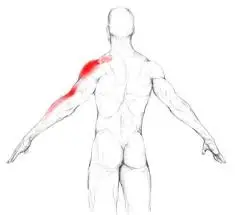
- Soreness in the shoulder. For optimal shoulder function, the thoracic spine must move enough. Shoulder impingement may result from the shoulder blade compensating if the upper back is unable to extend during the whole movement of extending your arm above your head.
- Low back pain: To compensate for a stiff thoracic spine and an increased curvature, the pelvis often tilts forward to raise the lumbar curve. Increased lower back pain may result from this, particularly for people who have had prior disc problems.
- Prolonged sitting can result in a flat lower back, tight hamstrings, and poor pelvic control, which can produce pelvic weakness, poor gluteal control, and an enlarged thoracic curvature.
- Running problems: If a stiff upper back is causing pelvic and butt weakness, it will affect any running-related activity!
- Breathing problems: In order to breathe normally, each side’s bottom rib cage must move like a bucket handle. It will be more difficult to breathe if the thoracic spine is tight because there will be less flexibility at the joint where the ribs attach to the spine. This is especially true when activity calls for larger, quicker breaths.
Thoracic Mobility Exercises’ Advantages for Improved Posture and Spinal Health:
Benefit 1: Improved Upright Posture and Decreased Forward Head Position:
A real improvement in resting posture is the most obvious advantage of thoracic mobility exercises. When the thoracic spine is fully grown, the head naturally rests over the shoulders rather than thrusting forward, the shoulders drop away from the ears, and the chest expands. This has immediate effects on day-to-day living, such as reduced neck fatigue during screen time, improved breathing, and less tension in the upper traps.
Benefit 2: Reduction of Shoulder Pain and Upper Back Stiffness:
By mid-afternoon, the majority of people looking for thoracic exercises are coping with a similar cluster of symptoms: chronic, dull aching between the shoulder blades, trouble turning to look over one shoulder, and a feeling of being locked up in the mid-back. These problems are promptly addressed by thoracic rotation drills, cat-cow variants, and thoracic extension over a foam roller, which restore the movement that stiffness has taken away. The muscle guarding that builds up around a limited thoracic spine can be gradually reduced with regular practice on these patterns.
Benefit 3: Improved Shoulder Function and Overhead Range of Motion
Every time you pull a door, press a weight, or reach overhead, a constricted thoracic spine makes the shoulder joint compensate. This compensation is responsible for a considerable portion of rotator cuff pain and impingement presentations. The shoulder can move smoothly across its entire arc when thoracic extension and rotation are restored. Thoracic mobility is a fundamental requirement for carrying out the 150 minutes of moderate physical activity per week that the WHO prescribes, which includes muscle-strengthening exercises. Any comprehensive strength program must include thoracic-based mobility movements.
Benefit 4: Increased Daily Energy and Breathing Capacity
The thoracic vertebrae are directly attached to the ribcage. Breathing becomes shallow and chest-dominant when thoracic extension is restricted because the ribs are unable to fully stretch during inhalation. Restoring thoracic mobility improves oxygen supply, reduces respiratory fatigue, and supports the kind of sustained energy that makes a full day feel bearable rather than exhausting by enabling the ribcage to move three-dimensionally with each breath. As part of a comprehensive training strategy, energy-building exercises complement thoracic mobility exercises.
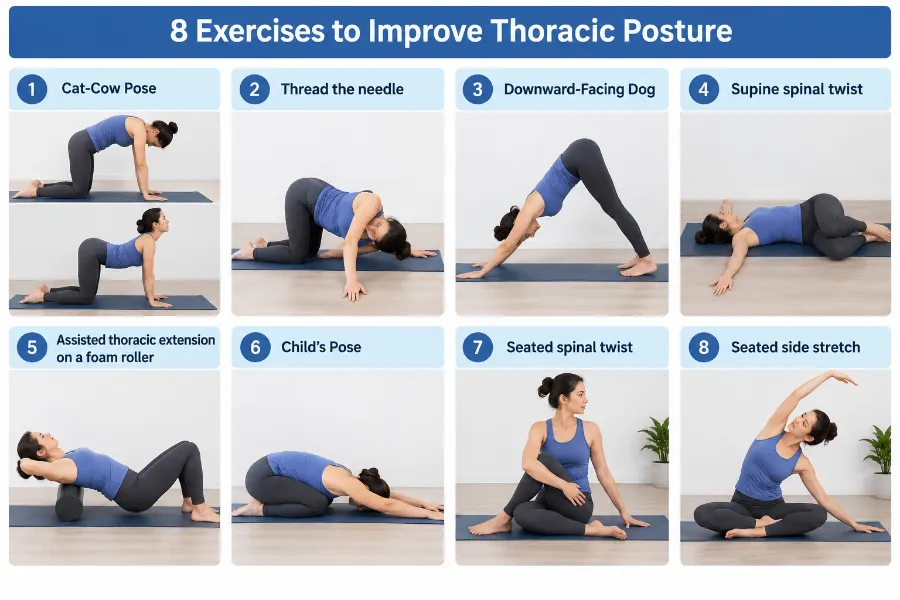
8 exercises to improve thoracic posture:
The following exercises can help you sit with better thoracic posture:
Cat-Cow Pose:
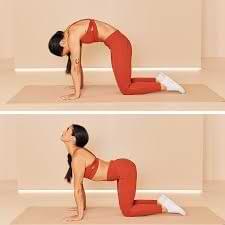
Based in yoga, the Cat-Cow Pose is a popular and powerful fundamental pose used by many other therapies.
- Start on all fours and line your hands with your shoulders and your knees with your hips. Put your spine in a neutral position to begin.
- Exhale so that your mid-back is bent toward the ceiling, your hands are pressed into the floor, and your head hangs.
- Take a breath to bring your spine back to neutral, then keep extending so that your chin rises and you can gaze up. Keep your core muscles strong and raise your chest and tailbone to the sky.
- Try to perform this movement straight. Repeat eight to twelve times, holding for five to ten seconds at the end of each exercise.
If kneeling is not an option, you can do the same exercise standing with your hands on a desk or counter. The surface should be at hip level or lower. You may also perform the exercise while seated in a chair with your hands on your knees.
Tips: Breathe deeply and fully throughout. Be careful not to overarch your lower back when you move into extension.
Thread the needle:
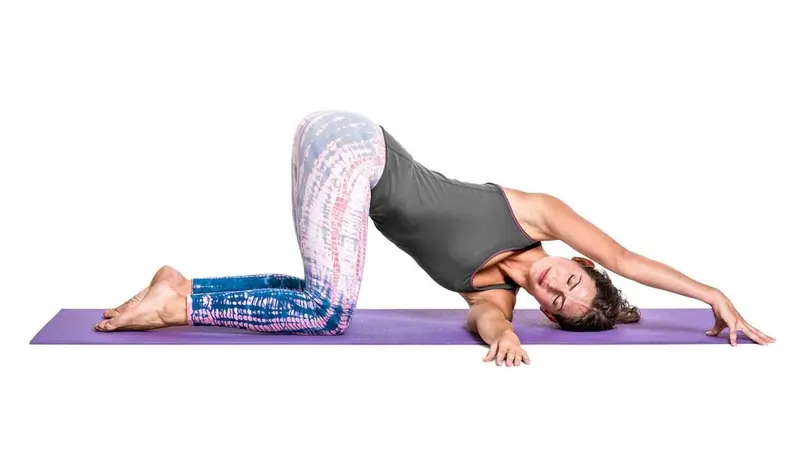
Threading the needle is an excellent exercise for thoracic rotation with a small amount of extension. It is highly effective and less likely to cause lower back rotation because it’s harder to work against gravity while staying on all fours.
- Begin on all fours, connecting your hands to your shoulders and your knees to your hips. Put your spine in a neutral position to begin.
- Inhale, then lift your right hand toward the ceiling with the palm facing away from your body.
- Exhale, then lower your right arm across your body and place it on the ground under your left arm. Let your eyes follow your right arm until your right cheek and shoulder touch the floor.
- Open your shoulder and chest by raising your left arm into the air after threading the needle. Inhale deeply.
- Return to the beginning position by bringing your left arm back down. Repeat the stretch on the opposite side.
- After performing the exercise six to eight times on each side, hold the stretch for five to ten seconds.
Tips: Keep breathing completely into your ribs and move at a modest pace.
Downward-Facing Dog:
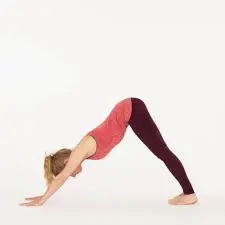
Downward-facing dog is an effective mobility exercise for opening up the front of the shoulders and thoracic extension.
- Start on your hands and knees.
- Inhale, then release the breath by raising your hips off the ground. Create an inverted V by bending at the hips.
- Take a breath and push your chest through your arms and toward your legs.
- Breathe out to move your weight forward, then go back to where you were before.
- For three sets, repeat eight to twelve times.
Tips: Pause at the peak of the position to take a deep breath and feel your spine lengthen. Proceed slowly to moderately. If the stretch is too tough, slightly bend your knees. Alternatively, you can make this stretch easier by resting your arms on a table, chair, or counter.
Supine spinal twist:

The lower back is stretched in a circular movement with this exercise.
- With your legs straight and your arms out at your sides, lie on your back. Your body should resemble a T.
- Raise your right knee to your chest.
- As you release the breath, turn your body to the left and try to lower the inside of your right knee to the ground. Next, turn your head to the right.
- After three seconds of holding this stretch, turn back to the beginning position. After eight to twelve repetitions of this leftward motion, switch sides.
- After 8 to 12 repetitions on each side, hold the stretch for 5 to 10 seconds.
Tips: Consider placing a pillow or rolled-up towel behind your head for additional support.
Assisted thoracic extension on a foam roller:
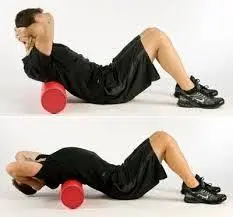
Using a foam roller can help you develop your trunk muscles, lengthen your thoracic spine, and increase the range of motion in your upper body.
- Place the roller flat on the floor as you sit with your back to it.
- When you rest on it, the bottoms of your shoulder blades should touch it. Bend your knees, ground your feet, and support your neck with your hands behind your head.
- Raise your hips a little with your breath. Open your chest and bend back over the roller to create a curved pattern in your upper back.
- Pay attention to sensitive areas as you roll your upper back up and down. Allow your body to soften toward the floor by taking deep breaths into your rib cage. In each posture, take a few breaths.
- Release your hands and extend your arms back and up if your neck feels supported.
- Moving up and down your mid-back, repeat five times for three sets.
Tips: Keep breathing deeply into your ribs. Put your hands, a block, or a hard pillow under your head if the arch position is causing any neck pain.
Child’s Pose:
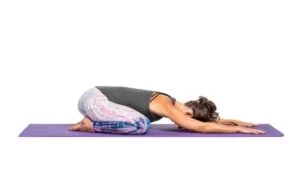
Child’s Pose can help extend your spine and stretch your shoulders, lower back, and chest muscles.
- Get on all fours to start.
- Take a breath, then sit back on your heels as you release it. Put your hands forward and lower your forehead to the floor.
- Feel the stretch from your lower back to your fingers as you gently inhale and exhale.
- For three sets, hold this position for 30 to 60 seconds.
Tips: Use a towel or pillow under your forehead, stomach, or thighs for extra support.
Seated spinal twist:
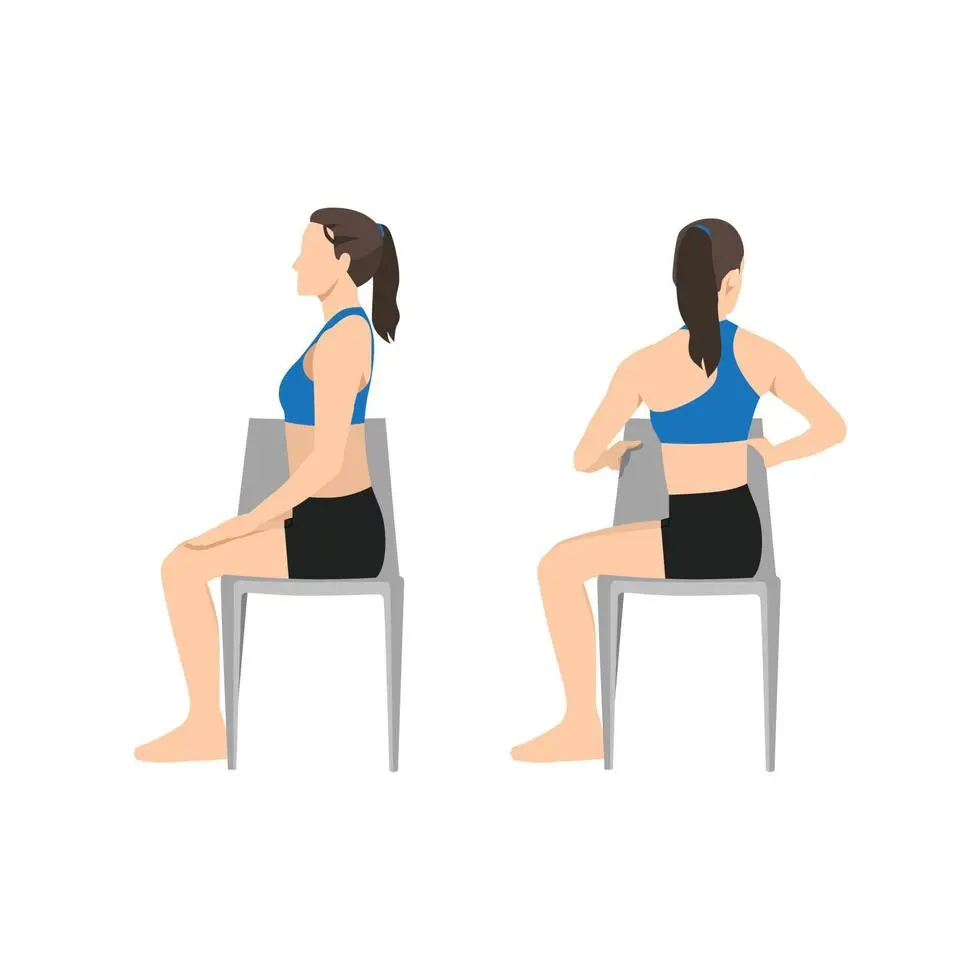
The main action of the thoracic spine, rotation, is the focus of this exercise.
- Lengthen your spine while sitting on a chair with your buttocks at the front edge. Put your hands on your knees.
- Breathe in, then exhale and turn to the left, placing your right hand on your left knee and your left arm behind you. Keep your spine neutral while you rotate, and see yourself getting higher.
- Breathe to return to the center. Repeat oppositely.
- Hold the stretch for five to ten seconds at the conclusion of each of the eight to twelve repetitions of the whole sequence.
Tips: To prevent your pelvis from moving, keep your legs tight. Feel the rotation of your spine originating from above your waist. With each repeat, try to get taller while maintaining your breathing.
Seated side stretch:
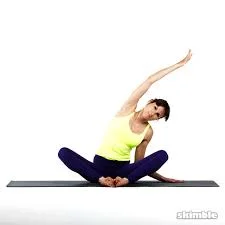
This sitting exercise can bend the thoracic spine in a lateral plane and offer deep stretches for the arms, lats, and lower back.
- With your knees slightly apart and your feet together, take a seat on the edge of a chair. Put your arms by your sides.
- With your palm facing front, raise your left arm to your side and bend it at a 90-degree angle. Hold the seat’s edge at your side with your right hand.
- Raise your left hand over your head and stretch it to the right toward the ceiling while maintaining a straight spine, creating the appearance of an arch. Concentrate on making the left side of your body longer.
- Repeat on the opposite side after inhaling to go back to the beginning position.
- Hold each stretch for five to ten seconds after completing eight to twelve stretches on each side.
Tips: Try to maintain a long spine and hold your breath in your ribs.
How to Avoid Sitting: Ineffective vs. Effective Sitting Postures
While sitting is not naturally harmful, prolonged sitting may be. Here are some tips for safely sitting throughout lengthy workdays and in daily life.
Sit less:
- Whether you’re at home or working from home, sitting can appear like an ideal way to relax on your cozy sofa. However, to avoid the harmful effects of sitting, make sure you walk about, exercise, or just stretch your body.
- If you’re at work, move about as much as you can and change positions.
- For instance, take a break, tiptoe about, and stand up every 20 minutes to stretch your arms and back.
- You could merely utilize a height-adjustable or sit/stand desk and alternate between sitting and standing while working to reach the deadline, even if you’re under pressure!
Don’t Slouch:
To ensure that you are seated with good posture, keep in mind the following advice:
- Instead of hunching over or rounding your shoulders, sit up straight.
- Choose a chair height that will allow you to keep a firm grasp on the floor.
- Don’t cross your legs.
- Make sure your screen is at eye level and stay away from a forward head position.
- To ensure that your neck is positioned correctly, tuck your chin in.
Call for Support:
- When you sit, it’s always helpful to have something to support you.
- This prevents you from getting poor posture or slouching.
Here’s how to support the curvature of your spine when sitting to improve posture:
- You can support your feet by keeping them flat or by resting them on the ground or a footrest.
- Make sure you have a cushion behind your back to support your lumbar curvature.
- Make sure your shoulders are not rounded by sitting up straight and resting your back on the chair’s back.
- Don’t cross your ankles or knees.
Sit Straight:
By ensuring that loads are appropriately and uniformly distributed on your spine, sitting upright lowers your chances of pain, damage, and abnormalities.
Keep in mind this straightforward “S” rule to help you recall the correct seating position:
- From the side, your spine should look like an “S” rather than a slouched “C” curvature.
- If your back makes a forward “C,” you should concentrate on sitting up straight.
- Your spine shouldn’t look like the letter “S” whether seen from the front or rear. It needs to be straight instead.
This typically occurs when you cross your legs or place your elbow on a low armrest.
If your spine is S-shaped and your shoulders are not level, you should focus on sitting upright.
Strengthen Your Core:
- Some of the key muscles that support your lower back and guard against damage when lifting or bending are your “core” muscles.
- While a strong core better supports your spine, a weak core raises your risk of back pain and injury.
- For this reason, you must include a few repetitions of core-strengthening exercises in your routine.
- These facts may be concerning, but when done correctly, back pain rehabilitation offers the answers to all of your issues and is always beneficial.
Using a computer while seated? Make it secure!
You should take special care to keep your back and posture healthy if you are among the many individuals who must spend a lot of time at a desk for work or education.
Here is some advice:
- The monitor should be no more than two inches above your natural line of sight and at arm’s length.
- Customize your place of work by adding backrests, wrist pads, or footrests.
- To switch between sitting and standing, use a standing desk.
- Make use of a knee chair, a yoga ball, or an ergonomic chair.
- Try a variety of keys and wands.
- To avoid reaching, place the mouse and keyboard near one another.
- To prevent forward head posture, place the screen at eye level.
These are crucial tips to ensure that your spine health is not adversely affected by the amount of time you spend sitting.
FAQs:
Which exercise is better for the thoracic spine?
The Cat-Cow Pose and the Foam Roller Thoracic Extension are two of the most basic exercises for improving mid-back extension, rotation, and overall mobility.
What is the most common thoracic spine problem?
Myofascial trigger points, strained muscles, and bad posture are the most common thoracic spine issues.
How can I test my thoracic spine mobility?
You may use basic self-assessments for rotation and extension to measure your thoracic spine (upper back) mobility at home.
How much time does it take to fix bad posture?
Correcting bad posture requires two to six months of chronic work; however, you can start seeing results in two to four weeks.
Can I correct years of bad posture?
Yes, you can fix years of poor posture, but the length of time and degree of improvement will depend on how long the habits have persisted and whether your spine has experienced any long-term structural changes.
What is the root cause of poor posture?
Muscle imbalances, a lack of exercise, poor ergonomics, and repetitive movement patterns that gradually alter how your body supports weight against gravity are all contributing factors to bad posture.
References:
- Clough, J. (2022, October 20). The thoracic wedge: easiest way to improve your posture and flexibility. Sport & Spinal Physiotherapy. https://sportandspinalphysio.com.au/thoracic-wedge-improve-posture-flexibility/
- Bothra, T. (2026, September 17). Thoracic mobility exercises for better posture and spinal health. Habuild. https://habuild.in/strength-training/thoracic-mobility-exercises
- Menzies, R. (2026, March 30). 8 Thoracic mobility exercises for a strong, Pain-Free back. Healthline. https://www.healthline.com/health/fitness/thoracic-mobility-exercises#seated-spinal-twist
- Alessi, J. (2026, April 29). How to Sit with Good Posture and Prevent Thoracic Back Pain. Personal Training Master. https://www.personaltrainingmaster.co.uk/how-to-sit-with-good-posture-and-prevent-thoracic-back-pain/