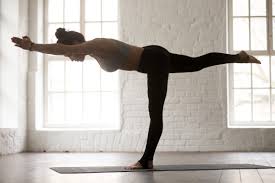
Warrior Pose III (Virabhadrasana III)
Introduction:
Warrior Pose III (Virabhadrasana III) is an advanced standing yoga posture that focuses on balance, strength, and stability. In this pose, the body forms a straight line from the head to the lifted leg while balancing on one foot.
The majority of Warrior Poses fall into the category of Standing and Balancing Asanas and are regarded as challenging. The Warrior Pose is regarded as a Pose of a Warrior because it gives the body a great deal of strength and vitality.
Because it may be used to create variations of Warrior Pose III, it is regarded as a base Pose. Warrior Pose III can be included in flow yoga poses since it increases the body’s energy.
How to Do Warrior Pose III:
- In Warrior Pose III, you start by standing upright with your feet together. lifting and bending the upper body such that it is parallel to the ground.
- Raise your left leg and extend it as far behind you as you can while keeping your body balanced on your right leg.
- Arms should be opened sideways at shoulder level and brought horizontally to the floor.
- Pulling in your stomach and abdominal muscles helps you stay balanced by directing your attention to any location.
- The neck can be positioned slightly higher with the eyes staring forward at a point, or it can stay at shoulder level with the eyes looking down at the floor.
- This pose is also known as the Airplane Pose because it gives the impression that the body is prepared for flight.
Benefits of Warrior Pose III:
If the body and breath are properly connected, each asana has its own advantages for the body and the mind. Additionally, Warrior Pose III offers a unique method of strengthening and repairing the body.
Physical (Anatomical) Benefits:
- It adds shape and strengthens the muscles in the legs.
- Additionally, it strengthens the shoulders, hips, and arms.
- When the body is calm, it helps maintain the strength and straightness of the shoulders and molds the chest.
- Increases posture and standing position because most of us place a lot of weight on our ankles and heels when standing.
Health Benefits:
- Help in toning and contracting the abdominal organs.
- Since balancing requires a lot of energy, it aids in attention.
- It improves digestion and maintains the equilibrium of the body’s fire since it uses a lot of strength from the tummy and abdominal muscles.
- Thinking clearly is made possible by controlling thoughts while maintaining concentration on body balance.
Contraindications of Warrior Pose III:
Warrior Pose, as its name implies, requires the body to resemble a warrior’s. And to do this, you must understand the power of the body. It is necessary to take specific precautions:
- This asana should definitely not be performed by someone with high blood pressure because the body needs to be focused to stay balanced. A learner with high blood pressure might not benefit from the abrupt blood flow to their brains.
- A learner with back issues should either stay away from this or follow the right, step-by-step instructions.
- Some people have trouble looking down and may get migraines, which might make them giddy.
- A learner should also avoid this pose if they have spondylitis. As a result, these are some of the circumstances to consider.
Modifications of Warrior Pose III:
The Asana has only a few changes, which are as follows:
- Since the pose necessitates balancing the body on one leg and foot, if the learner finds it extremely challenging, a straightforward method is to face the wall and use its support while bending forward to look at the wall.
- A sturdy chair can be used as support to help you balance your body.
- However, make sure the chair or stool is nearly tall enough to be held at shoulder height.
- When your pupils are in the pose, you might support them by holding one arm and encouraging them to use the other arm to balance their body.
- Another way to balance your body is to place your full leg behind you on a table or stool that is at hip level.
Warrior Pose III Breath Awareness:
Yoga is more about breathing to gain strength from inside and heal the organs that are tested during the pose than it is about doing Asanas to gain strength from the outside. The breathing in this Warrior III Pose is as follows:
- While standing, connect with your body, breathe deeply, and relax your body.
- Inhale, elevate your right foot as far behind you as you can, stretch your arms in front parallel to the floor, gaze down, and place your left foot forward until your feet are comfortably apart.
- Stretching the body wide at both extremes, fully exhale while in the position.
- By concentrating on a single place and inhaling deeply, the mind should establish a connection with the body. Tighten your abdomen and leg muscles as you release the breath.
- Breathe out slowly, raise your upper body, release your leg from behind, and stand with your feet comfortably apart to end the pose. As soon as possible, control your breathing and let your body relax.
- Before moving on to the opposite side and leg, take a few deep breaths.
Conclusion:
Like all of its variations, Virabhadrasana III improves balance, focus, and physical strength. You can safely and successfully increase your strength and alignment by following these tips.
This pose improves mental stability and clarity while toning important muscular regions like the calves, hamstrings, shoulders, and core.
FAQs:
In the Warrior 3 Pose, which muscles are used?
Warrior III develops your core and enhances your balance. This position strengthens your quadriceps and ankle while stretching the back of your thigh (hamstring) and buttocks (glute) on your standing leg.
In Sanskrit, what is the Warrior 3 pose?
To put it mildly, Warrior III (also known as Virabhadrasana III in Sanskrit) is a difficult yoga practice. It will test your strength, flexibility, balance, and ability to concentrate. Among the standing balance yoga poses, it is one of the hardest.
What advantages does Virabhadrasana Warrior Pose offer?
By doing this yoga pose, you can improve your side-to-side rotation and straighten your back. The warrior Pose lowers the risk of back pain, spasms, hunching back, and other conditions by activating the muscles surrounding the spine.
What are Warrior 3’s contraindications?
Warrior 3 does, however, have some contraindications that should be taken into account, just like any physical activity. This position should be approached gently by anyone who has leg, hip, or spine injuries or balance problems. Additionally, because Warrior 3 stresses the abdomen, pregnant women should avoid doing it.
What spiritual advantages can Warrior 3 offer?
The Warrior postures represent our own spiritual warrior against the issues we face on a daily basis, such as pride, ego, ignorance, erroneous perceptions, and a distracted mind. Warrior III will give you strength through focus and balance, embodying the ferocious power of a warrior.
Is the Warrior 3 position challenging?
One of the hardest yoga poses is Warrior 3/Virabhadrasana 3. It’s difficult to square off the hips in this pose if you’re a beginner. Now, why is alignment so important in yoga? Because it lowers the chance of injury and enables our body to sense the stretch in the muscle where it should occur.
Is Warrior 3 a step in the right direction?
Standing and one-legged, Warrior III Variation (front Bend) is an intermediate-level yoga pose. In addition, Warrior III Variation (forward bend) incorporates strength, stretch, balance, and forward bend.
Is Warrior 3 able to alleviate anxiety?
It tones the abdominal muscles, boosts stability and balance, and energizes the entire body. Mentally, it enhances attention, memory, and concentration. Emotionally, it fosters courage, self-assurance, and groundedness, all of which are useful in overcoming fear and anxiety.
Will Warrior 3 open your heart?
This version of Warrior III is vibrant and enlightening. To stimulate the back body, bend the elbows into a “goalpost” or cactus form rather than extending the arms forth or back. It improves balance and core control while strengthening the shoulders and upper back.
Which muscles are used by Warrior 3?
The entire rear side of the body, including the shoulders, hamstrings, calves, ankles, and back, is strengthened with Warrior III. Additionally, it strengthens and tones the muscles of the abdomen. Warrior III enhances full-body coordination, posture, and balance.
Is Warrior 3 a position for beginners?
Few poses demand as much mindfulness (which is required to maintain body extension and strength) as Virabhadrasana III, even though the Warrior 3 initially seems to just test one’s balance. This posture allows the intermediate learner to practice the complete body, even though it is not regarded as a starting Pose.
Why is Warrior 3 so challenging?
You become aware that Warrior 3 (Virabhadrasana III) is a full-body pose once you’re in it. The arms demonstrate how both strength and flexibility are required to find ease in a position, the abdominal and back body work together to maintain a strong and straight spine, and the standing leg functions just as much as the elevated one.
References:
- Yoga Journal. (2025b, February 28). Warrior 3 Pose. https://www.yogajournal.com/poses/warrior-iii-pose/
- Warrior III – Virabhadrasana III – The Yoga Collective. (2022, February 3). The Yoga Collective. https://www.theyogacollective.com/poses/warrior-3-virabhadrasana-3/
- Warrior Pose III Yoga(Virabhadrasana III)| Yoga sequences, benefits, variations, and Sanskrit Pronunciation | Tummee.com. (n.d.). Tummee.com. https://www.tummee.com/yoga-poses/warrior-pose-iii
- Yogitim. (2024b, December 10). Warrior 3 (Virabhadrasana III): Instructions, Tips & Benefits – Yoga Basics. Yoga Basics. https://www.yogabasics.com/asana/warrior-iii/