Sukhasana (Easy Pose)
Introduction:
Sukhasana (Easy Pose) is a simple cross-legged seated yoga posture that promotes relaxation, stability, and mindfulness.
As the name suggests, Sukhasana (Easy Pose) combines Sthira, which means “Steadiness,” with Sukha, which means “Pleasure.” These two Sanskrit terms form the cornerstone of a good yoga practice. It’s a seated pose for beginners.
As a result, a basic yoga pose can be incorporated at the start of an asana practice, offering stable support to the upper body with easy leg crossing, an erect back, and a neck that can be kept in the most relaxed state for a few hours to practice subsequent aṅgas, such as meditation and pranayama. Additionally, if done at the conclusion of a yoga practice, this great pose can help regulate breath and the mind.
It is primarily a Hatha yoga pose that is taught in practically every type of yoga session. It improves the state of calm and tranquility by strengthening the back, gradually opening the hips, groin, and outer thighs, stretching the knees and ankles, and realigning the spine. As a result, it’s a fantastic pose that may be incorporated into a restorative yoga routine to reduce tension and anxiety. Everyone can begin their yoga practice with this fundamental pose, which leaves you feeling awake and at ease.
Since sukhasana variations can be generated from sukhasana, sukhasana is regarded as a base pose. Sukhasana is regarded as a yoga warm-up that gets the body ready for more challenging positions and movements.
How to Do Sukhasana?
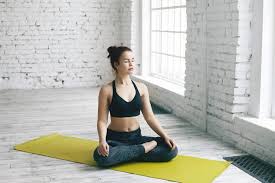
- Maintain a straight spine while sitting on the ground or the mat with your legs extended in front of you. With the elbows bent, place the hands on the thighs. Here, take a few breaths and establish a connection between the breath and your body. Take a breath and fold your legs.
- Under the left thigh, fold the right foot. Additionally, tuck the left foot beneath the right thigh.
- Instead of crossing your legs at your ankles, do so at the mid-shins. The cross of your shins and your pubic bone should line up.
- Maintain a slight flexion of your ankles so that your feet are perpendicular to the floor and on their outside borders.
- Your toes should face forward, and your foot soles should face the sides.
- Maintain a straight back, neck, and head. Gently draw your abdomen higher and inward.
- Depending on the pranayama being practiced, place the hands on the knees in any mudra. Alternatively, if this position is merely for relaxation, place the palms one over the other at the navel.
- Keep your attention on the navel, the center of your body, and raise your back, spine, and belly inward and upward. Stay as long as the pranayama practice requires or as long as your body feels comfortable.
- Stretch your legs out in front of you, slowly relax your back, enter Dandasana, and take a few deep breaths if needed.
Benefits of Sukhasana:
The following are some advantages of practicing Sukhasana, a very grounding pose:
- Stretches, Strengthens, Lengthens: Sukhasana, which involves sitting with a straight back, opens the hips, groin, and abductors (outer thigh muscles), stretches the knees and ankles, and strengthens the back and easily crossed legs.
- Chest, Diaphragm, and Breath: In Anjali Mudra, the hands widen the shoulders, opening the chest. The diaphragm and lungs are actively used, which enhances breathing and affects balance and stability in the position.
- Awareness and Focus: Swami Sivananda asserts that a person must be able to sit in one of the meditative poses for three hours straight without experiencing any shaking. In order to establish a mind-body connection and maintain the body in a constant position with minimal effort and changes, Easy Pose works wonders while keeping the body awake and attentive. This position promotes mindfulness. Perfect harmony between the body and mind makes it easier to concentrate and go past any challenges in a practitioner’s life in order to accomplish a desired outcome.
- Organs and Stimulation: Crossing one’s legs when sitting decreases blood flow to the legs but increases blood flow to the reproductive and digestive systems, which feed and stimulate the organs.
- Emotions and Balance: A grounded posture calms the nervous system and promotes mental clarity and balance. The mind calms while the body is sthira, or still. As a result, it lays the groundwork for learners to fulfill their spiritual goals and gets them ready for more advanced practices like Dharana and Dhyana.
- Others: Easy pose is a common, fundamental, and foundational contemplative pose that supports pranayama and meditation sessions. It also provides insightful advice on how to live in harmony with our prana, or energy. By fostering sthira and sukha with Easy Pose, learners who are psychologically overwhelmed or have had a demanding day can restore a smooth rhythm in their body and mind. Therefore, it’s a beginner-level position that may be incorporated into a yoga sequence for everyone, including professionals, teenagers, housewives, athletes, and everyone else.
- Preparatory pose: Sukhasana is a foundational position that gets the body and mind ready for the many twisting, forward, and backward bending, and lateral stretches that are done with the legs easily crossed.
Contraindications of Sukhasana:
While teaching the Easy Pose, yoga instructors should consider the following safety measures, even if it’s a calming pose:
- Physical Strength and Weak Body: learners should avoid sitting on the floor if they have arthritis in their knees, hips, or feet, especially if they are elderly. A pillow can help those who have a slipped disc, spinal problems, poor digestion, a slight backache, or knee pain, but they shouldn’t hold the pose for longer than five minutes. In order to avoid having trouble sitting with their legs crossed for extended periods of time, learners with tight hips can practice the hip-opening sequence.
- Injury and Surgery: Before engaging in this exercise, learners who have had injuries to their knees, hips, lower back, hamstrings, ankle, or who have had any abdominal, knee, or hip surgery should consult their physicians or therapists.
- Lack of Body-Breath Connection: It can be challenging for learners, particularly those who are new to yoga, to establish the body-breath connection while sitting upright with their spines straight. The practice may cause pain and interfere with the flow of energy if body-breath linkages are not well understood. As a result, pupils can practice with their backs to a wall.
- Others: Because Easy Pose might squeeze the sciatic nerve, learners with sciatica-related sciatic nerve pain should avoid it. The technique can be followed with an open mind by those who struggle with anxiety.
Sukhasana Breath Awareness:
Any yoga pose that is connected to pranayama or meditation requires breathing. Sukhasana also functions best when the inhalation and exhalation are performed while paying attention to the movement of the spine.
- Inhale: Place your feet behind the opposing thighs, bring your legs close to you, and cross them at the shins.
- Breathe out once the legs are in this posture.
- Take a breath and place your outer wrists on the nearest knee, joining the tips of your thumb and index finger. Stretch out and point down with the remaining three fingers.
- Exhale: Lift your back and position your hips so that you are sitting on your sit bones.
- Inhale: Shut your eyes, relax your body, and fully relax your eyes.
- Exhale: Bring the chest out in front and raise the entire upper body. Pull in your stomach as much as you can without experiencing any tension.
- Inhale and Exhale: Start the body’s gentle movement, bringing the body free with each breath. As you exhale, widen the spine and move upward, pushing the upper back above and the lower back inside. Don’t push them; instead, sink your knees and legs deeply into the ground. Repeat this, relax your facial muscles, and gradually bring your body and mind focus to the Pranayama you are performing while in this yoga pose.
Conclusion:
Sukhasana, also known as Easy Pose, is a straightforward but effective sitting pose that encourages inner calm, mental clarity, and relaxation. It helps lower tension, relax the mind, and get the body ready for meditation by promoting good posture and steady breathing.
Sukhasana is a great posture for both novice and seasoned practitioners since it can help with focus, hip flexibility, and general well-being.
FAQs:
Does Sukhasana help with back pain?
Reduces Pain in the Lower Back
Sukhasana strengthens the muscles that support the lower back and promotes good spinal alignment. In addition to preventing the slumping that frequently results in back pain, sitting with a straight spine relieves pressure on the lumbar area.
What safety measures are in place for Sukhasana?
Physical Strength and Weak Body: learners should avoid sitting on the floor if they have arthritis in their knees, hips, or feet, especially if they are elderly. A pillow can help those who have a slipped disc, spinal problems, poor digestion, a slight backache, or knee pain, but they shouldn’t hold the pose for longer than five minutes.
What is Sukhasana’s other name?
The Easy Pose is another name for Sukhasana. This fundamental cross-legged sitting yoga pose, sometimes referred to as the “Pose of Happiness” or “Pleasant Pose,” is meant to be comfortable during meditation and pranayama.
Can we eat and then sit in Sukhasana?
When eating, the sukhasan position increases blood flow to all of the digestive organs. The Sukhasan position somewhat reduces blood flow to the legs, allowing more blood to reach all of the abdominal organs.
How much time should I spend in Sukhasana?
Shut your eyes and inhale deeply multiple times, paying attention to how the breath enters and exits your body. As long as it feels comfortable, hold the pose for one to five minutes. Gently uncross your legs and return to a seated position to release the pose.
Who ought to stay away from Sukhasana?
Although Sukhasana (Easy Pose) is generally safe, it should be avoided or adjusted if you have recently had lower back, hip, or knee operations or injuries. Important contraindications include severe knee pain, sciatica, slipped discs, or arthritis; in order to prevent stressing joints, props like cushions or a chair are frequently needed.
Is Sukhasana beneficial for high blood pressure?
Sukhasana offers relaxing qualities that help reduce stress and ease mental tension. This, in turn, aids in lowering high blood pressure due to its ability to alleviate stress. Sit on the ground with your legs stretched out using your yoga mat, a carpet, or a cushion.
Does Sukhasana help with back pain?
Sukhasana strengthens the muscles that support the lower back and promotes good spinal alignment. In addition to preventing the slumping that frequently results in back pain, sitting with a straight spine relieves pressure on the lumbar area.
What disadvantages does Sukhasana have?
Physical Strength and Weak Body: learners should avoid sitting on the floor if they have arthritis in their knees, hips, or feet, especially if they are elderly. A pillow can help those who have a slipped disc, spinal problems, poor digestion, a slight backache, or knee pain, but they shouldn’t hold the pose for longer than five minutes.
Which disease does Sukhasana treat?
Sukhasana improves posture and guards against back pain by aligning the hips, shoulders, and spine.
What are the advantages of Sukhasana?
Sukhasana, often known as “Easy Pose,” is a fundamental sitting yoga pose that encourages mental clarity, relaxation, and grounding. It offers advantages like better posture, less stress, more hip flexibility, and stronger back muscles. It entails sitting cross-legged with an erect, extended spine. It’s perfect for meditation.
References:
- Sukhasana Yoga(Easy Pose)| Yoga sequences, benefits, variations, and Sanskrit pronunciation | Tummee.com. (n.d.). Tummee.com. https://www.tummee.com/yoga-poses/sukhasana
- Yoga Journal. (2025b, March 14). Easy pose. https://www.yogajournal.com/poses/easy-pose-3/
- The Art of Living. (2023, September 22). Easy pose (Sukhasana). Art Of Living (United States). https://www.artofliving.org/us-en/easy-pose-sukhasana
- Allen, W. (2025c, November 19). Sukhasana. https://myyogateacher.com/yoga-asana/sukhasana
- Benefits of Sukhasana (Easy Pose) and How to Perform it. (n.d.). https://www.tataaia.com/blogs/health-and-lifestyle/health-benefits-of-sukhasana.html