Sirsasana (Headstand Pose)
Introduction:
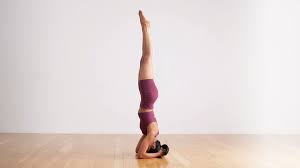
Salamba Sirsasana, also known as Headstand Pose (Sirsasana), is an advanced inverted yoga pose that requires power in the head, neck, elbows, and core. This pose is primarily found in Hatha Yoga Sequences and requires mindfulness of the breath, body, and mind.
Only skilled yoga instructors should lead the practice because improper posture and body alignment can result in injuries. Students may hold the pose for 30 seconds at first, and with consistent practice, they can progressively extend that time to 1-2 minutes. Using the strength from the core, shoulders, chest, upper abdomen, and hips, students should take their time learning to balance and maintain stability in the posture.
The upper body, neck, abs, back, and legs are all strengthened by the headstand pose. Additionally, it is part of the Ashtanga Second Series Nadi Shodhana Intermediate Series and the Ashtanga Advanced Series. You become conscious of the flow of energy while you hold the Headstand Pose because gravity pulls oxygen-rich blood to your brain.
The pituitary gland is stimulated, and the mind is revitalized by the blood flow. It relieves tension in the body and psyche by relaxing the blood vessels. As long as breath awareness is used, the pose also balances all seven chakras from Root to Crown.
Beginners can execute Half Headstand Pose on Forearms or One Legged Headstand Pose before Headstand Pose in order to acquire the necessary strength. Yoga instructors can also allow students to practice the pose with the help of a nearby wall at first. Once they gain confidence, they can then perform the Salamba Sirsasana without assistance.
However, it is always advised to stay away from the wall because the right muscles might not be used, making it impossible to reap the true benefits. The pose has been dubbed the “King of all asanas” due to its many advantages. Teenagers can be taught the position because it’s beneficial to start early. Headstand also improves memory because oxygen-rich blood flows to the brain, sharpening it.
Since variations of sirsasana can be created from this pose, sirsasana is regarded as a base pose. Sirsasana can be used in flow yoga sequences since it increases the body’s energy.
How to Do Sirsasana:
Let’s methodically start this pose to make it simple and comfortable:
- Lie down close to a blanket that has been spread out four times on the ground. Make sure the space between your elbows on the floor is no greater than your shoulder by placing your forearm in the middle of the blanket.
- To create a cup-shaped palm, interlock the fingers all the way up to the fingertips.
- Place only the crown of the head on the blanket by bringing the knees closer to the head so that the rear of the head contacts the cupped palms.
- Once the head position is secure, take a few deep breaths, focusing on your complete body, and check your alignment.
- Now that the body is ready, elevate the knees off the ground by drawing the toes up to the head. Feel the weight on your shoulders and neck. Stay in this position while progressively bringing your shoulders and neck closer to the floor.
- Breathe out a few times, then gently swing off the floor and raise your legs off the ground while bending your knees. Swing such that both feet are off the ground at the same time.
- Keeping your entire body perpendicular to the floor, extend your legs and stand on your head. Maintain balance by ensuring that your thighs, hips, and spine are in alignment.
- Breathe deeply and gently to help you relax your entire body. If it’s comfortable, close your eyes and maintain attention.
- With practice, the majority of the body weight will shift towards the head, and you will experience less stress at the neck and shoulders. Initially, the full weight would be felt at the neck and shoulders, including the elbows.
- In this last pose of Salamba Sirsasana, concentrate on balancing the body with breathing and pulling in the stomach to tighten the abdominal muscles, strengthening the spine, and ensuring that the imbalance is lessened.
- Once you’ve been in the final posture for a comfortable amount of time, return by flexing your knees and sliding them down to the floor in reverse order. Then, release your neck, shoulders, and head from the floor.
- Return to a supine position on your back, take a few breaths to prepare your body for Savasana, and then take a few breaths of Sarvangasana to release any tension in your shoulders and neck while practicing Sirsasana.
Benefits of Sirsasana:
Headstand Pose is a full-body strength exercise that has the following advantages:
- Stretches, Strengthens, and Lengthens: Headstand pose lengthens the spine in the inversion pose while strengthening the legs, back, upper body, and core. Because of the friction they encounter when supporting the body weight, the elbows grow stronger. When all of the pressure is applied to the cranium, it strengthens. This pose strengthens the biceps and triceps and applies pressure to the arms and shoulders when held for a while. The abdominal muscles are strengthened by the strain on the belly. The brain’s blood vessels may become stronger as a result of the blood flowing to the brain, perhaps preventing migraines and other related problems.
- Flexibility and Range of Motion: One important aspect of this pose is the improvement of leg flexibility. In particular, the hamstring muscles become more flexible, which helps prevent sciatica inadvertently.
- Chest, Diaphragm, and Breath: Headstand Pose creates room for the back by raising the chest and rib cage. Because of the pressure in the chest area and its opening, the lung’s capacity is expanded, and the surrounding muscles are strengthened. As a result, the respiratory system’s performance is also enhanced.
- Awareness and Focus: Headstand Pose is a powerful inversion yoga pose. This pose compels the practitioner to draw inward and become aware because of the inversion. Given the difficulties of the position, it might be challenging at first to bring focus, but with consistent practice, awareness can be attained, and the increased flow of oxygenated blood to the brain enhances mental performance. It may function as an inverted pranayama yoga pose with the mindfulness of deep breathing, and one may also develop a sense of spirituality and self-worth.
- Alignment and Posture: The Headstand Pose strengthens the shoulders, arms, and back muscles while also strengthening the core. Raising the legs in the air lengthens the spine, and the straight-line posture of the back allows for alignment correction.
- Energizing, De-stressing, and Relaxing: The brain is kept cool and composed by the oxygenated blood flow. When the adrenal glands are inverted, they are compressed, which results in the production of stress hormones. As a result, stress can be prevented by the adrenal glands operating at their best. Because of the posture’s characteristics and slower breathing, it is a cooling pose.
- Stimulation, Organs, Systems, and Circulation: By flipping onto the head, the Headstand Pose activates the lymphatic system, which is in charge of eliminating toxins from the blood. Because the pose’s reversing gravity pull washes out the biological fluids built up in the legs, students who must stand all day due to their jobs or even those who spend a lot of time sitting still can benefit from avoiding leg edema. By using the opposite effects of gravity to move trapped materials, remove undesirable gases, and improve the stomach organs, the headstand pose aids in better digestion. The brain becomes cold and memory crisp as a result of the blood rushing down to the brain. Blood rich in nutrients and oxygen also reaches the eyes, allowing them to perform at their best and helping prevent macular degeneration and other eye-related problems.
- Others: One excellent pose for supplying the head and scalp with nutrient-rich blood is the Headstand pose. Hair follicles absorb the necessary nutrients from blood, which results in improved health and quality of the hair. The flow is lifted when the pose is maintained upside down because the skin of the face hangs in the opposite direction. Additionally, the face glows naturally due to oxygen-rich blood flow. Teenagers who are enrolled in school benefit from the position because it helps them remember things better. Teens who lead modern lives tend to be distracted. Regular practice of the pose can undoubtedly help one gain confidence. As a result, it gets rid of worry, stress, and dread.
- Preparatory Pose: Headstand Pose can serve as a preparatory pose for more difficult or complex poses, such as Bound Hands Headstand Pose D, Bound Hands Headstand Pose B, Headstand Pose III, and Headstand Pose Wide Legs, where students learn to use their arms, shoulders, and core muscles in addition to developing their balance.
Contraindications of Headstand Pose:
Headstand position is an extremely difficult and advanced position that, for safety reasons, should only be done in front of a qualified and experienced yoga instructor. The position takes a lot of effort and practice. A small amount of negligence could result in harm. Yoga instructors should consult the following contraindications to avoid them and execute the posture safely:
- Injury and Surgery: Students who have injuries to their elbows, ribs, arms, or shoulders should avoid using the headstand pose. Additionally, caution should be exercised in the event of any injury involving the hamstring or neck muscles. In a similar vein, students recovering from recent or previous surgeries about the aforementioned regions ought to avoid the pose. Additionally, as this is an all-body yoga pose, students with internal surgeries will not be able to complete it.
- Strengths and Weaknesses of the Body: Those with very weak upper bodies, vertigo, severe headaches, migraines, or illnesses cannot perform the Headstand Pose. The pose should be strictly prohibited for children under the age of seven since their skulls are not entirely fused or sufficiently hardened, making them vulnerable to harm. The pose can be dangerous if a pregnant woman slips or falls; she should avoid it. Due to the unbearable pressure on their eyes, students with glaucoma are unable to perform the position. To prevent cramps, women should avoid the pose during the first few days of their period. Students at the beginner level who are unconfident and unbalanced might try the One-Legged Headstand Pose Against the Wall to start.
- Lack of Breath Awareness: As you hold the Headstand Pose for a long time, your breath becomes deeper and slower. As a result, the position should be avoided by anyone who has asthma or has no understanding of breath awareness. They should only practice the position in accordance with the aforementioned safety precautions after learning this from a qualified yoga instructor.
Modifications of Headstand Pose:
- When doing it for the first time, start by using the wall support by placing your palms two to three inches away from the wall. Using the corner wall is preferable because it provides support from both sides and keeps the back straight rather than inclined, which puts additional strain on the neck.
- One leg at a time can be used if one is still working on balancing this pose. First, use the wall to gently walk both legs toward your chest. Next, raise just one leg and work on your balance for a time before moving on to the other leg. After you’ve been doing this for a while, move on to the following stage when you feel more confident.
- You can also go halfway, bend both knees, lift your feet off the ground, and balance here a few times before moving on to the following step once your confidence has grown.
- If you are comfortable with your shoulders and neck, use a buddy to assist you in raising your legs.
- Use blankets and cushions to provide adequate support for the neck, shoulders, and elbows, or try this on a very firm mattress.
- If the body is not prepared to keep the position for an extended period of time after raising the legs, start with a few seconds of practice and then progressively increase it to a few more. Understand the body at all times and be conscious of how the body and brain communicate.
- Make sure to develop awareness since ignoring any bodily pain, particularly in the neck, shoulders, or head, will only worsen the situation when the posture is released.
Headstand Pose Breath Awareness:
- Inhale while bringing the body near to your palms, then bring the crown of your head close to your palms as you exhale.
- Take another breath, raise your knee off the mat or blanket, and then release it by raising your spine and lower back. In this pose, take a few breaths and, as you exhale, move your shoulders and neck closer to the back of your head.
- Now take a breath, move with your toes close to your chest, tighten your shoulders and knees as you exhale, and prepare your body for the position.
- At this point, unwind, pay attention to the pressure at the top of your head and neck, and become conscious of your body while you breathe.
- Breathe deeply, raise both feet off the mat or floor, and bring your legs to a 90-degree angle as you exhale. Make sure your back is straight, and your legs are in line with your neck, hips, and chest.
- Take a position when you exhale after expanding your body upward and applying extra pressure to your hips as you inhale. At this point in the position, start breathing slowly, maintain your composure, and smile to give your brain more new blood.
- Breathe out as you release the posture, bringing your feet near the floor one leg at a time. Then, take a breath, relax your entire body, and descend into Child posture to ease your head, shoulders, and neck.
Conclusion:
A powerful yoga practice that improves strength, balance, and mental clarity is sirsasana, often known as headstand. Frequent practice strengthens the shoulders and core, increases focus, and improves blood flow to the brain.
To prevent injury, it should be practiced under appropriate instruction and alignment. Sirsasana can be a very helpful addition to your yoga practice if you practice it consistently and patiently.
FAQs:
Is a headstand beneficial to your back?
To strengthen your upper spine and shoulder blades, try these two headstand variations. Try these two Headstand and SIrsasana modifications to lengthen your spine, develop your upper back and scapulae muscles, and soothe your nervous system without putting any strain on your head or neck.
Does Sirsasana improve cognitive function?
Shirshasana practice improves focus, memory, and mental alertness by increasing the brain’s oxygen-rich blood flow. The pituitary and pineal glands are stimulated by the increased blood flow, which controls hormones that affect mood and cognitive functions.
Can a patient with high blood pressure perform Sirsasana?
This position may increase head pressure and strain the cardiovascular system, so people with uncontrolled high blood pressure or cardiac disorders should also avoid it. Due to changes in blood pressure and balance, pregnant women should avoid inversions like Sirsasana, particularly after the first trimester.
Do headstands prevent aging?
Iyengar Yoga’s sirsasana, or headstand, reverses the weight away from the organs to aid in anti-aging. overall vitality for a more robust, healthy individual.
When should headstands be avoided?
Avoid the yoga headstand position if you have severe migraines or intense headaches. Additionally, people with neck and shoulder diseases should avoid doing headstands until their injuries have fully healed. This yoga pose should be avoided in all inversions by those who have high blood pressure.
What would happen if you performed a daily headstand?
In addition to potentially boosting blood flow to the head, promoting mental attention, and supporting circulation, performing a headstand (Sirsasana) on a daily basis can greatly enhance core strength, balance, and upper-body strength. Although there is a chance of neck injury, it may also improve digestion and lessen water retention in the legs.
Does Sirsasana help people with sciatica?
Try Janu Sirsasana (Head-to-Knee Forward Bend) instead of Paschimottanasana (Seated Forward Bend) since sciatica frequently affects only one side. Bring the leg in toward the groin on the side you are not suffering from sciatica if the pain originates from the lower back.
What would happen if I performed Shirshasana daily?
Numerous advantages of headstand (Sirsasana) include increased blood flow to the brain, improved mental clarity and attention, strengthened upper body and core, decreased stress, and increased vitality. Additionally, it encourages improved balance and posture.
What is Sirsasana’s age limit?
Headstands are dangerous for kids under the age of seven; they should be avoided. Women who are menstruating or pregnant should stay away from headstands and Sirsasana. This pose should be avoided by those with aberrant artery bulges.
What disadvantages does the headstand have?
Because headstands (Sirsasana) put a lot of strain on the neck and cervical spine, they can be dangerous if done incorrectly. Risks of ruptured discs, stroke from artery damage, eye pressure, headaches, and the possibility of falling are among the main drawbacks.
Does Sirsasana improve the health of the spine?
Janu Sirsasana’s forward-bending action strengthens and aligns the spine. By lengthening the spine, the mild stretch improves posture and lessens compression between vertebrae. A healthy, upright posture is supported, and back pain can be avoided by strengthening the spinal muscles.
Are headstands beneficial for lymphatic drainage?
A headstand significantly restructures the body’s circulation, energy, and consciousness. The lymphatic system, which circulates fluid through movement and gravity rather than a pump like the heart, is physically supported by headstand.
References:
- Sirsasana Yoga(Headstand pose)| Yoga sequences, benefits, variations, and Sanskrit pronunciation | Tummee.com. (n.d.). Tummee.com. https://www.tummee.com/yoga-poses/headstand-pose
- Yoga Journal. (2025f, March 24). Supported headstand. https://www.yogajournal.com/poses/supported-headstand/
- Google Search. (n.d.). https://www.google.com/search?q=Sirsasana+(Headstand+Pose)&oq=sir&aqs=chrome.0.69i59j69i57j69i59j0i67i512i650l2j69i61l3.2482j0j7&sourceid=chrome&ie=UTF-8
- Rakshak, & Rakshak. (2024c, August 23). Shirshasana (Head Stand pose) | Benefits of Sirsasana – The Art of Living. The Art of Living – Making Life A Celebration. https://www.artofliving.org/in-en/yoga/yoga-poses/sirsasana-headstand-pose