Sartorius Muscle Exercises: Stretches, Strengthening & Rehab Guide from a PT
Have you ever felt a sudden pinch at the front of your hip when crossing your legs, or an annoying ache along the inner side of your knee after a run?
If so, your sartorius muscle might be trying to tell you something.
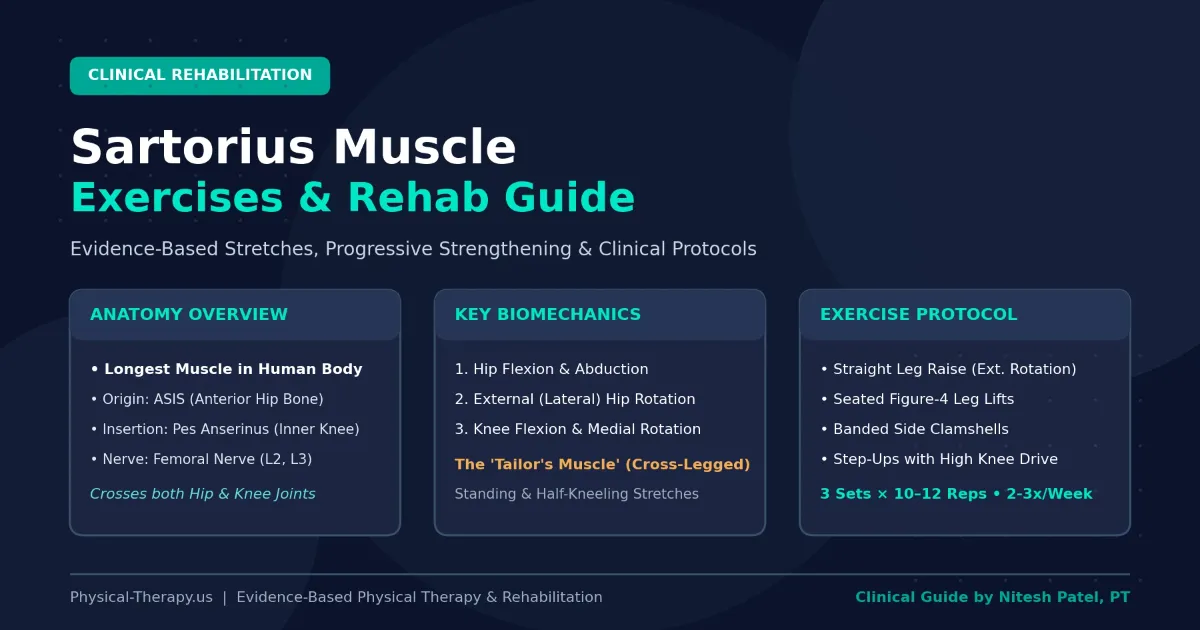
As the longest muscle in the human body, the sartorius rarely gets as much attention as the hamstrings or quadriceps—until it gets tight, irritated, or strained. In this guide, we’ll break down what this muscle actually does, why it gives people trouble, and the exact stretches and strengthening exercises we recommend in our clinical practice to get you moving pain-free again.
What Does the Sartorius Muscle Actually Do?
The name sartorius comes from the Latin word sartor, meaning “tailor.” Historically, tailors sat cross-legged on the floor all day to sew hemlines—a posture that relies heavily on this specific muscle.
To understand why this muscle matters, it helps to know how it runs through your leg:
- Where it starts: At the front point of your hip bone (the Anterior Superior Iliac Spine, or ASIS).
- Where it travels: It winds diagonally across the front of your thigh like a seatbelt.
- Where it attaches: At the inner side of your shin bone just below the knee (a tendon junction called the Pes Anserinus).
Because the sartorius crosses both your hip and your knee, it helps you perform four distinct movements at once:
- Lifting your knee upward (hip flexion)
- Moving your leg outward (hip abduction)
- Rotating your thigh outward (external rotation)
- Bending your knee (knee flexion)
Every time you step into a car, climb a flight of stairs, climb over an obstacle, or kick a soccer ball, your sartorius is working behind the scenes.
3 Gentle Stretches for a Tight Sartorius Muscle
When the sartorius becomes chronically tight—often from long hours of sitting or repetitive running—it can pull on both the front of the pelvis and the inner knee.
Clinician Tip: When stretching, you should feel a pleasant, gentle tension—never a sharp pain. Breathe smoothly and never bounce.
1. The Standing Heel-to-Glute Stretch (With a Twist)
Most people know the standard quad stretch, but with a small tweak in leg angle, you can target the sartorius directly.
- How to do it:
- Stand tall near a wall or sturdy chair so you don’t have to worry about balance.
- Bend your right knee and grab your ankle behind you with your right hand.
- Gently pull your heel toward your glute while keeping your knees close together.
- The Sartorius Tweak: Instead of just pulling backward, gently bring your knee slightly behind you and angle your thigh slightly inward (internal rotation).
- Keep your ribs down and your core braced—don’t let your lower back arch.
- Prescription: Hold for 25–30 seconds. Switch sides and repeat 3 times per leg.
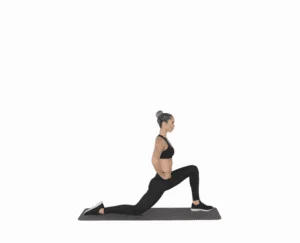
2. Half-Kneeling Hip Flexor & Reach
This is one of our favorite clinic stretches because it opens up the entire anterior hip chain while protecting your lower back.
- How to do it:
- Kneel on a comfortable mat with your left knee down and your right foot flat on the floor in front of you (like a marriage proposal position).
- Tuck your tailbone slightly under you (a posterior pelvic tilt) to wake up your glutes.
- Shift your hips forward a few inches until you feel a stretch along the front of your left hip.
- Reach your left arm straight up toward the ceiling, then gently lean your torso toward the right side.
- Prescription: Hold for 30 seconds. Do 3 sets on each side.
3. Classic Seated Butterfly Stretch
This simple stretch gently releases tension along the inner thigh and groin where the sartorius passes.
- How to do it:
- Sit tall on the floor. Bring the bottoms of your feet together and let your knees relax outward to the sides.
- Hold onto your ankles or feet, keep your chest proud, and hinge forward slightly from your hips.
- Avoid rounding your upper back—focus on letting gravity open up your hips.
- Prescription: Hold for 30 seconds. Repeat 3 times.
4 Effective Exercises to Strengthen the Sartorius
Stretching alone isn’t always enough. If a muscle feels constantly tight, it’s often weak and struggling to handle daily loads. Here is how to build resilient strength:
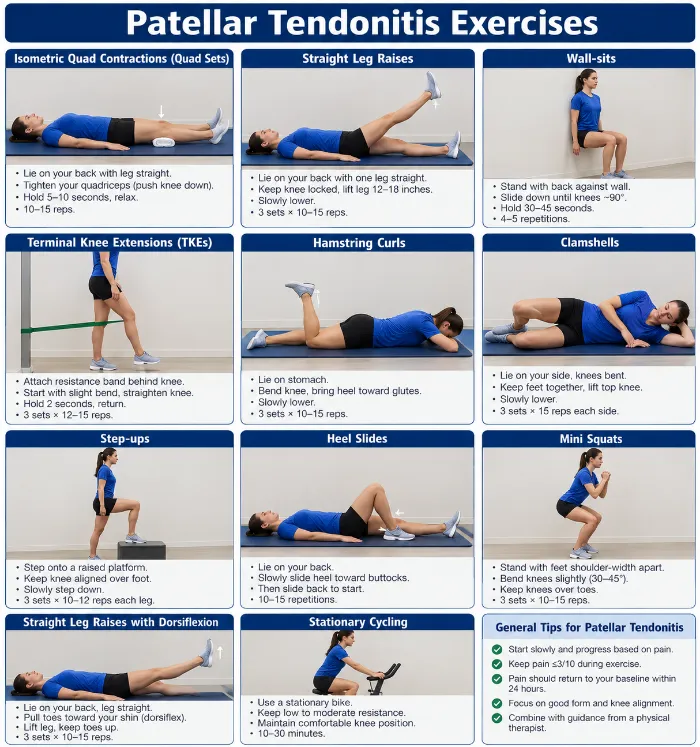
1. Lying Straight Leg Raise with External Rotation
By simply turning your toes outward, you shift the workload from your general quads directly onto the sartorius.
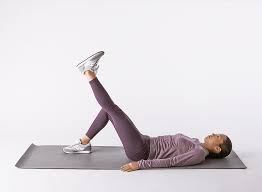
- How to do it:
- Lie flat on your back on an exercise mat. Bend one knee with your foot flat, and keep the working leg extended straight.
- Rotate your working leg outward so your toes point diagonally away from your body (about 45 degrees).
- Lock your knee and slowly lift your leg about 10–12 inches off the mat.
- Pause for a count of two at the top, then lower down slowly with control.
- Repetitions: 3 sets of 10 to 12 reps per side.
2. The Seated “Figure-4” Lift
This exercise mimics the exact multi-plane action of the sartorius against gravity.
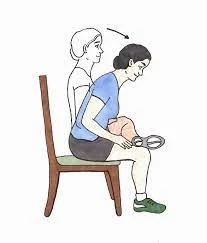
- How to do it:
- Sit upright in a supportive chair with your feet flat on the ground.
- Pick up your right leg and rest your right ankle across your left knee in a “Figure-4” position.
- From this cross-legged position, actively try to lift your entire right leg an inch or two off the supporting knee using your hip muscles.
- Hold for 1 second, then lower down smoothly.
- Repetitions: 3 sets of 10 to 12 reps per leg.
3. Side-Lying Clamshells with Band
Clamshells strengthen the hip abductors and external rotators that support healthy pelvic stability.
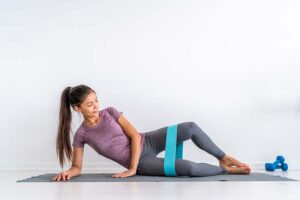
- How to do it:
- Lie on your side
- Now keep your hips and knees bent at around 45 degrees.
- Use a light loop resistance band above your knees as seen in the image.
- Keep your heels glued together.
- Now gradually open your top knee like a clamshell.
- Ensure your pelvis stays stacked vertically—do not roll your hips backward as you open the knee.
- Squeeze your gluteal muscles at the top and lower gradually.
- Repetitions: 3 sets of 12 to 15 reps on each side.
4. Controlled Step-Ups with a High Knee Drive
This functional exercise bridges the gap between basic rehab and everyday movements like walking or running.
- How to do it:
- Stand in front of an aerobic step or sturdy box (around 6 to 8 inches high).
- Step firmly with your right foot, pressing through your whole foot to stand tall.
- Drive your left knee straight up toward hip height in a controlled marching motion.
- Step down Gradually
- Reset before the next rep.
- Repetitions: 3 sets of 10 reps per leg.
Common Sartorius Problems: What You Should Know
1. Sartorius Muscle Strain
- Who gets it: Runners, soccer players, martial artists, and anyone performing sudden sprints, kicks, or directional changes.
- What it feels like: A sharp twinge or tender ache along the upper inner thigh or near the front crease of the hip.
- Recovery timeline: Mild strains usually settle down in 1–2 weeks with relative rest and gentle movement. Moderate to severe strains require 4–8 weeks of progressive rehab.
2. Pes Anserine Bursitis / Tendonitis
Because the sartorius shares a tendon attachment at the inner knee with two other muscles (the gracilis and semitendinosus), repetitive friction can irritate the nearby bursa. If you have tenderness about 2 inches below the inside of your knee joint, this may be the culprit.
Frequently Asked Questions
Can a tight sartorius cause knee pain?
Yes. Because the sartorius inserts into the inner shinbone (pes anserinus), excessive tightness or overuse can cause irritation, tenderness, and localized swelling at the inner knee.
What is the best sleeping position for a sartorius strain?
Sleeping on your back with a pillow under your knees takes tension off the hip flexors. If you prefer side sleeping, place a supportive pillow between your knees to keep your hips in neutral alignment.
When should I see a physical therapist?
When should I see a physical therapist?
If you cannot bear weight comfortably, notice significant swelling or bruising, or experience groin/hip pain that doesn’t improve after a week of rest and gentle stretching, consult a licensed physical therapist for an in-person assessment.
Can a tight sartorius cause knee pain?
Yes. Because the sartorius inserts into the inner shinbone (pes anserinus), excessive tightness or overuse can cause irritation, tenderness, and localized swelling at the inner knee.
What is the best sleeping position for a sartorius strain?
Sleeping on your back with a pillow under your knees takes tension off the hip flexors. If you prefer side sleeping, place a supportive pillow between your knees to keep your hips in neutral alignment.
When should I see a physical therapist?
If you cannot bear weight comfortably, notice significant swelling or bruising, or experience groin/hip pain that doesn’t improve after a week of rest and gentle stretching, consult a licensed physical therapist for an in-person assessment.
Summary & Next Steps
Your sartorius muscle works hard with every step you take. Incorporating these simple stretches after long sitting sessions and adding targeted strengthening twice a week can keep your hips flexible, your knees stable, and your stride pain-free.
- Author: Nitesh Patel, PT (Physical Therapist)
- Website: Physical-Therapy.us
- Medical Disclaimer: The information provided in this article is for educational purposes only and should not replace personalized medical advice. Always consult a licensed healthcare professional before starting any new exercise routine.
Clinical References
- Moore, K. L., Dalley, A. F., & Agur, A. M. (2018). Clinically Oriented Anatomy (8th ed.). Wolters Kluwer.
- Magee, D. J. (2014). Orthopedic Physical Assessment (6th ed.). Elsevier Health Sciences.
- National Library of Medicine (NCBI). Anatomy, Bony Pelvis and Lower Limb, Sartorius Muscle.