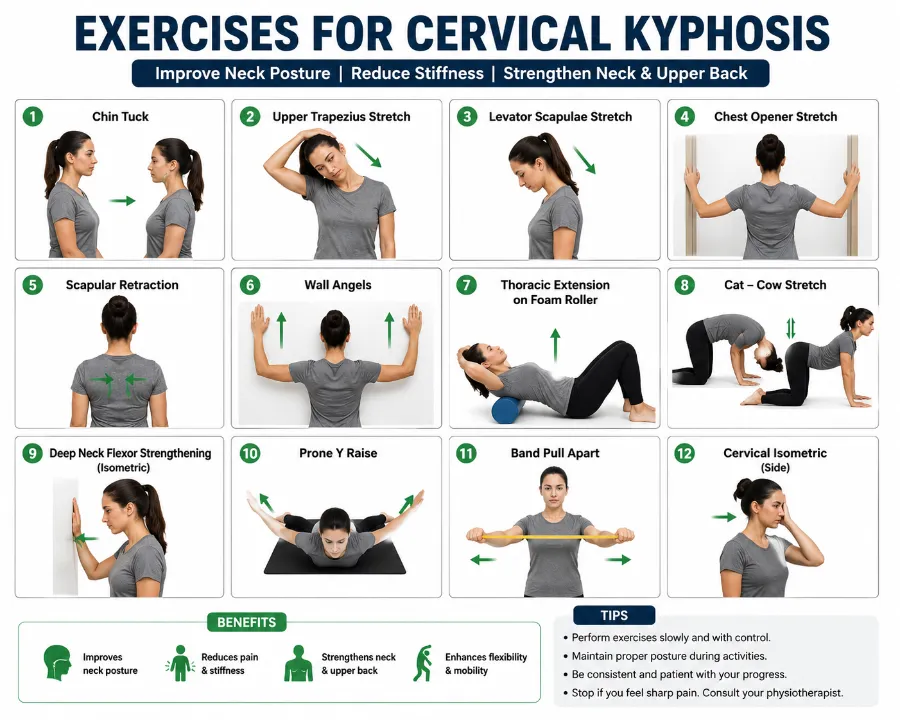
Top Exercises For Cervical Kyphosis
Introduction:
Cervical kyphosis is an abnormal forward curvature of the neck (cervical spine) that can lead to poor posture, neck pain, stiffness, muscle fatigue, headaches, and reduced range of motion. It may develop due to prolonged poor posture, degenerative changes, trauma, congenital conditions, or weakened neck and upper back muscles. If left untreated, cervical kyphosis can affect spinal alignment and interfere with daily activities.
Targeted exercises are an important part of managing cervical kyphosis. They help strengthen the deep neck flexor muscles, improve upper back and shoulder stability, stretch tight muscles, and restore proper spinal alignment. Regular exercise can reduce pain, improve posture, increase flexibility, and enhance overall neck function.
The exercises in this guide are designed to be safe and effective for most people with mild to moderate cervical kyphosis. For the best results, perform them consistently while maintaining proper form. If you experience severe pain, numbness, tingling, weakness, or dizziness during exercise, stop immediately and consult a healthcare professional or physiotherapist.
With patience and regular practice, these cervical kyphosis exercises can help improve posture, reduce discomfort, and support a healthier, stronger neck over time.
Five benefits of cervical kyphosis exercises
Exercises for cervical kyphosis are important for improving neck posture and reducing pain. Your spine and general well-being can benefit from a variety of focused stretches and strengthening exercises.
Improves Alignment and Posture
Frequent workouts retrain the neck and upper back to maintain a natural bend while strengthening postural muscles. This reduces the forward head position that is frequently linked to cervical kyphosis.
Reduces Stiffness and Pain
Tension and pain are reduced by strengthening workouts and stretching tense neck and chest muscles. This can significantly increase comfort and movement over time.
Strengthens the muscles in the neck and upper back.
The deep neck flexors, rhomboids, and trapezius muscles are targeted by chin tucks, wall angels, and scapular movements. The cervical spine is better supported by stronger muscles, which stops further curvature alterations.
Increases Range of Motion and Spinal Flexibility
Cat-cow stretches and thoracic spine mobilizations are examples of mobility exercises that assist in releasing tight joints and improving upper back and neck mobility.
Promotes Long-Term Spinal Health
Cervical kyphosis may be prevented from getting worse with regular practice and good ergonomics, which also lowers the chance of developing chronic problems. Additionally, it enhances confidence in day-to-day tasks, balance, and general posture.
In just a few weeks, including these exercises into routine produces significant effects and enhances additional interventions like posture correctors and ergonomic changes.
Top 10 Cervical Kyphosis Exercises
Exercises that target cervical kyphosis can help strengthen the muscles that support your spine, improve posture, and ease neck pain. Regularly performing these exercises can increase flexibility, reduce stiffness, and stop the cervical spine from further bending.
Chin tuck exercise
How it helps: People with cervical kyphosis frequently have weak deep neck flexor muscles, which are targeted by chin tucks. By strengthening these muscles, forward head posture is reduced, and the head is pulled back into correct alignment. Frequent practice can help avoid pain from extended screen time or slouching, as well as reduce stiffness in the neck.
How to do it:
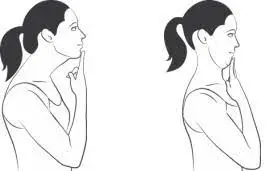
- With your shoulders relaxed, sit or stand straight.
- Without stretching your neck forward, gently pull your chin back to form a double chin.
- Hold for five to ten seconds.
- Repeat ten to fifteen times while relaxing.
- To ensure appropriate form and alignment, use a mirror.
Advice: Avoid tilting your head up or down and keep looking forward. Instead of emphasizing speed, concentrate on slow, gradual motions.
Wall Angels
How it helps: Wall angels are a great way to stretch the chest muscles that become tense due to bad posture and to improve the mobility of the thoracic spine. They address the rounded shoulder posture frequently associated with cervical kyphosis by strengthening the upper back muscles, which aid in pulling the shoulders down and back.
How to do it:
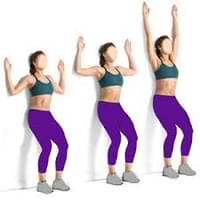
- Place your feet slightly away from a wall and keep your back flat.
- Gently press your head, shoulders, and lower back against the wall.
- Position your arms at a 90-degree angle to form a “goalpost.”
- Raise your arms over your head slowly, then lower them again.
- Repeat ten or twelve times at a leisurely pace.
Advice: Take your time and concentrate on sensing the activation of your upper back muscles. Your lower back should be softly placed against the wall rather than stretched.
Prone Y-T-W Lifts
How it helps: The rhomboids and trapezius muscles, which support the upper back and shoulders, are the focus of these exercises. By strengthening these postural muscles, kyphotic curvature is reduced, shoulder mobility is increased, and the cervical and thoracic spines are kept in appropriate alignment.
How to do it:
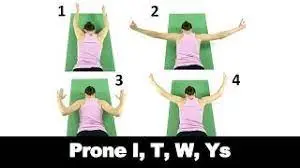
- On a mat or stability ball, lie face down.
- Raise your arms into the Y position, which is a 45-degree angle with your arms straight over your head.
- Raise your arms into a T shape with your arms at shoulder level and out to the sides.
- Raise your arms into a W shape, with your elbows at your sides and your arms bent at a 90-degree angle.
- After holding each posture for two to three seconds, let go.
- For each position, repeat 8–10 times.
Advice: Concentrate on tightening your shoulder blades. Avoid craning upward and maintain a neutral neck position. This is a mild but powerful workout when performed consistently.
Resistance band rows
How it helps: The rhomboids, trapezius, and posterior deltoids are among the upper back muscles that are strengthened with resistance band rows. By stabilizing the cervical spine and lowering tension, strengthening these muscles helps prevent forward shoulder posture.
How to do it:
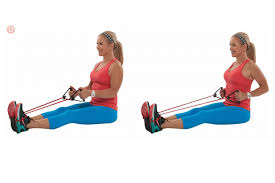
- A resistance band should be fixed at chest level.
- With the palms facing inside, grasp the band with both hands.
- Squeeze your shoulder blades together as you pull the band toward your torso.
- Release slowly and go back to where you were.
- Do this 12–15 times.
- Avoid shrugging your shoulders and maintain a straight back.
Advice: Throughout the exercise, keep your spine neutral. Instead of shrugging your shoulders up, concentrate on the back muscles. As strength increases, start with a mild resistance band and gradually raise the tension.
Neck side bends
The lateral neck muscles, such as the scalenes and upper trapezius, are stretched during side bends. Forward head position frequently causes these muscles to tighten, resulting in stiffness and pain. Increasing lateral flexibility reduces cervical vertebral strain and aids in balance restoration.
How to do it:
- With your shoulders relaxed, sit up straight.
- Keeping the other shoulder down, tilt your head toward one shoulder.
- Hold for 15 to 20 seconds.
- On the opposite side, repeat.
- Do three to five reps on each side.
Advice: Take your time and don’t push yourself to stretch. Never pull forcefully; instead, use your hand to slowly deepen the stretch.
Shoulder blade squeezes
How it helps: Squeezing the shoulder blades targets the mid-back muscles, which are frequently weak in individuals with cervical kyphosis. By keeping the shoulders from curving forward and lessening neck pain, strengthening these muscles helps in maintaining good posture.
How to do it:
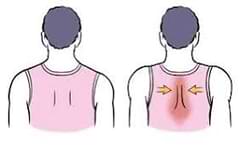
- With your shoulders relaxed, choose a tall seat or stand.
- Squeeze your shoulder blades together as tho you were reducing a little ball.
- Hold for five to ten seconds.
- Repeat ten to fifteen times after releasing.
- Don’t shrug your shoulders.
Advice: Don’t shrug your shoulders. To increase muscular activation, concentrate on slow, deliberate motions.
Cat-Cow stretch
How it helps: The cat-cow stretch increases spinal flexibility, especially in the thoracic and cervical areas. It is useful for preventing and treating kyphosis because it eases stress, increases circulation, and supports healthy spinal curvature.
How to do it:
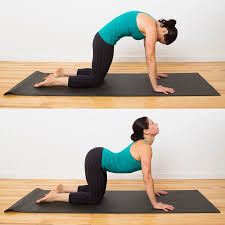
- Begin on your hands and knees, placing your knees behind your hips and your wrists beneath your shoulders.
- Inhale: raise your head and buttocks while arching your back (Cow).
- Exhale by rounding your back and tucking your pelvis and chin (Cat).
- Repeat ten to twelve times slowly and deliberately.
Advice: Align your breathing with your activity. Keep your neck in a comfortable range of motion and avoid pushing it too much.
Doorway Pectoral Stretch
How it helps: Cervical kyphosis is made worse by tight chest muscles that pull the shoulders forward. This stretch improves posture and reduces stress by opening the chest and allowing the shoulders and upper back to realign naturally.
How to do it:
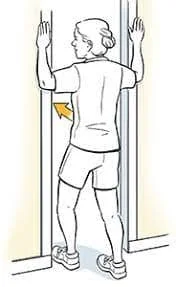
- Place your hands shoulder-high on the frame of a doorway.
- Lean carefully into the doorway after taking one step forward.
- For 20 to 30 seconds, hold.
- Do this two or three times.
- Avoid arching your lower back and maintain a relaxed posture.
Advice: Avoid arching your lower back and maintain a relaxed shoulder position. To improve the stretch, concentrate on taking slow, deep breaths.
Neck retractions
How it helps: Neck retractions support appropriate cervical alignment and improve deep neck flexors. This reduces strain that causes cervical kyphosis and lowers forward head position.
How to do it:
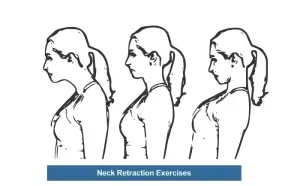
- With your shoulders relaxed, sit up straight.
- With your eyes forward, gently tilt your head back straight.
- Hold for five seconds.
- Repeat ten repetitions while relaxing.
- Don’t tilt your head up or down; instead, make short, gradual movements.
Advice: Make small, careful movements. Don’t raise or lower your head. Proper alignment may be ensured by doing this exercise in front of a mirror.
Upper trapezius stretch
How it helps: Tight shoulder and neck muscles that pull the head forward are targeted by the upper trapezius stretch. Frequent stretching promotes improved posture, increases neck mobility, and relieves tension.
How to do it:
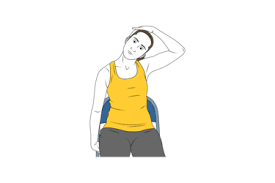
- Take a seat or stand upright.
- Bring your ear closer to your shoulder by tilting your head to one side.
- Gently deepen the stretch using your hand.
- Hold each side for 15 to 20 seconds.
- Do this two or three times.
- Breathe deeply and keep your shoulders relaxed.
Advice: Avoid lifting the opposing shoulder and maintain a relaxed posture. For best results, move gently and take deep breaths.
Conclusion
Exercises for cervical kyphosis can play a significant role in improving neck posture, reducing pain and stiffness, and enhancing overall spinal health. By consistently performing strengthening, stretching, and posture-correction exercises, you can help restore better alignment, increase flexibility, and support the muscles that keep your neck and upper back in a healthy position.ion
Remember that improvement takes time and consistency. Perform the exercises with proper technique, avoid movements that cause sharp pain, and combine your exercise routine with good posture habits during work, study, and daily activities. See a physiotherapist or other trained healthcare provider for an examination if your symptoms are severe, becoming worse, or along with numbness, weakness, or balance issues.
With regular practice and the right guidance, cervical kyphosis exercises can help you move more comfortably, improve your posture, and maintain a healthier, pain-free neck in the long term.
FAQs
What exercises should be avoided with kyphosis?
Exercises that result in significant axial pressure, excessive twisting under load, or spinal flexion (forward rounding of the upper back) should be avoided if you have kyphosis. Exercises that aggravate the forward flexion and increase the risk of spine fractures include regular crunches, sit-ups, toe touches, and lat pulldowns behind the head.
Can kyphosis be corrected by exercise?
Actually, by strengthening the muscles in the upper back and stretching the tight muscles in the chest, exercise may greatly improve and correct postural kyphosis, or sitting kyphosis. Although physical therapy helps manage pain and function, exercise alone cannot completely restore structural kyphosis, which is caused by bone abnormalities such as Scheuermann’s disease or fractures.
Which muscles are weak if you have kyphosis?
Kyphosis is an imbalance in which the front muscles of the chest tighten while the muscles of the upper back and neck become weak and extended. The shoulders and spine are dragged into a forward, rounded posture by this imbalance.
What are the signs of kyphosis?
Mild back stiffness, a slightly rounded or hunched upper back, and shoulder or spine muscular fatigue from straining to remain upright are frequently the initial symptoms of kyphosis. Additionally, you could see unequal shoulder heights or a small forward tilt of your head.
References
- Hero, B., USA. (2025, October 5). Top 10 cervical kyphosis exercises to reduce pain. Back Hero USA. https://backherousa.com/blogs/news/cervical-kyphosis-exercises?srsltid=AfmBOopE2KSxspDMQWi-ydrpIQORj7OBqqhAGCmzyOmhTfJwB-GqbhQA
- Freutel, N. (2023, May 26). Kyphosis exercises to treat a rounded upper back. Healthline. https://www.healthline.com/health/exercise-fitness/kyphosis-exercises#causes-and-treatment
- Cool, M. (2025b, December 23). Exercises to relieve cervical kyphosis pain. Vitalphysio. https://www.vitalphysio.ca/exercises-to-relieve-cervical-kyphosis-pain/