Salabhasana (Locust Pose)
Introduction:
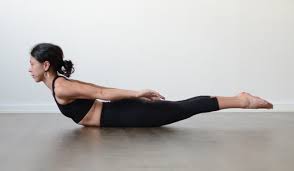
Salabhasana (Locust Pose) is a gentle yet powerful back-strengthening yoga posture that involves lifting the chest, arms, and legs off the ground while lying prone.
Salabhasana means “grasshopper” in Sanskrit, as the name suggests. The body will therefore resemble that of a grasshopper in this position. The Sivananda and Iyengar Schools of Yoga have mentioned and practiced this pose.
It takes power and energy to execute this dynamic position since it moves against gravity. The learners rest on their stomachs in this position, simultaneously raising their upper and lower bodies off the ground.
In addition to automatically tightening the back and buttocks, this pose activates the parasympathetic nerves in the lower back. The position strengthens the arms, legs, pelvis, and back of the body. It facilitates the release of pelvic tension. As everyone knows, keeping the body balanced depends on having a strong pelvis.
Once the learner is at ease performing forward bend yoga postures and has developed adequate spinal flexibility, the yoga instructors can introduce this backbend asana. The back and abdominal postural muscles are toned in this pose.
Beginners can incorporate Locust Pose into mild hip or heart openers to add the extra benefit of strengthening and working the core muscles. Teens and new mothers can therefore embrace this variety. Pelvic muscle strengthening is crucial, particularly for older adults and postpartum women. Accurate balance and a healthy bladder are associated with a sturdy pelvis.
In order to facilitate appropriate blood circulation throughout the entire lower body, particularly the legs, beginning at the base of the spine, a yoga instructor may want to examine the many variations. learners may also be advised to practice Locust Pose, Wide Legged Chariot Pose Arms Out Flow before the full Locust Pose, as this pose is frequently recommended by physiotherapists for patients with severe lower back pain.
The back muscles are strengthened by this pose. There are other versions of Locust Pose; some are simpler than this, like Chariot Pose Variation Forearms or Locust Pose Elbows, while others are more difficult, like Superman Pose or Locust Pose Hands Behind Head, to name a couple.
In addition to preparing learners to practice additional backbends, including Dhanurasana (Bow Pose), Upward Facing Dog Pose, Downward Facing Dog Pose Flow, and Urdhva Dhanurasana (Wheel Pose), this pose serves as the basis for deeper backbends. Lumbar and cervical spinal disorders are on the rise due to the difficulties of the new era of desktop work. Additionally, by applying pressure to the stomach organs, this pose improves the digestive system and can treat flatulence, constipation, and indigestion.
Since salabhasana variations can be developed from it, salabhasana is regarded as a base position. Salabhasana can be used in flow yoga sequences since it increases the body’s energy.
How to Do Salabhasana?
The detailed directions for practicing Locust Pose are provided below:
- First, perform Reverse Corpse Pose (Advasana) while lying prone on the mat. The mind is ready for the flow when the body is at ease.
- With the palms facing the ceiling, place the hands behind the body in this position. With your forehead lying on the mat, remain in this position for a few breaths.
- Inhale at this point and lift both legs off the waist. Maintain your knees straight and legs slightly apart at a 40-degree angle to the floor, or as comfortable for you. Raised from the pelvic region, the lower body rests on the upper abdomen. Lift the chin and body off the ground at the same time while maintaining head engagement. Stretch your arms close to your body from behind. Breathe out. The feet are not on the mat. Breathe out.
- Maintain the position to the best of your ability. The learner’s chest constriction causes the breath to be short, but breath awareness keeps them in the position. The pupil should refrain from holding their breath in this pose.
- Let go and relax in Makarasana, or crocodile pose.
Benefits of Salabhasana:
There are numerous advantages to the prone back-bending exercise known as the Locust Pose, which are detailed below:
- Lengthens, Stretches, and Strengthens: From Reverse Corpse Pose Head. The muscles in the spine, core, legs, hips, and upper torso are used when the learner elevates their body off the ground sideways. The quadriceps, hamstrings, psoas, ankles, and shin muscles are all stretched in Locust Pose (Salabhasana). It strengthens the lower back and knees. It aids in toning the thighs and glutes. Belly fat is burned, and the muscles are toned by the pressure applied to the abdomen. Although the pupil may feel that this posture calls for a full-body effort, the lower back is where the pressure is felt the greatest. Strength in the shoulders, arms, and forearms is necessary to lift the legs, since a body with weak shoulders cannot do so. Additionally, the entire back of the body and the core will be noticeably stretched, which will improve and maintain the flexibility of the spine.
- Flexibility & Range of Motion: By conditioning the legs and strengthening the lower and mid-back, agility is improved. Because of the prone positioning, this pose, which involves a mild backbend, is possible. Overall, the stretch improves muscular flexibility and strengthens the joints. The learner can eventually advance from Locust Pose to other positions such as Locust Pose Bound Hands, Locust Pose Hands Behind Head, and others of a similar nature.
- Chest, Diaphragm, and Breath: It’s well recognized that one of the most crucial components of the Locust position is breathing; teachers should always tell their learners to inhale deeply before entering the position. Despite being a chest opener, this position causes constriction because it puts pressure on the lower chest. The backbend causes the shoulder blades to abduct, opening the upper and mid-back. Breathing is aided by this motion. This pose strengthens and tones the diaphragm. The heart rate rises when this pose is maintained with breath awareness for a while, providing a cardiovascular exercise.
- Awareness and Focus (Concentration): During an inhale, the pupil raises both the upper and lower body simultaneously. Aligning with the position is made simple by this breath awareness. Breath awareness and core strength help attain the balance required for the position.
- Alignment & Posture: Locust Pose is a popular backbend exercise that, if mastered, prepares the arms, legs, shoulders, chest, back, and core for more difficult poses that need total body power. Regular practice of this pose will teach you the proper alignment needed to effortlessly deepen your backbends. But to develop this kind of strength, awareness of not only the breath but also how the body’s many parts stay in harmony with one another is crucial. As an illustration, concentrate on aligning the feet to the hips, the hips to the shoulders, the head to the shoulders, and the hips to the externally rotated, equally engaged shoulders by bringing the shoulder blades near to one another.
- Energizing, De-stressing, and Relaxing: Locust Pose is a lovely full-body energizer exercise that helps to fully settle the mind and concentration for a short while. The degree of pelvic bracing is one of this practice’s most distinctive features. It leaves a much-balanced state of mind and acts as an instant positive energy booster. It eases the stiffness in the neck, legs, and lower back. The joints and muscular tensions from the fingertips to the toes are relieved as a result of the symmetrical body extension. It also relieves tension by stimulating the autonomic nervous system, especially the parasympathetic areas of the neck and pelvis. The pupil feels lively, at ease, and light after practicing this pose.
- Organs and Circulation and Systems: The thyroid glands and digestive organs are stimulated by this pose. The lumbar spine and core are strengthened as a result of the strain on the abdomen. The full-body stretch improves blood flow throughout the entire body. The thyroid glands become active as a result of the neck strain. It maintains the proper balance of thyroxine production, which is essential for both the health of the bones and joints and the effective operation of the reproductive system. This pose’s primary advantage is that it activates the lower back’s parasympathetic nerves. Both the nerve system and brain activity are calmed by this pose.
- Therapeutic, Healing, and Diseases: Yoga instructors use the Locust Pose (Salabhasana) as a therapeutic pose to treat osteoporosis, diabetes, thyroid imbalance, and lower back pain. This pose has therapeutic benefits such as relieving constipation, gas, and moderate sciatica. Women with menstrual issues can practice this asana to support healthy organ function because it places a lot of pressure on the lower abdomen. It aids in the treatment of uncomfortable period problems and irregular period syndrome.
- Balance and Emotions: This pose activates the Root (Muladhara), Sacral (Swadisthana), and Solar Plexus (Manipura) Chakras. These three fundamental chakras provide emotions, creativity, stability, and balance. This is beneficial for developing one’s individuality. When the Throat (Vishuddha Chakra) and Heart (Anahata Chakra) are activated, a person becomes self-assured, giving, and develops communication clarity.
- Others: Adults, teenagers, women, athletes, and swimmers can all practice this flow. It helps swimmers improve their swimming by giving them the strength to tone their back and muscles. This position is beneficial for deep-ocean divers. This pose helps the pupil become acclimated to breathing while constricting their chest, which is crucial underwater.
- Preparatory Pose: Because it strengthens the lower back and core, which are fundamental, the Locust Pose (Salabhasana) serves as a precursor pose for all back-bending asanas.
Contraindications of Salabhasana:
Before introducing or teaching the Locust Pose, there are a few safety measures to be aware of. These are as follows:
- Injury and Surgery: learners should not practice this posture if they have injuries to their ankles, knees, hips, pelvis, rib cage, or shoulders. learners should take extra measures or simply avoid the practice if they have recently undergone surgery or had surgery years ago that included any portion of the body, such as the ankles, knees, hips, shoulders, spine, or any abdominal organs or the heart.
- Lack of Body-Breath Connections: When entering and exiting the position, learners should be conscious of and knowledgeable about breath synchronization. Mention the reasons this is crucial, one of which is to prevent strain or damage.
- Physical Strength and Weak Body: This posture tightens the entire body from the hip to the feet, which may cause difficulty for learners with severe sciatica. This procedure should be avoided by someone who has severe menstrual issues or a prolapsed uterus because the strain on the abdomen may be detrimental. Although there is a heart opening, the prone posture is unsuitable for those with asthma because it places pressure on the chest and abdomen. This pose should be avoided by learners who have peptic ulcers since it puts strain on the abdomen. blood pressure must exercise caution. The major arteries close to the neck are compressed by the light chin pressure. The major arteries close to the neck are compressed by the light chin pressure. Depending on their capacity, they can do it for brief periods of time. This is not an asana that heart patients should do. Because their muscles are weak, patients with peptic ulcers and abdominal hernias shouldn’t practice this flow as it may cause dislocations or inversions.
- Others: Because this flow requires a prone position and is not recommended for the womb and the fetus, pregnant women should be discouraged from practicing it. To prevent damage to the hips, pelvis, or rib cage, postpartum women and elderly people should avoid this flow for the first four weeks following childbirth.
Modifications of Salabhasana:
The following describes a few modifications that can be made to this pose:
- You could place a blanket beneath the pelvic region to prevent any strain on the lower abdomen during this pose. Verify that the blanket is not slick.
- If lifting your legs too high causes lower back pain, you could start with a small amount that is comfortable for you and gradually increase it with repeated repetition.
- You might start by placing the forehead on the floor or even a little blanket beneath the chin or forehead if balancing the body on the chin puts pressure on the neck and throat.
- To assist with raising the legs and thighs, you could place your palms beneath the thighs. However, when balancing the body on the arms, be careful not to hurt your wrists.
- Therefore, the asana can still be enjoyed while obtaining the necessary stretch with these minor adjustments.
Locust Pose Breath Awareness:
Breathing can be challenging in this specific Asana, but it is possible with focus. Breathing is undoubtedly an art in this situation due to the pressure on the chest and abdomen.
- As you lie down in Makarasana, relax your spine by inhaling slowly and connecting each exhale to the movement of your spine.
- Now, with the chin on the ground, elevate the entire lower body forward at an angle by inhaling while keeping your arms close to your sides or beneath your upper thighs. Holding onto the pose and balancing the body on the chin and chest, fully exhale.
- Maintain this position while breathing slowly and make sure your feet are together. Breathing may initially make the body tremble and move, but with skill, both the breathing and the body may be regulated by calming the body.
- Elevate your legs, apply pressure to your lower back, and lift your torso off the ground with each breath.
- After taking a few calm breaths, relax the chin and slowly lower the body with an exhale. Take off your hands, put them outside near your body, and relax.
- Return to Makarasana and start breathing, making a connection between the breath and the spine’s contraction.
- You could return to the pose after taking a few calming breaths.
Conclusion:
Salabhasana, also known as Locust Pose, is a powerful yoga pose that strengthens the back and enhances posture, spinal flexibility, and general body awareness. Frequent exercise can stimulate the abdominal organs, tone the legs and glutes, and strengthen the lower back.
It can also help reduce fatigue and mild back pain when done with the right alignment and breathing. Your body will be stronger, more balanced, and more resilient if you incorporate Salabhasana into your regimen.
FAQs:
Who shouldn’t practice Shalabhasana?
Salabhasana, also known as Locust Pose, is a prone backbend that should not be performed by anyone who has had recent abdominal surgery, a hernia, severe spinal problems (such as herniated discs), or injuries to their neck or hips. Both throughout pregnancy and in the early postpartum period, it should be avoided. It should also be avoided by those who have severe sciatica, high blood pressure, or heart problems.
How long should I practice Shalabhasana?
20–30 seconds
Although holding the Shalabhasana pose for 20 to 30 seconds is advised, you can adjust the hold time based on your fitness level.
In Locust Pose, which muscles are used?
The quadriceps, hamstrings, psoas, ankles, and shin muscles are all stretched in Locust Pose (Salabhasana). It strengthens the lower back and knees. It aids in toning the thighs and glutes. Belly fat is burned, and the muscles are toned by the pressure applied to the abdomen.
Is Locust Pose suitable for beginners?
Locust is a basic backbend that develops robust and resilient back muscles, which makes it a great prelude to more complex positions that require stability and strength in the spine.
Which illness is cured by Shalabhasana?
The backward bending of the spine is a characteristic of Shalabhasana. This pose eases back pain and strengthens the arms, legs, hips, pelvic organs, and lower back. Shalabhasana can ease sciatic nerves and provide comfort! This powerful yoga pose could provide a natural treatment for slipped discs and mild sciatica.
What issues are caused by locusts?
Locust swarms, which may bring to mind biblical plagues and historical famines, remain a major global issue. They have the power to damage entire regions’ worth of crops, disrupt people’s livelihoods, and, in some cases, affect children’s schooling and future use prospects.
Is Locust Pose the same as Shalabhasana?
The quadriceps, hamstrings, psoas, ankles, and shin muscles are all stretched in Locust Pose (Salabhasana). It fortifies the lower back and knees. It aids in toning the thighs and glutes. Belly fat is burned, and the muscles are toned by the pressure applied to the abdomen.
Who ought to stay away from Shalabhasana?
Salabhasana, also known as Locust Pose, is a prone backbend that should not be performed by anyone who has had recent abdominal surgery, a hernia, severe spinal problems (such as herniated discs), or injuries to their neck or hips. Both throughout pregnancy and in the early postpartum period, it should be avoided. It should also be avoided by those who have severe sciatica, high blood pressure, or heart problems.
How much time should you spend in Locust Pose?
To maintain a long neck and prevent compressing the vertebrae in the back of the neck, your gaze should be either slightly forward or down toward the mat. After 30 to 60 seconds of holding the locust position, release it with an exhale. Take a few breaths while bringing your cheek to the mat. Do this two or three times.
Which illness does Shalabhasana treat?
Certain illnesses cannot be cured by shalabhasana. Nonetheless, it can reduce the symptoms of several ailments, such as back pain, digestive problems, and diseases linked to stress. Frequent practice can improve general health.
Is it safe for everyone to perform the Locust Pose?
The asana should be avoided by anyone with a weak heart, excessive blood pressure, or a hernia. Additionally, you should practice with a teacher and exercise extreme caution if you have back pain or a slipped disc.
Which pose is associated with Locust Pose?
Locust (Salabhasana) The Locust: Lying face down, legs raised. Salabhasana, often known as the Locust pose, is the most effective asana for strengthening willpower.
What are the advantages of Salabhasana?
Salabhasana/locust: Strengthens lumbar muscles, relieves the psoas, tones abdominal muscles, stimulates organs, enhances posture, and may help with lower back pain.
References:
- Locust Pose Yoga(Salabhasana)| Yoga sequences, benefits, variations, and Sanskrit Pronunciation | Tummee.com. (n.d.). Tummee.com. https://www.tummee.com/yoga-poses/locust-pose
- Yoga Journal. (2025b, February 27). Locust pose. https://www.yogajournal.com/poses/locust-pose/
- Allen, W. (2025c, August 26). Salabhasana. https://myyogateacher.com/yoga-asana/salabhasana
- Yoga, P. (n.d.). Full Locust Pose (Poorna Salabhasana) – A complete guide. Pratham Yoga. https://www.prathamyoga.com/blog/full-locust-pose-poorna-salabhasana
- School, A. Y. (2025, January 23). Best 10 Health Benefits of Salabhasana Locust Pose. https://www.arogyayogaschool.com/blog. https://www.arogyayogaschool.com/blog/health-benefits-of-salabhasana-locust-pose/