
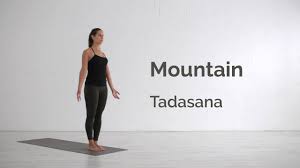
Mountain Pose (Tadasana)
What is Mountain Pose?
Mountain Pose, commonly known as Tadasana, is a fundamental yoga standing pose that serves as the basis for numerous other standing postures. With your feet hip-width apart or together, your arms at your sides, and your body in line from head to toe, you stand tall in this stance. Maintaining a straight spine, using your legs, and distributing your body weight equally on both feet are the objectives.
Despite its apparent simplicity, this stance enhances body awareness, balance, and posture. As you practice, you raise your chest, relax your shoulders, keep your chin parallel to the floor, and softly contract your thigh muscles. Breathing steadily and slowly keeps the body calm and stable.
How to Do Mountain Pose?
The steps for performing Tadasana (Mountain Pose) are as follows:
- When you step onto the mat, be sure that your feet are in contact with one another. The feet should be grounded to the yoga mat in all four corners. This helps maintain engagement of the lower body and feet. In this stance, we are connecting with the ground.
- Place the feet so that the heels and toes are in contact. Press the heel and the balls of the foot down on the ground. Take a breath, tighten your knees, and raise your kneecaps. [See: Knee Cap Pulled Close Knee Exercise] [Up to raise the knees] The legs become straighter as a result. Make sure your chin is positioned close to your neck. To activate the leg muscles, firmly raise your thighs. Distribute your body’s weight evenly rather than bearing it on your heels or toes.
- Continue breathing. The pelvis is the second part of the body. Maintain a straight neck, a tucked-in stomach, a powerful core, a forward chest, an extended spine, and a thrusting sternum. Make sure the chin is near the collarbone and not elevated. The muscles in your face are relaxed and make you grin. Put your arms by your thighs to bring them close to your body.
- With their eyes closed, one can learn to balance their body by concentrating on their breathing and the steadiness. Feel free to leave your eyes open if you find it difficult to close them. For as long as it is comfortable, stand here. As you practice, your body becomes more stable, and your spine straightens with healthy breathing.
Benefits of Mountain Pose:
All forms of yoga contain Tadasana (Mountain Pose), which serves as both a base pose and a transition for nearly all standing poses. There are numerous advantages to doing so, some of which are listed below:
- Stretches, Strengthens, Lengthens: The glutes, outer thighs, calf muscles, shin, ankles, and feet are toned by Tadasana (Mountain Pose). It makes the knees stronger. This type of consistent, moderate muscular strengthening tones the ligaments that support the muscles, thereby strengthening the joints. The knees and ankles of the legs strengthen. Toning the leg muscles via extended practice of this position will make it easier to do all other standing poses. It starts with the most basic stance and helps to develop the stomach and core muscles.
- Breath, Diaphragm, and Chest: In Tadasana, or Mountain Pose, the breath is organic, and the diaphragm and chest are neutral. The upper body and chest have the stability to experience breath awareness thanks to the alert spine with the proper shoulder and neck alignment. When performing this pose after a strenuous workout, the practitioner can feel the heartbeat gradually returning to normal while maintaining an attentive body-mind synchronization.
- Alignment and Posture: The conscious awareness of the body is known as Tadasana (Mountain Pose). The beauty of this pose is in the awareness of the body in stillness rather than any dramatic motions. The yoga instructor leads the practitioner from the toes to the crown of the head in this pose, encouraging alertness. Students’ focus and concentration improve as a result, and with the teacher’s help, they typically comprehend every body part. A deeper consciousness is awakened by the bodily discipline and breath awareness attained in this pose, and the practitioner recognizes the distinction between the work of yoga on oneself and any regular workout regimen.
- Emotions and Balance: Tadasana, or Mountain Pose, increases vitality. A person’s body and mind are stabilized in this stance. In addition to improving posture, this pose fosters confidence. With conviction, the practitioner mentally chooses to begin a yoga practice and gets ready to use the practice to produce positive thoughts.
- Therapeutic, Healing, and Illnesses: Yoga instructors can employ Tadasana (Mountain Pose) to help students with concentration issues and correct their posture. This stance can also help with cloudiness or brain fog. Sleeplessness and an inability to complete daily duties are the results of being a hyperactive person who lacks focus and learns to direct their energies appropriately. This basic foundation stance can be used to treat such individuals. To improve their mental skills, students who struggle with academic concentration could practice this. Spinal diseases such as kyphosis, scoliosis, and herniated discs can be treated using Tadasana (Mountain Pose).
- Others: Seniors, expectant mothers, new mothers, children, and teenagers can all perform this foundation stance. This can also be practiced with wall support by beginners or students recuperating from a protracted sickness.
Contraindications of Mountain Pose:
The contraindications for Tadasana (Mountain Pose) are as follows:
- Injury and Surgery: Individuals with knee and ankle ailments shouldn’t perform Tadasana (Mountain Pose). Additionally, those who have had hip, spinal, or knee surgery should avoid it. For some people, this pose necessitates standing for a while, which can be taxing and perhaps harmful.
- Lack of Body-Breath Connections: It may be challenging for beginners to even remain upright with their feet close to one another. With the help of the yoga instructor, people who do not have a breath-body connection can perform this pose. They can begin with either Mountain Pose Wall (Tadasana Wall) or Mountain Pose Variation Feet Hip Wide (Tadasana Variation Feet Hip Wide). Another version that aids in understanding body alignment and foot support is Mountain Pose Block Between Feet (Tadasana Block Between Pada).
- Physical Strength and Weak Body: Students should refrain from immediately entering Tadasana (Mountain Pose) if they have weak knees or ankles. Before starting the pose, the yoga instructor must lead them in knee and ankle strengthening. Seated Knee Bending will strengthen their knees, while Seated Ankle Rotations (Upavistha Goolf Chakra) is a fantastic pose to strengthen their ankles. This pose should also be avoided by people who have low or high blood pressure, dizziness, or migraines. These conditions result in vertigo, and if the balance is difficult, this pose may create further pain or discomfort. Some folks find knee locking difficult, but the yoga instructor can help them with the Knee Exercise Knee Cap Pulled Close Up.
- Others: Pregnant women and senior individuals may struggle to balance. Due to the weight of the womb, pregnant women may have an imbalance, and the elderly may experience frailty, etc. They can benefit from Mountain Pose Wall (Tadasana Wall) or Mountain Pose Variation Feet Hip Wide. Wider feet improve balance, and the wall support is comforting and back-supporting.
- Therapy and Restorative: Although this posture helps treat herniated discs, scoliosis, and kyphosis spinal diseases, yoga instructors must screen for vertigo, migraines, and low or high blood pressure in these patients to prevent imbalance-related falls. Seated spinal exercises can be recommended for these patients.
Mountain Pose Modifications:
Even though this pose appears simple, some people may find it difficult to raise their spine while standing with their feet together due to their posture and muscle strength. Therefore, there are a few different approaches or adjustments that may be made to make this posture simple to maximize the benefit:
- Wall Support: Using the wall to improve your grip on your back and spine can help you initially grasp the pose’s requirements.
- Spread Feet: If a person is unable to stand with their feet or toes together, they can place their feet more than a foot apart to improve their body’s balance. As their muscles strengthen over time, the distance can be decreased.
- Block between Wall and Upper/Middle Back: If the chest collapses easily, putting a block between the wall and the middle of the back will gradually alter the upper body’s posture and boost self-esteem.
- Block between Wall and Lower Back: If you have trouble maintaining your lower back and hips elevated, you can tone your hips and gradually gain confidence by placing a block on the wall and using your lower back to support it.
- Keep Your Eyes Open: If you find it difficult to close your eyes, you may either avoid it or gradually learn how to do it to boost your confidence.
- Folded Mat: For beginners, the feet may burn if they are left in one spot for an extended period of time. Therefore, a somewhat firm blanket can be placed beneath the feet, or the current mat can be folded.
Common Mistakes and Misalignments:
Many beginners make frequent mistakes when performing Tadasana, including rounding their shoulders forward, leaning forward, and placing weight in their toes.
In order to prevent these errors, it’s critical to maintain the lower back in a neutral position, the hips slightly above the ankles, the weight uniformly distributed through the feet, and the shoulder blades drawing toward each other and down toward the hips.
Keep the shoulders in line with the hips, the tailbone extended toward the floor, and the body stacked with a plum line down the middle. To increase stability and balance in the pose, consider elevating and spreading your toes.
Conclusion:
Despite its seeming simplicity, Mountain Pose (Tadasana) is crucial for creating a solid foundation for a variety of yoga poses. This pose enhances posture, balance, and general stability by emphasizing correct alignment, consistent breathing, and body awareness.
Mountain Pose is a beneficial complement to any fitness or health regimen, as it can improve spinal alignment and prepare the body for more challenging yoga poses.
FAQs:
What drawbacks can Mountain Pose have?
Injury and Surgery: Individuals with knee and ankle ailments shouldn’t perform Tadasana (Mountain Pose). Additionally, those who have had hip, spinal, or knee surgery should avoid it. For some people, this pose necessitates standing for a while, which can be taxing and perhaps harmful.
Is mountain position a pose for relaxing?
A moment of quiet can be found by the practitioner of mountain posture. Usually, it’s employed as a resting stance or as a way to move from one standing pose to another. Both the Surya Namaskar and Chandra Namaskar routines employ tadasana.
What makes mountain stance crucial?
Regulates the activities of your adrenal glands and the big intestine by stimulating the Muladhara Chakra. strengthens your spine and enhances your poise and balance. facilitates neuro-muscular coordination. improves your feet, ankles, thighs, and hips’ strength, power, and mobility.
Can stress be reduced with Mountain Pose?
Stress reduction and mindfulness: Mountain position helps you stay in the now and develop body awareness. According to studies, mindfulness-based yoga can enhance general well-being and lessen stress and anxiety. Confidence: Maintaining proper posture can improve your attitude and sense of self.
Which muscles are stretched by the mountain pose?
To develop the shoulders, chest, upper back, side torso, and arms, Mountain Pose Stretched Out Hands is frequently performed. It strengthens the scapular stabilizers, deltoids, and rotator cuff muscles while opening the chest.
Can back pain be relieved by Mountain Pose?
Tadasana helps ease minor back pain by strengthening the muscles surrounding the spine and encouraging appropriate spinal alignment. By promoting spinal extension, the pose eases lower back stress and lessens compression between vertebrae.
What are Mountain Pose’s psychological advantages?
When you need a reset, mountain position is a great asana to go back to. It’s calming, grounding, and perfect for developing mindfulness, especially when combined with deep breathing.
Who shouldn’t perform Mountain Pose?
This pose should also be avoided by those who have low or high blood pressure, dizziness, or migraines. These conditions result in dizziness, and if the balance is difficult, this position may create more pain or suffering.
Which muscles are used in Mountain Pose?
Stretches, Strengthens, Lengthens: The glutes, outer thighs, calf muscles, shin, ankles, and feet are toned by Tadasana (Mountain Pose). It makes the knees stronger. This type of consistent, moderate muscular strengthening tones the ligaments that support the muscles, thereby strengthening the joints.
Are parvatasana and tadasana the same pose?
Another name for the standing mountain position is Mountain position (Tadasana). In seated mountain posture, the upper body rises upward with the hands in Namaskar Mudra, while the legs are planted in Lotus posture (Padmasana). A straightforward yogasana that is done while seated is called Parvatasana. The Ashtanga yoga system includes this asana.
References:
- Yoga Journal. (2025a, March 27). Mountain pose. https://www.yogajournal.com/poses/mountain-pose/
- Clinic, C. (2025b, October 27). Mountain pose (Tadasana): benefits and how to do it. Cleveland Clinic. https://health.clevelandclinic.org/mountain-pose
- Tadasana Yoga(Mountain Pose)| Yoga sequences, benefits, variations, and Sanskrit pronunciation | Tummee.com. (n.d.). Tummee.com. https://www.tummee.com/yoga-poses/mountain-pose
- Rakshak, & Rakshak. (2024, October 23). Tadasana (Mountain Pose) | Steps | How to do | Benefits – The Art of Living. The Art of Living – Making Life A Celebration. https://www.artofliving.org/in-en/yoga/yoga-poses/tadasana-the-mountain-pose
- Wikipedia contributors. (2025a, July 7). Tadasana. Wikipedia. https://en.wikipedia.org/wiki/Tadasana


One Comment