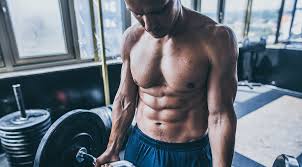
15 Best Functional Strength Exercises to Build Power!
Introduction:
The goal of functional strength exercises is to improve the body’s capacity to carry out everyday tasks with more force, ease, and stability. Functional training emphasizes coordinated, multi-joint actions that simulate daily activities, including lifting, bending, pushing, pulling, and twisting, in contrast to traditional workouts that isolate specific muscles.
Your body will be more resilient and effective in everyday activities, sports, and physically demanding jobs thanks to these workouts that enhance balance, mobility, core stability, and general strength.
Functional strength training develops useful, real-world power that really matters, whether you’re an athlete or just want to move more effectively in daily life.
Benefits of Best Functional Strength Exercises:
Numerous physical benefits that are directly applicable to daily functioning are offered by functional strength workouts. By using several muscles and joints simultaneously, they improve general body coordination and make movement safer and more effective. By greatly enhancing posture, balance, and core stability, these workouts lower the chance of getting hurt when engaging in regular activities or sports.
Additionally, they increase flexibility and mobility, making it easier for your body to perform dynamic, everyday motions. Functional training also improves general strength and power, which makes lifting, carrying, and bending much simpler.
Functional strength exercises help you develop a strong, robust body that can function at its peak in everyday settings by increasing endurance and encouraging superior body mechanics.
15 Best Functional Strength Exercises to Build Real-Life Power Video:
Best Functional Strength Exercises:
Squats:
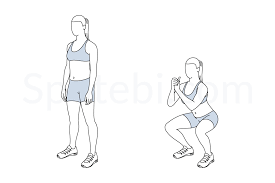
Because they replicate natural motions like sitting, standing, and lifting objects off the ground, squats are among the best functional strength workouts. This compound exercise helps develop lower-body strength and general stability by working the quadriceps, hamstrings, glutes, and core, among other important muscle groups.
Additionally, squats increase hip and ankle mobility, balance, and your capacity to exert force in practical tasks. Squats improve posture, lower the chance of injury, and increase overall functional strength by strengthening the muscles used in daily activities.
Deadlifts:
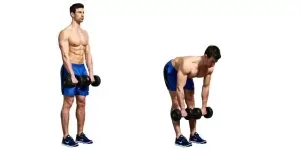
Deadlifts are a very useful functional strength exercise for daily life because they mimic the natural motion of lifting objects off the ground. In addition to working the hamstrings, glutes, lower back, and upper back, this exercise also works the core for stability. By strengthening the muscles that support the spine, deadlifts help establish improved posture, improve hip hinge mechanics, and increase overall strength.
Additionally, they improve coordination and grip strength, which makes repetitive jobs like lifting large objects safer and more effective. Deadlifts increase real-life power and lower the chance of back injuries by teaching your body how to lift with good form.
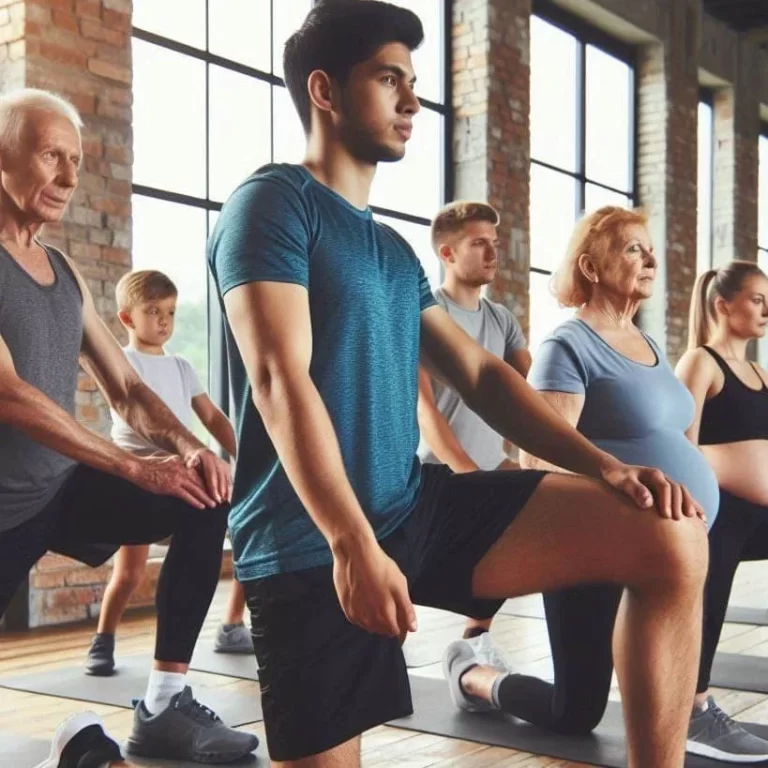
Lunges:
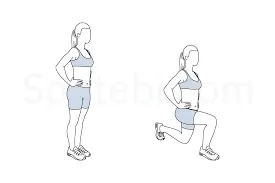
Lunges are a great functional strength workout that closely resembles everyday tasks like walking, climbing stairs, and shifting your body weight. This unilateral exercise strengthens the quadriceps, hamstrings, glutes, and calves while working each leg separately to help address muscular imbalances.
Additionally, lunges improve hip stability, balance, and coordination—all of which are necessary for fluid, controlled movement. Lunges make daily movements like bending, stepping, and carrying objects considerably safer and easier by increasing lower-body strength and mobility.
Push-Ups:
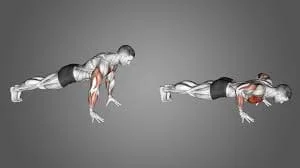
Push-ups are a basic functional strength exercise that teaches your upper body to perform pushing motions with more power and control. They assist in developing balanced upper-body strength by simultaneously working the chest, shoulders, triceps, and core, among other muscular groups.
Additionally, push-ups build the muscles required for activities like pushing doors, lifting objects, and bracing your body during movement. They also improve wrist and elbow support and shoulder stability. Push-ups improve posture, general stability, and practical functional performance by using the core throughout the exercise.
Pull-Ups:
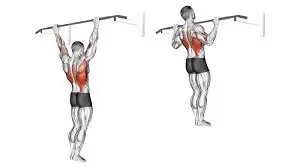
Pull-ups are a very powerful functional strength exercise that teaches your upper body the necessary pulling motions for both everyday activities and athletic endeavors. This compound exercise works the biceps, shoulders, forearms, core, and back muscles, particularly the lats. Pull-ups increase upper-body coordination, strengthen your grip, and stabilize your shoulders.
Pull-ups help you do real-life tasks like climbing, lifting objects, or stabilizing yourself more effectively and safely by strengthening the muscles that lift, pull, and support your body weight.
Plank:
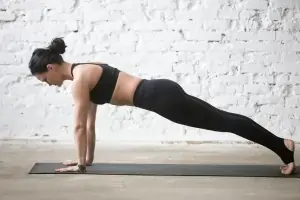
A fundamental functional strength exercise, the plank develops deep core stability, which is necessary for almost all daily movements. The plank develops the muscles involved in maintaining good posture and body alignment by working the glutes, shoulders, lower back, obliques, and abdominals.
By supporting the spine when lifting, bending, twisting, and performing other real-world actions, this exercise helps improve balance, increase general stability, and lower the chance of accidents. Planking strengthens the core, which enhances athletic performance, improves movement control, and boosts productivity in daily chores.
Step-Ups:
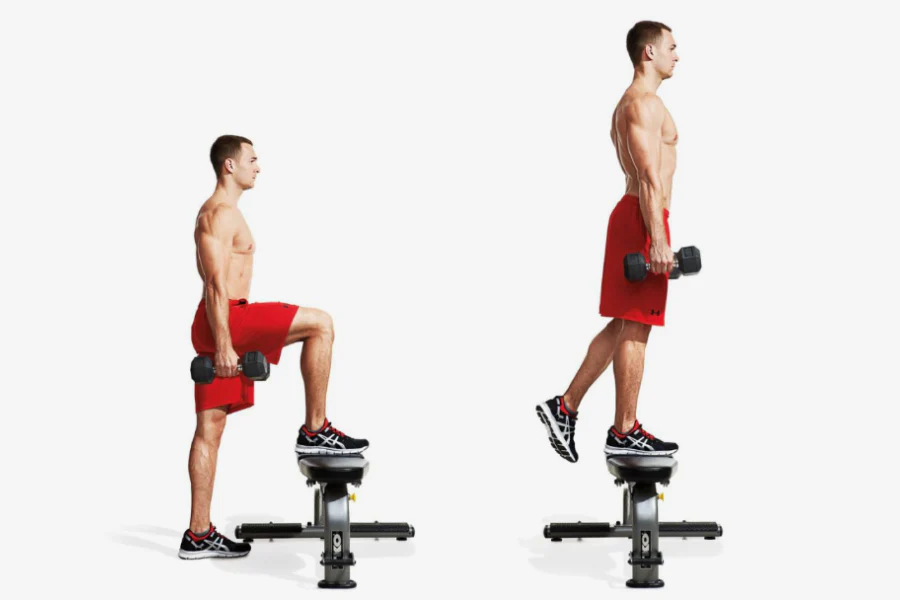
A useful functional strength exercise that closely resembles daily activities like climbing stairs or stepping onto elevated surfaces is the step-up. This exercise enhances balance, coordination, and unilateral leg strength in addition to strengthening the quadriceps, hamstrings, glutes, and calves.
Step-ups improve joint stability and address muscular imbalances by training one leg at a time, particularly in the knees and hips. This workout makes everyday chores easier and safer by teaching your body to move more effectively during real-life tasks like walking uphill, carrying loads up stairs, or stepping over obstacles.
Overhead Press:
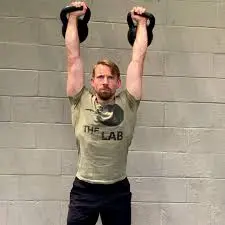
The overhead press is a potent functional strength exercise that mimics pushing and pulling motions found in everyday situations, including putting things on high shelves or lifting things overhead. In order to maintain good posture and control, it mainly works the shoulders, triceps, and upper chest while activating the core and stabilizer muscles.
This exercise increases shoulder mobility, strengthens the upper body, and strengthens the torso and spine. The overhead press gives you more ease, power, and safety when performing daily overhead chores by teaching your body to press weight upward in a controlled manner.
Kettlebell Swings:
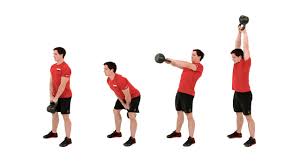
A dynamic functional strength workout, kettlebell swings improve hip drive, full-body coordination, and explosive power. This exercise challenges the back, shoulders, and grip strength in addition to focusing on the glutes, hamstrings, and core. Kettlebell swings enhance your ability to produce force rapidly, which is crucial for everyday tasks like lifting, jumping, and accelerating movement, by training the hip hinge pattern.
Additionally, they improve cardiovascular endurance and support the development of a robust lower back and strong, stable hips. Kettlebell swings are among the best workouts for developing real-life power and enhancing general athletic performance because they combine strength, speed, and stability.
Russian Twists:
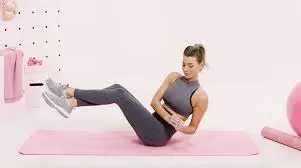
Russian twists are a useful functional core workout that improves your torso’s rotation, twisting, and stability during everyday motions. This exercise helps increase rotational strength and control, which is necessary for tasks like turning, reaching, lifting, and changing direction. It works the obliques, abdominals, lower back, and hip stabilizers.
By using a variety of muscles to maintain good posture throughout the exercise, Russian twists help improve balance and coordination. This exercise enhances functional movement quality and increases total real-life power by fortifying the core’s capacity to withstand and generate rotational force.
Medicine Ball Slams:
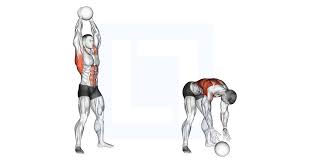
Medicine ball slams are an effective full-body functional strength workout that develops coordination, explosive force, and practical power. Lifting the ball high and driving it hard into the ground works the core, shoulders, back, hips, and legs. Medicine ball smashes improve speed, reaction time, and overall body control while teaching your body to produce strength from the ground up.
Additionally, they assist in building a strong, stable core that can handle dynamic, high-intensity workouts and improve grip strength. Medicine ball slams help you move more effectively, powerfully, and safely in daily circumstances by simulating lifting, throwing, and force creation.
Glute Bridges:
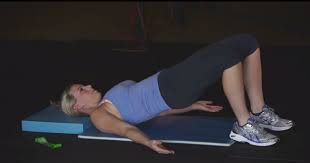
A crucial functional strength exercise, glute bridges strengthen the lower back, hamstrings, and glutes while promoting healthy hip movement patterns. The posterior chain, which is essential for supporting the spine, stabilizing the pelvis, and producing power for daily tasks like walking, lifting, and ascending stairs, is strengthened by this exercise.
Additionally, glute bridges increase hip mobility and core engagement, which lowers the risk of lower back pain. This exercise promotes improved posture, balances muscle growth, and enhances overall strength and stability in real life by developing strong, active glutes.
Bird Dog Exercises:
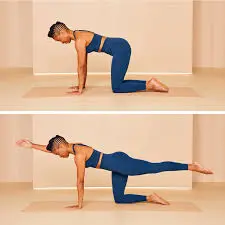
Bird dog movements are a great way to improve overall body coordination and develop functional core stability. This exercise trains the body to maintain balance during opposing limb motions while focusing on the deep abdominal muscles, lower back, glutes, and shoulders. The bird dog develops the muscles that stabilize the spine during daily activities, including lifting, bending, and reaching, by extending one arm and the opposing leg.
Additionally, it improves body mechanical control, lowers the risk of back injuries, and improves posture. The bird dog is a low-impact, joint-friendly exercise that is perfect for improving strength, stability, and movement efficiency in real life.
Split Squats:
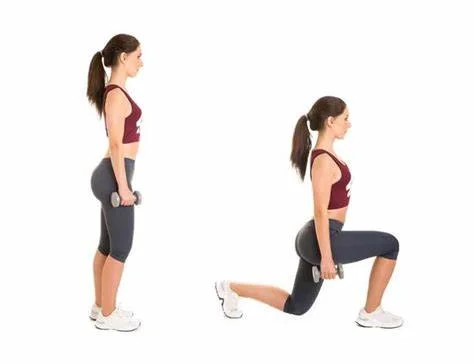
A strong unilateral functional strength exercise that improves lower-body balance, mobility, and stability is the split squat. They strengthen the quadriceps, hamstrings, glutes, and calves and help address muscular imbalances by training each leg separately. Stepping, climbing, and stabilizing your body amid uneven or shifting movements are examples of real-life behaviors that this movement closely resembles.
Additionally, split squats increase core activation, improve hip and knee alignment, and help you better manage your lower-body mechanics. Split squats greatly improve real-world strength and movement efficiency by teaching the body to maintain stability while bearing weight on one leg.
Box Jumps:
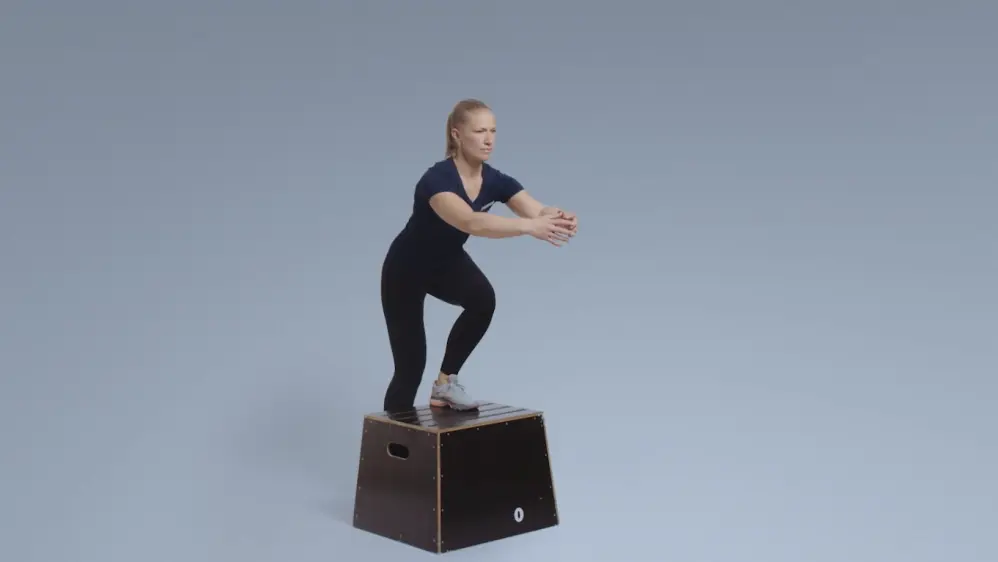
Box jumps are a high-intensity functional strength exercise that improves lower-body strength, explosive power, and coordination. In addition to using the core for stability and balance, this plyometric exercise mainly works the quadriceps, hamstrings, glutes, and calves. Box jumps improve athletic performance and real-life skills like jumping, sprinting, and responding to dynamic situations by teaching the body to produce force rapidly and land securely. Additionally, they improve proprioception, cardiovascular fitness, and agility, which increases the strength and efficiency of commonplace motions like lifting off the ground, ascending stairs, and stepping over obstacles.
Conclusion:
Exercises for functional strength are crucial for increasing real-world power, enhancing movement efficiency, and lowering injury risk. These workouts equip your body to manage daily jobs, sports, and physically demanding activities with more ease and confidence by targeting numerous muscle groups, improving core stability, and simulating everyday movements.
Balanced strength, mobility, and coordination are ensured by combining exercises like squats, deadlifts, lunges, push-ups, pull-ups, planks, and explosive workouts like box jumps or kettlebell swings.
Regularly engaging in functional training makes your body more capable, resilient, and powerful in all facets of everyday life. It also enhances posture, stability, and general quality of life.
FAQs:
How can one develop long-lasting strength?
Gradually increase the weight or resistance when you can do a particular exercise with greater ease. According to research, most people can gain muscle with just one set of 12 to 15 repetitions using the right weight, which is just as effective as three sets of the same exercise.
Which workout is the most effective?
The following are some of the best workouts that engage the entire body: Burpees: A high-intensity workout that incorporates a push-up, leap, and squat into a single, dynamic motion. Squats: Whether done with bodyweight or additional resistance, squats work the quadriceps, hamstrings, glutes, and core.
What makes deadlifts so appealing to girls?
In addition to improving your posture, deadlifting may strengthen and stabilize your core. The majority of the muscles in the legs, lower back, and core are trained by deadlifting. All of these muscles are involved in posture, which helps maintain the alignment of your hips, shoulders, and spine.
What is the best workout in the world?
There isn’t a single “best” exercise; it all depends on your objectives. However, compound exercises like squats, deadlifts, push-ups, and pull-ups, effective cardio exercises like walking or interval training, and functional exercises like yoga or planks are all excellent choices for overall fitness. The most important thing is to find an activity you regularly enjoy. The most complete advantages, from increasing muscle mass and burning fat to enhancing mood and balance, come from a combination of aerobic, strength, and flexibility exercise.
Which muscles react more favorably to high repetitions?
Additionally, isolation exercises that target small muscles, such as bicep curls and lateral raises, respond better to higher repetitions than large complex exercises, such as deadlifts and squats.
Which muscle is the most difficult to develop?
The calves, forearms, and occasionally the upper chest (clavicular head) are the hardest muscles to grow because they are frequently used in daily activities (such as walking and gripping), have genetic factors (fiber type and attachment points), and often require very specific, high-intensity, full-range-of-motion training to overcome resistance to hypertrophy.
Which exercises improve endurance and speed?
Combine aerobic exercises (long runs, swimming, cycling) with high-intensity interval training (HIIT) exercises (hill sprints, fartleks), plyometric exercises (box jumps, squat jumps) for power, and strength training exercises (lunges, squats, deadlifts) to develop powerful muscles for endurance and explosive movements. Agility and speed are also enhanced by exercises like shuttle runs and high knees.
Which activity is the mother of all exercises?
“Mother of all exercises” isn’t a single exercise; rather, it’s a title that’s frequently given to the squat because of its full-body muscle engagement or occasionally to yoga because of its holistic approach. Other contenders include push-ups for foundational strength or burpees for high intensity; the best option will depend on fitness objectives like strength, cardio, or flexibility.
Which exercise is the best of all?
No other movement is as intricate or fundamental as the squat, making it the king or queen of movements. Everybody squats several times a day. The squat is an amazing example of head-to-toe coordination.
How can one develop long-lasting strength?
Gradually increase the weight or resistance when you can do a particular exercise with greater ease. According to research, most people can gain muscle with just one set of 12 to 15 repetitions using the right weight, which is just as effective as three sets of the same exercise.
Of all the exercises, which one is the best?
Although some argue for the deadlift because of its total-body strength indicator, the squat is commonly referred to as the “King of all exercises” because it is a fundamental, full-body compound movement that develops enormous strength, power, and mobility in legs, glutes, core, and back, essential for daily life and overall fitness.
How can one develop true strength?
Although some argue for the deadlift because of its total-body strength indicator, the squat is commonly referred to as the “King of all exercises” because it is a fundamental, full-body compound movement that develops enormous strength, power, and mobility in legs, glutes, core, and back, essential for daily life and overall fitness.
What are the three main muscle exercises?
The deadlift, bench, and squat all work several muscular groups at once, increasing hypertrophy and general strength. Including them in a comprehensive exercise regimen that makes use of progressive loading is very beneficial for building muscle.
Which seven exercises make up functional training?
The seven fundamental functional fitness exercises—squat, hinge, lunge, push, pull, twist (or rotate), and gait (locomotion)—train vital patterns like lifting, bending, carrying, and moving, preparing the body for everyday tasks and preventing injury.
References:
- Aldridge, L. (1970, January 1). 7 functional strength training moves that Peloton instructors swear by. https://www.onepeloton.com/blog/functional-strength-training
- Sinrich, J. (2024, June 25). The Ultimate guide to functional strength training. Verywell Fit. https://www.verywellfit.com/functional-strength-training-8666465
- Cpt, T. R. B. (2022, April 18). Explosive workouts for speed, power, and strength. Healthline. https://www.healthline.com/health/fitness/explosive-workouts
- Nishatedgydkkfu. (2025, November 7). 10 functional fitness workouts to build strength. Gold’s Gym. https://www.goldsgym.com/blog/functional-fitness-workouts-to-build-strength/
- Fawkes, J. (n.d.). The 30 Best Exercises for Functional Strength and Mobility. https://www.spartan.com/en/blog/best-exercises-for-functional-strength
- The55 Fitness US. (2025, July 14). 10 functional exercises to improve everyday movements. The55 Fitness US. https://the55fitness.com/functional-training/10-functional-exercises/