Corpse Pose (Savasana)
Introduction:
Savasana, also known as Corpse Pose, is a final resting pose that involves resting and grounding. The Sanskrit terms Sava (corpse/dead body) and Asana (pose/posture) are the source of the name Savasana.
As a result, this supine position is inherently healing. Consequently, cool-down yoga positions include Savasana. Savasana assists learners in releasing stiffness in the joints or muscles while surrendering into the practice—beyond the body and mind—even after intense yoga sequences or guided meditations like Yoga Nidra.
Savasana, on the other hand, calms the body and mind and centers awareness to get ready for the next yoga pose when done at the start of the practice. Additionally, it is utilized as a transition pose or in between poses, particularly when performing the supine yoga poses, to eliminate exhaustion and the consequences of exercise.
Corpse Pose, which is incorporated into regular yoga routines as part of a nightly practice, relieves physical tension and stress while calming the mind and encouraging restful sleep. Additionally, Savasana offers a chance to develop mindfulness, present-moment awareness, and heightened bodily awareness by settling into this stillness and silent pose. Thus, getting the body ready for meditation exercises.
There is more to savasana than just lying down and shutting your eyes. It has been dubbed the hardest asana, despite being a simple and moderate practice. The paradox is that practicing relaxation is much harder than it first seems. The explanation is as follows:
- Physical Discomfort: Surprisingly, despite Savasana’s seemingly easy physical requirements, it can highlight physical discomforts that may have gone overlooked during the more strenuous poses. The ability to relax with the back fully resting on the mat may be hampered by any physical discomfort or pain, whether it is tension in the body or an unsettling feeling. However, yoga instructors can alter the posture of the legs or adjust this resting position using yoga supports.
- Restlessness Nature: “Doing nothing, no active stretches, but just lying” might be difficult in this fast-paced society, particularly for children and teenagers with extremely active or monkey minds. For some pupils, Savasana’s concentration on silence and stillness may cause restlessness and boredom. However, yoga instructors can introduce this practice with guided meditation or calming music, or sound (Singing Bowls).
- Mental Healing: A lot of people experience anxiety, despair, and high blood pressure. By calming their nervous system and healing their fears, this easy relaxation technique can provide them with mental tranquility.
Because of its nature, Savasana can be incorporated into yoga sequences for nearly everyone, including learners healing from medical conditions while lying in bed, elders, and pregnant or postpartum women. This pose, which is a part of Yin Yoga sequences, heals the body and encourages deeper relaxation by repairing the tissues stretched during a strenuous practice or otherwise.
By practicing Savasana, you can establish a gentle yet profound connection with your body, allowing gravity to take care of you without requiring you to push or violently relax on the ground. This position, which is part of therapeutic yoga sequences, relieves body weariness, reduces blood pressure, and soothes disturbed or nervous minds. Savasana is a fantastic post-workout practice and a fantastic way to recover, and it is included in yoga for runners, athletes, or learners participating in vigorous sports.
Since corpse pose variations can be created from corpse pose, corpse pose is regarded as a base pose. Corpse Pose can be used in flow yoga sequences since it increases the body’s energy.
How to Do Corpse Pose?
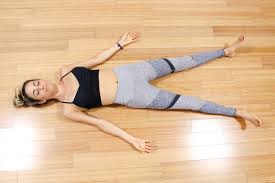
- To start, sit in the middle of the mat in Dandasana, fully extending your legs and straightening your spine. Here, take a few deep breaths, put your hands on your thighs, and begin to relax. Next, place your left hand on the floor, shift your hip to face the left side of the mat, and slowly place your back on the mat while bending your elbow. After you’re down, turn around once again, face up, and fully place your back on the mat, making sure that your calf, upper shoulders, back of your head, and lower back all touch the ground.
- Point the toes outward and the heels inside to relax the outer feet on the floor as you spread your legs wider than hip distance apart.
- Stretch with the palms facing up while bringing the arms to the floor, keeping them away from the body.
- Now close your eyes, lower your chin slightly, and loosen your entire body.
- Keep your mouth closed, your throat clear, your eyes serene, your tongue relaxed, your jaws relaxed, and your teeth relaxed. Don’t move any part of your body.
- Start breathing, then gradually move your thoughts from your bottom to your upper body. Take a steady breath and start focusing on the toes, inner soles, ankle joints, calf muscles, back of the knee, hamstring muscles, outer thigh muscles, knee, knee cap, shin bone, outer ankle joint, and so on. Now, slowly exhale and relax the entire leg.
- There should be no movement of the legs at this point. Start with the arms and fully separate your thoughts from the leg.
- Now start with the tips of the fingers and work your way inward to the palms, wrist joints, inner forearm, inner elbow, upper arm, biceps and triceps muscles, outer elbow, outer forearm, back of the wrist, and finally the tips of the fingers. Now, slowly exhale and relax the entire arm.
- To relax your mind and eyes, take a few deep breaths through your nose, feeling the coolness travel from your mouth to your neck and chest. Hold your breath for a few seconds, then slowly exhale without making any noise. Feel the calming energy within you as you inhale and exhale for around six breaths.
- Imagine your entire abdomen, including the chest, ribs, pelvis, and inner thighs. Now take a leisurely breath out and relax your entire upper body.
- Proceed to the sides of the upper legs, the hip joint, the lower back, the middle back, the shoulder blades, the space between the shoulder blades, the upper back at the shoulders, and lastly the intersection of the shoulder and neck. Now fully relax your entire body while remaining unattached to it. The body will gradually start to relax as you direct all of the energy to the tip of your nose and observe the energy’s inflow and outflow.
- The entire body is now used to soothe and observe the mind. If your thoughts stray, take a few deep breaths, pause, and then gently release your breath.
- You can overcome this with experience, so don’t worry if you fall asleep. Stay in this position until your entire body is at ease. Then, shift your attention to your thoughts and mind, and use a slow exhale to bring them under control.
Benefits of Corpse Pose:
The advantages of practicing Savasana (Corpse Pose) include the following:
- Stretches, Strengthens, Lengthens: Savasana is more of a restorative exercise that relieves stress, stiffness, and tightness in the muscles, joints, and even the body’s deeper tissues. In preparation for the more difficult stretches and flows, it calms the body and mind.
- Chest, Diaphragm, and Breath: After a strenuous workout, finding the rhythm of the breath and returning the heart rate to normal can be achieved by surrendering to gravity and letting go of any influence in Corpse Pose.
- Awareness and Focus: Savasana is not the same as sleeping, despite being a resting pose. It’s a fundamental stance that allows one to be mindful of their breath, body, and thoughts without passing judgment. This technique, when combined with guided meditation, increases awareness of the present moment and improves concentration.
- Alignment and Posture: The fundamental position for Savasana is a comfortable supine position. It is an active relaxation condition. The entire rear of the body is grounded. The back of the neck is extended when the chin is tucked in toward the chest. The feet are falling outward, and the legs are separated. With the palms toward the sky and the fingers curled in, the hands are securely detached from the body. The chest is exposed. The blades of the shoulders are removed. There is no undue pressure on any one area of the body because the weight is distributed equally throughout the entire body.
- Energizing, Relaxing, and De-stressing; Therapeutic, Healing, and disease: It is a restorative pose that activates the parasympathetic nervous system while calming the body and mind. After a tough yoga practice, this pose helps the body return to normal and relieves weariness. Deliberate breathing, it causes muscles to relax. hence aiding in the healing of tissues and cells that have been harmed by excessive stretching or other causes. The blood pressure is largely under control. It can be used at night to treat sleeplessness and tense muscles. The functioning of the cardiovascular and respiratory systems is enhanced, which aids in recovery, enhances the treatment of addiction, and lessens chronic pain, tension, anxiety, and depression.
- Balance and Emotions: Savasana allows for a connection with “you” and aids in the resolution of numerous unresolved issues. Learning to fully submit and make an effort to establish a connection with the “soul” is beneficial. Savasana is an excellent therapeutic technique that helps pinpoint areas of discomfort as well as relieve physical tension. In a more profound practice, this position offers a secure environment for learners to recognize and let go of stress and emotional loads. Emotional equilibrium can be fostered by the mind venturing into deeper, more contemplative worlds while the body relaxes. It’s a simple method of inner connection and realization, as well as a self-help tool. Deepening this practice stimulates the Heart Chakra and Crown Chakra on a spiritual level.
- Others: Savasana is a gentle and simple yoga pose that may be practiced by anyone, regardless of age, skill level, gender, strength, or mobility. Corpse Pose can be used to relax the body at the start of a yoga session or to take a break in between flows or postures, even though it is usually done at the finish.
Contraindications of Corpse Pose:
Corpse Pose, or Savasana, is a fundamental and widely available pose. However, before teaching this pose, yoga instructors should consider the following:
- Injury and Surgery: learners who have recently had stomach surgery or who have a back injury may find it uncomfortable to lie flat on their backs for extended periods of time.
- Physical Strength and Weak Body: While this posture is calming, learners with severe and acute back pain can modify it by bending their knees or placing a wrapped blanket or bolster beneath them. The exercise can be followed with an open mind by learners who are despondent or healing from trauma. With the help of props like a folded blanket, cushion, or bolster, people who have trouble lying on their backs or have limited strength can adapt the practice for a more comfortable and supported position. learners who suffer from severe respiratory diseases (such as asthma, chronic obstructive pulmonary disease), colds, or allergies should stay away from it because sleeping on their backs may make it difficult for them to breathe.
They might benefit from a more upright or semi-reclined position. such learners who suffer from acid reflux disease or other digestive difficulties. A pillow or small cushion can be used to support learners who have upper back or neck problems. Pushing the body will simply backfire, increase aggravation, and result in a headache, and a distracted mind will find it difficult to relax. - Others: Pregnant women should avoid lying flat on their back for prolonged periods of time since this can compress the vena cava, a key blood vessel, thus limiting blood supply to the fetus. Instead, they should adjust their position during relaxation. Lying on one’s back for extended periods of time might cause psychological discomfort or anxiety, even though this technique calms the body and mind. Teachers must therefore favor different relaxation positions or methods. Otherwise, practically everyone may incorporate an easy position into their yoga routines, which can be adjusted to suit their own needs.
Modifications of Corpse Pose:
A few modifications or substitutes might be investigated to make Savasana enjoyable and effective. I am going to list some below.
- A blanket might provide additional support to lift the spine off the ground if the back is bothersome.
- Use a blanket or a cushion beneath the neck and head for additional support if the neck suffers.
- Use a bolster beneath the knees or lift the knees with a blanket to provide additional back support.
- To block off light and improve attention, cover your eyes with a black cloth.
- Breathe alternately through each nostril for around 12 rounds if you’re having trouble breathing quickly and forcefully.
- If the mind wanders, let it do so without concentrating on the thoughts and guide it to the sensation of inhaling and exhaling via the nose.
- If your thoughts are making you feel stressed, put a big smile on your face, take a deep breath, and keep doing this until the thoughts stop.
Conclusion:
After a yoga practice, the corpse pose is a potent relaxation pose that enables the body and mind to completely relax. It facilitates profound inner awareness, nervous system relaxation, and stress reduction. Frequent Savasana practice increases mental clarity, speeds up healing, and leaves you feeling balanced, renewed, and revitalized.
FAQs:
Is it possible for Shavasana to reduce blood pressure?
By stimulating the parasympathetic nervous system, which lowers heart rate and widens blood vessels, shavasana helps lower blood pressure. This physiological reaction lessens the strain on the heart and promotes improved circulation.
When is the ideal time to strike corpse pose?
It is a position of relaxation that is commonly performed near the conclusion of a yoga session, which usually starts with activity and concludes with rest—a time or space when profound healing can occur. Additionally, you can do this at any time to ease tension, maintain mental and physical equilibrium, or get ready for bed.
For what duration should I perform Savasana?
For a typical yoga practice, Savasana (Corpse Pose) should ideally last five to ten minutes, or around ten percent of the entire class period. Longer sessions (15–20+ minutes) are advised for deeper integration following intensive physical exercise, while 5 minutes is a usual minimum to allow the nervous system to transition into a restorative state.
What is Savasana’s scientific basis?
It can activate the “rest and digest” parasympathetic nerve system, which has scientific support. The body can heal, regenerate, and control internal processes like digestion, heart rate, and immunity in this condition.
What are common mistakes in Savasana?
If everyone is getting up to go and they immediately start talking, it’s not exactly peaceful. Simply signal for everyone to exit the posture together and shut the class container. letting everyone know how long they plan to stay.
What are Savasana’s five advantages?
By creating a state of conscious relaxation, Savasana (Corpse Pose) has profound, healing benefits. It merges the physical and mental advantages of a yoga practice, soothes the central nervous system, lowers blood pressure, eases fatigue, and lessens tension and anxiety.
Who shouldn’t do savasana?
learners who suffer from severe respiratory diseases (such as asthma, chronic obstructive pulmonary disease), colds, or allergies should stay away from it because sleeping on their backs may make it difficult for them to breathe. They might benefit from a more upright or semi-reclined position.
Why is Savasana so enjoyable?
The parasympathetic nervous system and the central nervous system both shift toward down-regulation during the body’s rest in Savasana. This fosters serenity, which aids in the body’s restoration and relaxation, says Kirra Michel, a Peloton instructor.
Is it acceptable to nod off during Savasana?
You might wish to set a timer for your Shavasana if you are working alone. It is not unusual for pupils to nod off. While it’s acceptable to fall asleep, most teachers would rather you be conscious and awake while your body is at ease.
Which disease does savasana treat?
Shavasana is revitalizing and revitalizing. This pose aids in the treatment of conditions like dyspepsia, high or low blood pressure, and insomnia. The blood flow returns to normal. Regularly performing this pose aids in anger management.
Why did I cry while performing Savasana?
Since savasana is the only time you’ve been motionless and silent during the day, it may cause you to cry since it gives you a chance to re-establish a connection with your body and mind. You may cry tears of relief or tiredness. Or because, before you set foot on your mat, you had no place or time to cry.
Savasana Corpse Pose: What is it?
Shavasana, also known as Corpse Pose or Mritasana, is a pose used for relaxation at the conclusion of a session in both contemporary and hatha yoga. It is a crucial stance in restorative yoga and the standard pose for yoga nidra meditation.
Why is Savasana the most difficult pose?
Yes, it is correct. Perhaps the most difficult thing you will experience in your yoga practice is lying on the floor and being completely motionless and present. It is also the most crucial. This is a period of relaxation rather than sleep.
References:
- Corpse Pose Yoga(Shavasana)| Yoga sequences, benefits, variations, and Sanskrit pronunciation | Tummee.com. (n.d.). Tummee.com. https://www.tummee.com/yoga-poses/corpse-pose
- Rakshak, & Rakshak. (2025, February 26). Shavasana (Corpse Pose) | How to do | Benefits – The Art Of Living. The Art of Living – Making Life A Celebration. https://www.artofliving.org/in-en/yoga/yoga-poses/savasana-corpse-pose
- Wikipedia contributors. (2026a, March 2). Shavasana. Wikipedia. https://en.wikipedia.org/wiki/Shavasana
- Corpse pose – Savasana – The Yoga Collective Corpse pose – Savasana. (2025, August 12). The Yoga Collective. https://www.theyogacollective.com/poses/corpse-pose-savasana/