
9 Best Core Strengthening Exercises for Beginners
Introduction:
Improving balance, posture, stability, and general body strength all depend on developing a strong core. Beginners can develop and activate their lower back and abdominal muscles without straining them by beginning with easy yet powerful workouts.
These beginner-friendly core workouts are easy to execute at home, require no equipment, and gradually establish the foundation needed for more advanced routines.
By doing them consistently, you may boost your daily functional strength, reduce the chance of injuries, and support your fitness journey from the ground up.
Benefits of Best Core Strengthening Exercises for Beginners:
Core strengthening exercises offer several advantages, especially for beginners who are just starting their fitness adventure. By enhancing general stability, these exercises help your body move more effectively throughout regular tasks and activities. A strong core also supports improved posture, minimizing strain on your spine and lessening the chance of back pain.
In addition, beginner-friendly core workouts strengthen balance and coordination, making other exercises safer and more effective. Over time, routinely training your core can raise endurance, improve athletic performance, and contribute to a toned midsection.
9 Best Core Strengthening Exercises for Beginners Video:
Best Core Strengthening Exercises for Beginners:
Bird Dog Exercises:
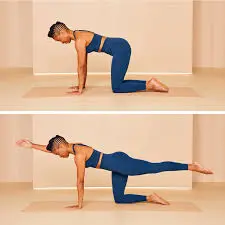
The bird dog exercise is a very powerful, beginner-friendly core exercise that strengthens the glutes, lower back, and abdominal muscles while enhancing balance and coordination. Start on your hands and knees with your spine in a neutral position to execute it. Keeping your hips level and your core active, slowly stretch your left leg backward and your right arm forward.
After a brief hold, switch sides and go back to the beginning position. This controlled, steady motion improves deep core muscles, enhances spinal stability, and helps improve posture. It’s ideal for beginners or anyone recovering from modest core weakness because it’s soft on the back.
Glute Bridge:
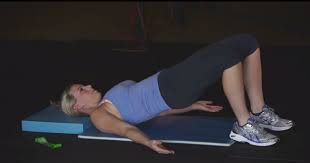
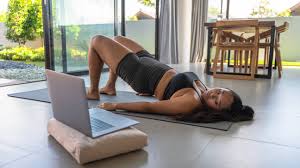
The glute bridge is a fantastic introductory core and lower-body exercise that strengthens the glutes, hamstrings, and lower back while increasing hip stability. Lift your hips until your body creates a straight line from shoulders to knees by using your core and applying pressure through your heels.
Squeeze your glutes as you briefly hold at the top, then carefully lower your hips back down. This exercise helps reduce lower-back pain, promotes pelvic stability, and builds foundational core strength required for daily movement and more advanced training.
Seated Knee Tucks:

Seated knee tucks are a basic yet effective beginner core exercise that targets the lower abdominals, hip flexors, and deep stabilizing muscles. To perform them, sit on the floor with your hands positioned slightly behind you for support and your legs extended in front. Lean back slightly while maintaining your chest elevated, then pull your knees toward your chest as you exhale.
Extend your legs outward again without allowing your feet to touch the ground, keeping control throughout the action. This exercise helps increase core strength, enhances balance, and builds stability in the lower torso, making it a fantastic addition to any beginner core regimen.
Crunches:
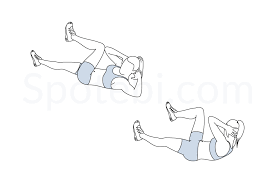
A traditional, beginner-friendly core exercise that works the muscles in the upper abdomen is the crunch. To execute them, lie on your back with your feet flat on the ground and your knees bent. Lightly place your hands over your chest or behind your head.
Engage your core and lift your shoulders off the ground, focusing on using your abdominal muscles rather than tugging on your neck. After a quick pause at the top, carefully go back down. Crunches enhance core endurance, strengthen the rectus abdominis, and lay the groundwork for more difficult abdominal workouts.
Plank:
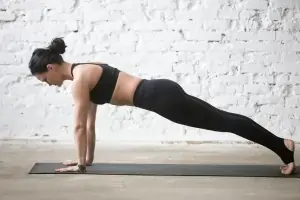
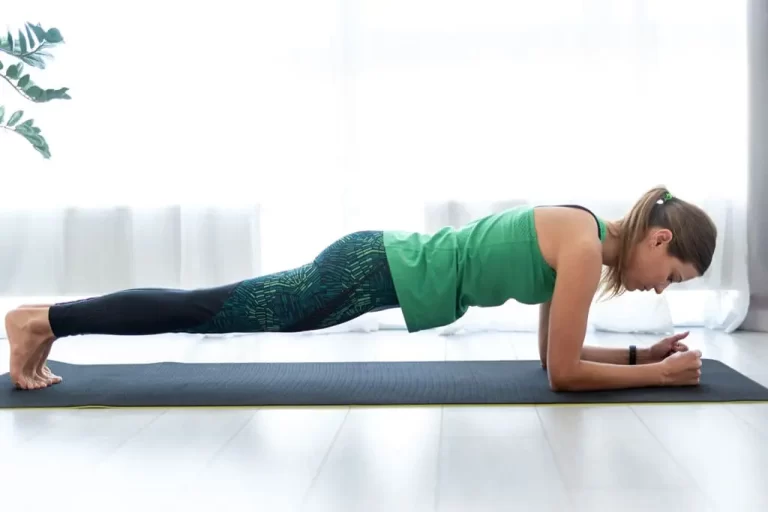
A basic exercise for strengthening the core, the plank works the entire midsection, including the lower back, obliques, and abdominals. To do it, begin with your body in a straight line from your head to your heels in a forearm or high push-up posture. Keep your core firm, hips level, and shoulders stacked above your elbows or wrists.
Hold this posture while breathing steadily and concentrating on tension throughout the entire body. The plank is one of the best exercises for beginners to establish a strong foundation because it enhances posture, strength, and core stability.
Side Plank:
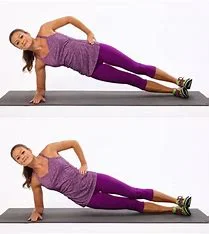
The side plank is a wonderful beginner-friendly exercise that focuses on the obliques, along with the hips, shoulders, and deep core stabilizers. To perform it, lie on your side and prop yourself up on your forearm, keeping your elbow directly under your shoulder. Lift your hips off the floor to create a straight line from head to heels after stacking or placing one foot in front of the other.
Engage your core and hold the position without letting your hips sink. In addition to promoting improved posture and lowering the risk of lower back pain, this exercise helps increase lateral core strength, stability, and balance.
Russian Twists:
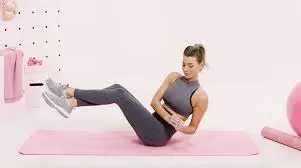
Russian twists are a beginner-friendly rotating core workout that targets the obliques, upper abdominals, and lower abdominals while increasing general trunk stability. They need you to sit on the floor with your feet flat or slightly raised for an extra difficulty, and your knees bent. Lean back slowly while maintaining your spine straight and core engaged.
Clasp your hands together and rotate your torso to one side, then twist to the other, moving with control. This exercise is a great addition to any beginner’s core regimen because it increases rotational strength, balances the body, and tones the waist.
Superman Pose:
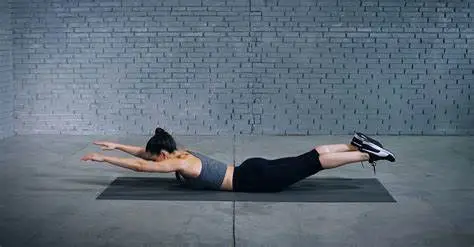
The Superman posture is a great introductory core exercise that strengthens the lower back, glutes, and hamstrings while increasing general spinal stability. To perform it, lie face down on the floor with your arms outstretched straight in front of you and legs stretched out behind. Using your core, slowly raise your legs, arms, and chest off the floor at the same time, forming a soft arch in your back.
Squeeze your glutes and maintain a neutral neck while holding the pose for a short while. Then, carefully descend back down. This action helps counteract poor posture, maintains a healthier spine, and boosts general back strength—making it a fantastic addition to a basic core workout routine.
Standing Side Bends:
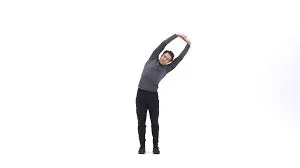
Standing side bends are a basic and effective starting core exercise that primarily targets the obliques while also improving flexibility in the sides of the chest. Keep your core active and stand tall with your feet hip-width apart to do them. Put your hands on your hips or allow your arms to fall naturally to your sides.
Slowly bend your torso to one side, bringing your hand down toward your knee without leaning forward or backward. Repeat on the opposite side after returning to the middle. This deliberate movement promotes improved posture and balance, increases spinal mobility, and strengthens the side abdominal muscles.
Conclusion:
Core strengthening is vital for developing a sturdy foundation that supports your entire body, especially for beginners. These workouts are easy to do at home because they are straightforward, efficient, and require little to no equipment.
By practicing them frequently, you can improve posture, stability, balance, and overall strength while minimizing the risk of back pain and injuries. You can safely and confidently work toward more challenging fitness objectives by incorporating these beginner-friendly core exercises into your regimen.
FAQs:
Is my weak core the source of my back pain?
Weak abdominal muscles push the lower back to compensate, leading to pain and strain. Try holding a plank for thirty seconds as a quick test. If your lower back starts hurting, it could be an indication of a weak core.
How do you know if your stomach muscles are weak?
Symptoms of weak abdominal muscles include abdominal pain, weakness during movement, trouble getting out of seats or beds, a sway while walking, and low back tiredness. You may also have a reduced range of motion, muscle spasms, and a bulging appearance below the navel, especially after meals. These muscles play a key role in posture and core stability; therefore, weakening can appear in many ways.
What are the symptoms of a weak core?
Symptoms of a weak core include lower back pain, poor posture, and difficulty balancing. Other symptoms include exhaustion, a general sense of weakness, and difficulties performing tasks like sitting up straight or moving heavy objects.
How long does it take to make a weak core stronger?
You should develop and strengthen your core muscles in four to eight weeks if you are consistent and work out your core two to three times a week.
What causes poor core strength?
Inactivity, bad posture, and muscular imbalances frequently result in a weak core, which can cause problems, including lower back pain, poor balance, and trouble engaging in physical activities. Other factors can include injury, surgery, and the natural process of aging.
How do I improve my weak core?
Classic core workouts stabilize and develop your core. Planks, situps, and fitness ball exercises are examples of traditional core exercises. Another traditional core exercise is a bridge.
What are the only two core workouts you need?
Two traditional exercises keep proving to be gold standards of core strengthening: the crunch, which firms the more superficial abs, and the rectus abdominis in the center.
Is a 20-minute core workout enough?
With the appropriate programming and techniques, you can see improvements with a 20-minute emphasis on your core. Consistency is crucial, so add this exercise to your regular schedule twice a week for the best results.
How to develop your core as a beginner?
Beginner core workouts include planks, bird dogs, dead bugs, and glute bridges. To start, maintain a plank on your knees for 20-30 seconds, complete three sets of 10 bird-dogs, do three sets of 10 dead bugs, then hold glute bridges for 15 repetitions. Focus on controlled movements and activating your core to increase stability and strength effectively.
References:
- Nunez, K. (2024, April 24). The Best Core Exercises for All Fitness Levels. Healthline. https://www.healthline.com/health/best-core-exercises
- Asp, K. (2024, May 8). A 7-Minute core workout for absolute beginners. EverydayHealth.com. https://www.everydayhealth.com/fitness/core-workouts-for-absolute-beginners/
- Frazier, R. S. (1970, January 1). 7 Beginner-Friendly Exercises to Target Your Core from All Angles. https://www.onepeloton.com/blog/beginner-core-exercises
- Exercises to improve your core strength. (n.d.). Mayo Clinic. https://www.mayoclinic.org/healthy-lifestyle/fitness/in-depth/core-strength/art-20546851
- Top 5 core exercises for beginners. (2023, November 8). PureGym. https://www.puregym.com/blog/top-5-core-exercises-for-beginners/
- Lewsley, J. (2021, January 18). The 8 best core exercises for gym and home training, from beginner to advanced. https://www.medicalnewstoday.com/articles/best-core-exercises