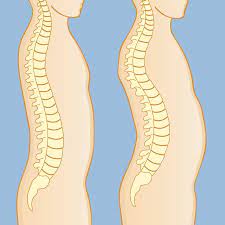

6 Best Cervical Spine Stabilization Exercise
Introduction:
The goal of cervical spine stabilization exercises is to increase the strength, endurance, and control of the upper back and deep neck muscles that support the cervical spine. These exercises improve posture and movement efficiency, lessen joint and ligament strain, and assist in preserving appropriate neck alignment.
Particularly for those who spend a lot of time on computers or have stiff, uncomfortable necks, regular practice can reduce neck pain, avoid injuries, and improve general spinal health.
Benefits of Cervical Spine Stabilization Exercise:
- Improves Neck Stability: The deep neck flexor and extensor muscles, which support and maintain the cervical spine, are strengthened.
- Reduces Neck Pain: Assists in reducing joint stress, tense muscles, and chronic neck pain.
- Improves Posture: Reduces forward head and rounded shoulder posture by encouraging correct head and shoulder alignment.
- Prevents Injuries: Increases the neck muscles’ and ligaments’ resilience, reducing the possibility of sprains or strains during regular exercises.
- Increases Range of Motion: Enhances neck and upper spine flexibility and movement control.
- Supports Rehabilitation: Helps people recover from postural imbalances, whiplash, and cervical spondylosis.
- Increases Functional Strength: Makes it easier to carry out daily duties with less tiredness and better balance.
Cervical Spine Stabilization Exercise:
Chin Tucks:
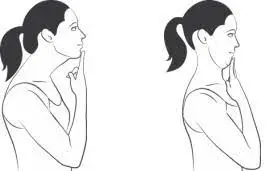
One of the best exercises for enhancing cervical spine alignment and strengthening the deep neck flexor muscles is the chin tuck. Sit or stand straight with your shoulders relaxed to complete this exercise.
Without lifting or lowering your head, gently drag your chin straight back, creating a double chin. After a few seconds of holding the position, let go. When done frequently, this exercise improves general spinal stability, lessens neck strain, and corrects forward head position.
Isometric Neck Extension:
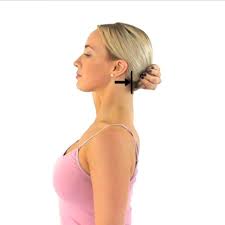
An exercise that strengthens the muscles at the back of the neck without requiring movement is called isometric neck extension. Sit or stand erect with proper posture to do this workout. Gently push your head back into your hands while using equal energy to prevent the movement, placing your hands or a soft surface behind your head.
Avoid tilting your head and keep your chin tucked under. After holding for five to ten seconds, let go. This exercise enhances posture, strengthens the neck extensor muscles, and protects the cervical spine from everyday stress.
Isometric Neck Flexion:
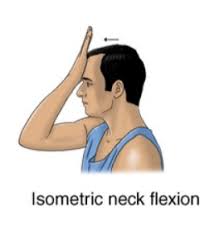
The deep flexor muscles at the front of the neck, which are crucial for preserving correct head and neck alignment, are strengthened by isometric neck flexion. Sit or stand with your back straight to complete this exercise. Put a soft object, such as a little towel or your hand on, your forehead.
To prevent any real movement, gently force your head forward onto your hand while fighting the motion. Hold the contraction for five to ten seconds, keeping your chin slightly tucked, before releasing it. This exercise promotes improved posture, lessens strain, and increases neck stability.
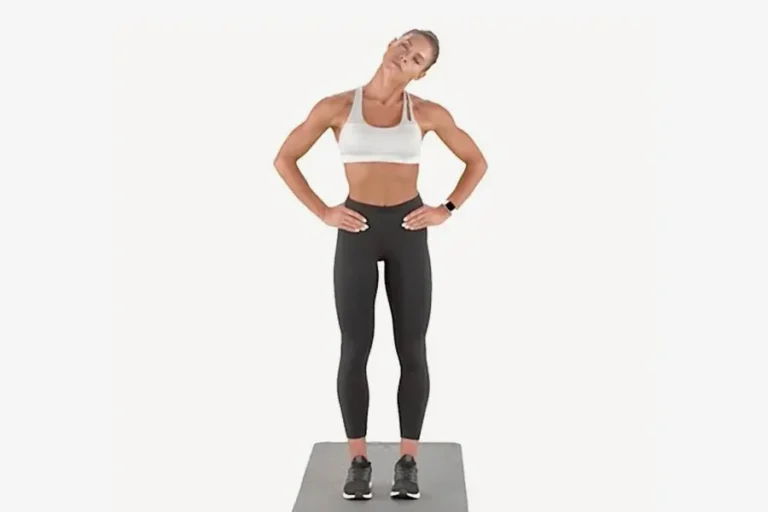
Isometric Neck Side Flexion:
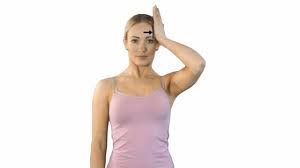
By focusing on the muscles on the sides of the neck, isometric neck side flexion helps to enhance the cervical spine’s lateral stability and balance. Sit or stand straight with your shoulders relaxed to complete this exercise. Just above the ear, place your right hand against the right side of your head.
Keeping your neck still, gently press your head toward your palm while resisting the motion with equal effort. After holding for five to ten seconds, let go and switch to the other side. This exercise improves posture, strengthens the lateral flexor muscles in the neck, and helps avoid neck strain and stiffness.
Scapular Retraction:
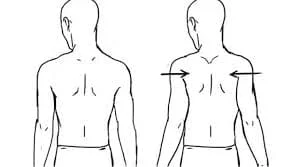
An essential exercise for strengthening the upper back muscles, especially the rhomboids and middle trapezius, which promote healthy neck posture and help stabilize the shoulder blades, is scapular retraction. Sit or stand upright with your shoulders relaxed to complete this exercise.
Without shrugging your shoulders, bring your shoulder blades down and back by gently squeezing them together. After holding the contraction for five to ten seconds, gradually release it. Frequent scapular retraction exercises improve cervical spine stability, lower tension in the neck and upper back, and improve posture.
Quadruped Banded Neck Extension:
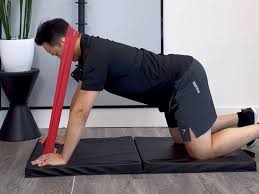
An advanced stabilization exercise that develops the neck extensor muscles and enhances cervical spine control is quadruped banded neck extension. With a resistance band fastened over the back of your head and anchored in front of you, begin this exercise in a quadruped (hands and knees) position.
Maintain a neutral spine and a strong core. Lift your head in line with your back as you slowly lengthen your neck against the resistance of the band, then carefully return to the beginning position. In order to maintain good head alignment during daily activities, this exercise improves posture, strengthens the neck, and increases endurance.
Conclusion:
Exercises for cervical spine stability are essential for preserving neck health, enhancing posture, and averting pain or injury. These exercises improve movement control and spinal support by strengthening the deep neck and upper back muscles. Frequent practice of exercises such as banded extensions, scapular retraction, isometric exercises, and chin tucks will greatly lessen neck strain and increase stability over time. You may develop a stronger, more balanced, and pain-free neck by including these exercises in your everyday regimen.
FAQs
How can the stability of the cervical spine be improved?
With your head in the neutral position and your back supported, take a seat in a chair. Put a hand across your forehead. Use your hand to firmly prevent any head movement while pushing your head and neck forward as forcefully as you can. Repeat three times after pushing for ten seconds and then relaxing.
When your neck is misaligned, what happens?
You may have chronic neck pain and limited range of motion in your neck and shoulders if you have misalignments in your cervical spine, which comprises vertebrae from C1 to C7. If left untreated, cervical spinal misalignments can also result in chronic headaches and exhaustion.
What are the initial symptoms of cervical problems?
Vaginal bleeding that’s unusual for you – including bleeding during or after sex, between your cycles or after the menopause, or having heavier periods than normal. Your vaginal discharge has changed. Pain during intercourse. pain in your lower abdomen, lower back, or pelvis, the space between your hip bones.
In cervical care, what should we avoid?
Avoid hard lifting, high-impact activities, and bad posture to safeguard your cervical spine. Smoking, sleeping on your stomach, and lengthy static positions without breaks are other things to avoid.
What signs indicate cervical spine instability?
Cervical instability can cause headaches, neck pain and stiffness, dizziness, balance issues, and a heavy or unsteady feeling in the head. Muscle spasms, numbness or paralysis in the hands and arms, and visual abnormalities like light sensitivity or poor vision are other symptoms. Loss of control over one’s bowels or bladder may occur in more severe situations.
How can the cervical spine be protected?
Use a comfortable chair that supports proper posture to sit with a good upright alignment of the spine. Keep your lower back against the chair’s back to prevent slouching. The neck is strained, and the arteries and nerves that supply the arms are impacted when the head is bent forward.
How long does it take to improve the flexibility of the spine?
Improving flexibility can take anywhere from two to three weeks of regular stretching to several months. Depending on personal circumstances and commitment, significant progress may occasionally take many months.
Which three crucial roles does the cervical spine play?
It covers and envelops your spinal cord, supports your head’s weight, and permits a variety of head movements. This part of your spine is affected by a number of disorders, such as stenosis, degenerative bone and disk disease, arthritis, and neck pain.
Which position is best for cervical stabilization?
Cervical alignment should be maintained when the patient is positioned in the middle of the board. First, the practitioner should use straps to bind the upper torso. Additionally, straps are used to secure the upper legs, pelvis, and chest.
What are the cervical instability risk factors?
An automobile accident, head trauma, birth trauma, or high-velocity rotational injury can all result in severe upper cervical instability, particularly at the C1–C2 level. Cervical dysstructure is characterized by a highly forward C1 and a disruption of the cervical curve.
What safety measures are necessary for cervical cancer?
Avoiding actions and activities that could cause neck strain, such as abrupt motions, heavy lifting, and extended awkward positions, is part of cervical precautions. Wearing a cervical collar, avoiding pushing, pulling, or twisting activities, and adhering to specified movement and exercise guidelines are precautions for people with serious injuries or those recovering from surgery. Maintaining normal posture, being active, taking regular breaks, and using the right ergonomics and support when sleeping are the key general precautions for preventing neck pain.
How long does it take to make the spine stronger?
Within four to six weeks of treatment, patients will typically begin to notice significant changes. However, chronict low back pain that has chronic for months or even years may take a little longer.
Why is stabilizing a cervical spine injury important?
The primary goal of treating an early spinal injury in an emergency is to stabilize the patient to stop them from moving and from getting worse.
When you have cervical instability, what activities should you avoid?
High-impact activities: Running, jumping, and contact sports are examples of high-impact activities that should be avoided since they can further damage the spine. Heavy lifting: Excessive lifting might worsen your symptoms and put a lot of strain on your spine.
References:
- Rodríguez-Sanz, J., Malo-Urriés, M., Lucha-López, M. O., Corral-De-Toro, J., González-Rueda, V., López-De-Celis, C., Pérez-Bellmunt, A., & Hidalgo-García, C. (2022). Is Cervical Stabilization Exercise Immediately Effective in Patients with Chronic Neck Pain and Upper Cervical Spine Dysfunction? Randomized Controlled Trial. Life, 12(5), 714. https://doi.org/10.3390/life12050714
- Orthopaedic Specialists of North Carolina. (n.d.). CERVICAL STABILIZATION EXERCISES. https://orthonc.com/uploads/pdf/Cervical_Stabilization.pdf
- Bastia, S. (2025, September 8). Strengthening and Mobilizing: 7 Essential exercises for cervical disc bulge relief. Alleviate Pain Clinic. https://alleviatepainclinic.com/blog/strengthening-and-mobilizing-7-essential-exercises-for-cervical-disc-bulge-relief/
- Pt, G. M. (2017, May 16). Neck strengthening exercises. Spine-health. https://www.spine-health.com/conditions/neck-pain/neck-strengthening-exercises
- NHS inform. (2025, February 6). Exercises for neck muscle and joint problems | NHS inform. NHS Inform. https://www.nhsinform.scot/illnesses-and-conditions/muscle-bone-and-joints/neck-and-back-problems-and-conditions/exercises-for-neck-problems