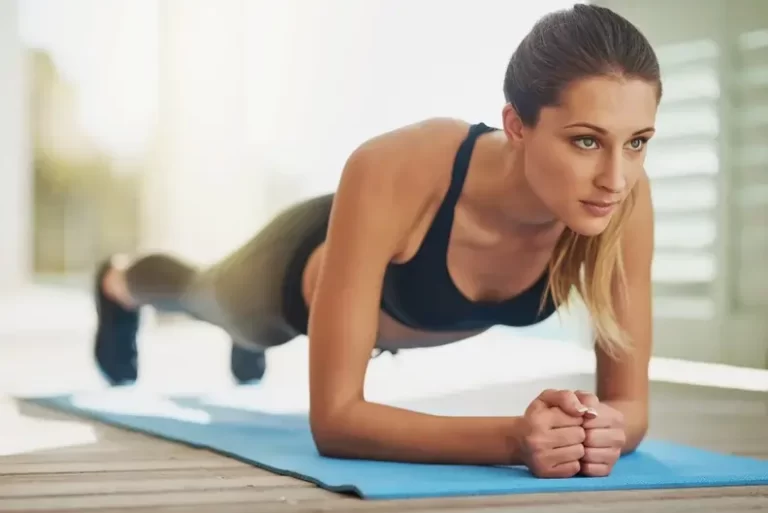

9 Best Exercises for Scoliosis
Introduction:
Idiopathic scoliosis, the most prevalent type of scoliosis, is characterized by a variety of anomalies in the spine. Asymmetry of the waist, unequal shoulders, and curvature of the spine are possible signs. Scoliosis can cause pain, decreased mobility, and, in extreme situations, breathing issues, though its severity varies.
Millions of people worldwide suffer from scoliosis, a disorder marked by an unnatural sideways curvature of the spine. Including the right exercises in your daily routine can greatly assist in controlling symptoms and enhancing spine health, even though scoliosis poses several problems. The finest scoliosis exercises will be discussed in this post, with a focus on what to attempt and what not to.
Benefits of Scoliosis Exercises:
Exercise is essential for scoliosis management and has many advantages.
- Better Posture: By aligning the spine, targeted activities lessen curvature and enhance posture.
- Pain Relief: By releasing stiff muscles, strengthening and stretching exercises reduce pain and discomfort.
- Enhanced Flexibility: Frequent exercise improves range of motion by increasing spine flexibility.
- Strengthening the muscles around the spine lowers the chance of progression by providing stability and support.
Best Exercises for Scoliosis Video:
Best Exercises for Scoliosis:
Cat-Cow Stretch:
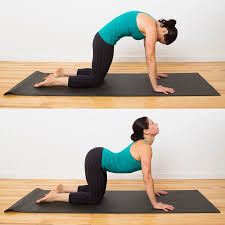
The Cat-Cow stretch is a great yoga pose that improves spinal flexibility and relieves tension in the shoulders, neck, and back. It is commonly used as a warm-up for mobility exercises or physical activities.
How to do:
- To start, kneel on the ground.
- Keep your head up and your abdomen straight when you are kneeling on the ground.
- Inhale deeply, elevate your lower ribs, round your back, and loosen your neck.
- When they exhale, they should lower their chest and lift it slightly toward the floor.
- Pull in your stomach to come back.
- Perform this workout ten or five times.
Bird Dog Exercises:
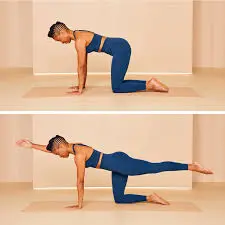
A great exercise for strengthening your lower back, balance, and core is the Bird Dog. It efficiently improves posture and lowers the risk of injury because it exercises the shoulders, glutes, lower back, and abs.
How to do:
- Put yourself on your hands and knees and assume the tabletop position.
- Put your hands over your shoulders while bending at the knees.
- In order to keep your spine steady, make sure your abs are contracting.
- Put your shoulder blades together.
- Raise your left foot and right arm while keeping your shoulders and hips flat on the ground.
- Lift your chin to your chest, reach the back of your neck, and glance down.
- Return to the starting position after holding it for a short while.
- Stretch your left arm and raise your right leg. Maintain this posture for a little period.
- Then unwind.
- You have to do this workout three to six times.
Child’s Pose:
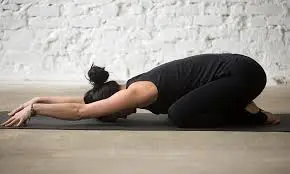
A calm yoga stance that promotes both physical and mental relaxation is called “Child’s Pose,” or “Balasana” in Sanskrit. It is frequently utilized as a resting pose in yoga.
How to do:
- Your big toes should line up when you’re sitting on your heels. Your big toes should line up with one another as a result. You want to align your big toes with one another.
- Keep your knees together for a more rounded spine stretch; separate them for a deeper hip stretch.
- Put your arms in front of your torso, palms up, rather than straight out in front of you, palms down.
- Bring your forehead to the mat while allowing your chest to fall all the way to the floor. Your body will stretch as a result. Lower your forehead to the mat and your torso to the ground.
- Maintain regular, relaxed breathing while focusing on holding for 30 seconds to several minutes.
Side Plank:
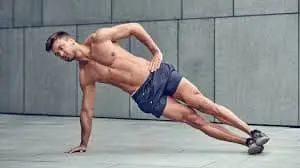
A core-strengthening exercise that works the glutes, shoulders, abdominals, and obliques is the side plank. It enhances posture, balance, and core stability.
How to do:
- Your legs should be piled on top of one another when you are lying on your side. After that, you must place your elbow beneath your shoulder. With your elbow below your shoulder and your legs stacked, you should be in this posture.
- Your head and heels will form a straight line if you raise your hips off the floor with your core.
- While maintaining the position, you must breathe extremely slowly and maintain a stable body. Maintain your position. Don’t forget to take calm breaths. Your body needs this. Your body must be stable. While in this position, you must breathe slowly.
- Hold for the proper amount of time, then lower your hips and move to the opposite side.
Camel Pose:
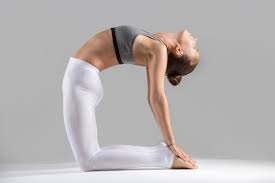
How to do:
- To get started, you need to kneel on your mat. Your thighs should be straight up and down, perpendicular to the floor. Also, make sure your knees are hip-width apart, which means they are as far apart as your hips are wide. This is the starting position for this exercise, so you want to get your knees and thighs in the spot. Your mat is where you will be kneeling, so it should be right under your knees.
- To help your spine, put your hands on the part of your back. Make sure your fingers are pointing downwards. This is a way to support your spine.
- Gradually begin to raise your chest and arch your back using your core.
- Reach for each of your heels separately while keeping your hips over your knees.
- If it feels okay, you can let your head drop back a bit. Just make sure to keep your chin tucked, especially if your neck is hurting. This way, your neck will not hurt much, and you can be more comfortable. Keep your chin tucked in to help alleviate neck discomfort.
- Hold the position for 20 to 30 seconds while taking deep breaths.
- Put your hands back on your lower back and elevate your torso gradually to let go.
Cobra Pose:
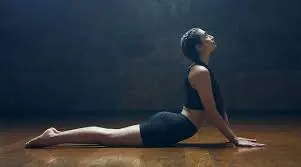
Cobra Pose, also known as Bhujangasana in Sanskrit, is an easy backbend for beginners that stretches the shoulders and abdomen, strengthens the spine, and opens the chest. It’s typically used in sequences like Sun Salutations.
How to do:
- With your feet pressed into the mat and your legs outstretched, lie on your stomach. This is where everything begins. Make sure the tops of your feet are firmly planted in the mat.
- Your feet are going to be supported by the mat. Therefore, the tops of your feet must be forced into the mat.
- You are now prepared to proceed to the step by lying down on your stomach with your legs outstretched and the tops of your feet pressed into the mat.
- Place your elbows towards your ribcage and your palms beneath your shoulders.
- You must press your pelvis up on the surface while doing this. You should use your glutes somewhat, but not excessively. Your glutes should be moderately engaged, but not overly so, so you need to establish a balance.
- Inhale deeply, bend your elbows slightly, and use your palms to gently raise your chest.
- Keep your neck in a neutral position and move your shoulders back and forth without straining upward.
- Breathe deeply while maintaining this posture for 15 to 30 seconds.
- Lower your chest and release the breath.
Bow Pose:
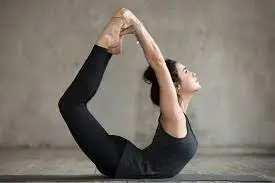
Bow pose, also known as dhanurasana, is a backbend yoga pose that expands the chest, stretches the shoulders and thighs, and strengthens the back. With the arms serving as the string and the body coiled, it mimics an archer’s bow.
How to do:
- Extend your hands back and bring your heels to your glutes.
- Hold your ankles firmly while keeping your knees hip-width apart.
- Lift your head as you inhale. Off the ground, chest. Additionally, you should raise your thighs off the floor. Raise your ankles to face you. When you take a breath, your body should do this.
- To achieve a deep backbend, place your feet in your hands and contract your legs.
- Take deep breaths and hold the pose for 20 to 30 seconds.
- Breathe out, let go of your hold, and return your torso and legs to the ground.
Bicycle Crunches:
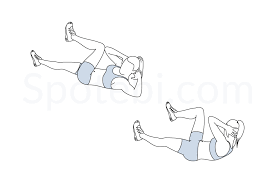
Bicycle crunches are a good way to work the rectus abdominis and obliques, two abdominal muscles.
How to do:
- Raising your legs until your knees are bent at a 90-degree angle requires lifting your shoulders off the ground and bringing your elbows to your knees.
- As you rotate your torso to bring your left elbow closer to your right knee, extend your right leg at a 45-degree angle. Try to fully extend your right leg without letting it touch the ground at the same time.
- To switch sides, extend your left leg straight out and twist your torso until your right elbow is close to your left knee. Continue pedaling with alternate sides, just like you would when riding a bicycle.
- During the exercise, maintain an active core and avoid straining your neck. Concentrate on twisting and bringing your elbow closer to your knee with your abs.
- Bend your knees while lying on your back on a mat with your feet flat on the ground. To lessen the strain on your neck, place your hands behind your head without joining your fingers.
- Do two or three sets of 15–20 repetitions on each side.
Superman Pose:
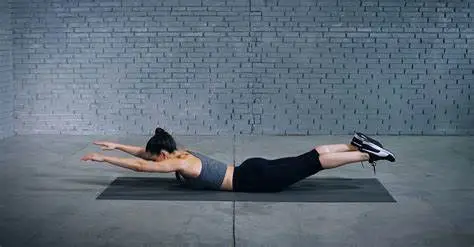
The Superman stance strengthens and enhances posture by using the muscles in the glutes, shoulders, and lower back.
How to do:
- Lying face down on the floor or a yoga mat, extend your arms in front of you and your legs straight behind you.
- Your core will become stronger if you make sure your body is straight and draw your belly button toward your backbone. Your core is really crucial. Your core will be stimulated and perform better if you do this.
- So you aspire to be Superman? You must simultaneously raise your arms, legs, and torso to do this. You must maintain your arms out in front of you.
- Maintaining your neck in alignment with your spine and your back muscles active, hold the pose for five to ten seconds.
Conclusion:
A person may require assistance when conditions worsen, such as wearing a brace, undergoing surgery, or performing specific exercises with a physical therapist. You should always consult a physician or physical therapist before beginning any kind of exercise if you have scoliosis. They can assist you in ensuring that it is both safe and effective in treating your scoliosis.
Before choosing a course of treatment, it is essential to consult an expert because scoliosis can have an impact on a person’s mobility and overall health. Exercises for scoliosis concentrate on strengthening the core muscles, increasing flexibility, and adjusting posture to assist in controlling the curvature of the spine and lessening pain.
FAQs:
Can scoliosis be completely cured?
Patients should be aware that there is no 100% cure for scoliosis before starting any kind of treatment. Various therapies can help stabilize the spine or lessen the curvature and halt the progression of scoliosis, depending on the degree of curvature.
Can someone with severe scoliosis live a long life?
Although no two scoliosis instances are alike, in general, the more serious a problem is, the more likely it is to affect quality of life; even in severe cases, a shorter life expectancy isn’t thought to be a common condition effect.
If you have scoliosis, what should you avoid doing?
Patients with scoliosis can safeguard their spine curves and reduce their risk of injury by avoiding straining postures, awkward positions, and heavy loads.
Why have I developed scoliosis all of a sudden?
Growth spurts, heredity, or other health issues could be the cause. The child’s age and the severity of the curve determine the course of treatment. If the curvature is severe, it can include surgery, brace use, or just keeping an eye on them. Rapid-onset scoliosis can be managed with early detection of the condition’s symptoms.
Can scoliosis get worse as you get older?
Indeed, scoliosis can worsen with age, particularly if it was severe in adolescence (over 50 degrees), progressing slowly due to gravity, degeneration, and wear and tear, resulting in pain or nerve problems. On the other hand, mild curves (under 30 degrees) usually stay stable in adulthood, though disc/joint weakening can also cause adult-onset degenerative scoliosis.
If I have scoliosis, can I still perform squats?
Squatting with the body’s weight is generally seen as safe, but squatting with weights needs to be addressed cautiously, modified, or avoided entirely. Patients with scoliosis must have their treatment providers approve all activities, sports, and exercises.
Which sleeping posture is ideal for those with scoliosis?
Finding the ideal position might help lessen pain, but scoliosis can make it more difficult to sleep soundly. While side sleeping can be a good substitute with the right assistance, back sleeping is usually preferable. Although it’s not advised, if stomach sleeping is your only alternative, minor adjustments can make it more comfortable.
What kind of lifestyle is ideal for those with scoliosis?
To live a good life with scoliosis, one must maintain a healthy lifestyle. Eating anti-inflammatory meals and a balanced diet can help you manage your pain. To prevent gaining too much weight, which can strain your spine, you should always combine a healthy diet with frequent exercise.
When does the progression of scoliosis stop?
You must keep an eye on your teen’s spine because scoliosis does not go away. Over time, that adolescent should assume that responsibilities as an adult. Once the bones finish growing, the scoliosis usually stops becoming worse and stays the same until the age of 35 or 40. You never outgrow scoliosis, though.
Which exercises make scoliosis worse?
Exercises and sports, including deep backbends (like some yoga poses), gymnastics, high jumps, diving, and some dance moves that require repeated torso extensions of the thoracic spine (middle/upper back), should be avoided.
How can I naturally lessen my scoliosis?
Pain relief and spinal alignment are greatly aided by exercises like yoga and Pilates. You can find a natural scoliosis therapy and possibly slow down your disease if you incorporate these exercises into your regular regimen. You can also enhance your posture and coordination by performing daily duties.
Are exercises for scoliosis safe to perform while pregnant?
Maintaining an active lifestyle helps ease back pain, strengthens your spine, and facilitates a more comfortable pregnancy. Although scoliosis-specific corrective activities, low-impact aerobics, and mild strength training are frequently safe, please consult your OB provider before beginning or changing a regimen.
Are scoliosis workouts effective?
It’s critical for people with scoliosis to understand that there are workouts that can actually aid in treating the illness. In order to increase flexibility, these exercises for moderate scoliosis frequently incorporate scoliosis spine stretches and strengthen the muscles supporting the spine.
References:
- Kakadiya, D. (2025, February 21). 10 Best Exercises for Scoliosis – Samarpan Physio. https://www.masterclass.com/articles/dumbbell-bench-presses. https://samarpanphysioclinic.com/exercises-for-scoliosis/
- 12 Scoliosis Exercises for Pain Relief | Jason Lowenstein, MD. (n.d.). Dr. Jason Lowenstein | Scoliosis & Spinal Deformities Surgeon. https://jasonlowensteinmd.com/12-scoliosis-exercises-for-pain-relief/
- Sakra World Hospital. (2025, May 19). 10 Best scoliosis Exercises and Stretches for Pain relief & Posture. Sakra World Hospital. https://www.sakraworldhospital.com/blogs/10-scoliosis-exercises-and-stretches/450
- Ames, H. (2024, March 1). The 7 best stretches and exercises for scoliosis. https://www.medicalnewstoday.com/articles/325385