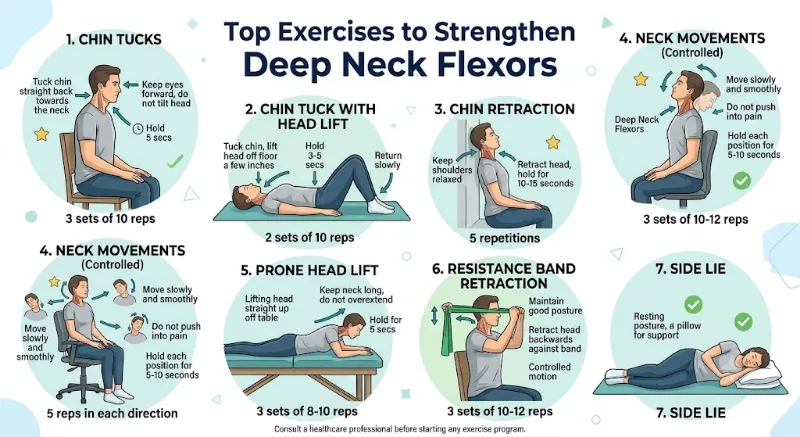
7 Best Exercises for Weak Deep Neck Flexor Muscles
Introduction:
Maintaining neck health and general well-being requires strengthening the deep neck flexors. These muscles are crucial for supporting the neck, preserving proper posture, and reducing neck pain. We’ll go over a number of efficient deep neck flexor exercises in this article, along with pictures to walk you through each one.
What Are The Deep Neck Flexors?
We’ll go over a number of efficient deep neck flexor exercises in this article, along with pictures to walk you through each one.
Deep Neck Flexor muscles:
- Longus Colli
- Longus Capitis
The Deep Neck Extensors, which are located behind the cervical spine, help them.
Why Strengthen Your Deep Neck Flexors?
- Improve neck stability and posture
- Reduce neck pain
- Enhance overall neck function
The muscles that are close to the front of your neck are called deep neck flexors. They are essential for maintaining good posture, enabling controlled and fluid neck movements, and maintaining cervical spine stability. Headaches, neck pain, and bad posture can result from weakness in these muscles. Deep neck flexors include the longus colli, capitis, and rectus capitis anterior muscles, which are found on the front of the spine behind your mouth and throat.
The Deep Neck Flexors’ Function in Posture and Movement
In order to preserve cervical posture, the deep neck flexors are essential. These muscles frequently become weak or restricted in today’s society, when forward head position has grown more prevalent owing to smartphone and computer use. In addition to placing unnecessary tension on these muscles and the surrounding musculature, poor posture can cause a number of problems, such as headaches, shoulder stiffness, and neck pain.
When the deep neck flexors are malfunctioning, the head may sit forward, changing the center of gravity and increasing the strain on the upper back and shoulder muscles. In addition to generating pain, this imbalance may have an impact on respiratory function since proper position is essential for efficient breathing mechanics.
Deep Neck Flexor Endurance Test:
A straightforward head-lift test is used by physical therapists to determine whether a patient has weak deep neck flexors. To do the test, get out a timer and:
- With your feet on the floor and your legs bent, lie on your back.
- Start with a chin tuck while keeping your head on a flat surface.
- Lift your head just enough to be unsupported while keeping your chin tucked.
- Keep a full chin tuck and time how long you can keep your head floating in the air.
Averages for the Endurance Test:
- Women: 29 seconds
- Men: 39 seconds
Your deep neck flexors’ endurance will be gauged by this test, but for a more thorough assessment, see your neighborhood physical therapist.
Common Problems with Deep Neck Flexors:
One of the most frequent issues with deep neck flexors is weakness and inhibition caused by a lack of engagement. These muscles are frequently overlooked in conventional workout regimens since they are not readily seen or well-known. The superficial neck muscles, which are primarily used for movement and rapid movement rather than long-term stability, are significantly relied upon by many.
Forward Head Posture and Tech Neck:
The forward head posture, commonly called “tech neck,” is a posture in which the head is not straight over the shoulders but rather extends forward. This posture puts a lot of tension on the deep neck flexors, which eventually atrophy and make it harder for them to maintain a normal balance. Other muscles, like the trapezius, may develop trigger points as a result of having to work harder to compensate for this imbalance.
Trigger Points in the Deep Neck Flexors:
Trigger points, another name for muscular knots, are highly irritable parts of the muscle that can cause pain and dysfunction. Problems in the deep neck flexors themselves may not always be visible, but they frequently result in trigger points in nearby muscles such as the upper trapezius, scalenes, and sternocleidomastoid (SCM). These trigger sites may contribute to tension headaches in addition to producing pain in the head, jaw, or shoulders.
Top Exercises to Strengthen Deep Neck Flexors:
Chin Tucks:
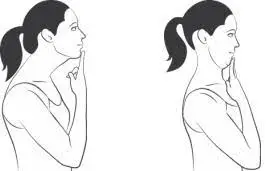
Chin tucks are a quick and simple technique to engage and strengthen the deep neck flexors.
How to Perform
- Let go of the contraction after five to ten seconds while lying on your back with your head at rest.
- Do three sets of ten repetitions.
Advice: To help target the deep neck flexors, try to relax your jaw and major neck rotator muscles while you tuck your chin.
Chin Tuck with Head Lift:
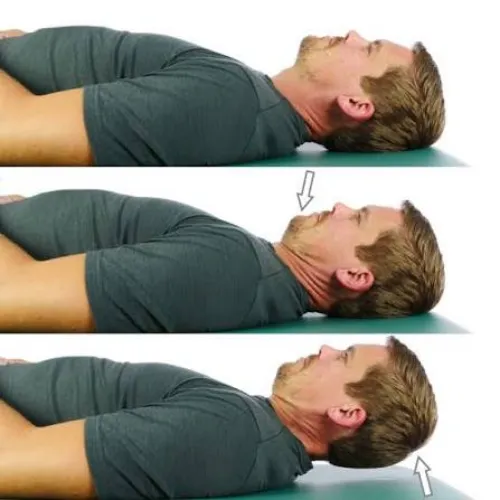
The deep neck muscles are further tested and strengthened when the head raise is added to the chin tuck exercise.
How to Perform
- With your head resting, lie on your back.
- Feel the muscles at the front of your neck flex as you nod your head slightly to indicate “yes.”
- Raise your head two inches into the air while keeping your chin tucked in.
- Hold for ten seconds.
- Perform 10 repetitions in two to three sets.
Advice: Remember to keep your chin tucked in as you elevate your head to avoid suboccipital headaches.
Chin Retraction:
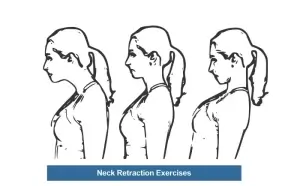
- On the ground, lie down.
- Keep your knees bent and your feet on the ground.
- If necessary, support the weight of your head with a little pillow.
- Nod your chin downward.
- Put your chin in.
- Make an effort to softly tighten the back of your throat.
- Hold for five seconds.
- Repeat 10 Times.
Neck Movements:
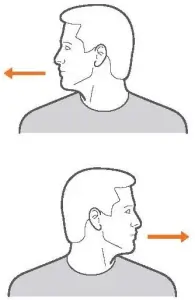
- Sit up straight.
- Nod your chin down gently.
- Slide your chin back gently.
- At the back of your neck, try to feel a slight lengthening.
- Try using the following movement patterns to feel some activation of the deep neck flexors:
- Rising/Declining
- Turn from side to side
- Tilt from Side to Side
- In each direction, complete 20 repetitions.
Prone Head Lift:

- On your stomach, lie down.
- Turn your chin toward the top of your chest. (Your muscles are under more strain since you are rotating your head against gravity.)
- Tuck your chin in gently.
- Try to sense the activation of the muscles in the back of your neck and the Deep Neck Flexors.
- Try to hold for five seconds.
- Ten times over, repeat.
Resistance Band:
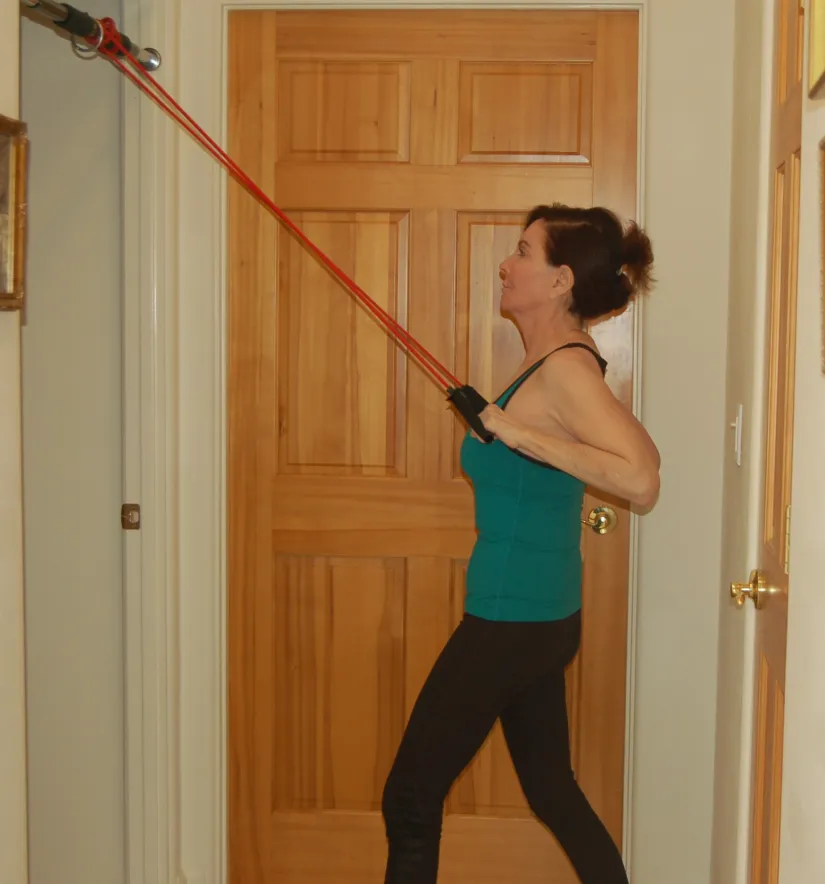
- Put a resistance band on the back of your head.
- Place your hands in front of your head and grasp the ends of the band.
- The resistance band should be pulled forward.
- Turn your chin toward the top of your chest.
- Tuck your chin in gently.
- Attempt to sense the Deep Neck Flexors being activated.
- The muscles in the back of your neck will also begin to tighten.
- Hold for five seconds.
- Ten times over, repeat.
Side Lie:
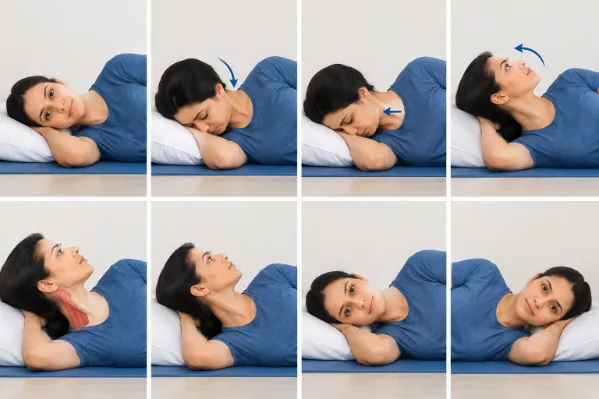
- On your side, lie down.
- Press your chin into the top of your chest.
- Retract your chin gently.
- Attempt to sense the Deep Neck Flexors being activated.
- Your head should be tilted slightly toward the ceiling.
- The muscles in the side of your neck will also become active.
- Hold this posture for five seconds.
- Do ten repetitions.
- On the opposite side, repeat.
How to Take Care of Yourself to Keep Your Deep Neck Flexors Healthy:
Patients need to combine postural awareness, regular strengthening, and lifestyle changes to maintain the health of their deep neck flexors. I frequently give customers the following advice:
- Maintain proper posture: Pay attention to your forward head position, particularly when using a computer or phone. Think about setting up reminders to keep an eye on and adjust your posture at different times throughout the day.
- Stretch often: Perform gentle shoulder and neck exercises to maintain the flexibility of the surrounding muscles and reduce tension.
- Take breaks: Standing up, stretching, and performing a few chin tucks might help prevent neck and shoulder muscular pain if you work long hours at a desk.
Conclusion — Deep Neck Flexors:
To get the most out of these exercises and see noticeable improvements in neck strength and posture, keep the following in mind:
- For noticeable gains in neck strength and posture, practice these exercises every day. Consistency is essential.
- Start out slowly and gradually increase the number of repetitions and shorten holds as your muscles strengthen.
- Put form first: Correct form is crucial to maximizing the advantages of every workout and avoiding strain. Pay close attention to the photos to ensure good technique.
- Make use of the workouts on a daily basis: Make deep neck flexor exercises a part of your everyday routine. Do chin tucks, for instance, when operating a vehicle or at a desk.
- It may be necessary to use specialized equipment: The right neck exercise equipment can make the difference between achieving your neck strengthening goals and struggling to do so.
FAQs:
How to strengthen weak deep neck flexors?
Strengthen the deep neck muscles, including the longus colli and longus capitis, with gentle isometric exercises and slow chin tucks while avoiding excessive strain on superficial muscles such as the sternocleidomastoid.
What causes weak deep neck flexors?
Prolonged muscle inhibition, poor anatomical alignment, and lack of endurance activation are the main causes of weak deep neck flexors (such as the longus colli and longus capitis).
What are the symptoms of weak neck muscles?
The 10- to 12-pound weight of your head is difficult for your neck to hold if you have weak neck muscles, which can cause localized tension, altered posture, and common pain.
How to check the strength of deep neck flexors?
The deep cervical flexor test evaluates the endurance and coordination of the neck’s deep stabilizing muscles, including the longus capitis, longus colli, rectus capitis anterior, and rectus capitis lateralis.
Can poor neck posture be fixed?
Yes, with regular exercises, stretches, and workplace modifications, bad neck posture—such as forward head position or “tech neck”—can be corrected and improved at any age.
Can chin tucks help strengthen deep neck flexors?
A fundamental exercise to strengthen and activate the deep neck flexors (such as the longus colli), enhance posture, and ease neck strain or pain is the chin tuck.
Which vitamin deficiency causes neck stiffness?
Low levels of vitamin D and vitamin B12 may contribute to neck stiffness and persistent muscle spasms in the cervical region.
Painful muscular tension and spasms can also be caused by a magnesium deficit.
How long does it take to strengthen weak neck muscles?
Initial improvements in neck strength and posture may appear within 4–8 weeks, while noticeable gains in muscle endurance and development can require 8–12 weeks of consistent training.
References:
- Api, S. (2026, October 23). Deep neck flexor strengthening. NecksLevel. https://neckslevel.com/blogs/news/deep-neck-flexor-exercises?srsltid=AYCX9vIBUvUrSAWgAywvswZVAub-_kmUtYS8agMj9-loEP6NwCwb7IWL
- Mark. (2025, December 15). Deep neck flexor strengthening exercises. Posture Direct. https://www.posturedirect.com/exercises-for-deep-neck-flexors/#3
- Marks, D. (2024, November 12). The deep neck flexors. Niel Asher Education. https://nielasher.com/en-in/blogs/video-blog/the-deep-neck-flexors?srsltid=AYCX9vLV_nITFbIupXSZnD-hfe1_unJI3WuGEUCwv1H-Tn0ZgKivVHuv