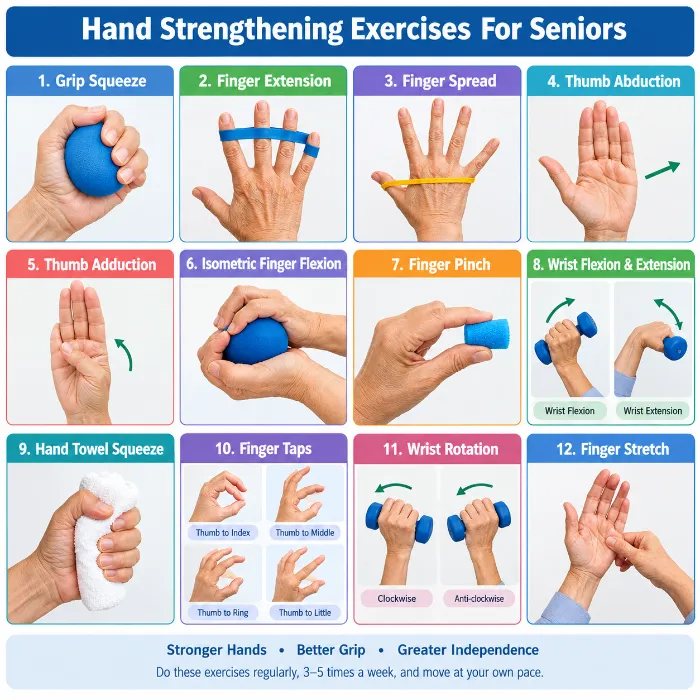
Hand Strengthening Exercises For Seniors
Introduction
Everyday tasks like opening jars, holding tools, buttoning garments, writing, and carrying might become more difficult as we age due to the progressive weakening and stiffening of the hand muscles and joints. Seniors may maintain their grip strength, finger control, wrist stability, and general hand function with regular hand strengthening activities.
Simple exercises such as fist squeezes, finger bends, thumb movements, wrist curls, and gentle resistance exercises can be performed at home with minimal equipment. When practiced consistently and within a comfortable range, these exercises may help seniors maintain independence and make daily hand movements easier.
Before starting, exercises should be performed gently without forcing painful movements. Seniors with significant wrist pain, hand pain, swelling, numbness, recent injury, or a diagnosed joint condition should consult a healthcare professional or physiotherapist for individualized guidance.
Exercises
Hook Hands
How to do it:
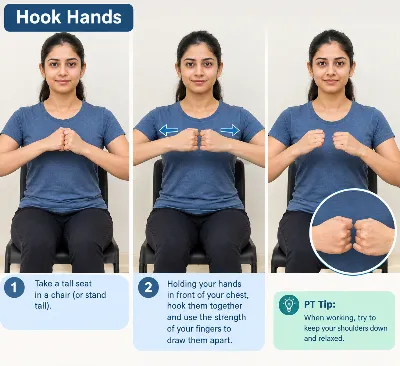
- Sit up straight in a chair or stand up straight.
- Holding your hands in front of your chest, hook them together and use the strength of your fingers to draw them apart.
- PT Tip: When working, try to keep your shoulders down and relaxed.
Towel Squeeze
Grip strength is enhanced by this exercise. Our ability to grasp objects is crucial for performing daily tasks, including hauling, lifting, reaching, and grasping. Additionally, grip strength might provide you with a quick overview of your general health.
Research has connected weaker grip strength to conditions like osteoporosis, heart disease, and even early signs of dementia, making it a helpful indicator of larger health problems.
How to do it:
- With a table in front of you, take a seat.
- Place your forearm and elbow on a table and pick up a rolled-up towel.
- You should have your palm facing down.
- Squeeze the towel roll with your hand.
- Try your hardest to squeeze the towel, then let go.
- PT Tip: By varying the size of your hold, you may modify the difficulty of this exercise by using a larger or smaller towel.
Grip Squeeze
This one is similar to the towel squeeze, but it’s a little more difficult because you will squeeze a harder object than a towel—like a reusable water bottle. This works the muscles that enable you to do tasks like turning a doorknob or opening a container.
How to do it:
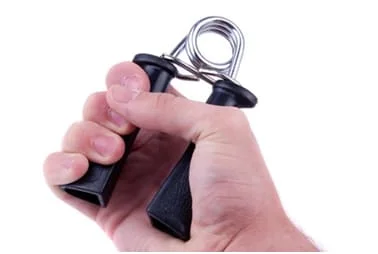
- With your forearm resting on a table in front of you, gently grasp a hard item, such as a water bottle or hand gripper.
- Using your thumb on one side and your fingers on the other, grip the item.
- Squeeze the item. Squeezing may cause your hand to rise slightly off the table.
- Return to the beginning posture by slowly relaxing your muscles.
Towel Wringing
This is an even more challenging grip training exercise since it involves a twisting movement. This aids in both strengthening and regulating your movements. This type of exercise will probably cause some difficulty in your forearms.
How to do it:

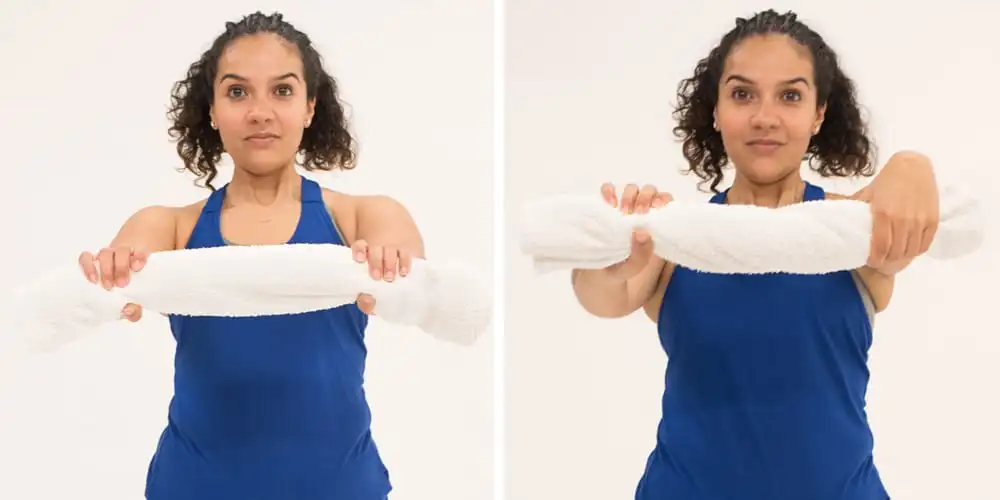
- With your palms toward the floor and your hands spaced approximately a foot apart, grasp a rolled-up towel.
- To twist the towel, move your left palm slightly upward and away from your body while your right palm moves downward and toward your left side.
- To go back to the beginning, untwist the towel.
- To get a proper twist, adjust your grip as necessary and twist the towel in the other way.
- Go back to where you were.
Isometric Finger Flexion
This exercise routine works the hand muscles that allow you to lift your fingers closer to your palm. This is useful for tasks like picking up a cup, using scissors, and gripping a doorknob. By using your opposing hand to create resistance, you may do this exercise without any equipment. Apply more or less pressure based on your tolerance. You may also use a resistance band for a more challenging activity.
How to do
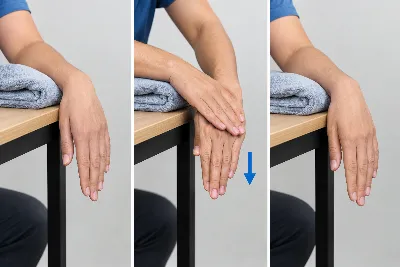
- This exercise routine works the hand muscles that allow you to lift your fingers closer to your palm.
- Your fingers have to be straight and drop from the table’s edge.
- With your opposing hand, push your fingers down toward the floor while they struggle, then let them rest.
Finger Abduction
The importance of being able to spread your fingers apart may surprise you. It shows how strong and flexible your hand’s tiny muscles are, which are essential to grip strength, fine motor control, and general hand function. Simply performing the exercise will help you with this. To increase the resistance as you go, use your opposing hand or even a resistance band.
How to do it:
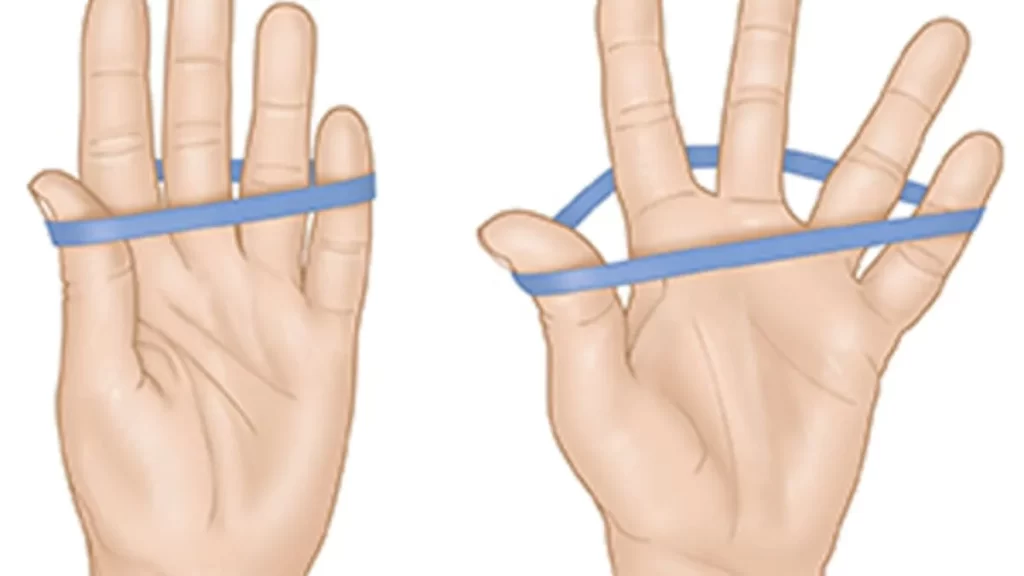
- Raise your hand to head height and place the targeted hand’s elbow on a table.
- You should hold your fingers firmly together and straighten them.
- Extend your fingers widely apart.
- Return your fingers to their initial position.
Thumb Abduction And Adduction
When considering hand strength, the thumb cannot be overlooked. This workout targets some of your hand’s smallest muscles, which are crucial for flexibility and fine motor control despite their tiny size.
How to do it:
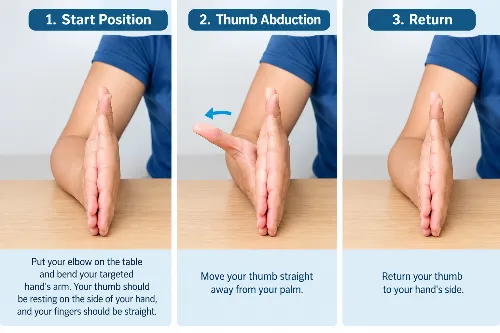
- Put your elbow on the table and bend the affected hand’s arm.
- Your thumb should be resting on the side of your hand, and your finger should be straight.
- Move your thumb straight away from your palm.
- Return your thumb to your hand’s side.
Thumb Opposition
Using your thumb and fingers together, this exercise works the muscles in your palm. It gradually isolates every muscle involved in a good, firm grip.
How to do it:
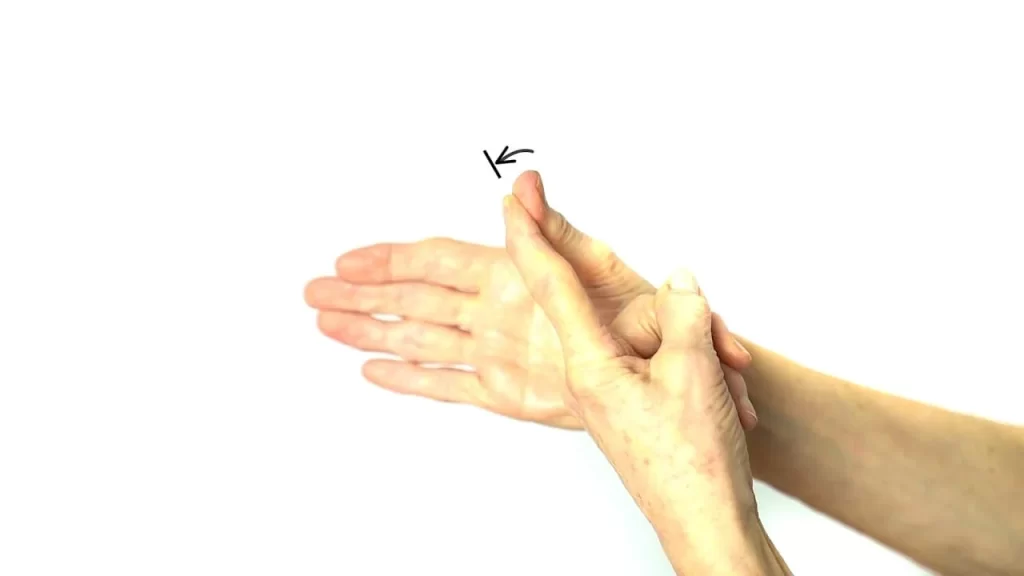
- To begin, place your targeted hand’s elbow on a table.
- Your hand should be open, with your thumb and fingers straight and slightly apart.
- Just the tips of your thumb and index finger should come into contact as you bend them toward one another.
- Once you’ve maintained this position, let go and put your hand back where it was.
- Bend your thumb and middle finger tips in the direction of one another. After maintaining this posture, return to the initial position with comfort.
- Bend your thumb and ring finger tips together. After maintaining this posture, let go.
- Bend your thumb and pinky fingertips together.
- Hold, then let go.
Benefits
Exercises to strengthen your hands are beneficial for more than simply opening a jar of olives that won’t open. There are several advantages to hand exercises, especially if you want to enhance your general health, flexibility, and hand function.
Strengthened grasp
Gaining strength in your hands improves your grip, which makes lifting, carrying, and grabbing items simpler. However, grip strength is more complex than you may imagine. Strength may be a predictor of a long life and can be used to measure general health. Improving grip strength is crucial for life as well as daily functioning.
Improved coordination and flexibility.
Stronger hands improve fine motor abilities, which are crucial for precise activities like typing, writing, or playing an instrument.
Assist with daily tasks.
It is simpler to carry a bag to the grocery store and do tasks like dishwashing without pain or stiffness when your hands are stronger.
Preventing injuries.
Tendons and joints are better supported by stronger hand muscles. This lowers the possibility of being hurt when engaging in regular activities or sports.
Improved joint health.
Exercises that strengthen the hands can increase flexibility and decrease stiffness, which is especially beneficial for people recuperating from accidents or suffering from ailments like arthritis. Hand arthritis affects a lot of people. Maintaining grip strength and intentionally performing beneficial movement patterns are two ways to keep those muscles strong and reduce symptoms.
Things to Avoid During Hand Strengthening Exercises for Seniors
Avoid exercising through sharp or severe pain. Mild muscle fatigue is normal, but sharp, burning, or increasing joint pain is a reason to stop.
Avoid using excessive resistance. Start with light resistance and gradually increase it as hand strength improves.
Avoid gripping too tightly. Over-squeezing a ball or hand gripper can place unnecessary stress on the fingers, wrist, and thumb joints.
Avoid sudden or jerky movements. Perform each exercise slowly and with controlled movements.
Avoid exercising an acutely swollen or injured hand. Allow appropriate recovery and seek professional guidance when needed.
Avoid holding your breath. Breathe normally throughout strengthening exercises.
Avoid exercising only the fingers. Include the wrist, thumb, and forearm to maintain balanced strength and mobility.
Avoid pushing through numbness or tingling. These symptoms may indicate nerve irritation and should not be ignored.
Avoid comparing your strength with others. Seniors should progress according to their own comfort, ability, and functional goals.
Avoid doing too many repetitions too soon. Start with a reasonable number of repetitions and work your way up.
Avoid poor wrist positioning. Keep the wrist comfortable and generally neutral rather than repeatedly bending it into extreme positions.
Avoid continuing if symptoms worsen after exercise. Persistent pain, swelling, weakness, or loss of hand function should be evaluated by a healthcare professional.
Tip: For seniors, the goal is gradual, pain-free strengthening with good control, rather than using heavy resistance or performing a large number of repetitions.
Conclusion
Hand strengthening exercises can help seniors maintain grip strength, finger flexibility, wrist stability, and independence in everyday activities such as opening jars, carrying objects, dressing, writing, and using household items. Simple exercises performed regularly can support better hand function and confidence while helping reduce weakness caused by inactivity.
Start with gentle resistance and a comfortable number of repetitions, then gradually increase the difficulty as strength improves. Proper technique and consistency are more important than using heavy resistance. Seniors should avoid exercising through sharp pain, numbness, swelling, or worsening symptoms. If hand weakness or pain persists, consult a physiotherapist or healthcare professional for an individualized exercise program.
Hand strengthening exercises may be an easy and efficient way to keep our mobility, strength, and independence as we age if we perform them regularly and advance appropriately.
FAQs
How can seniors strengthen their hands?
Seniors may safely increase their hand and grip strength at home by performing easy daily activities with common household objects like towels and tennis balls.
What is a good hand grip strengthener for elderly people?
The finest hand grip strengtheners for senior citizens are therapy putty, soft foam squeeze balls, and low-resistance grip rings because they maintain flexible joints and provide mild, painless movement.
What is the most common cause of hand weakness?
Carpal tunnel syndrome, which occurs when the median nerve is squeezed as it passes through the wrist, is the most frequent cause of hand weakness.
What are some good hand exercise equipment for elderly people?
Low-impact, ergonomic hand exercise equipment that enhances grip strength, finger mobility, and joint flexibility without creating strain is beneficial for senior citizens.
What are some good 10-minute strength training exercises for seniors?
Seniors might benefit from a 10-minute strength training session focusing on low-impact, functional exercises that increase stability with body weight or small dumbbells.
Which exercises are ideal for seniors over 80?
The best exercises for seniors over 80 concentrate on low-impact activities that preserve joint health, preserve mobility, strengthen the lower body, and enhance stability.
Can hand muscles be strengthened?
It is possible to strengthen and develop your hand muscles.
Although genetics determines bone size, your hands have more than 30 muscles, including strong forearm muscles that may be strengthened and enlarged with specific practice.
Reference
- Dpt, C. H. P., & Dpt, S. S. P. (2024, October 18). 9 Best hand strengthening exercises for better function. hingehealth. https://www.hingehealth.com/gb/en/resources/articles/hand-strengthening-exercises/
- Daubney, A. (2025, January 26). 5 Exercises to improve hand strength and coordination for Seniors | Rebound Health. Rebound Health. https://www.reboundhealthwa.com.au/reboundhealth-blog/5-exercises-to-improve-hand-strength-and-coordination-for-seniors